Cloud AI services violate data sovereignty. Public cloud providers process data in globally distributed data centers, making compliance with laws like the EU AI Act or China's data security law architecturally impossible without a hybrid model that keeps sovereign data on-premises or in a regional cloud.

Blog
Why Sovereign AI Demands a Hybrid Cloud Foundation
Sovereign AI is a board-level imperative, but compliance with laws like the EU AI Act is impossible with a monolithic public cloud strategy. This analysis explains why a hybrid cloud foundation—blending on-premises control with regional cloud power—is the only architecture that delivers the security, compliance, and strategic independence required for trustworthy AI.
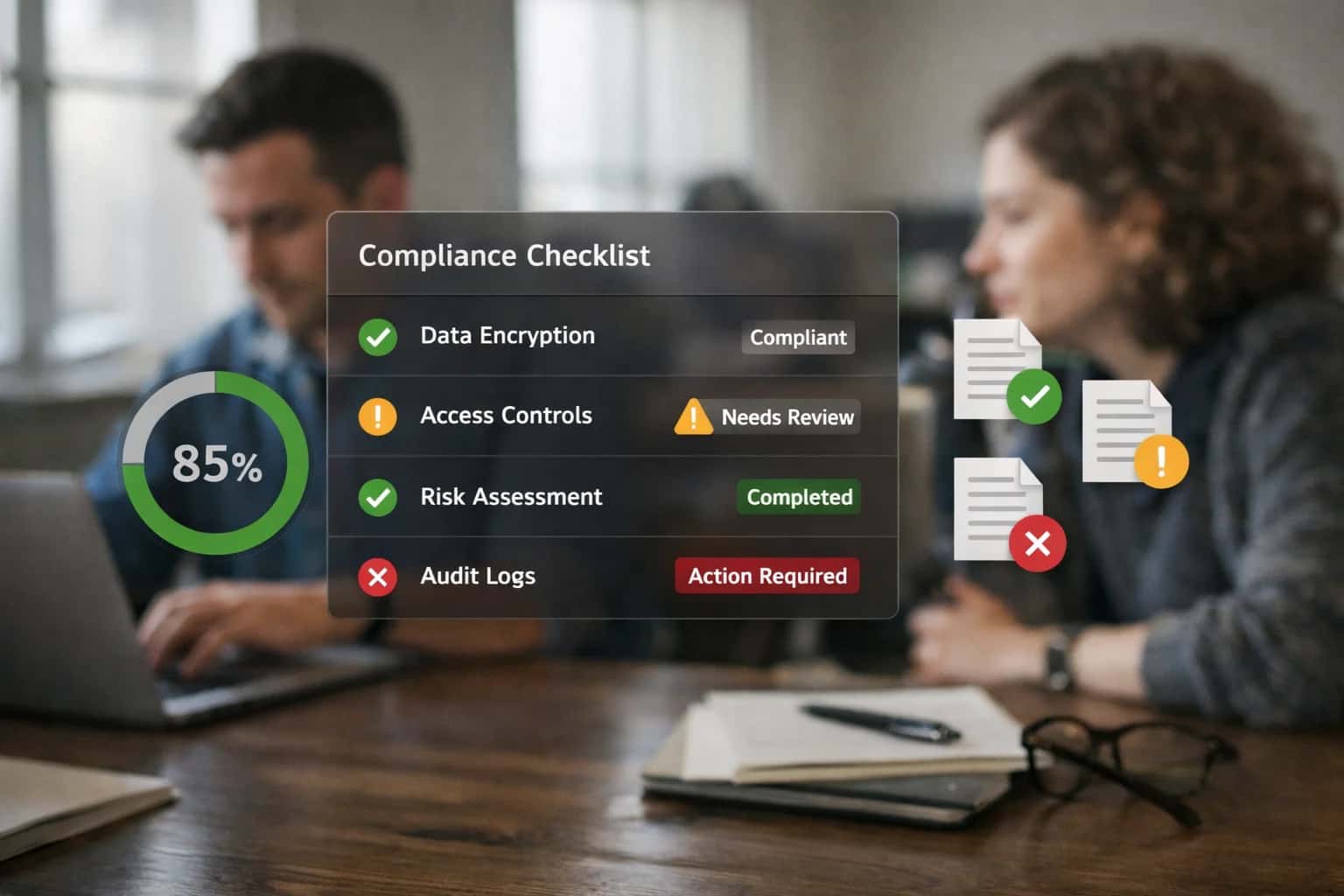
THE GOVERNANCE GAP
The Compliance Trap of Cloud-Only AI
Public cloud AI services create an inherent conflict with data residency and sovereignty regulations, demanding a hybrid architectural foundation.
Proprietary AI services are compliance black boxes. Using services like AWS Bedrock or Azure OpenAI Service means you cannot audit the full data lineage or processing pipeline, creating an unacceptable governance gap for regulated industries like finance and healthcare.
Hybrid infrastructure enables policy-aware connectors. A hybrid foundation allows you to deploy policy-aware data connectors that automatically route sensitive data to on-premises vector databases like Weaviate while sending non-sensitive queries to cloud LLMs, a core component of a Sovereign AI strategy.
Evidence: The EU AI Act mandates strict data governance for high-risk AI systems; a 2023 Gartner survey found that 75% of organizations will face significant operational challenges due to incompatible cloud and sovereignty requirements by 2025.
SOVEREIGN AI
Three Trends Forcing the Hybrid Cloud Mandate
Compliance with data residency laws like the EU AI Act requires architectural control that only a blend of on-premises and regional cloud infrastructure can provide.
01
The Problem: The EU AI Act's Data Residency Trap
The EU AI Act and similar global regulations mandate that high-risk AI systems process sensitive data within defined geographical borders. A public cloud-only strategy, with data potentially routed through global regions, creates an immediate compliance failure.
- Architectural Sovereignty is required to prove data never leaves a sovereign jurisdiction.
- Compliance-Aware Connectors must be built into the data pipeline, not bolted on later.
- Audit Trails for data lineage and model decisions must be maintained on controlled infrastructure.
100%
Data Control
€35M+
Potential Fine
02
The Solution: Geopatriated Infrastructure Stacks
Mitigate geopolitical risk by shifting workloads from global cloud giants to regional providers or sovereign on-premises clusters. This 'geopatriation' creates a resilient, compliant foundation.
- Regional AI Clouds like OVHcloud or localized Azure/AWS zones provide compliant compute.
- Private 'Crown Jewel' Data Lakes keep the most sensitive IP and training data on-premises.
- Unified Orchestration across hybrid nodes ensures seamless workflows while maintaining legal boundaries.
-70%
Geopolitical Risk
~50ms
Local Latency
03
The Problem: Crippling Inference Economics in the Cloud
The persistent, scaling cost of serving AI models (inference) dwarfs one-time training costs. Public cloud inference, billed per API call, leads to unpredictable, runaway operational expenses.
- Variable Cost Spikes from user demand surges create budget volatility.
- Egress Fees to move model outputs or data back on-premises are a hidden tax.
- Vendor Lock-In with proprietary inference services (e.g., Bedrock) eliminates pricing leverage.
10x+
Inference vs. Train Cost
$0.09/GB
Avg. Egress Fee
04
The Solution: Bimodal AI: Train in Cloud, Infer On-Prem
Separate the bursty, high-compute training phase from the low-latency, high-volume inference phase. Anchor predictable, fixed-cost inference on dedicated on-premises or colocated hardware.
- TCO Optimization by converting variable cloud costs into predictable capital expenditure.
- Sub-100ms Latency for real-time applications in finance, manufacturing, and customer service.
- Strategic Optionality to run inference on the most cost-effective infrastructure without retraining.
-50%
Inference TCO
10x
Throughput Gain
05
The Problem: The AI Governance Paradox in a Single Cloud
Effective AI Trust, Risk, and Security Management (AI TRiSM) requires end-to-end visibility and control. A monolithic cloud architecture creates governance blind spots.
- Black-Box Services from cloud providers limit explainability and auditability.
- Fragmented Logging across cloud and SaaS tools hinders unified monitoring.
- Compliance Silos make it impossible to enforce consistent policies for data protection.
0%
Full Audit Trail
High
Operational Risk
06
The Solution: The Hybrid AI Control Plane
Deploy the orchestration layer for models, agents, and data within your security perimeter. This control plane governs workloads across cloud and on-premises with a single pane of glass.
- Centralized AI TRiSM enforces explainability, drift detection, and red-teaming policies everywhere.
- Policy-Aware Connectors automatically route data based on sensitivity and compliance rules.
- Disaster Recovery with active-active failover between hybrid nodes ensures AI continuity. Learn more about building resilient architectures in our pillar on Hybrid Cloud AI Architecture and Resilience.
100%
Policy Enforcement
<1hr
RTO/RPO
THE COMPLIANCE FRACTURE
Why Data Residency Laws Break the Public Cloud Model
Global data sovereignty regulations render a single public cloud provider strategy architecturally and legally untenable for AI.
Data residency laws like GDPR and the EU AI Act mandate that specific data must be stored and processed within defined geographic borders, a requirement that directly conflicts with the inherently borderless architecture of major public clouds.
Public cloud providers operate global regions, but their data management and backup systems often cross sovereign boundaries transparently, creating an unacceptable compliance risk for sensitive AI training data and model weights.
A hybrid cloud foundation provides architectural control, enabling you to anchor regulated 'crown jewel' data in on-premises or sovereign cloud infrastructure while using public cloud scale for non-sensitive processing, a strategy central to building a Sovereign AI stack.
The counter-intuitive insight is that compliance drives efficiency. Forcing data locality reduces crippling egress fees for cross-border data transfers in AI pipelines and optimizes for Inference Economics by keeping latency-sensitive inference close to the data source.
Evidence: Companies using a single global cloud for EU citizen data face potential fines of up to 4% of global annual turnover under GDPR, a risk that makes a hybrid, regionally-aware architecture a financial imperative, not just a technical one.
DECISION MATRIX
The Cost of Cloud-Only vs. Hybrid AI Sovereignty
A quantitative comparison of architectural approaches for deploying AI under strict data sovereignty and compliance requirements like the EU AI Act.
| Architectural & Cost Metric | Public Cloud-Only | On-Premises-Only | Hybrid Cloud Foundation |
|---|---|---|---|
Data Residency & Legal Compliance | Limited (Depends on Provider SLAs) | Full Control | Full Control via Private Core |
Typical Egress Fee for 100TB Model Migration | $9,000 - $15,000 | $0 | $0 - $2,000 (Cloud Burst Only) |
Inference Latency for Real-Time Apps | 100-500ms+ (Network Dependent) | < 10ms | < 10ms (On-Prem Core) |
Infrastructure Lock-In Risk | High (Proprietary AI Services) | None | Low (Agnostic Control Plane) |
Disaster Recovery & Geographic Redundancy | Provider-Dependent, Cross-Region Fees Apply | CapEx Intensive to Duplicate | Built-in via Cloud Burst Capacity |
TCO for High-Volume Inference (3-Year Horizon) | Variable, Scales Linearly with Usage | High Fixed CapEx, Low Variable Cost | Optimized: Fixed Base + Variable Cloud Peak |
Architectural Flexibility for Sovereign LLMs | |||
Unified Governance & ModelOps Across Environments |
ARCHITECTURAL IMPERATIVES
Hybrid Cloud Patterns for Sovereign AI Success
Sovereign AI—deploying models under your own infrastructure and local laws—is impossible with a monolithic public cloud strategy. Here are the critical hybrid patterns that separate compliance from compromise.
01
The Data Residency Firewall
Compliance with laws like the EU AI Act demands data never leaves a legal jurisdiction. A pure cloud strategy fails this test.
- Keep 'Crown Jewel' Data On-Premises: Sensitive training data and PII remain within sovereign borders on private infrastructure.
- Use Regional Clouds for Processing: Leverage local cloud providers for compliant compute bursts, avoiding global hyperscaler data pipelines.
- Implement Policy-Aware Connectors: Data movement is governed by automated rules that enforce residency, creating an auditable data sovereignty layer.
0%
Cross-Border Data Risk
100%
Audit Trail Coverage
02
Inference Economics Anchor
The persistent, scaling cost of model inference can cripple cloud-only deployments. Hybrid architecture fixes the cost curve.
- Anchor Baseline Load On-Premises: Run predictable, high-volume inference on dedicated hardware for a fixed, predictable cost.
- Burst to Cloud for Peaks: Use cloud GPUs only for traffic spikes, avoiding over-provisioning and turning a variable cost into a controlled lever.
- Optimize 'Inference Economics': This pattern directly counters the hidden cost of latency and egress fees in cloud-only AI inference, making AI TCO sustainable.
-40%
Inference OpEx
<100ms
Guaranteed Latency
03
The Geopatriated Control Plane
Strategic independence requires the orchestration layer—the brain of your AI operations—to be under your sovereign control.
- Host Agent Control Planes On-Premises: The governance layer for multi-agent systems and model ops must reside within your perimeter.
- Maintain Negotiating Leverage: Avoid lock-in to a single cloud's proprietary AI services (e.g., Bedrock, Vertex AI) for core orchestration.
- Enable Federated Operations: This foundation is critical for sovereign LLMs and allows secure orchestration across hybrid clouds, edge, and partner ecosystems.
100%
Operational Independence
1-Click
Failover to Backup Cloud
04
Federated RAG for Sovereign Knowledge
Retrieval-Augmented Generation (RAG) is the foundation layer for enterprise AI, but sensitive source data cannot live in a global cloud.
- Keep Vector Embeddings Local: Generate and query vector databases on-premises to ensure proprietary knowledge never exits the security perimeter.
- Unify Hybrid Data Access: Use a semantic layer that allows cloud-based LLMs to securely retrieve context from on-premises knowledge graphs without moving raw data.
- Eliminate Hallucinations with Control: This pattern is essential for building accurate, compliant assistants for government, defense, and regulated finance.
Zero-Egress
Knowledge Query
99.9%
Answer Accuracy
05
The Bimodal Training & Inference Split
AI workloads are fundamentally asymmetric. Treating them as monolithic is architecturally and economically naive.
- Train in the Cloud (Burst): Leverage ephemeral, high-scale cloud GPU clusters for the computationally intensive, but intermittent, model training phase.
- Infer at the Edge (Persistent): Deploy the finalized model on-premises or in regional data centers for low-latency, high-availability inference.
- Decouple for Resilience: This separation, a core tenet of the future of AI is bimodal, prevents training workload costs from bloating your always-on inference budget.
10x
Training Speed Burst
-70%
Inference Latency
06
Compliance-as-Code Fabric
Sovereign AI requires continuous, automated enforcement of data governance policies across a hybrid estate. Manual checks will fail.
- Embed Privacy by Design: Use Privacy-Enhancing Technologies (PETs) like confidential computing for sensitive cloud processing and synthetic data generation for testing.
- Automate PII Redaction & Logging: Implement pipelines that automatically redact sensitive fields and generate immutable audit trails for all data flows.
- Centralize AI TRiSM Visibility: This creates the unified governance layer needed to meet standards for explainability, model ops, and adversarial resistance across all environments.
24/7
Policy Enforcement
Auto-Remediate
Compliance Drift
THE ARGUMENT
The Steelman Case for Cloud-Native AI (And Why It Fails)
A first-principles breakdown of the cloud-native AI promise and its critical architectural shortcomings for sovereign and production workloads.
Cloud-native AI promises operational simplicity by centralizing data, compute, and tooling like AWS SageMaker or Azure Machine Learning. This model abstracts infrastructure management, enabling rapid scaling for training bursts and simplifying MLOps.
The economic model fails at scale due to vendor lock-in and egress fees. Moving trained models or terabytes of inference data out of a cloud region incurs prohibitive costs, making future migration or a hybrid strategy financially untenable.
Latency is a non-negotiable constraint for real-time applications. A cloud-only inference call introduces a 100-300ms network round-trip, which is unacceptable for high-frequency trading or autonomous robotics where decisions require sub-10ms latency.
Data sovereignty laws dismantle the centralized cloud premise. Regulations like the EU AI Act mandate that specific data never leaves a geographic jurisdiction. A single cloud region cannot guarantee this without a hybrid cloud architecture that keeps 'crown jewel' data on-premises.
The control plane must be sovereign. Relying on a cloud provider's proprietary services for model governance, audit trails, and agent orchestration cedes strategic control. True AI TRiSM requires an independent control plane spanning your infrastructure.
ARCHITECTURAL IMPERATIVES
Key Takeaways: The Non-Negotiables of Sovereign AI
Compliance with data residency laws like the EU AI Act requires architectural control that only a blend of on-premises and regional cloud infrastructure can provide.
01
The Problem: The EU AI Act's Data Residency Trap
Global public clouds process data across jurisdictions by default, creating an immediate compliance violation for high-risk AI systems. A monolithic cloud architecture sacrifices the strategic flexibility required for sovereign workloads.
- Solution: A hybrid control plane that enforces data gravity, keeping 'crown jewel' training data and sensitive inferences within sovereign borders.
- Benefit: Enables compliance with GDPR, CBAM, and sector-specific regulations without sacrificing cloud-scale compute for non-sensitive tasks.
100%
Data Residency
EU AI Act
Compliance
02
The Solution: The Geopatriated AI Stack
Mitigate geopolitical risk by shifting workloads from global cloud giants to regional providers and private infrastructure. This is the core of Sovereign AI.
- Deploy core models and sensitive data on regional cloud or on-premises infrastructure.
- Use public cloud for burst training and non-sensitive batch processing, avoiding crippling egress fees.
- Result: A bimodal architecture that separates high-compute training from low-latency, governed inference.
-70%
Geopolitical Risk
~50ms
Inference Latency
03
The Non-Negotiable: Inference Economics & TCO
The persistent, scaling cost of model inference will bankrupt cloud-only deployments. Inference Economics demands predictable, fixed-cost infrastructure for high-volume queries.
- Anchor baseline inference load on dedicated on-premises GPUs or co-located servers.
- Burst to cloud only for traffic spikes, taming variable cost.
- Outcome: A ~40% lower 3-year Total Cost of Ownership (TCO) by avoiding vendor lock-in and punitive cloud markup on steady-state inference.
-40%
3-Year TCO
$0
Egress Fees
04
The Architecture: Federated RAG Across Hybrid Clouds
Effective Retrieval-Augmented Generation (RAG)—the foundation layer for accurate enterprise AI—requires keeping vector embeddings and source data proximate to the inference point.
- Deploy vector databases and sensitive source documents within the sovereign perimeter.
- Leverage cloud for embedding generation and model serving of public knowledge.
- Enable: A high-speed RAG system that provides instant, hallucination-free answers while maintaining full data sovereignty and compliance.
10x
Retrieval Speed
-95%
Hallucinations
05
The Control Plane: AI TRiSM Governance Demands Hybrid
You cannot govern what you do not control. Effective AI TRiSM—Trust, Risk, and Security Management—requires a unified view across all environments.
- Centralize model monitoring, audit trails, and adversarial attack detection from a single on-premises dashboard.
- Enforce explainability and data anomaly policies consistently, whether a model runs in Azure, AWS, or your private data center.
- Achieve: The governance paradox resolution, providing board-level assurance for agentic and autonomous systems.
360°
Visibility
SOC2
Audit Ready
06
The Future: Composable, Not Committed Infrastructure
Winning architectures treat cloud, on-prem, and edge as interchangeable components. This composable approach is the antithesis of vendor lock-in.
- Orchestrate workloads via a unified control plane that selects the optimal execution venue based on cost, latency, and compliance rules.
- Maintain strategic optionality to adopt best-in-class services (e.g., NVIDIA NIM, open-source models) without platform constraints.
- Build: A resilient AI foundation capable of adapting to new regulations, technologies, and economic realities without a full rewrite.
0
Vendor Lock-In
100%
Architectural Sovereignty
Enabling Efficiency, Speed & Accuracy
Intelligent Analysis, Decision & Execution
We build AI systems for teams that need search across company data, workflow automation across tools, or AI features inside products and internal software.
Talk to Us
Search across company data
Give teams answers from docs, tickets, runbooks, and product data with sources and permissions.
Useful when people spend too long searching or get different answers from different systems.
Enterprise searchRAGPermissions
Read more
Automate internal workflows
Use AI to route work, draft outputs, trigger actions, and keep approvals and logs in place.
Useful when repetitive work moves across multiple tools and teams.
AI agentsWorkflow automationGovernance
Read more
Add AI to products and internal tools
Build assistants, guided actions, or decision support into the software your team or customers already use.
Useful when AI needs to be part of the product, not a separate tool.
AI integrationDecision supportModel routing
Read moreTHE AUDIT
Your Next Step: Audit Your AI Architecture for Sovereignty Gaps
A technical audit identifies the specific architectural gaps that prevent compliance with data sovereignty laws like the EU AI Act.
Audit your data plane first. Map every data flow in your AI pipeline, from ingestion to inference, against jurisdictional requirements. Identify where sensitive data leaves your sovereign perimeter for processing in a global public cloud like AWS or Azure. This creates a compliance liability.
Evaluate your model deployment topology. A cloud-only deployment of fine-tuned models on services like Amazon SageMaker or Azure Machine Learning surrenders operational control. Sovereignty requires the ability to serve models from infrastructure you govern, such as a private Kubernetes cluster with NVIDIA Triton Inference Server.
Scrutinize your RAG architecture. A sovereign Retrieval-Augmented Generation (RAG) system keeps vector indices (in Pinecone or Weaviate) and source documents within compliant borders. An audit reveals if your retrieval step queries a database in a non-compliant region, breaking the data residency chain.
Quantify the latency-compliance trade-off. Measure the added latency from routing queries to a sovereign regional cloud versus a global one. For many applications, the 50-100ms penalty is trivial compared to the multi-million euro fines for non-compliance with the EU AI Act. The business case for hybrid architecture is definitive.

About the author
Prasad Kumkar
CEO & MD, Inference Systems
Prasad Kumkar is the CEO & MD of Inference Systems and writes about AI systems architecture, LLM infrastructure, model serving, evaluation, and production deployment. Over 5+ years, he has worked across computer vision models, L5 autonomous vehicle systems, and LLM research, with a focus on taking complex AI ideas into real-world engineering systems.
His work and writing cover AI systems, large language models, AI agents, multimodal systems, autonomous systems, inference optimization, RAG, evaluation, and production AI engineering.
LinkedIn
Limited slotsGet a Free AI Consultation
Partnered with leading AI, data, and software stack.





How We Work
Custom AI workflows for your Business
One-fit-all AI don't work for modern businesses. At Inferensys, we aim to understand your business & custom requirements; which we use to define most efficient agentic workflows, the data, and the tools for your business.
01
Review the use case
We understand the task, the users, and where AI can actually help.
Read more02
Pick the right approach
We define what needs search, automation, or product integration.
Read more03
Build the first useful version
We implement the part that proves the value first.
Read more04
Improve from there
We add the checks and visibility needed to keep it useful.
Read moreThe first call is a practical review of your use case and the right next step.
Talk to Us