Monolithic cloud AI is a strategic trap that trades short-term convenience for long-term cost, control, and compliance risks. Committing to a single provider's ecosystem, like AWS Bedrock or Google Vertex AI, creates an architecture that is expensive to exit and impossible to fully govern.

Blog
The Future of AI Infrastructure is Composable, Not Committed
The era of committing to a single cloud provider for AI is over. Winning architectures treat cloud, on-prem, and edge as interchangeable components orchestrated by a unified control plane. This guide explains why composable AI infrastructure is the only sustainable path for cost, compliance, and competitive advantage.
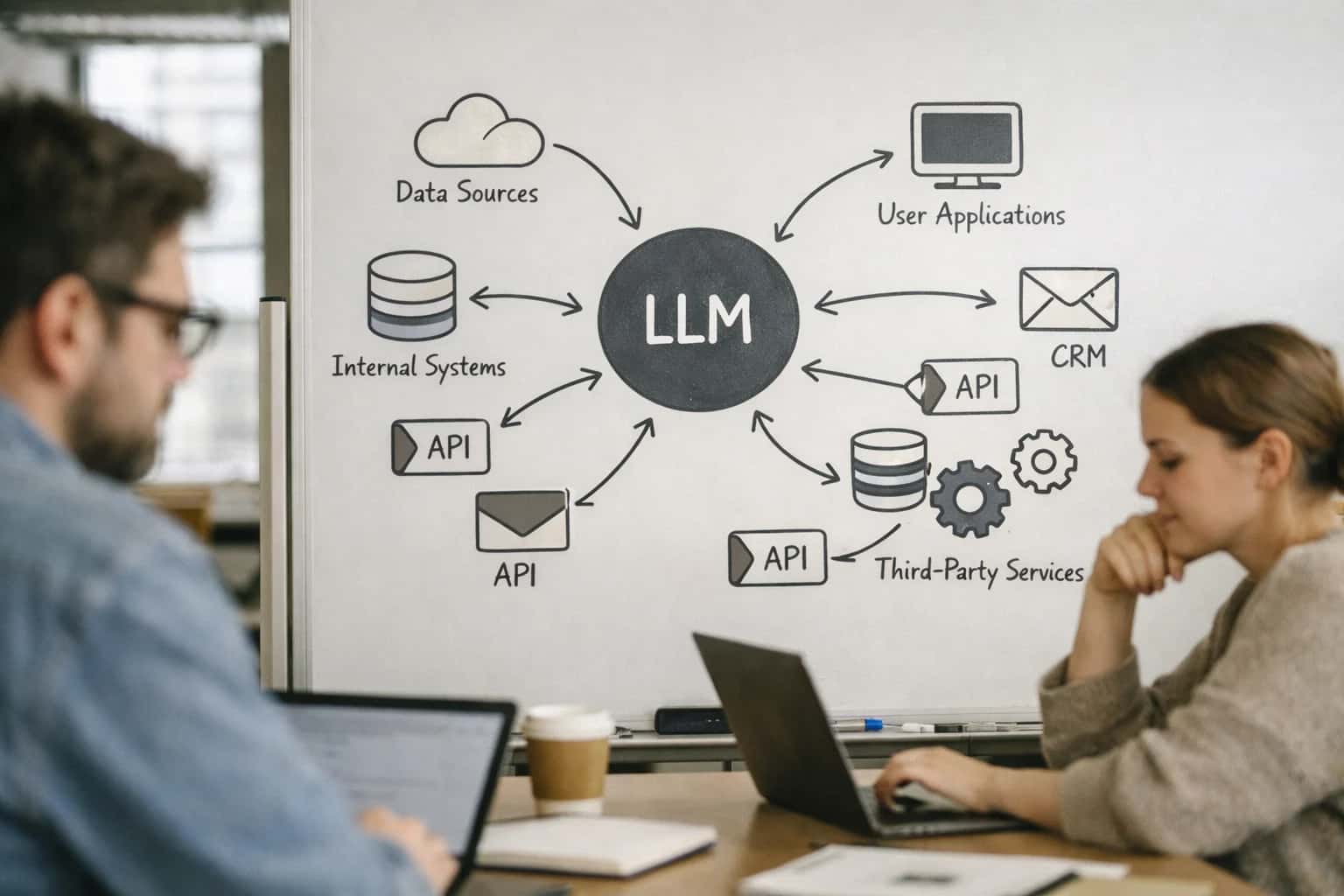
THE COMMITMENT
The Monolithic Cloud AI Trap
Vendor lock-in with a single cloud provider sacrifices the strategic flexibility and cost control required for sustainable AI.
Vendor lock-in is the primary financial risk. Models fine-tuned or served using proprietary cloud APIs and formats become hostages to that provider's roadmap and pricing. This eliminates your negotiating leverage and makes migrating for better performance or lower cost a prohibitive re-engineering project.
Inference economics are distorted by hidden costs. While training is a bursty, high-compute expense, inference is a persistent, scaling operational cost. A cloud-only architecture subjects this continuous workload to variable pricing and crippling data egress fees, making total cost of ownership unpredictable and unsustainable.
Strategic optionality is sacrificed. A monolithic commitment locks you out of innovations from competing clouds, specialized hardware providers like NVIDIA, and best-of-breed tools like Pinecone or Weaviate. Your AI roadmap becomes dependent on a third party's priorities.
Evidence: Industry analysis shows that egress fees for moving multi-terabyte models and datasets between clouds or back on-premises can constitute over 30% of operational AI spend, a cost that is entirely avoidable with a hybrid cloud architecture.
THE ARCHITECTURAL IMPERATIVE
Key Takeaways: Why Composable AI Wins
Monolithic, single-cloud AI architectures create financial traps, compliance risks, and strategic dead-ends. Composable design treats infrastructure as interchangeable components.
01
The Problem: Vendor Lock-In is a Strategic Tax
Committed architectures using proprietary cloud AI services (e.g., AWS Bedrock, Google Vertex AI) create an inescapable cost and innovation trap.
- Strategic Cost: Your AI roadmap becomes dependent on a single vendor's pricing and feature releases.
- Financial Leverage: Migrating fine-tuned models or terabytes of embeddings incurs prohibitive egress fees and retraining costs.
- Innovation Lag: You are locked out of best-in-class models and tools emerging from other providers or the open-source ecosystem.
30-70%
Vendor Premium
$0.09/GB
Egress Cost
02
The Solution: Unified Control Over Hybrid Components
A composable architecture uses a unified control plane to orchestrate models and data across cloud, on-premises, and edge as interchangeable components.
- Inference Economics: Anchor predictable, fixed-cost inference on-premises while bursting to cloud GPUs for variable demand.
- Sovereign Compliance: Keep 'crown jewel' data on private infrastructure to comply with laws like the EU AI Act, using the cloud for non-sensitive processing.
- Optimal Placement: Dynamically route workloads based on latency, cost, and data residency requirements—training in cloud, inference at edge.
-50%
Inference TCO
<100ms
Edge Latency
03
The Problem: The Hidden Cost of Data Gravity
In cloud-only AI, the operational and financial weight of your data anchors you to a single location, crippling agility.
- Pipeline Amplification: Multi-stage ML pipelines (storage → prep → training → serving) multiply egress fees with each data transfer.
- Latency Tax: Network round-trips for cloud-based inference introduce ~500ms delays, unacceptable for real-time applications in finance or manufacturing.
- Resilience Risk: A single cloud region becomes a critical point of failure for your entire AI operation.
10x
Egress Multiplier
99.95%
Cloud SLA
04
The Solution: A Federated, Portable Data & Model Plane
Composability enables a federated approach where data and models are portable across environments, breaking the hold of data gravity.
- Federated RAG: Keep vector embeddings and sensitive source data on-premises for low-latency, secure retrieval-augmented generation.
- Model Portability: Containerize models using standards like ONNX and KServe for seamless deployment across Kubernetes clusters in any location.
- Disaster Recovery: Implement active-active failover between on-premises and cloud inference endpoints, ensuring AI continuity planning.
Zero
Migration Lock-in
99.99%
System Uptime
05
The Problem: Monolithic Governance in a Distributed World
Cloud-only AI stacks fracture visibility, making it impossible to consistently monitor models, enforce policies, or maintain audit trails.
- Shadow AI: Teams spin up unauthorized cloud instances, creating unmanaged risk and compliance gaps.
- Governance Paradox: You plan for agentic AI but lack a control plane to oversee permissions and hand-offs across hybrid infrastructure.
- Audit Blind Spots: Generating consistent reports for regulators requires stitching logs from multiple, disparate cloud services.
40%
Unmanaged Spend
High
Compliance Risk
06
The Solution: The Composable AI Control Plane
The orchestration layer—the control plane—must reside within your perimeter, governing all components regardless of physical location.
- Unified MLOps: A single pane of glass for monitoring model drift, performance, and cost across all deployment targets.
- Policy-as-Code: Enforce security, data privacy, and AI TRiSM controls (explainability, adversarial resistance) uniformly.
- Agent Orchestration: Manage permissions, budgets, and human-in-the-loop gates for agentic AI workflows spanning hybrid infrastructure. This is the core of a resilient Hybrid Cloud AI Architecture.
Centralized
Policy Enforcement
Full
Audit Trail
THE ARCHITECTURAL IMPERATIVE
Composable AI Infrastructure: The Core Argument
Winning AI architectures treat cloud, on-prem, and edge as interchangeable components orchestrated by a unified control plane.
Composable AI infrastructure is the architectural model that treats cloud, on-premises, and edge as interchangeable components, orchestrated by a unified control plane like Kubernetes or HashiCorp Nomad. This approach directly counters the vendor lock-in and cost unpredictability of committing to a single cloud provider's proprietary AI stack, such as AWS Bedrock or Azure OpenAI Service.
Monolithic cloud commitment sacrifices strategic optionality. A cloud-only architecture binds your AI roadmap to a single vendor's pricing, roadmap, and regional availability. A composable strategy, in contrast, lets you deploy fine-tuned models on-premises for low-latency inference while using cloud GPUs for burst training, optimizing for both performance and Inference Economics.
The control plane is the non-negotiable core. True composability requires an orchestration layer that manages models and data across heterogeneous environments. This unified control plane enables policies for data sovereignty, ensuring sensitive data stays in-region while leveraging global cloud scale for non-sensitive tasks, a foundational concept for Sovereign AI and Geopatriated Infrastructure.
Evidence: Companies adopting a composable, hybrid approach report 30-50% reductions in total AI operational costs by avoiding punitive cloud egress fees and anchoring predictable inference costs on dedicated infrastructure. This architectural flexibility is critical for implementing resilient Retrieval-Augmented Generation (RAG) and Knowledge Engineering systems where vector databases like Pinecone or Weaviate must be co-located with sensitive source data.
THE INFRASTRUCTURE IMPERATIVE
Three Market Forces Driving Composable AI
Monolithic cloud commitments are being dismantled by economic, technical, and regulatory pressures that demand architectural flexibility.
01
The $10B+ Egress Fee Trap
Moving terabytes of training data and model weights between cloud regions or back on-premises incurs crippling, unpredictable costs. This financial model breaks at AI scale, where data gravity is immense.
- Anchor fixed-cost workloads like inference and sensitive data lakes on-premises.
- Use cloud burst capacity only for variable training and experimentation, slashing egress by ~70%.
- Achieve predictable TCO by separating data locality from compute elasticity.
~70%
Egress Cost Reduction
$10B+
Industry-Wide Drain
02
The <500ms Latency Mandate
Network round-trip times to a centralized cloud introduce unacceptable delays for real-time applications in finance, manufacturing, and customer service. Latency is a competitive barrier.
- Deploy inference engines at the edge or on-premises for sub-100ms response.
- Maintain a unified control plane to orchestrate models across hybrid locations.
- This architecture is foundational for agentic AI and autonomous systems requiring instant decisioning.
<100ms
On-Prem Inference
10x
User Exp. Improvement
03
Sovereign AI & Geopatriation
Data residency laws like the EU AI Act and geopolitical risk make a single global cloud provider a compliance and strategic liability. Control is non-negotiable.
- Keep 'crown jewel' data and models within sovereign infrastructure or regional clouds.
- Implement policy-aware connectors to enforce data governance across hybrid environments.
- This mitigates regulatory risk and provides the architectural sovereignty required for trustworthy AI.
50+
Data Residency Laws
0
Compliance Breaches
ARCHITECTURE DECISION MATRIX
The Cost of Commitment: Monolithic vs. Composable AI
A data-driven comparison of infrastructure strategies for enterprise AI, quantifying the trade-offs between vendor lock-in and architectural sovereignty.
| Architectural Metric | Monolithic Cloud (Committed) | Composable Hybrid (Strategic) | Why It Matters |
|---|---|---|---|
Vendor Lock-In Risk | High | Low | Negotiating power and roadmap independence |
Inference Latency (P99) |
| < 50 ms | User experience for real-time applications |
Data Egress Cost per TB | $80 - $120 | $0 - $20 | Predictable TCO for model retraining and migration |
Disaster Recovery RTO | 4 - 12 hours | < 1 hour | Business continuity for critical AI services |
Sovereign Data Compliance | Adherence to EU AI Act and data residency laws | ||
Infrastructure Agility | 6 - 12 months | < 30 days | Speed to adopt new models, frameworks, or hardware |
Inference Cost per 1M Tokens | $2.50 - $7.00 | $0.50 - $2.50 | Scaling economics for high-volume applications |
THE ARCHITECTURE
Anatomy of a Composable AI Control Plane
A composable control plane is the orchestration layer that treats cloud, on-prem, and edge as interchangeable components for AI workloads.
A composable AI control plane is the central nervous system that abstracts infrastructure, enabling workloads to run on the optimal execution environment—be it AWS SageMaker for training, on-prem NVIDIA DGX for inference, or Azure OpenAI for prototyping. This architectural pattern is the antidote to vendor lock-in and the foundation for Inference Economics.
The control plane decouples logic from location. It defines policies—like 'run latency-sensitive inference on-premises' or 'route sovereign data to a regional cloud'—while tools like Kubernetes, Apache Airflow, and MLflow handle the execution. This separation creates strategic optionality, allowing you to swap underlying providers without rewriting application code.
Composability defeats monolithic commitment. Unlike committing to a single cloud's AI stack (e.g., Google Vertex AI), a composable system integrates best-of-breed components: Pinecone for vector search, Ray for distributed training, and Weaviate for knowledge graphs. This approach optimizes for performance and cost, not vendor roadmap alignment.
Evidence: Companies implementing hybrid control planes report a 30-50% reduction in total AI operational costs by anchoring high-volume, predictable inference on fixed-cost infrastructure while using the cloud for bursty training. This directly addresses the hidden cost of egress fees in monolithic pipelines.
ARCHITECTURAL PATTERNS
Composable AI in Action: Real-World Patterns
These patterns demonstrate how a composable, hybrid-first architecture solves concrete business problems by strategically placing AI workloads.
01
The Problem: Real-Time Fraud Detection at ~500ms SLA
Cloud-only inference introduces network latency that breaches service-level agreements for high-frequency trading or payment processing. Batch analysis is too slow to prevent losses.
- Solution: Deploy inference models on-premises or at the network edge, colocated with transactional databases.
- Result: Latency drops to <10ms, enabling real-time pattern recognition and blocking fraudulent transactions before they complete.
<10ms
Inference Latency
>99.9%
Block Rate
02
The Problem: $10M+ in Unplanned Cloud Egress Fees
Retraining a 70B-parameter LLM on proprietary data in the cloud requires moving petabytes between storage and GPU instances, then exporting the finished model. Egress fees create a financial trap.
- Solution: Adopt a bimodal strategy. Keep raw, sensitive training data on-premises. Use cloud credits for burst training, but repatriate the final model weights for on-premises inference.
- Result: Anchor 80% of AI spend as predictable CapEx, using cloud only for elastic, variable workloads.
-70%
Egress Costs
80%
Predictable Spend
03
The Problem: EU AI Act Compliance for Customer Support RAG
A Retrieval-Augmented Generation system for support tickets must ground answers in internal knowledge bases containing PII. A global cloud violates data residency laws like GDPR and the EU AI Act.
- Solution: Implement Federated RAG. Deploy vector embeddings and the inference engine in a sovereign cloud region or on-premises data center, while using a cloud LLM via a secure API gateway.
- Result: Maintain data sovereignty and pass compliance audits while still leveraging the latest foundational models. Learn more about this in our pillar on Sovereign AI and Geopatriated Infrastructure.
0
Data Residency Violations
100%
Audit Ready
04
The Problem: Vendor Lock-In with Proprietary AI Services
Using a cloud provider's managed service (e.g., Bedrock, Vertex AI) for fine-tuning and inference creates architectural lock-in. Migrating models becomes technically and financially prohibitive, ceding strategic control.
- Solution: Build on composable, open-source frameworks like vLLM or TensorRT-LLM. Use a unified orchestration layer (e.g., Kubernetes with Kserve) to deploy identical model containers on-premises or across multiple clouds.
- Result: Achieve true portability, avoid 300% price hikes, and maintain negotiating leverage. This approach is core to our philosophy on Hybrid Cloud AI Architecture and Resilience.
3x
Negotiating Leverage
0
Migration Penalty
05
The Problem: Unpredictable Inference Costs During Traffic Spikes
A cloud-only inference endpoint scales automatically with user demand, leading to sporadic, massive bills during viral events or marketing campaigns. Capacity planning is impossible.
- Solution: Implement a hybrid burst pattern. Serve baseline traffic from cost-optimized on-premises GPU clusters. Use cloud inference pools, orchestrated by a load balancer, to absorb overflow traffic only when on-premises capacity hits >85% utilization.
- Result: Smooth cost curves and guarantee availability without over-provisioning. This is a key component of managing Inference Economics.
-50%
Cost Variance
100%
Uptime SLA
06
The Problem: Siloed AI/MLOps Between Cloud and On-Prem Teams
Data scientists develop in the cloud, but production models must run on-premises for latency or compliance. The handoff causes environment drift, deployment failures, and finger-pointing.
- Solution: Deploy a unified MLOps control plane that spans environments. Use tools like Kubeflow or MLflow with hybrid Kubernetes clusters to provide identical development, staging, and production environments across cloud and on-premises.
- Result: Single pane of glass for model governance, monitoring, and lifecycle management, accelerating the AI Production Lifecycle.
5x
Faster Deployment
1
Unified Pipeline
THE MYTH
The Cloud-Only Rebuttal (And Why It's Wrong)
The argument for a single-cloud AI strategy is based on outdated assumptions about simplicity and scale, ignoring the financial, operational, and strategic realities of modern model deployment.
The cloud-only argument is obsolete. It assumes a single provider's ecosystem offers the best price-performance ratio for every stage of the AI lifecycle, from data preparation to model serving. This ignores the specialized economics of training versus inference and the crippling impact of vendor lock-in and data egress fees.
Inference economics dictate hybrid architecture. The persistent, scaling cost of serving models—inference economics—makes predictable, fixed-cost on-premises or colocated infrastructure essential for financial control. Bursty training can use cloud GPUs, but anchoring inference cost is a competitive necessity, as detailed in our analysis of Inference Economics.
Latency is a non-negotiable requirement. For real-time applications in finance, customer service, or industrial IoT, network round-trip times to a cloud region introduce unacceptable delay. On-premises inference or edge deployment is the only solution for sub-100ms response times, not an optimization.
Sovereign AI demands architectural control. Compliance with laws like the EU AI Act and data residency mandates requires knowing exactly where data is processed. A global cloud provider cannot guarantee this without a hybrid foundation that keeps 'crown jewel' data within a controlled perimeter.
Evidence: The egress fee trap is real. Moving a 500GB fine-tuned model from AWS to an on-premises NVIDIA DGX system for serving can incur over $45,000 in data transfer fees alone, a hidden cost that makes cloud exit strategies prohibitively expensive and entrenches lock-in.
FREQUENTLY ASKED QUESTIONS
Composable AI Infrastructure: FAQs
Common questions about relying on The Future of AI Infrastructure is Composable, Not Committed.
Composable AI infrastructure treats cloud, on-premises, and edge resources as interchangeable components orchestrated by a unified control plane. This approach, using tools like Kubernetes and service meshes, allows you to dynamically place workloads—like running inference on-premises and training in the cloud—based on cost, latency, and data sovereignty needs. It is the antithesis of being locked into a single cloud provider's proprietary stack.
Enabling Efficiency, Speed & Accuracy
Intelligent Analysis, Decision & Execution
We build AI systems for teams that need search across company data, workflow automation across tools, or AI features inside products and internal software.
Talk to Us
Search across company data
Give teams answers from docs, tickets, runbooks, and product data with sources and permissions.
Useful when people spend too long searching or get different answers from different systems.
Enterprise searchRAGPermissions
Read more
Automate internal workflows
Use AI to route work, draft outputs, trigger actions, and keep approvals and logs in place.
Useful when repetitive work moves across multiple tools and teams.
AI agentsWorkflow automationGovernance
Read more
Add AI to products and internal tools
Build assistants, guided actions, or decision support into the software your team or customers already use.
Useful when AI needs to be part of the product, not a separate tool.
AI integrationDecision supportModel routing
Read moreTHE EVOLUTION
The Roadmap: From Composable to Autonomous Infrastructure
The end-state of composable infrastructure is a self-orchestrating system that dynamically routes AI workloads across cloud, on-prem, and edge based on cost, latency, and policy.
Composable infrastructure is the prerequisite for autonomous operations. The final stage of this architectural shift is a self-orchestrating control plane that treats every compute, storage, and networking resource—from AWS Inferentia chips to on-prem NVIDIA DGX pods—as a fungible pool. The system dynamically routes workloads like inference or fine-tuning based on real-time variables: cost, latency, data sovereignty rules, and GPU availability.
Autonomy eliminates the manual toil of workload placement. Today, a team manually decides to run a RAG pipeline on-premises for data residency and use cloud Spot Instances for batch training. The autonomous system makes these decisions in milliseconds, executing a cost-optimized execution plan across a federated Kubernetes cluster spanning Azure Arc and private data centers. This is the operational realization of our Inference Economics principle.
The control plane becomes an AI agent itself. The orchestrator evolves from a rules-based scheduler to an intent-based AI agent. You define a Service Level Objective (SLO)—"complete this fine-tuning job for under $500 with data never leaving the EU"—and the agent provisions the resources, monitors progress, and adapts to failures. This mirrors the shift described in our pillar on Agentic AI and Autonomous Workflow Orchestration.
Evidence: Autonomous systems reduce cloud spend by 30-50%. Early adopters using platforms like Kubernetes with Karpenter for hybrid scaling and Crossplane for declarative resource management report slashing idle resource waste and eliminating manual intervention for 80% of workload deployments. The system's continuous optimization directly attacks the hidden cost of variable inference.

About the author
Prasad Kumkar
CEO & MD, Inference Systems
Prasad Kumkar is the CEO & MD of Inference Systems and writes about AI systems architecture, LLM infrastructure, model serving, evaluation, and production deployment. Over 5+ years, he has worked across computer vision models, L5 autonomous vehicle systems, and LLM research, with a focus on taking complex AI ideas into real-world engineering systems.
His work and writing cover AI systems, large language models, AI agents, multimodal systems, autonomous systems, inference optimization, RAG, evaluation, and production AI engineering.
LinkedIn
Limited slotsGet a Free AI Consultation
Partnered with leading AI, data, and software stack.





How We Work
Custom AI workflows for your Business
One-fit-all AI don't work for modern businesses. At Inferensys, we aim to understand your business & custom requirements; which we use to define most efficient agentic workflows, the data, and the tools for your business.
01
Review the use case
We understand the task, the users, and where AI can actually help.
Read more02
Pick the right approach
We define what needs search, automation, or product integration.
Read more03
Build the first useful version
We implement the part that proves the value first.
Read more04
Improve from there
We add the checks and visibility needed to keep it useful.
Read moreThe first call is a practical review of your use case and the right next step.
Talk to Us