Credo AI excels at providing a comprehensive, out-of-the-box governance operating system that maps directly to global regulatory frameworks. Its strength lies in its curated Policy Packs, which translate complex legislation like the EU AI Act and NIST AI RMF into executable, scannable requirements. For example, a multinational bank can use Credo AI to automatically assess over 200 AI use cases against ISO/IEC 42001 controls, reducing manual evidence collection by an estimated 60% through structured workflow automation.

Difference
Credo AI vs Monitaur: AI Governance Audit
A technical comparison of Credo AI and Monitaur for automating AI governance audits, focusing on policy pack completeness, evidence collection automation, and risk tiering for regulatory frameworks like the EU AI Act.
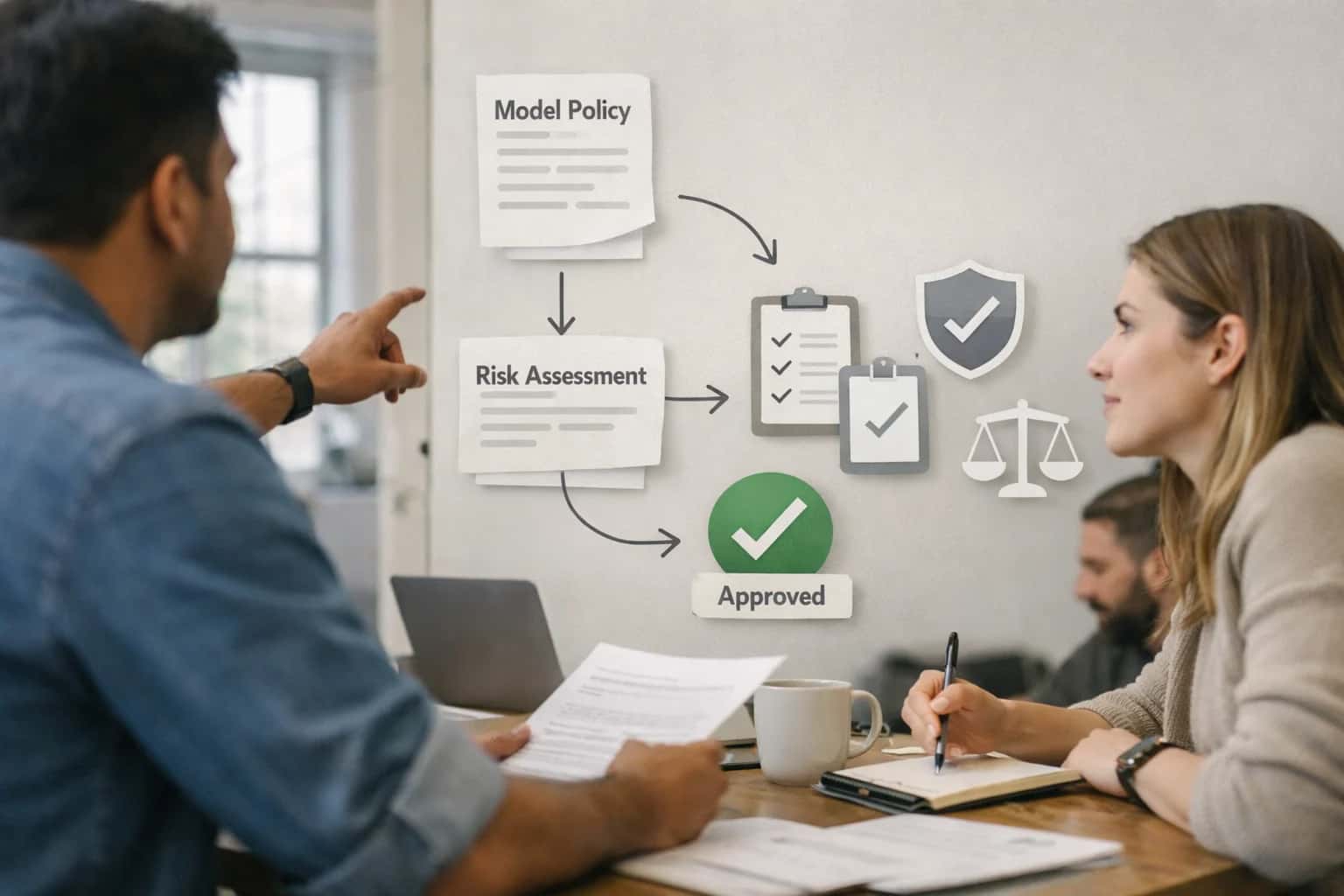
THE ANALYSIS
Introduction
A direct comparison of Credo AI and Monitaur for automating AI governance audits, focusing on policy pack completeness, evidence collection, and risk tiering for CTOs evaluating enterprise compliance platforms.
Monitaur takes a different approach by focusing on deep, technical model assurance and evidence collection directly from the ML pipeline, rather than just the policy layer. It acts more like an audit trail for the model's entire lifecycle, automatically capturing performance metrics, data drift logs, and fairness evaluations. This results in a highly granular, immutable record that is purpose-built for technical model risk management (MRM) teams, but it may require more manual effort to map technical logs back to specific regulatory articles compared to a policy-first platform.
The key trade-off: If your priority is rapid, cross-functional compliance with specific regulatory frameworks and board-level reporting, choose Credo AI. If you prioritize deep, continuous technical assurance and a verifiable audit trail generated directly from model operations, choose Monitaur.
HEAD-TO-HEAD COMPARISON
Feature Comparison Matrix
Direct comparison of key metrics and features for Credo AI and Monitaur in automating AI governance audits and ensuring agent alignment with regulatory frameworks like the EU AI Act.
| Metric | Credo AI | Monitaur |
|---|---|---|
Policy Pack Completeness (EU AI Act) | High-Risk & Limited Risk | High-Risk Focus |
Evidence Collection Automation | ||
Risk Tiering Granularity | 4 Tiers (Minimal to Unacceptable) | 3 Tiers (Low to High) |
ISO/IEC 42001 Audit Template | ||
Agentic Decision Monitoring | ||
Avg. Audit Cycle Reduction | 40% | 30% |
Integration Depth (MLOps) | AWS, Azure, Databricks | MLflow, Kubeflow |
NIST AI RMF Alignment |
Credo AI vs Monitaur
TL;DR Summary
A side-by-side look at the core strengths and trade-offs for automating AI governance audits.
01
Credo AI: Regulatory Coverage Breadth
Specific advantage: Pre-built policy packs for the EU AI Act, ISO/IEC 42001, and NIST AI RMF 1.0. Credo AI maps controls to over 20 global frameworks out-of-the-box. This matters for multinational enterprises needing a single source of truth for diverse regulatory reporting without manual mapping.
02
Credo AI: Evidence Collection Automation
Specific advantage: Deep integrations with MLOps and LLMOps tools (MLflow, Databricks) for automated artifact gathering. Credo AI pulls model cards, eval results, and drift metrics directly from the pipeline. This matters for ML engineering teams who need audit-readiness without manual evidence uploads.
03
Monitaur: Agentic Decision Auditing
Specific advantage: Purpose-built for recording and replaying agent decision trails, including tool-call sequences and approval gates. Monitaur captures the 'why' behind an agent's action, not just the model metadata. This matters for autonomous systems teams who must prove that agent actions were bounded by policy.
04
Monitaur: Real-Time Risk Tiering Engine
Specific advantage: A dynamic risk-scoring engine that classifies agent actions as low, medium, or high risk at inference time, triggering human-in-the-loop reviews only when thresholds are breached. This matters for high-velocity operations where stopping every action for review is impossible.
Enabling Efficiency, Speed & Accuracy
Intelligent Analysis, Decision & Execution
We build AI systems for teams that need search across company data, workflow automation across tools, or AI features inside products and internal software.
Talk to Us
Search across company data
Give teams answers from docs, tickets, runbooks, and product data with sources and permissions.
Useful when people spend too long searching or get different answers from different systems.
Enterprise searchRAGPermissions
Read more
Automate internal workflows
Use AI to route work, draft outputs, trigger actions, and keep approvals and logs in place.
Useful when repetitive work moves across multiple tools and teams.
AI agentsWorkflow automationGovernance
Read more
Add AI to products and internal tools
Build assistants, guided actions, or decision support into the software your team or customers already use.
Useful when AI needs to be part of the product, not a separate tool.
AI integrationDecision supportModel routing
Read moreCHOOSE YOUR PRIORITY
When to Choose Which Platform
Credo AI for EU AI Act
Strengths: Credo AI offers a purpose-built, structured policy pack specifically mapped to the EU AI Act's high-risk classification logic. It automates the gap analysis between your current agent inventory and the Act's Title III requirements, providing a clear 'conformity assessment' roadmap. The platform excels at evidence collection automation, pulling model cards, dataset metadata, and performance logs directly into a unified audit trail.
Monitaur for EU AI Act
Strengths: Monitaur provides a more flexible, principle-based framework that maps to the EU AI Act but isn't rigidly locked to it. Its strength lies in operationalizing the Act's continuous monitoring requirements through direct API integration with your agent's runtime. It automatically flags drift events that would change an agent's risk tiering under the Act, triggering re-assessment workflows.
Verdict: Choose Credo AI if you need a prescriptive, out-of-the-box path to initial EU AI Act certification. Choose Monitaur if your primary concern is maintaining compliance post-deployment through continuous runtime evidence.
THE ANALYSIS
Verdict
A direct comparison of Credo AI and Monitaur for automating AI governance audits, focusing on regulatory alignment, evidence collection, and risk tiering.
Credo AI excels at providing a comprehensive, top-down governance operating system because it maps AI systems directly to specific regulatory requirements like the EU AI Act and ISO/IEC 42001. For example, its policy pack completeness and automated evidence collection streamline the creation of audit-ready documentation, making it a strong fit for organizations that need to prove compliance across a diverse portfolio of models to external regulators.
Monitaur takes a different approach by focusing on the bottom-up technical assurance of individual models, emphasizing rigorous statistical performance monitoring and model risk tiering. This results in a platform that is exceptionally strong for data science and ML engineering teams who need to deeply validate model behavior, detect drift, and ensure fairness at a granular level, rather than just mapping to high-level policy frameworks.
The key trade-off: If your priority is demonstrating enterprise-wide compliance with specific, named regulations and automating governance workflows for auditors, choose Credo AI. If you prioritize deep technical model validation, statistical rigor, and a tool built for the specific workflows of ML engineers and model risk managers, choose Monitaur.

About the author
Prasad Kumkar
CEO & MD, Inference Systems
Prasad Kumkar is the CEO & MD of Inference Systems and writes about AI systems architecture, LLM infrastructure, model serving, evaluation, and production deployment. Over 5+ years, he has worked across computer vision models, L5 autonomous vehicle systems, and LLM research, with a focus on taking complex AI ideas into real-world engineering systems.
His work and writing cover AI systems, large language models, AI agents, multimodal systems, autonomous systems, inference optimization, RAG, evaluation, and production AI engineering.
LinkedIn
Limited slotsGet a Free AI Consultation
Partnered with leading AI, data, and software stack.





How We Work
Custom AI workflows for your Business
One-fit-all AI don't work for modern businesses. At Inferensys, we aim to understand your business & custom requirements; which we use to define most efficient agentic workflows, the data, and the tools for your business.
01
Review the use case
We understand the task, the users, and where AI can actually help.
Read more02
Pick the right approach
We define what needs search, automation, or product integration.
Read more03
Build the first useful version
We implement the part that proves the value first.
Read more04
Improve from there
We add the checks and visibility needed to keep it useful.
Read moreThe first call is a practical review of your use case and the right next step.
Talk to Us