
Differences
Task and Motion Planning Integrations
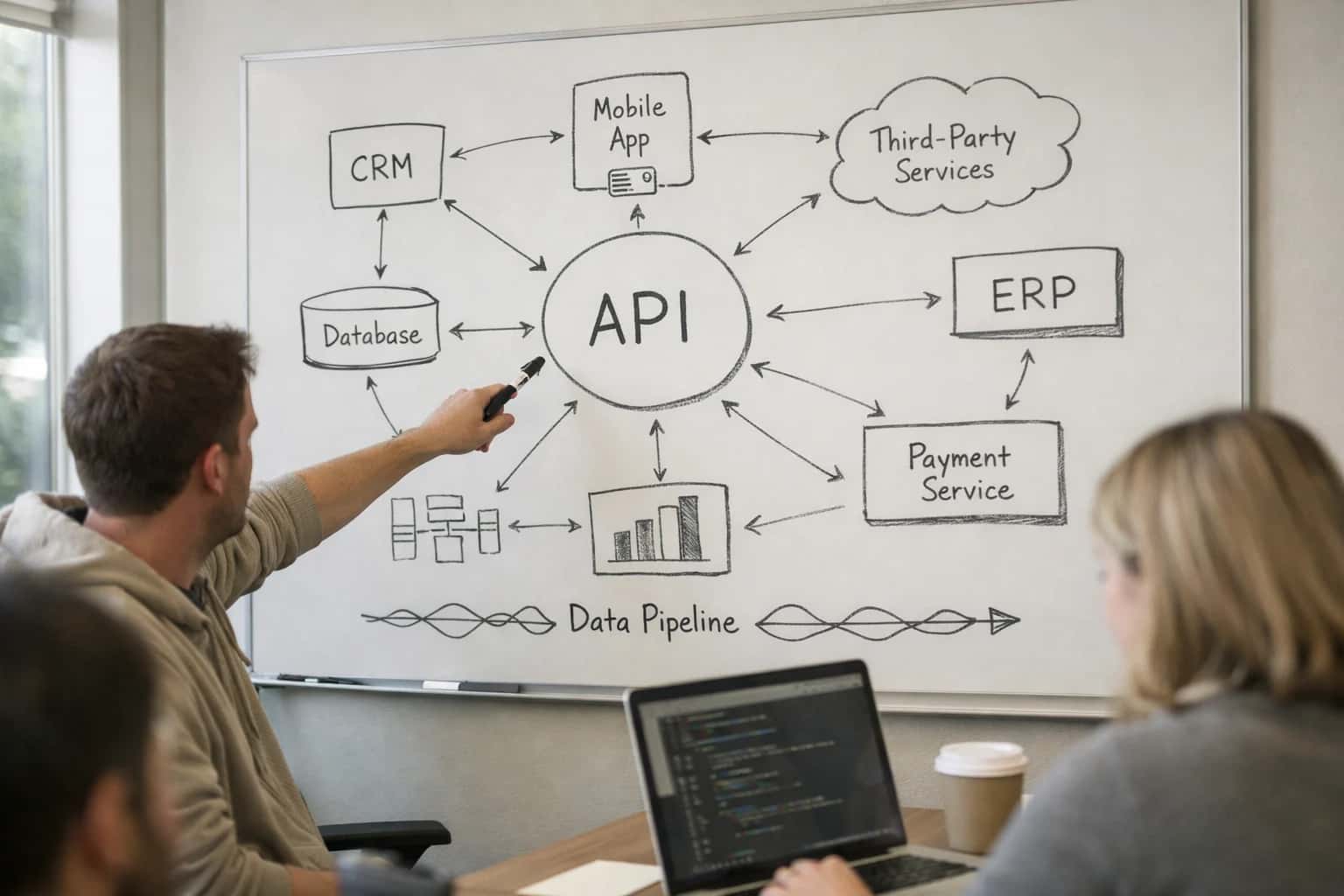
Task and Motion Planning Integrations
Comparisons related to combining high-level task planning with low-level VLA motion control. Target: software architects and autonomy stack developers.
Behavior Trees vs State Machines: Robot Task Control
Compares the modular, reactive architecture of Behavior Trees against the deterministic, state-transition logic of Finite State Machines for orchestrating complex, multi-step industrial robot tasks. Focuses on scalability, reusability, and real-time reactivity in dynamic workcells.
TAMP vs Sequential Planning-Then-Control
Analyzes the integrated Task and Motion Planning (TAMP) approach against the traditional decoupled method of high-level task planning followed by low-level motion execution. Evaluates which strategy better handles geometric dependencies and contact-rich manipulation for VLA-driven robots.
MoveIt 2 vs SkiROS2: Task-Level Robot Programming
Compares MoveIt 2's motion-centric hybrid planning pipeline with SkiROS2's knowledge-driven, skill-based architecture for composing and executing industrial manipulation tasks. Focuses on integrating perception, planning, and action in a unified framework.
Classical Planners vs LLM-Based Task Planners
Evaluates the reliability and determinism of classical PDDL solvers like Fast Downward against the flexibility and open-world reasoning of Large Language Model-based planners for generating robot task sequences from natural language instructions.
RRT-Connect vs PRM: Motion Planning Algorithms
Compares sampling-based motion planners, contrasting the single-query, bidirectional tree growth of RRT-Connect with the multi-query, roadmap-building approach of Probabilistic Roadmaps (PRM) for high-DOF industrial arms in cluttered environments.
STOMP vs CHOMP: Trajectory Optimization
Analyzes the stochastic, noise-tolerant STOMP optimizer against the gradient-based, functional optimization of CHOMP for generating smooth, collision-free robot trajectories. Focuses on handling cost function discontinuities and local minima.
TrajOpt vs Tesseract: Industrial Motion Planning
Compares the sequential convex optimization of TrajOpt with the lightweight, high-performance Tesseract planning environment for time-optimal, collision-free path generation in complex industrial assembly and machining tasks.
BioIK vs TRAC-IK: Inverse Kinematics Solvers
Evaluates the bio-inspired, multi-objective BioIK solver against the deterministic, thread-safe TRAC-IK solver for finding fast, reliable inverse kinematics solutions for redundant manipulators in constrained industrial settings.
Diffusion Policy vs Action Chunking with Transformers
Compares the multimodal action distribution modeling of Diffusion Policy against the temporal coherence of Action Chunking with Transformers (ACT) for learning robust, reactive visuomotor policies from human demonstrations.
Code as Policies vs Natural Language Task Plans
Analyzes the precision and composability of generating executable robot code (Code as Policies) against the flexibility of directly grounding natural language instructions into action sequences for VLA model task execution.
SayCan vs Inner Monologue: Grounding Language to Action
Compares the affordance-based, value-function grounding of SayCan with the feedback-driven, step-by-step reasoning of Inner Monologue for reliably executing abstract natural language commands on physical robots.
PaLM-E vs RT-2: Vision-Language-Action Models
Evaluates the embodied, multimodal reasoning of PaLM-E against the web-scale knowledge transfer of RT-2 for directly outputting robot actions from vision and language inputs. Focuses on generalization to unseen objects and environments.
Octo vs OpenVLA: Fine-Tuning for Task Plans
Compares the modular, transformer-based Octo architecture against the open-source, Llama-based OpenVLA for fine-tuning generalist robot policies on specific industrial manipulation tasks with limited demonstration data.
Imitation Learning vs Reinforcement Learning: Policy Acquisition
Analyzes the sample efficiency and safety of learning from human demonstrations (Imitation Learning) against the autonomous exploration and reward optimization of Reinforcement Learning for acquiring complex robotic manipulation skills.
MPPI vs DWA: Local Trajectory Optimization
Compares the sampling-based, GPU-accelerated Model Predictive Path Integral (MPPI) controller against the dynamic window approach (DWA) for real-time, reactive local planning and obstacle avoidance in dynamic industrial environments.
TEB Planner vs Model Predictive Control
Evaluates the topology-optimizing Timed Elastic Band (TEB) planner against classical Model Predictive Control (MPC) for time-optimal, kinematically feasible trajectory generation for mobile manipulators and AGVs.
Admittance Control vs Impedance Control: Physical Interaction
Compares the force-accommodating behavior of admittance control with the motion-resisting dynamics of impedance control for safe, compliant physical interaction during assembly, polishing, and human-robot collaboration tasks.
Sim-to-Real Transfer vs Real-to-Sim Calibration
Analyzes the strategy of training policies in simulation and transferring them to reality against the approach of building high-fidelity digital twins from real-world scans for zero-shot deployment of VLA models on industrial hardware.
Partnered with leading AI, data, and software stack.





How We Work
Custom AI workflows for your Business
One-fit-all AI don't work for modern businesses. At Inferensys, we aim to understand your business & custom requirements; which we use to define most efficient agentic workflows, the data, and the tools for your business.
01
Review the use case
We understand the task, the users, and where AI can actually help.
Read more02
Pick the right approach
We define what needs search, automation, or product integration.
Read more03
Build the first useful version
We implement the part that proves the value first.
Read more04
Improve from there
We add the checks and visibility needed to keep it useful.
Read moreThe first call is a practical review of your use case and the right next step.
Talk to Us