Densify excels at deep, analytical workload profiling because its engine performs a granular, combinatorial analysis of workload patterns against infrastructure supply. For example, Densify's Cloe engine can analyze months of historical telemetry to identify that a specific GPU cluster for inference is consistently over-provisioned by 40%, recommending a precise, non-disruptive move to a more cost-effective instance family without sacrificing latency SLAs.

Difference
Densify vs IBM Turbonomic: AI Workload Resource Matching
A technical comparison of Densify's analytical workload profiling against IBM Turbonomic's real-time, intent-driven resource management for optimizing GPU density, non-disruptive scaling, and policy compliance in AI inference and training environments.
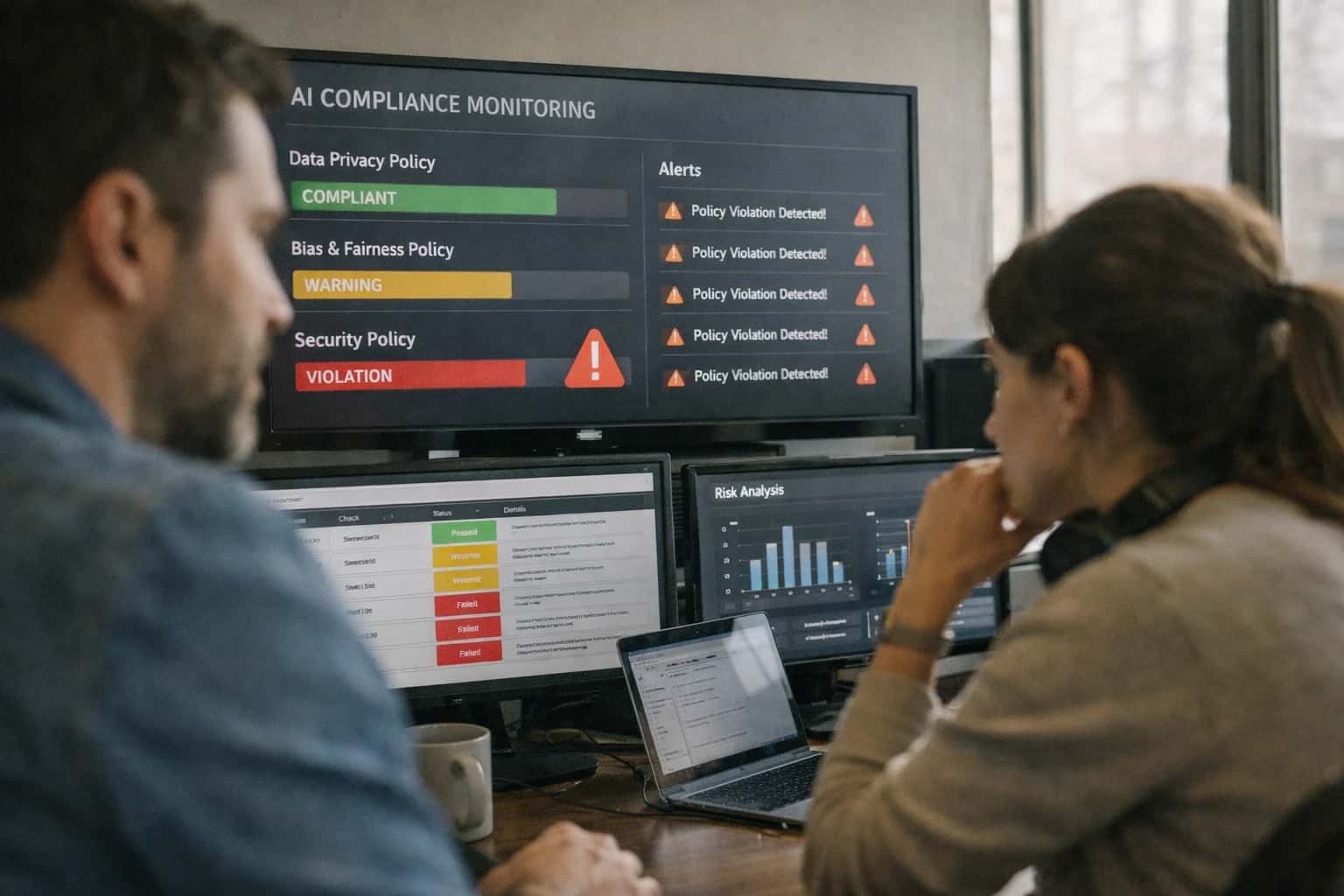
THE ANALYSIS
Introduction
A data-driven comparison of Densify's analytical workload profiling and IBM Turbonomic's real-time intent-driven resource management for AI infrastructure.
IBM Turbonomic takes a fundamentally different approach by using an intent-driven, real-time control loop. Instead of periodic analysis, it continuously generates and executes resourcing actions to maintain a desired state. This results in a system that can automatically scale GPU nodes up or down in milliseconds to match live inference demand spikes, a critical trade-off for latency-sensitive, customer-facing AI applications where waiting for an analytical report is not an option.
The key trade-off: If your priority is a deep, forensic understanding of workload patterns to make precise, long-term rightsizing decisions for stable training jobs, choose Densify. If you prioritize real-time, automated, non-disruptive scaling to match highly volatile inference workloads and maintain strict SLOs, choose IBM Turbonomic.
HEAD-TO-HEAD COMPARISON
Feature Comparison Matrix
Direct comparison of Densify's analytical workload profiling against IBM Turbonomic's real-time, intent-driven resource management for AI infrastructure.
| Metric | Densify | IBM Turbonomic |
|---|---|---|
Optimization Engine | Analytical (ML-driven analysis) | Real-time (Economic desirability engine) |
GPU Density Optimization | ||
Non-Disruptive Scaling Actions | ||
Policy Compliance Automation | ||
Typical Analysis Cycle | 24 hours (batch) | Sub-60 seconds (real-time) |
Primary Integration Target | VMware, Kubernetes | Full-stack (App, DB, Network, Storage) |
AI Training Workload Support | ||
AI Inference Workload Support |
Densify vs IBM Turbonomic
TL;DR Summary
A side-by-side look at the core strengths and trade-offs of analytical profiling versus real-time intent-driven resource management for AI workloads.
01
Densify: Analytical Depth & Rightsizing Precision
Deep workload profiling: Densify analyzes months of historical utilization data to recommend optimal CPU, memory, and GPU configurations. This matters for batch AI training and predictable inference where long-term efficiency gains outweigh real-time reactivity. It excels at identifying persistent over-provisioning that real-time tools miss.
02
Densify: Strategic Capacity Planning
What-if simulation engine: Models the impact of hardware refreshes, cloud migrations, and workload colocation before making changes. This matters for infrastructure architects planning GPU cluster expansions or evaluating cost vs. performance trade-offs for new model deployments.
03
IBM Turbonomic: Real-Time Intent-Driven Automation
Continuous resource arbitration: Makes placement, scaling, and capacity decisions every 10 seconds based on real-time demand. This matters for dynamic AI inference serving where traffic patterns fluctuate unpredictably and non-disruptive scaling is critical to maintain latency SLOs.
04
IBM Turbonomic: Policy Compliance & Governance
Business intent policies: Automatically enforces affinity, anti-affinity, and compliance rules during resource actions. This matters for regulated AI environments where data locality, GPU isolation, and audit trails are mandatory. It ensures performance while respecting operational guardrails.
CHOOSE YOUR PRIORITY
When to Choose Densify vs. IBM Turbonomic
Densify for Cost Optimization
Strengths: Densify excels in analytical workload profiling, providing deep visibility into resource waste and precise rightsizing recommendations. Its strength lies in identifying over-provisioned GPU instances and predicting the exact resource needs of AI inference workloads before deployment. The platform's 'what-if' analysis allows FinOps teams to model cost savings without risking performance.
Verdict: Choose Densify when your primary goal is reducing AI infrastructure spend through granular, data-driven rightsizing. It's ideal for teams that want to analyze historical utilization patterns and generate precise resource templates for Kubernetes pods and VM-based AI workloads.
IBM Turbonomic for Cost Optimization
Strengths: Turbonomic takes an intent-driven approach, continuously matching supply to demand in real time. For AI workloads, this means dynamically scaling GPU resources up or down based on live demand, not just historical analysis. Its strength is in automating cost-saving actions—like moving workloads to spot instances or consolidating idle containers—without human intervention.
Verdict: Choose Turbonomic when you need hands-free, continuous cost optimization that reacts to real-time AI workload fluctuations. It's better for environments with highly variable inference traffic where static rightsizing recommendations quickly become outdated.
HEAD-TO-HEAD COMPARISON
Cost and Licensing Comparison
Direct comparison of pricing models, licensing structures, and cost optimization approaches for AI workload resource matching.
| Metric | Densify | IBM Turbonomic |
|---|---|---|
Licensing Model | Per-VM/container instance; capacity-based tiers | Per-VM/container instance; concurrent virtual socket-based |
Pricing Transparency | Custom quote required; no public pricing | Custom quote required; no public pricing |
Savings Realization Model | Analytical recommendations with manual or scripted execution | Real-time automated execution with intent-driven resourcing |
GPU Optimization Support | GPU density analysis and workload profiling | GPU-aware scheduling and automated GPU rightsizing |
Free Tier / Trial | Proof-of-concept engagement | 30-day free trial available |
SaaS Deployment | ||
On-Premises Deployment | ||
Primary Cost Focus | Density optimization and long-term capacity planning | Real-time non-disruptive scaling and continuous placement |
Enabling Efficiency, Speed & Accuracy
Intelligent Analysis, Decision & Execution
We build AI systems for teams that need search across company data, workflow automation across tools, or AI features inside products and internal software.
Talk to Us
Search across company data
Give teams answers from docs, tickets, runbooks, and product data with sources and permissions.
Useful when people spend too long searching or get different answers from different systems.
Enterprise searchRAGPermissions
Read more
Automate internal workflows
Use AI to route work, draft outputs, trigger actions, and keep approvals and logs in place.
Useful when repetitive work moves across multiple tools and teams.
AI agentsWorkflow automationGovernance
Read more
Add AI to products and internal tools
Build assistants, guided actions, or decision support into the software your team or customers already use.
Useful when AI needs to be part of the product, not a separate tool.
AI integrationDecision supportModel routing
Read moreRESOURCE MATCHING MECHANICS
Technical Deep Dive: GPU Optimization Approaches
A granular comparison of how Densify and IBM Turbonomic approach the challenge of matching AI workloads to the right GPU resources, focusing on the underlying algorithms, data inputs, and scaling philosophies.
Densify uses an analytical, simulation-based engine, while Turbonomic relies on a real-time, intent-driven AI decision engine. Densify performs deep workload profiling over weeks, analyzing historical utilization patterns to recommend a stable, optimal state. In contrast, Turbonomic continuously generates and executes resourcing actions every 10 seconds based on live demand, treating the environment as a dynamic supply chain. For stable AI training jobs, Densify's long-term analysis is ideal; for volatile inference workloads, Turbonomic's real-time adjustments prevent micro-bursts of latency.
THE ANALYSIS
Verdict: Choosing the Right AI Workload Resource Matching Tool
A data-driven breakdown of Densify's analytical profiling versus IBM Turbonomic's real-time intent-driven approach to help CTOs select the optimal resource matching engine for AI workloads.
Densify excels at deep, analytical workload profiling and initial placement because it builds a granular model of application demand patterns over time. For example, its analysis engine can identify that a specific inference pod requires a consistent 24GB of GPU memory but only bursts to 80% compute utilization for 15 minutes every hour, recommending a precise, cost-optimized instance type before deployment. This results in highly accurate initial sizing and a strong 'shift-left' capability for infrastructure planning, reducing overprovisioning by an average of 30% according to their case studies.
IBM Turbonomic takes a fundamentally different approach by using an intent-driven, real-time control loop. Instead of just profiling, it continuously analyzes the supply and demand of the entire environment—including GPU, CPU, memory, and network—and executes non-disruptive resourcing actions to maintain a desired state. This results in a dynamic trade-off: while Densify provides a perfect initial blueprint, Turbonomic acts as a 24/7 autopilot, automatically moving AI training jobs to underutilized GPU nodes or scaling inference replicas to prevent latency spikes caused by resource contention, ensuring policy compliance without human intervention.
The key trade-off: If your priority is precise, analytical capacity planning and 'rightsizing before deployment' for predictable AI inference workloads, choose Densify. Its strength lies in preventing waste from day one. If you prioritize real-time, automated remediation and continuous optimization for dynamic, multi-tenant AI training and inference environments where demand is unpredictable, choose IBM Turbonomic. Its value is in assuring performance and efficiency at every moment, not just at the point of provisioning.

About the author
Prasad Kumkar
CEO & MD, Inference Systems
Prasad Kumkar is the CEO & MD of Inference Systems and writes about AI systems architecture, LLM infrastructure, model serving, evaluation, and production deployment. Over 5+ years, he has worked across computer vision models, L5 autonomous vehicle systems, and LLM research, with a focus on taking complex AI ideas into real-world engineering systems.
His work and writing cover AI systems, large language models, AI agents, multimodal systems, autonomous systems, inference optimization, RAG, evaluation, and production AI engineering.
LinkedIn
Limited slotsGet a Free AI Consultation
Partnered with leading AI, data, and software stack.





How We Work
Custom AI workflows for your Business
One-fit-all AI don't work for modern businesses. At Inferensys, we aim to understand your business & custom requirements; which we use to define most efficient agentic workflows, the data, and the tools for your business.
01
Review the use case
We understand the task, the users, and where AI can actually help.
Read more02
Pick the right approach
We define what needs search, automation, or product integration.
Read more03
Build the first useful version
We implement the part that proves the value first.
Read more04
Improve from there
We add the checks and visibility needed to keep it useful.
Read moreThe first call is a practical review of your use case and the right next step.
Talk to Us