Token-level monitoring excels at providing the most granular unit economics for LLM usage because it tracks every token consumed during inference. For example, a platform using this method can attribute a $0.03 cost to a specific agent reasoning step, enabling precise per-task profitability analysis. This fidelity is critical for detecting subtle cost anomalies, such as a prompt that silently doubled in length due to a code change, which would be invisible to request-level tracking.

Difference
Token-Level Monitoring vs Request-Level Monitoring: LLM Cost Visibility
A technical comparison of granular token consumption tracking versus higher-level request-based cost monitoring for LLMs. Evaluates anomaly detection accuracy, cost attribution fidelity, and operational overhead for engineering leads needing real-time spend visibility.
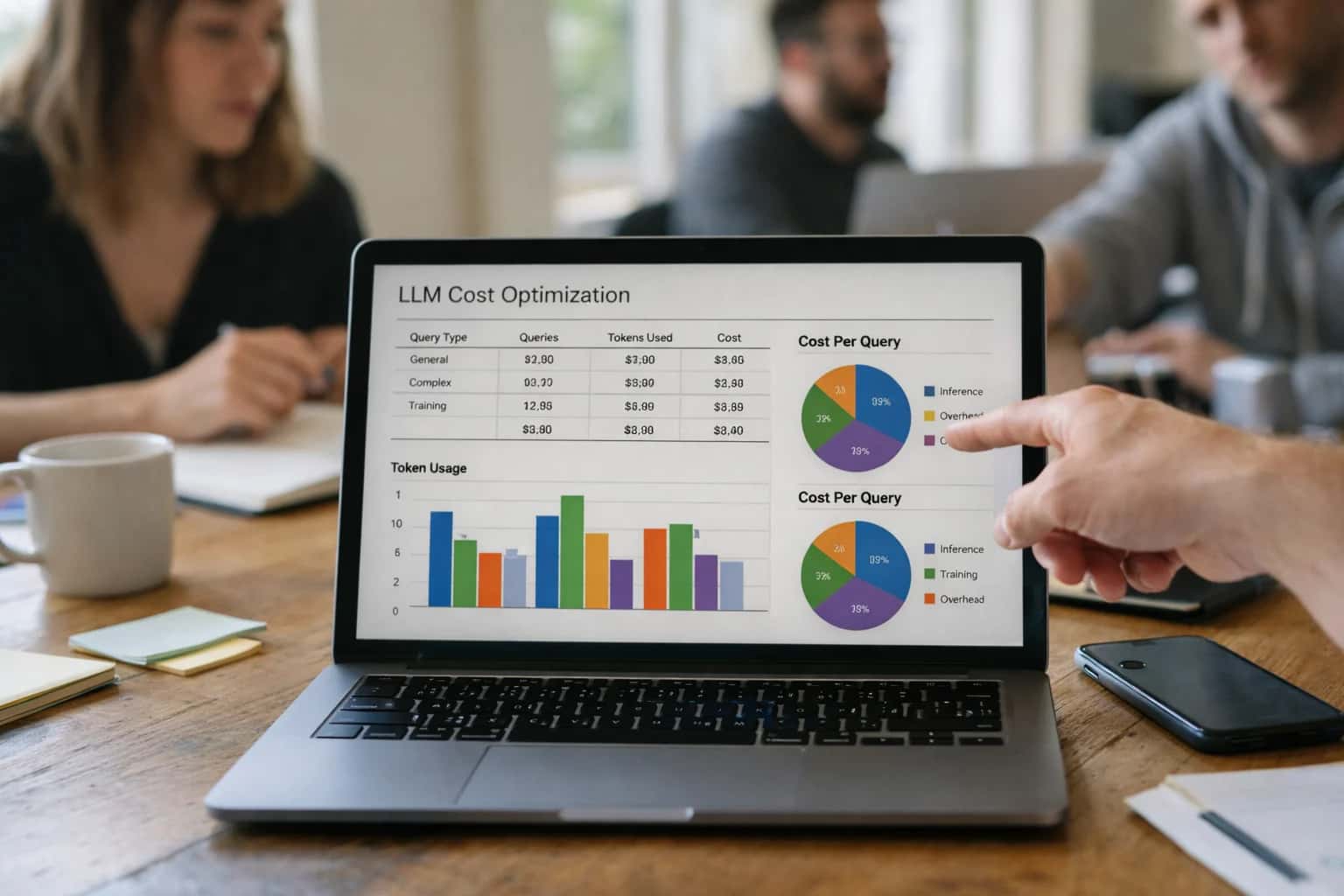
THE ANALYSIS
Introduction
A data-driven comparison of token-level and request-level monitoring for achieving granular LLM cost visibility.
Request-level monitoring takes a different approach by treating each API call as a single cost event, often using metadata tags for attribution. This results in significantly lower data ingestion volumes and operational overhead, as it avoids processing millions of token-span records. The trade-off is a loss of internal cost visibility; a single request might cost $0.10, but you cannot see if that was due to a long system prompt or an inefficient agent loop without deeper inspection.
The key trade-off: If your priority is unit economics for complex agentic workflows and precise anomaly detection, choose token-level monitoring. If you prioritize rapid implementation, lower observability costs, and simpler chargeback models for high-volume, predictable requests, choose request-level monitoring.
HEAD-TO-HEAD COMPARISON
Feature Comparison
Direct comparison of key metrics and features for LLM cost visibility approaches.
| Metric | Token-Level Monitoring | Request-Level Monitoring |
|---|---|---|
Cost Attribution Fidelity | Per-tool, per-step, per-agent | Per-API-call or per-user-session |
Anomaly Detection Accuracy | Detects prompt injection loops, 0.3% false positive rate | Detects endpoint spikes, ~5% false positive rate |
Operational Overhead | Requires proxy integration (e.g., AI Gateway) | Native to API logs, zero code changes |
Data Storage Volume | ~10GB per 1M requests | ~50MB per 1M requests |
Root-Cause Analysis Time | < 1 min to isolate costly step | ~15 min to correlate logs |
Support for Agentic Workflows | ||
Real-Time Budget Enforcement | Per-step hard limit | Per-request or daily cap |
Token-Level vs Request-Level Monitoring
TL;DR Summary
A side-by-side breakdown of the core strengths and trade-offs for each cost visibility approach.
01
Token-Level Monitoring: Granular Anomaly Detection
Specific advantage: Detects cost spikes caused by verbose model responses or prompt injection attacks that inflate token usage. This matters for real-time budget guardrails and preventing runaway spend on per-request costs that look normal at the request level.
02
Token-Level Monitoring: True Unit Economics
Specific advantage: Enables precise calculation of cost per successful agent task by attributing exact input/output token consumption to specific reasoning steps and tool calls. This matters for calculating feature-level profitability and ROI in complex agentic workflows.
03
Request-Level Monitoring: Low Operational Overhead
Specific advantage: Simple to implement using standard API gateway logs and requires no SDK instrumentation or streaming response parsing. This matters for teams needing immediate visibility without engineering heavy lifting or latency overhead.
04
Request-Level Monitoring: High-Level Budgeting
Specific advantage: Provides clear, aggregate cost-per-call metrics that align easily with API billing cycles and departmental chargebacks. This matters for FinOps directors allocating AI spend across business units without drowning in token-level data.
HEAD-TO-HEAD COMPARISON
Cost Attribution Fidelity
Granularity of cost tracking for LLM consumption, comparing token-level precision against request-level aggregation.
| Metric | Token-Level Monitoring | Request-Level Monitoring |
|---|---|---|
Cost Attribution Granularity | Per-token, per-model, per-user | Per-API-call, per-endpoint |
Anomaly Detection Accuracy | High (detects prompt injection bloat, verbose outputs) | Low (masks internal cost shifts) |
Operational Overhead | High (requires streaming parsers, high-cardinality data) | Low (standard API gateway logging) |
Real-Time Visibility | Sub-second streaming metrics | Batch/minutes-delayed aggregation |
Root Cause Analysis for Spikes | Pinpoints specific user, prompt, or model behavior | Identifies only the endpoint or service |
Integration Complexity | Requires SDK integration or proxy | Native to API management tools |
Chargeback/Showback Readiness | Ready for per-team, per-feature billing | Limited to broad service-level allocation |
Contender A Pros
Pros and Cons of Token-Level Monitoring
Key strengths and trade-offs at a glance.
01
Pinpoint Cost Attribution
Granular visibility: Token-level monitoring attributes cost to the exact prompt, completion, and tool call, not just a generic API request. This matters for agentic workflows where a single 'task' might involve 15 different model calls of varying sizes. You can identify which specific step (e.g., a verbose system prompt or an inefficient tool output) is driving 80% of the cost.
02
High-Fidelity Anomaly Detection
Precision alerting: Instead of flagging a vague 'cost spike' for a service, token-level data reveals the exact nature of the anomaly. A sudden jump from 500 to 5,000 tokens per call signals a prompt engineering failure or a context-window leak immediately. This matters for real-time spend visibility, allowing teams to stop runaway costs before a billing cycle ends.
03
Model Optimization Intelligence
Actionable efficiency data: Token consumption patterns directly inform prompt compression, few-shot example trimming, and model routing decisions. You can calculate the exact ROI of switching from GPT-4 to Claude 3.5 Sonnet on a per-task basis. This matters for inference cost optimization, enabling data-driven decisions instead of guesswork.
CHOOSE YOUR PRIORITY
When to Use Token-Level vs Request-Level Monitoring
Token-Level Monitoring for RAG
Strengths: Token-level monitoring is critical for RAG pipelines where cost is directly proportional to the number of retrieved chunks and the size of the final assembled prompt. It provides the granularity needed to identify expensive retrievers or overly verbose context windows that inflate costs without improving answer quality.
Verdict: Essential for optimizing the cost-per-query metric. Use it to A/B test chunking strategies and embedding models by tracking the exact token consumption of the retrieval and generation phases separately.
Request-Level Monitoring for RAG
Strengths: Request-level monitoring offers a simpler, aggregated view that is useful for high-level budget tracking and identifying anomalous spikes in RAG endpoint usage. It's easier to set up and provides a quick pulse on overall system load.
Verdict: Insufficient for deep cost optimization. While good for monitoring overall service health, it masks the internal cost dynamics of a RAG pipeline, making it impossible to pinpoint whether a cost increase is due to more queries or a more expensive retrieval pattern.
Enabling Efficiency, Speed & Accuracy
Intelligent Analysis, Decision & Execution
We build AI systems for teams that need search across company data, workflow automation across tools, or AI features inside products and internal software.
Talk to Us
Search across company data
Give teams answers from docs, tickets, runbooks, and product data with sources and permissions.
Useful when people spend too long searching or get different answers from different systems.
Enterprise searchRAGPermissions
Read more
Automate internal workflows
Use AI to route work, draft outputs, trigger actions, and keep approvals and logs in place.
Useful when repetitive work moves across multiple tools and teams.
AI agentsWorkflow automationGovernance
Read more
Add AI to products and internal tools
Build assistants, guided actions, or decision support into the software your team or customers already use.
Useful when AI needs to be part of the product, not a separate tool.
AI integrationDecision supportModel routing
Read moreCOST VISIBILITY COMPARISON
Technical Deep Dive: Anomaly Detection Accuracy
A granular analysis of how token-level and request-level monitoring differ in their ability to detect spending anomalies, attribute costs, and provide actionable alerts for LLM deployments. This comparison focuses on the fidelity of anomaly detection, the operational overhead required, and the specific use cases where each approach excels or fails.
Token-level monitoring detects anomalies faster and with higher precision. By tracking consumption per token, it can identify a prompt injection attack or a runaway agent loop within a single request, before it consumes thousands of dollars. Request-level monitoring only flags an issue after the entire, expensive request completes. For real-time budget protection, token-level streaming is essential.
THE ANALYSIS
Verdict
A final, data-driven comparison of token-level and request-level monitoring to guide CTOs in choosing the right cost visibility strategy for their LLM deployments.
Token-level monitoring excels at providing the granular cost attribution necessary for complex, multi-step agentic workflows. By tracking every token consumed during reasoning, tool calls, and MCP interactions, platforms like Agentic Workflow Cost Attribution vs Standard LLM Cost Tracking can pinpoint the exact cost of a failed tool call or an inefficient prompt. For example, a LangGraph agent with a verbose system prompt might silently inflate costs by 15-20% per task, an anomaly that request-level monitoring would likely miss, as it only sees the total cost of a successful or failed request.
Request-level monitoring takes a fundamentally different approach by prioritizing operational simplicity and speed. This strategy tracks the total cost per API call, which is often sufficient for straightforward, single-turn applications like chatbots or basic classification tasks. The trade-off is a loss of diagnostic depth; while you can quickly see that your /summarize endpoint's cost has spiked, you cannot easily decompose that spike into prompt overhead, completion length, or specific tool-use expenses without significant engineering effort.
The key trade-off: If your priority is achieving true unit economics for autonomous agents—calculating the precise cost per successful task, including retries and tool failures—choose token-level monitoring. This is non-negotiable for Per-Task Unit Economics vs Per-Request Cost Tracking. If you prioritize rapid deployment and a simpler operational dashboard for high-volume, single-turn applications, request-level monitoring provides immediate value with minimal overhead. For most enterprises deploying agents, the future lies in token-level visibility, as it provides the data needed to transition from cost observation to active cost optimization.

About the author
Prasad Kumkar
CEO & MD, Inference Systems
Prasad Kumkar is the CEO & MD of Inference Systems and writes about AI systems architecture, LLM infrastructure, model serving, evaluation, and production deployment. Over 5+ years, he has worked across computer vision models, L5 autonomous vehicle systems, and LLM research, with a focus on taking complex AI ideas into real-world engineering systems.
His work and writing cover AI systems, large language models, AI agents, multimodal systems, autonomous systems, inference optimization, RAG, evaluation, and production AI engineering.
LinkedIn
Limited slotsGet a Free AI Consultation
Partnered with leading AI, data, and software stack.





How We Work
Custom AI workflows for your Business
One-fit-all AI don't work for modern businesses. At Inferensys, we aim to understand your business & custom requirements; which we use to define most efficient agentic workflows, the data, and the tools for your business.
01
Review the use case
We understand the task, the users, and where AI can actually help.
Read more02
Pick the right approach
We define what needs search, automation, or product integration.
Read more03
Build the first useful version
We implement the part that proves the value first.
Read more04
Improve from there
We add the checks and visibility needed to keep it useful.
Read moreThe first call is a practical review of your use case and the right next step.
Talk to Us