
Differences
Prompt Compression Tools
Prompt Compression Tools
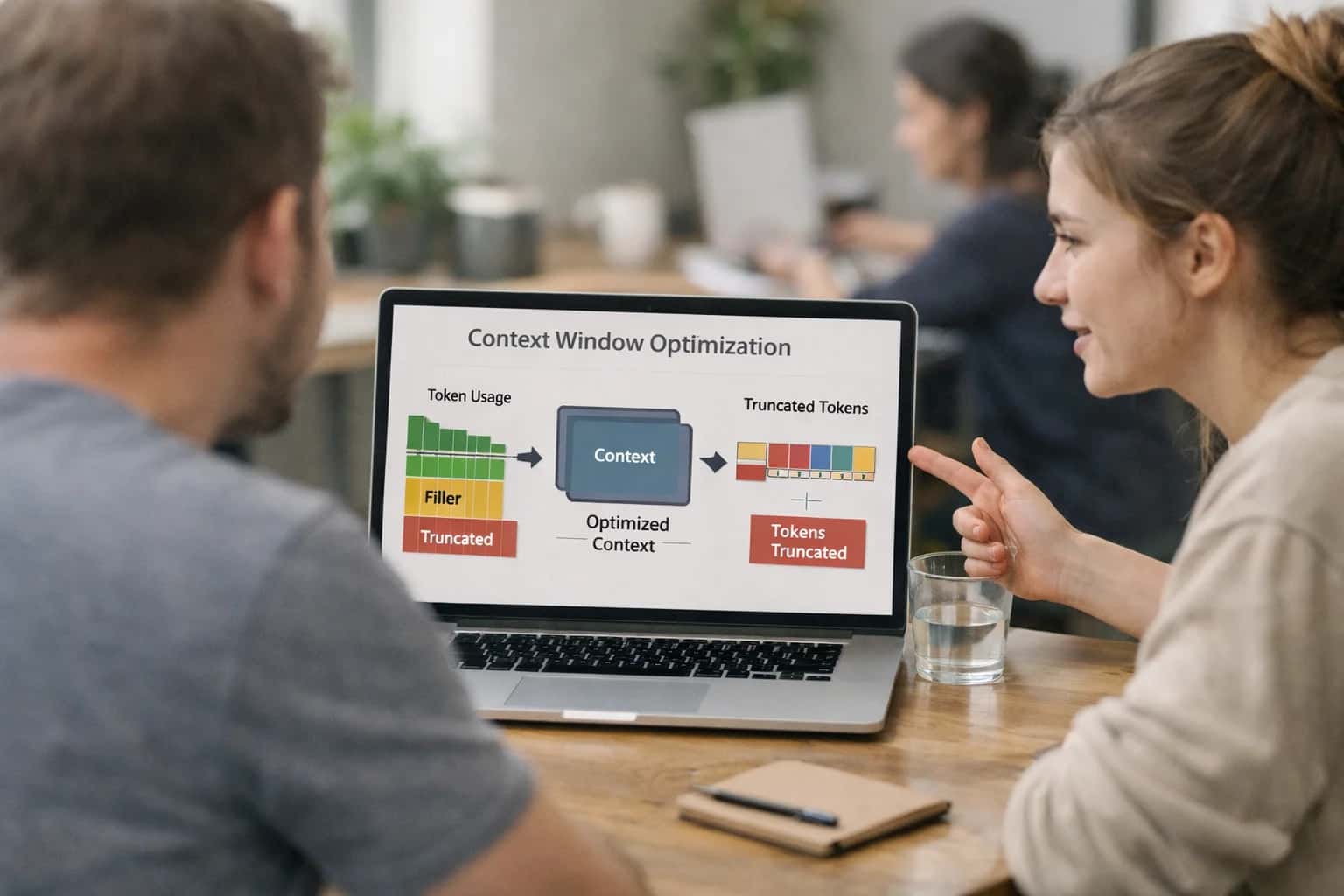
Comparisons related to context window optimization for SLMs with limited token capacity. Target: application developers maximizing SLM accuracy under tight context constraints.
LLMLingua vs Selective Context
Compares Microsoft's LLMLingua token-pruning framework against Selective Context's entropy-based approach for compressing prompts. Focuses on which method better preserves instruction-following accuracy for SLMs with tight context windows, evaluating compression ratios and downstream task performance.
Anthropic Prompt Caching vs Google Context Caching
Evaluates the two major cloud provider caching solutions for reducing latency and cost on repeated prompt prefixes. Compares cache-hit granularity, TTL management, and cost-per-token savings for applications routing between SLMs and foundation models.
Semantic Compression vs Lexical Compression
Distinguishes between meaning-based compression that rewrites prompts and token-level pruning that removes words. Analyzes trade-offs in information fidelity, latency overhead, and suitability for different SLM architectures.
LongLLMLingua vs RECOMP
Compares two contrastive compression techniques: LongLLMLingua's question-aware coarse-to-fine pruning against RECOMP's extractive and abstractive compression models. Focuses on performance with long-context documents exceeding standard SLM token limits.
ICAE vs AutoCompressors
Evaluates In-context Autoencoders against AutoCompressors for generating soft, compressed summary tokens. Compares the training overhead, inference speed, and the ability of each to condense long contexts into fixed-size representations for SLMs.
Gist Tokens vs Summarization-based Compression
Compares the use of learned 'gist' tokens for implicit context compression against traditional extractive/abstractive summarization pipelines. Analyzes which method better retains nuanced details critical for multi-hop reasoning under tight token budgets.
Nugget-based Compression vs Entropy-based Token Pruning
Contrasts two distinct pruning philosophies: selecting high-value semantic 'nuggets' versus removing low-entropy, predictable tokens. Evaluates the impact on factual recall and hallucination rates in compressed prompts for SLMs.
Microsoft LLaMA-Reviewer vs NVIDIA NeMo Guardrails Compression
Compares Microsoft's LLaMA-Reviewer for context compression against NVIDIA's NeMo Guardrails for input/output moderation and compaction. Focuses on the dual challenge of reducing token counts while enforcing safety and topical constraints.
LLMLingua-2 vs Selective Context
Evaluates the next-generation LLMLingua-2 against Selective Context for task-agnostic prompt compression. Compares the speed of the distillation-based approach in LLMLingua-2 against the statistical self-information metrics used by Selective Context.
Prompt Compression via Reinforcement Learning vs Supervised Fine-Tuning
Analyzes the training paradigms behind adaptive compressors. Compares RL-tuned compressors that optimize for end-task reward against SFT-based compressors trained on human demonstrations of good summaries, focusing on generalization to unseen SLM tasks.
Partnered with leading AI, data, and software stack.





How We Work
Custom AI workflows for your Business
One-fit-all AI don't work for modern businesses. At Inferensys, we aim to understand your business & custom requirements; which we use to define most efficient agentic workflows, the data, and the tools for your business.
01
Review the use case
We understand the task, the users, and where AI can actually help.
Read more02
Pick the right approach
We define what needs search, automation, or product integration.
Read more03
Build the first useful version
We implement the part that proves the value first.
Read more04
Improve from there
We add the checks and visibility needed to keep it useful.
Read moreThe first call is a practical review of your use case and the right next step.
Talk to Us