
Differences
Hybrid Cloud Inference Routing
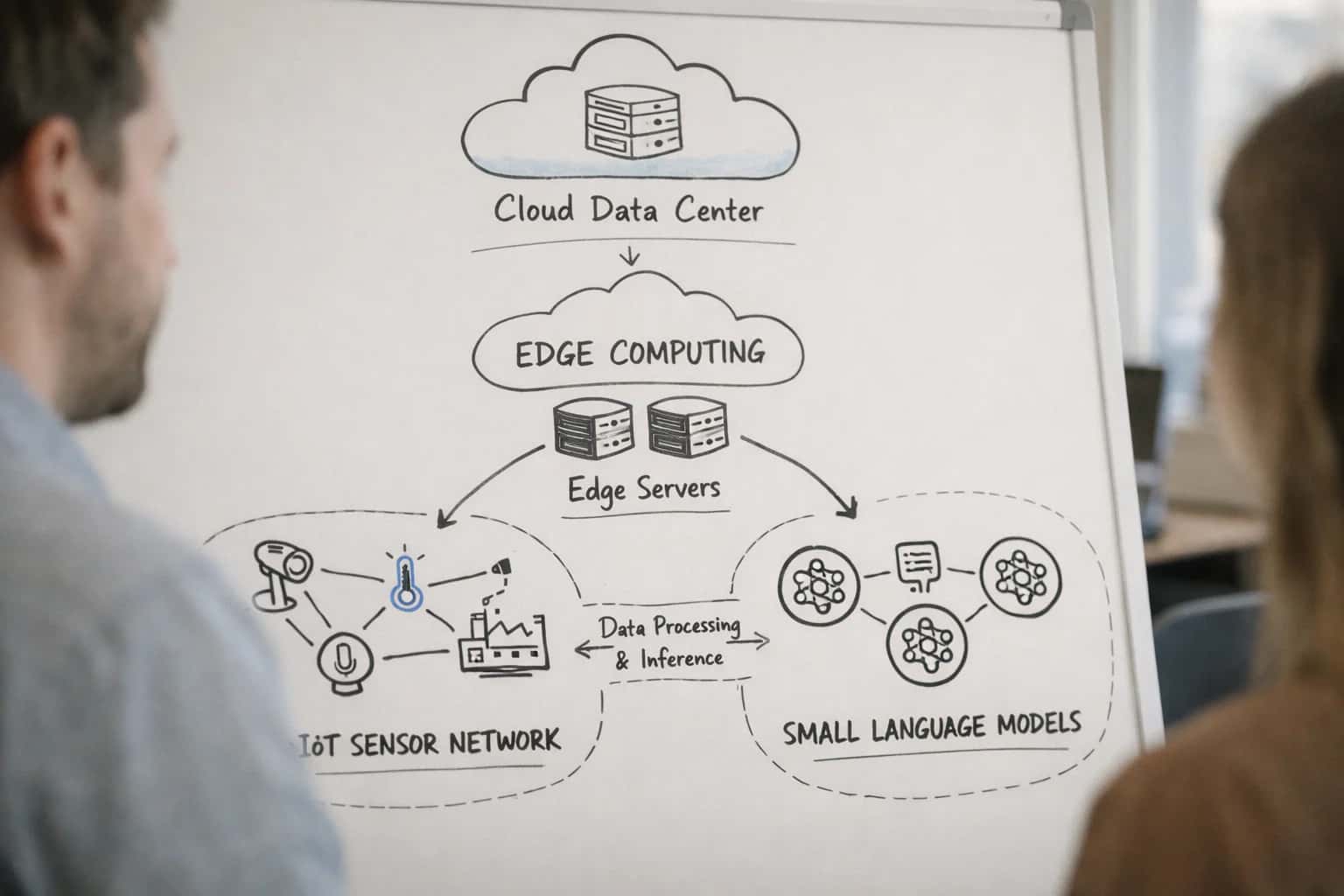
Hybrid Cloud Inference Routing
Comparisons related to multi-region deployment, cold start mitigation, and edge-to-cloud inference orchestration. Target: cloud architects designing globally distributed inference topologies.
AWS Inferentia vs NVIDIA Triton Inference Server
Compares AWS's custom inference chip ecosystem against NVIDIA's universal model-serving framework for multi-region deployment. Focuses on hardware lock-in, throughput-per-dollar, and cold start latency for globally distributed inference topologies.
KubeEdge vs OpenYurt: Edge Inference Orchestration
Compares two CNCF projects extending Kubernetes to the edge for AI inference. Focuses on node autonomy during cloud disconnection, lightweight footprint, and device management for distributed inference workloads.
Cloudflare Workers AI vs Fastly Compute@Edge
Compares edge compute platforms for running inference at the CDN layer. Focuses on global Points of Presence (PoPs), cold start mitigation, WebAssembly support, and latency for user-facing AI applications.
OctoML vs Baseten: Multi-Cloud Model Routing
Compares platforms that abstract away cloud GPU provisioning and optimize model placement. Focuses on cost-aware routing, hardware selection automation, and cold start performance across AWS, GCP, and Azure.
Azure Arc vs AWS Outposts: Hybrid Inference Management
Compares hybrid cloud solutions for running inference on-premises with centralized cloud control. Focuses on data residency enforcement, management plane latency, and integration with native AI services.
Lambda Labs GPU Cloud vs CoreWeave: Cold Start Performance
Compares GPU-specialized cloud providers for inference hosting. Focuses on bare-metal provisioning speed, reserved instance economics, and scaling latency for bursty inference traffic.
Modal vs Banana Dev: Serverless GPU Cold Start
Compares serverless GPU platforms designed for AI inference. Focuses on container snapshotting, scale-to-zero latency, and developer experience for deploying custom models without managing infrastructure.
Seldon Core vs KServe: Hybrid Cloud Model Serving
Compares Kubernetes-native model serving frameworks for multi-cloud deployments. Focuses on inference graph complexity, canary rollout support, and explainer integration for production-grade serving.
Fly.io vs Railway: Global Container Scheduling
Compares platforms that turn containers into globally distributed applications. Focuses on edge routing, region-aware scheduling, and suitability for latency-sensitive inference APIs.
K3s vs MicroK8s: Lightweight Kubernetes for Edge
Compares minimal Kubernetes distributions for resource-constrained edge inference nodes. Focuses on binary size, add-on simplicity, and air-gapped deployment capabilities.
Karpenter vs Cluster Autoscaler: Inference Node Provisioning
Compares Kubernetes node autoscaling tools for dynamic inference workloads. Focuses on provisioning speed, bin-packing efficiency, and GPU-aware scheduling for minimizing cold start impact.
Crossplane vs Terraform: Infrastructure-as-Code for Inference
Compares IaC tools for managing multi-cloud inference infrastructure. Focuses on control plane vs. CLI-driven workflows, drift detection, and composability for GPU cluster management.
Istio vs Linkerd: Service Mesh for Inference Microservices
Compares service mesh solutions for securing and observing inference traffic. Focuses on sidecar resource overhead, latency addition, and mTLS performance for high-throughput model serving.
Temporal vs AWS Step Functions: Durable Inference Workflows
Compares durable execution engines for long-running, multi-step inference pipelines. Focuses on retry logic, state management, and SDK flexibility for orchestrating complex model chains.
CAST AI vs Spot by NetApp: Automated Inference Optimization
Compares platforms that automate cloud infrastructure optimization for Kubernetes. Focuses on spot instance fallback, bin packing, and cost reduction for GPU-intensive inference clusters.
Partnered with leading AI, data, and software stack.





How We Work
Custom AI workflows for your Business
One-fit-all AI don't work for modern businesses. At Inferensys, we aim to understand your business & custom requirements; which we use to define most efficient agentic workflows, the data, and the tools for your business.
01
Review the use case
We understand the task, the users, and where AI can actually help.
Read more02
Pick the right approach
We define what needs search, automation, or product integration.
Read more03
Build the first useful version
We implement the part that proves the value first.
Read more04
Improve from there
We add the checks and visibility needed to keep it useful.
Read moreThe first call is a practical review of your use case and the right next step.
Talk to Us