Traditional Audit MRV excels at establishing institutional trust through accredited third-party bodies and manual verification processes. This approach relies on decades of established protocols from registries like Verra's VCS and the Gold Standard, where trained auditors physically validate data, ensuring a human-verified chain of custody. For example, a typical audit cycle can take 12-24 months and cost upwards of $50,000, creating a high barrier to entry but a widely accepted standard of credibility for corporate buyers.

Difference
Blockchain MRV vs Traditional Audit MRV: Carbon Credit Integrity
A technical comparison of blockchain-based digital Measurement, Reporting, and Verification (dMRV) against conventional third-party auditing for soil carbon credits. We evaluate transparency, cost reduction, issuance speed, and trust mechanisms to help carbon program managers and sustainability officers choose the right verification infrastructure.
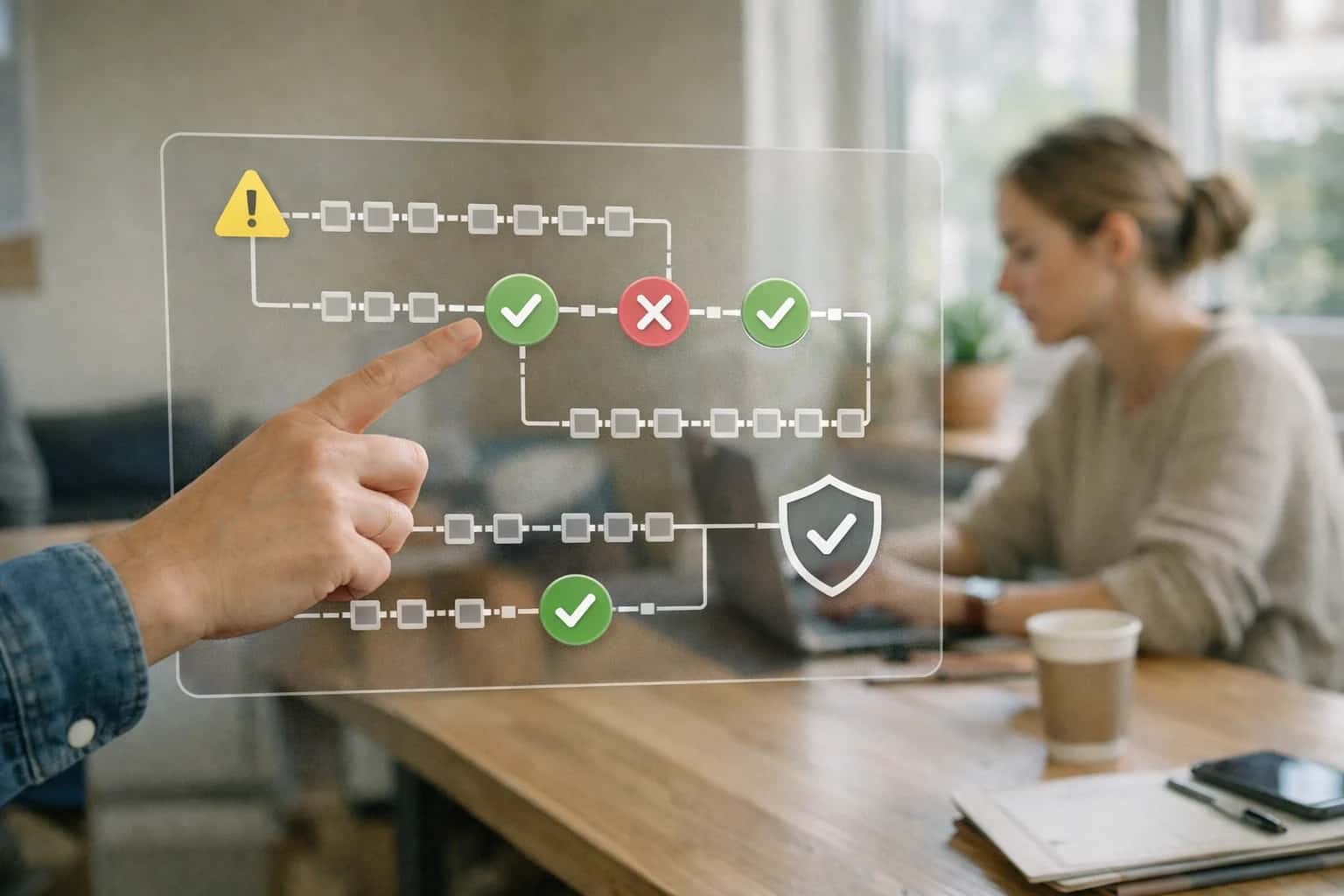
THE ANALYSIS
Introduction
A foundational comparison of two distinct verification paradigms for soil carbon credits, framing the core trade-off between established institutional trust and emerging algorithmic transparency.
Blockchain MRV takes a fundamentally different approach by replacing manual audits with cryptographically secure, automated data streams from IoT sensors, satellites, and digital farm management systems. This results in near real-time credit issuance and a potential 90% reduction in verification costs, but shifts the trust anchor from a human institution to the integrity of the code and hardware oracles. The key trade-off is speed and cost-efficiency against the market's nascent regulatory acceptance of algorithmic verification.
The key trade-off: If your priority is immediate market access and unquestioned buyer acceptance under current compliance standards, choose Traditional Audit MRV. If you prioritize scalability, cost reduction, and building a transparent, tamper-proof data pipeline for the future of digital carbon markets, choose Blockchain MRV. Consider a hybrid approach where blockchain systems provide immutable data trails that streamline, but don't entirely replace, the human auditor's judgment.
HEAD-TO-HEAD COMPARISON
Head-to-Head Feature Comparison
Direct comparison of key metrics and features for carbon credit integrity.
| Metric | Blockchain Digital MRV | Traditional Audit MRV |
|---|---|---|
Time to Credit Issuance | < 30 days | 6-24 months |
Verification Cost per Credit | $0.50 - $2.00 | $5.00 - $15.00 |
Data Transparency | Immutable, real-time ledger | Static, periodic PDF reports |
Tamper Resistance | Cryptographic proofs | Chain-of-custody documentation |
Remote Sensing Integration | ||
Auditor Dependency | Low (algorithmic consensus) | High (manual field visits) |
Scalability (Projects/Year) | 10,000+ | 100-500 |
Blockchain MRV vs Traditional Audit MRV
TL;DR Summary
Key strengths and trade-offs at a glance for ensuring carbon credit integrity.
01
Blockchain MRV: Speed & Cost Efficiency
Issuance time reduced by up to 90%: Digital MRV (dMRV) systems using IoT and satellite data can automate verification, slashing credit issuance timelines from months to days. This matters for project developers needing faster revenue recognition and lower transaction costs, making smaller projects economically viable.
02
Blockchain MRV: Radical Transparency
Immutable audit trail: Every data point, from a soil sensor reading to a model output, is cryptographically hashed on-chain. This creates a single source of truth, eliminating double-counting and enhancing trust for credit buyers who demand proof of environmental integrity.
03
Traditional Audit MRV: Established Trust & Acceptance
Registry-approved methodologies: Traditional audits by accredited Validation/Verification Bodies (VVBs) are the bedrock of existing carbon standards like Verra VCS and Gold Standard. This matters for accessing the largest compliance and voluntary markets where buyers and regulators require familiar, defensible verification processes.
04
Traditional Audit MRV: Deep Contextual Rigor
Human expert judgment: A third-party auditor can assess complex, non-standard situations—like an unexpected pest outbreak's impact on sequestration—that a purely digital model might misinterpret. This provides a qualitative safety net for credit quality, crucial for high-value, long-term permanence contracts.
HEAD-TO-HEAD COMPARISON
Cost and Speed Analysis
Direct comparison of key economic and temporal metrics for carbon credit issuance.
| Metric | Blockchain Digital MRV | Traditional Audit MRV |
|---|---|---|
Time to Credit Issuance | 1-4 weeks | 6-18 months |
Avg. Cost Per Credit Issued | $0.50 - $1.50 | $5.00 - $15.00 |
Audit Cycle Frequency | Continuous (per-block) | Annual/Bi-annual |
Data Verification Latency | < 1 hour | 3-6 months |
Transparency of Methodology | Open-source smart contracts | Proprietary auditor reports |
Dispute Resolution Time | ~48 hours | ~90 days |
Contender A Pros
Blockchain dMRV: Pros and Cons
Key strengths and trade-offs at a glance.
01
Immutable Audit Trail & Transparency
Specific advantage: Blockchain dMRV systems like those built on the Regen Network or Nori create a cryptographically secure, tamper-proof record of every data point from IoT sensors and satellite imagery. This matters for carbon credit integrity because it eliminates the risk of double-counting credits and provides real-time public verification. Unlike traditional audits, which rely on periodic sampling and manual checks, blockchain creates a continuous chain of custody from the farm to the registry, reducing the potential for fraud and increasing buyer trust in the quality of the credits.
02
Radical Cost Reduction & Speed of Issuance
Specific advantage: By automating verification through smart contracts and direct data feeds, blockchain dMRV can reduce the cost of issuing a carbon credit by up to 90% and compress the issuance timeline from 12-24 months to a matter of weeks. This matters for smallholder farmers and project developers who are often priced out of the traditional audit market, where a single audit can cost $30,000-$100,000. Platforms like Shamba Network leverage this to make regenerative agriculture projects economically viable at a much smaller scale, unlocking a new class of supply.
03
Automated, Real-Time Verification
Specific advantage: Digital MRV systems integrate directly with remote sensing data (e.g., Sentinel-2, Landsat 9) and on-the-ground IoT devices to continuously monitor and verify practice adoption and carbon outcomes. This matters for dynamic carbon accounting because it moves beyond static, backward-looking audits to a model where credits can be issued based on verified outcomes as they happen. This creates a more liquid and responsive carbon market, where buyers can purchase credits with the confidence that the sequestration has already been algorithmically confirmed, not just promised.
Enabling Efficiency, Speed & Accuracy
Intelligent Analysis, Decision & Execution
We build AI systems for teams that need search across company data, workflow automation across tools, or AI features inside products and internal software.
Talk to Us
Search across company data
Give teams answers from docs, tickets, runbooks, and product data with sources and permissions.
Useful when people spend too long searching or get different answers from different systems.
Enterprise searchRAGPermissions
Read more
Automate internal workflows
Use AI to route work, draft outputs, trigger actions, and keep approvals and logs in place.
Useful when repetitive work moves across multiple tools and teams.
AI agentsWorkflow automationGovernance
Read more
Add AI to products and internal tools
Build assistants, guided actions, or decision support into the software your team or customers already use.
Useful when AI needs to be part of the product, not a separate tool.
AI integrationDecision supportModel routing
Read moreCHOOSE YOUR PRIORITY
When to Choose Which
Blockchain MRV for Program Managers
Verdict: Choose this when speed of credit issuance and market liquidity are your primary KPIs. Blockchain MRV reduces the verification cycle from 6-12 months to near real-time, allowing you to scale project enrollment without a proportional increase in administrative overhead. The immutable audit trail simplifies stakeholder reporting and attracts tech-forward corporate buyers willing to pay a premium for 'digital-first' credits.
Traditional Audit MRV for Program Managers
Verdict: Choose this when your buyer base demands established, compliance-grade assurance. Traditional audits, conducted by accredited Validation/Verification Bodies (VVBs) under standards like Verra VCS or Gold Standard, carry institutional trust that blockchain systems have not yet universally earned. If your credits are destined for regulated markets or conservative corporate procurement policies, the familiarity of a human-signed audit report reduces transaction friction.
THE ANALYSIS
Verdict
A data-driven breakdown of blockchain-based digital MRV versus traditional third-party auditing for carbon credit integrity, helping CTOs and sustainability officers choose the right verification architecture.
Blockchain-based digital MRV excels at reducing the time-to-credit issuance and per-credit verification costs through automation and immutable data trails. For example, platforms integrating satellite imagery with on-chain verification can reduce the verification cycle from 12-18 months to under 90 days, while cutting audit costs from a typical $0.30-$0.50 per credit to an estimated $0.05-$0.15. This speed and cost profile makes it ideal for high-volume, lower-complexity projects where continuous monitoring data streams are available.
Traditional third-party auditing takes a fundamentally different approach by prioritizing methodological rigor and institutional trust. Accredited auditors under bodies like Verra VCS or the Gold Standard provide a human-expert review layer that is currently unmatched for complex, context-dependent assessments—such as evaluating the additionality of a novel regenerative practice or verifying baseline scenarios in heterogeneous landscapes. This results in higher buyer confidence and premium pricing, with audited credits often commanding 20-40% price premiums, but at the cost of slower issuance and higher transaction costs.
The key trade-off centers on trust architecture versus efficiency. Blockchain MRV shifts trust from institutional reputation to cryptographic proof and algorithmic consistency, which dramatically lowers costs and accelerates liquidity but introduces smart contract risk and oracle dependency. Traditional audits provide defensible, court-tested verification suitable for premium buyers and regulatory compliance, but create a bottleneck that limits market scale. If your priority is scaling a high-integrity, low-cost credit pipeline for corporate Scope 3 offsetting, choose blockchain MRV. If you prioritize maximum buyer confidence, regulatory defensibility, and premium pricing for complex projects, choose traditional audit MRV.

About the author
Prasad Kumkar
CEO & MD, Inference Systems
Prasad Kumkar is the CEO & MD of Inference Systems and writes about AI systems architecture, LLM infrastructure, model serving, evaluation, and production deployment. Over 5+ years, he has worked across computer vision models, L5 autonomous vehicle systems, and LLM research, with a focus on taking complex AI ideas into real-world engineering systems.
His work and writing cover AI systems, large language models, AI agents, multimodal systems, autonomous systems, inference optimization, RAG, evaluation, and production AI engineering.
LinkedIn
Limited slotsGet a Free AI Consultation
Partnered with leading AI, data, and software stack.





How We Work
Custom AI workflows for your Business
One-fit-all AI don't work for modern businesses. At Inferensys, we aim to understand your business & custom requirements; which we use to define most efficient agentic workflows, the data, and the tools for your business.
01
Review the use case
We understand the task, the users, and where AI can actually help.
Read more02
Pick the right approach
We define what needs search, automation, or product integration.
Read more03
Build the first useful version
We implement the part that proves the value first.
Read more04
Improve from there
We add the checks and visibility needed to keep it useful.
Read moreThe first call is a practical review of your use case and the right next step.
Talk to Us