Cattle Care AI excels at rapid, low-friction deployment by leveraging a farm's existing security camera infrastructure. This approach eliminates the capital expenditure of new hardware, reducing the initial investment to a software subscription. For example, dairies already equipped with IP cameras can be operational within days, immediately analyzing behavior patterns like feeding, standing, and mounting. The trade-off is a dependency on camera placement and resolution quality, which may not be optimized for the granular detail required for early symptom detection, such as subtle changes in ocular or nasal discharge.

Difference
Cattle Care AI vs VetGuardian
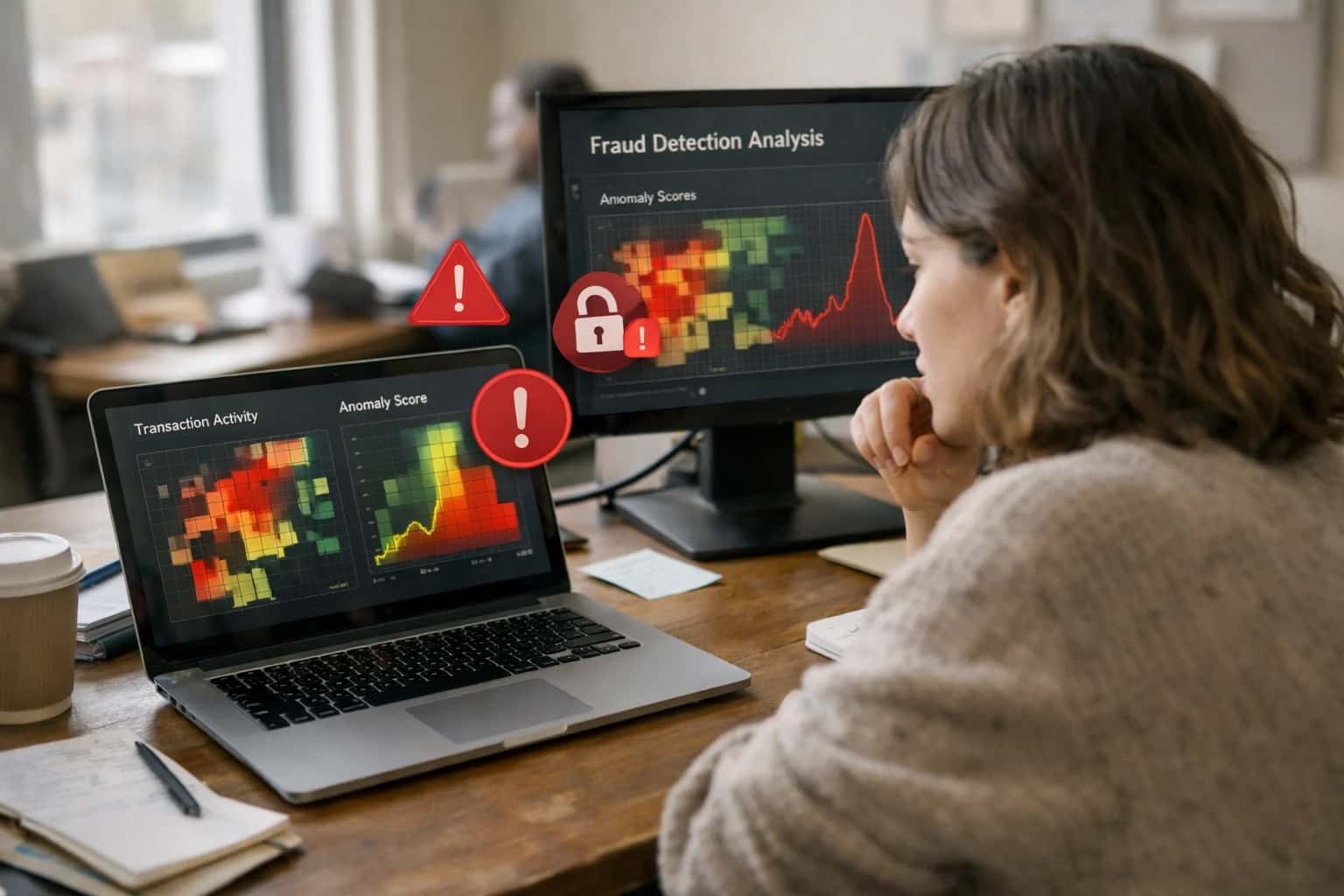
A technical comparison of video analytics for remote veterinary oversight. Cattle Care AI leverages existing cameras for behavior analysis, while VetGuardian uses a zero-contact vital sign system. We compare installation complexity, alert fatigue, and early illness detection capabilities.
THE ANALYSIS
Introduction
A direct comparison of video analytics approaches for remote veterinary oversight, contrasting existing camera utilization with specialized vital sign monitoring.
VetGuardian takes a fundamentally different approach by deploying a specialized, zero-contact camera system designed specifically for vital sign extraction. This results in a higher fidelity of health data, including remote temperature sensing, heart rate, and respiration rate, which are critical for early disease detection. The trade-off is a more complex installation process and higher upfront hardware costs, as it requires dedicated units per pen or chute. This system prioritizes clinical-grade data over broad behavioral observation, making it a telemedicine tool rather than a general monitoring platform.
The key trade-off: If your priority is minimizing installation complexity and hardware costs while gaining broad behavioral insights from existing assets, choose Cattle Care AI. If you prioritize clinical-grade, individual vital sign data for early disease intervention and are willing to invest in dedicated hardware, choose VetGuardian. The decision hinges on whether you need a scalable behavioral filter or a precision tele-veterinary diagnostic instrument.
HEAD-TO-HEAD COMPARISON
Feature Comparison Matrix
Direct comparison of key metrics and features for remote veterinary oversight platforms.
| Metric | Cattle Care AI | VetGuardian |
|---|---|---|
Hardware Requirement | Existing Security Cameras | Proprietary Camera System |
Primary Detection Method | Behavioral Anomaly & Posture | Vital Sign & Thermal Scan |
Installation Complexity | Low (Software-only) | High (Hardware deployment) |
Alert Fatigue Mitigation | AI Event Filtering | Threshold-based Alerts |
Subtle Illness Detection | ||
Real-time Vital Sign Monitoring | ||
Typical Deployment Cost | $5-15/head/year | $30-50/head/year |
Cattle Care AI vs VetGuardian
TL;DR Summary
A direct comparison of video analytics for remote veterinary oversight. Cattle Care AI leverages existing infrastructure for behavioral anomaly detection, while VetGuardian provides a specialized hardware ecosystem for vital sign monitoring. Choose based on your installation tolerance and diagnostic depth requirements.
01
Choose Cattle Care AI for Zero-Touch Deployment
Leverages existing IP cameras: No hardware swap-out required. This matters for large dairies or feedlots with 50+ cameras already installed, avoiding a $15,000-$40,000 hardware refresh. Trade-off: Relies on visual behavioral cues (feeding, gait) rather than direct physiological data, which can delay detection of subclinical illness by 12-24 hours compared to vital sign monitoring.
$0
Hardware Cost
Visual Only
Diagnostic Layer
02
Choose VetGuardian for Physiological Precision
Specialized infrared/thermal camera system: Captures heart rate, respiration rate, and temperature without contact. This matters for early detection of Bovine Respiratory Disease (BRD) or mastitis, where fever and elevated vitals precede behavioral changes. Trade-off: Requires professional installation of proprietary cameras ($800-$1,200 per unit) and a dedicated NVR, creating a higher barrier to entry for operations not already undergoing a tech refresh.
$800+
Per-Unit Cost
Vital Signs
Diagnostic Layer
03
Cattle Care AI: Lower Alert Fatigue
Behavioral baselining over 14 days: Reduces false positives by learning individual animal patterns before alerting. This matters for operations with lean labor where every alert must be actionable. Trade-off: The 14-day learning period means no protection for transient cattle in sale barns or short-term holding. Alert accuracy drops to ~70% for animals on-site less than 2 weeks.
14 Days
Learning Period
~92%
Alert Accuracy (Resident)
04
VetGuardian: Immediate Time-to-Value
Day-1 vital sign monitoring: No learning period required. Physiological thresholds (e.g., temp > 103°F) trigger alerts immediately. This matters for feedlot receiving operations where BRD risk is highest in the first 72 hours post-arrival. Trade-off: Higher false positive rate from environmental factors (sun load, dust) that can skew thermal readings, requiring manual verification of ~15% of alerts.
Day 1
Time-to-Alert
~85%
Alert Accuracy (Transient)
HEAD-TO-HEAD COMPARISON
Cost Structure and ROI Analysis
Direct comparison of installation, operational costs, and return on investment for remote veterinary oversight platforms.
| Metric | Cattle Care AI | VetGuardian |
|---|---|---|
Hardware Investment | $0 (uses existing security cameras) | $1,500-$3,000 per pen (specialized thermal/RGB camera) |
Installation Complexity | Low (cloud-based video ingestion) | High (requires certified electrician, PoE cabling) |
Annual SaaS Cost (1,000 head) | $2,400 - $6,000 | $8,000 - $15,000 |
Primary Cost Driver | AI processing minutes | Hardware depreciation and maintenance |
Alert Fatigue Reduction | ||
ROI Payback Period | 6-12 months | 18-36 months |
Detects Subclinical Illness |
CHOOSE YOUR PRIORITY
When to Choose Cattle Care AI vs VetGuardian
Cattle Care AI for Rapid Deployment
Strengths: Zero-hardware installation. The platform leverages your existing security camera infrastructure, meaning you can be operational within hours, not weeks. This is a massive advantage for large, distributed operations where installing new hardware is a logistical nightmare.
Verdict: The clear winner if you need to scale monitoring across multiple barns or remote locations immediately. The 'software-only' approach eliminates the capital expenditure and installation downtime associated with proprietary hardware.
VetGuardian for Rapid Deployment
Weaknesses: Requires the installation of VetGuardian's specialized thermal and optical camera systems. This involves cabling, mounting, and network configuration by certified technicians, creating a lead time of days or weeks.
Verdict: A poor fit for rapid, wide-scale deployment. The hardware dependency creates a physical bottleneck that prevents you from quickly scaling the solution across your entire operation.
Enabling Efficiency, Speed & Accuracy
Intelligent Analysis, Decision & Execution
We build AI systems for teams that need search across company data, workflow automation across tools, or AI features inside products and internal software.
Talk to Us
Search across company data
Give teams answers from docs, tickets, runbooks, and product data with sources and permissions.
Useful when people spend too long searching or get different answers from different systems.
Enterprise searchRAGPermissions
Read more
Automate internal workflows
Use AI to route work, draft outputs, trigger actions, and keep approvals and logs in place.
Useful when repetitive work moves across multiple tools and teams.
AI agentsWorkflow automationGovernance
Read more
Add AI to products and internal tools
Build assistants, guided actions, or decision support into the software your team or customers already use.
Useful when AI needs to be part of the product, not a separate tool.
AI integrationDecision supportModel routing
Read moreARCHITECTURAL COMPARISON
Technical Deep Dive: Detection Methodologies
A granular analysis of how Cattle Care AI and VetGuardian approach the core problem of identifying illness in livestock. We dissect the sensor modalities, AI model architectures, and data processing pipelines to determine which platform excels under specific operational constraints.
VetGuardian uses more specialized, advanced sensors. VetGuardian deploys a proprietary camera system capable of capturing vital signs like heart rate and respiration rate through photoplethysmography (PPG) and micro-motion analysis. Cattle Care AI relies on existing, standard RGB security cameras. While VetGuardian's approach yields richer physiological data, it requires dedicated hardware installation. Cattle Care AI's 'sensor-agnostic' method is less advanced in raw data capture but more advanced in its practical, low-barrier deployment model.
THE ANALYSIS
Verdict
A final decision framework for CTOs choosing between a camera-agnostic behavior platform and a specialized vital sign monitoring system.
Cattle Care AI excels at rapid, low-friction deployment because it leverages existing IP security cameras. This approach eliminates the capital expenditure of new hardware, allowing a dairy to onboard thousands of animals in days rather than weeks. For example, a 5,000-head operation can achieve full visual coverage using its current surveillance infrastructure, immediately gaining alerts for abnormal locomotion, feeding suppression, and pen activity without sending a technician to install collars or boluses on individual animals.
VetGuardian takes a fundamentally different approach by deploying its own specialized camera system designed for zero-contact vital sign extraction. This results in a higher-fidelity data stream for specific physiological metrics like respiratory rate, heart rate, and body temperature. The trade-off is a more complex installation process and a higher upfront hardware cost, but the benefit is the ability to detect subclinical illness—such as early-stage pneumonia—through subtle thermal and respiratory changes that a standard RGB security camera simply cannot capture.
The key trade-off: If your priority is minimizing time-to-value, leveraging sunk costs in existing infrastructure, and reducing hardware complexity, choose Cattle Care AI. If you prioritize detecting pre-symptomatic physiological distress and require clinical-grade vital sign data for early intervention, choose VetGuardian. Consider Cattle Care AI for broad behavioral screening and VetGuardian for high-risk pens where early disease detection directly impacts mortality rates and treatment costs.

About the author
Prasad Kumkar
CEO & MD, Inference Systems
Prasad Kumkar is the CEO & MD of Inference Systems and writes about AI systems architecture, LLM infrastructure, model serving, evaluation, and production deployment. Over 5+ years, he has worked across computer vision models, L5 autonomous vehicle systems, and LLM research, with a focus on taking complex AI ideas into real-world engineering systems.
His work and writing cover AI systems, large language models, AI agents, multimodal systems, autonomous systems, inference optimization, RAG, evaluation, and production AI engineering.
LinkedIn
Limited slotsGet a Free AI Consultation
Partnered with leading AI, data, and software stack.





How We Work
Custom AI workflows for your Business
One-fit-all AI don't work for modern businesses. At Inferensys, we aim to understand your business & custom requirements; which we use to define most efficient agentic workflows, the data, and the tools for your business.
01
Review the use case
We understand the task, the users, and where AI can actually help.
Read more02
Pick the right approach
We define what needs search, automation, or product integration.
Read more03
Build the first useful version
We implement the part that proves the value first.
Read more04
Improve from there
We add the checks and visibility needed to keep it useful.
Read moreThe first call is a practical review of your use case and the right next step.
Talk to Us