CrowdStrike excels at detecting known and derivative attack patterns against machine identities because its Indicator-of-Attack (IOA) methodology focuses on the intent of an adversary, not just a hash or static signature. For example, by analyzing the sequence of API calls a service account makes, CrowdStrike can identify a token theft attempt even if the specific malware variant is brand new. This behavioral approach, powered by the Falcon platform's cloud-scale graph database, correlates trillions of events daily to surface high-fidelity leads, reducing alert fatigue for SOC analysts tracking non-human identities.

Difference
CrowdStrike vs Darktrace for Machine Identity Anomalies
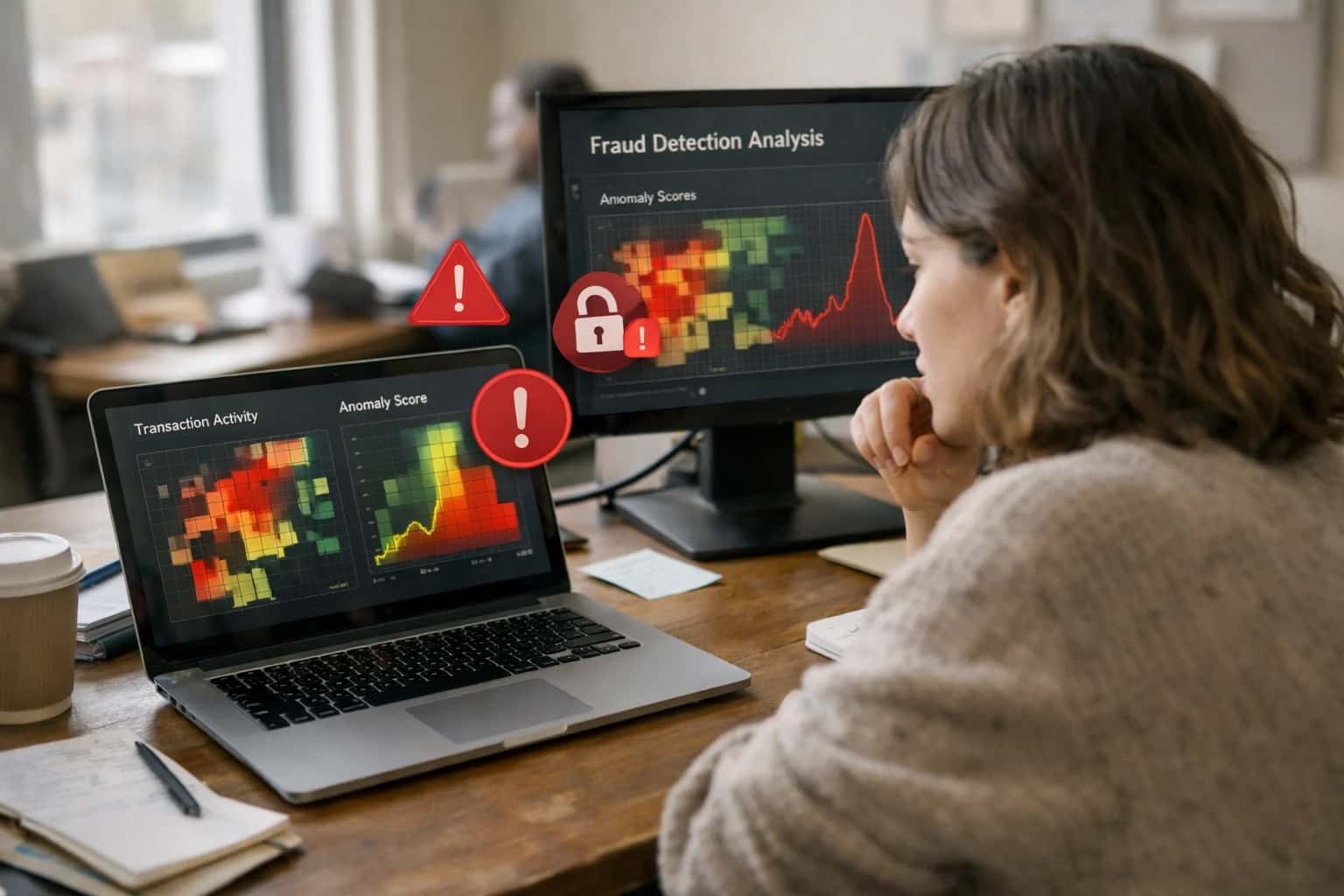
A technical comparison of CrowdStrike's indicator-of-attack (IOA) methodology versus Darktrace's unsupervised machine learning for detecting novel, low-and-slow anomalies in non-human account behavior. We analyze detection philosophy, alert fidelity, and SOC workflow integration.
THE ANALYSIS
Introduction
A data-driven comparison of CrowdStrike's indicator-of-attack methodology versus Darktrace's unsupervised machine learning for detecting novel anomalies in non-human account behavior.
Darktrace takes a fundamentally different approach by building a bespoke 'pattern of life' for every machine identity using unsupervised machine learning. Instead of looking for known bad behaviors, it learns what is 'normal' for a specific Kubernetes service account or an automated CI/CD pipeline runner. This results in a unique trade-off: Darktrace can detect genuinely novel, low-and-slow anomalies that signature-based or IOA systems might miss, such as a dormant machine identity slowly exfiltrating data over weeks. However, this often generates a higher volume of ambiguous alerts that require more contextual investigation.
The key trade-off: If your priority is high-fidelity, low-volume alerts that map directly to adversary TTPs and integrate seamlessly into an existing CrowdStrike-centric SOC workflow, choose CrowdStrike. If you prioritize detecting the 'unknown unknowns'—subtle, never-before-seen deviations in machine behavior—and have the analyst capacity to triage probabilistic anomalies, choose Darktrace. Consider CrowdStrike for precision and Darktrace for breadth of anomaly coverage.
HEAD-TO-HEAD COMPARISON
Feature Comparison: CrowdStrike vs Darktrace for NHI Anomalies
Direct comparison of detection methodology, data source integration, and response capabilities for non-human identity threats.
| Metric | CrowdStrike Falcon | Darktrace DETECT |
|---|---|---|
Core Detection Methodology | Indicator-of-Attack (IOA) & Behavioral AI | Unsupervised Machine Learning (Bayesian) |
Learning Period Required | ||
Native NHI-Specific Baselines | ||
Real-World MTTD for Novel Attacks | < 1 minute | ~7 days (learning period) |
Primary Data Source | Endpoint & Identity Telemetry | Network Traffic Analysis |
Automated Response for Token Theft | true (Contain Device, Revoke Sessions) | false (Alert Only) |
Cloud API Log Ingestion | true (Falcon Cloud Security) | Limited (via Antigena Email/Network) |
Deployment Model | Agent-Based + Agentless | Agentless (Network TAPs/SPAN) |
CrowdStrike vs Darktrace
TL;DR Summary
A side-by-side look at the core strengths and trade-offs of CrowdStrike's indicator-of-attack (IOA) methodology versus Darktrace's unsupervised machine learning for detecting novel anomalies in non-human identity behavior.
01
CrowdStrike: Precision & SOC Integration
IOA-driven detection: CrowdStrike maps machine identity behavior to known adversary tactics, techniques, and procedures (TTPs). This results in high-fidelity alerts with rich context, reducing alert fatigue for SOC analysts. Ideal for: Teams that need actionable, human-readable threat detection tightly integrated into existing XDR workflows and incident response playbooks. The focus is on speed and accuracy for known attack patterns.
02
CrowdStrike: Endpoint & Workload Depth
Agent-based visibility: The Falcon sensor provides deep, real-time visibility into process-level activity on endpoints and cloud workloads. This allows for precise attribution of anomalous actions to specific machine identities and immediate enforcement actions like containment. Ideal for: Organizations prioritizing deep endpoint and workload telemetry to detect token theft and credential dumping at the source.
03
Darktrace: Novelty & Zero-Day Detection
Unsupervised 'immune system' approach: Darktrace learns a 'pattern of life' for every non-human identity without prior knowledge of threats. This allows it to detect subtle, low-and-slow anomalies and novel zero-day attacks that signature-based or IOA-based systems might miss. Ideal for: Environments where detecting unknown, sophisticated, or insider threats from compromised machine accounts is the top priority.
04
Darktrace: Network & Ecosystem Breadth
Agentless, network-centric visibility: Darktrace passively analyzes network traffic and SaaS/cloud logs, providing broad coverage without deploying agents. It excels at correlating weak signals across the entire digital ecosystem to surface emergent machine identity threats. Ideal for: Organizations needing rapid, non-invasive deployment across complex, heterogeneous environments including OT, IoT, and legacy systems.
CHOOSE YOUR PRIORITY
When to Choose CrowdStrike vs Darktrace
CrowdStrike for SOC Analysts
Strengths: CrowdStrike's Indicator-of-Attack (IOA) methodology provides high-fidelity, deterministic alerts that map directly to the MITRE ATT&CK framework. For a SOC analyst investigating a potential token theft, the Falcon platform offers a clear, linear story of the attack chain—from initial access via a compromised API key to lateral movement. This reduces alert fatigue and accelerates triage because analysts aren't chasing statistical anomalies; they are investigating known-bad behavioral patterns.
Verdict: Best for Tier 1/2 analysts who need actionable, explainable alerts with clear remediation steps for known machine identity attack patterns.
Darktrace for SOC Analysts
Strengths: Darktrace's unsupervised machine learning excels at surfacing 'unknown unknowns.' For a novel, low-and-slow attack where a machine identity is being slowly probed, Darktrace's 'Cyber AI Analyst' will flag the subtle deviation from the 'pattern of life' long before a signature or IOA would trigger. It automatically generates a narrative of the incident, reducing the manual investigation burden for complex, never-before-seen anomalies.
Verdict: Best for Tier 3 analysts and threat hunters who need to investigate novel, subtle anomalies that signature-based tools miss, but be prepared for a higher volume of ambiguous alerts.
Enabling Efficiency, Speed & Accuracy
Intelligent Analysis, Decision & Execution
We build AI systems for teams that need search across company data, workflow automation across tools, or AI features inside products and internal software.
Talk to Us
Search across company data
Give teams answers from docs, tickets, runbooks, and product data with sources and permissions.
Useful when people spend too long searching or get different answers from different systems.
Enterprise searchRAGPermissions
Read more
Automate internal workflows
Use AI to route work, draft outputs, trigger actions, and keep approvals and logs in place.
Useful when repetitive work moves across multiple tools and teams.
AI agentsWorkflow automationGovernance
Read more
Add AI to products and internal tools
Build assistants, guided actions, or decision support into the software your team or customers already use.
Useful when AI needs to be part of the product, not a separate tool.
AI integrationDecision supportModel routing
Read moreDETECTION PHILOSOPHY
Technical Deep Dive: Detection Methodology
The fundamental divergence between CrowdStrike and Darktrace lies in their detection philosophy: CrowdStrike relies on human-curated behavioral signatures (IOAs), while Darktrace uses unsupervised machine learning to define 'normal' and flag deviations. This section dissects the technical trade-offs for detecting low-and-slow anomalies in non-human identities.
CrowdStrike primarily uses supervised, indicator-of-attack (IOA) logic. Its Falcon platform maps machine behaviors to known adversary TTPs via human-crafted rules and cloud-based ML trained on labeled attack data. This excels at catching known credential dumping patterns (e.g., Mimikatz variants) but can miss novel 'low-and-slow' API abuses that lack a predefined signature. For NHIs, this means strong detection of brute-force patterns but potential blind spots for subtle token misuse.
THE ANALYSIS
Verdict
A data-driven breakdown of CrowdStrike's indicator-of-attack methodology versus Darktrace's unsupervised machine learning for securing non-human identities.
CrowdStrike excels at detecting known and derivative attack patterns against machine identities because its Falcon platform relies on a human-curated, cloud-native graph of adversary tradecraft. For example, its indicator-of-attack (IOA) methodology triggers on the specific sequence of a Kerberos ticket request followed by a DCSync attempt from a service account, a behavior mapped to real-world ransomware operators. This results in high-fidelity alerts with rich context for a SOC analyst, reducing triage time. However, this strength is also a constraint: CrowdStrike is optimized to find malicious behavior it has already classified, making it less effective against genuinely novel, 'low-and-slow' anomalies that lack a predefined signature or behavioral chain.
Darktrace takes a fundamentally different approach by building a bespoke 'pattern of life' for every non-human identity using unsupervised machine learning. Instead of looking for known bad behaviors, its DETECT engine learns the normal baseline for a specific service account's credential usage, API call timing, and data access volume. This results in a unique trade-off: Darktrace can surface subtle deviations, like a machine identity accessing a database at an unusual time or exfiltrating a small, atypical amount of data, without any prior threat intelligence. The cost of this sensitivity is a higher volume of ambiguous alerts and a 'black box' problem where the precise trigger for an anomaly can be difficult for an analyst to reverse-engineer quickly.
The key trade-off: If your priority is high-fidelity, low-noise detections that map directly to the MITRE ATT&CK framework and integrate seamlessly into a rapid-response workflow, choose CrowdStrike. If you prioritize discovering novel, insider-like threats and subtle credential misuse that bypass signature-based defenses, and you have a threat-hunting team to triage statistical anomalies, choose Darktrace. For a robust defense-in-depth strategy against machine identity threats, the data suggests deploying both: CrowdStrike to stop known attacks fast and Darktrace to find the unknown compromises that inevitably slip through.

About the author
Prasad Kumkar
CEO & MD, Inference Systems
Prasad Kumkar is the CEO & MD of Inference Systems and writes about AI systems architecture, LLM infrastructure, model serving, evaluation, and production deployment. Over 5+ years, he has worked across computer vision models, L5 autonomous vehicle systems, and LLM research, with a focus on taking complex AI ideas into real-world engineering systems.
His work and writing cover AI systems, large language models, AI agents, multimodal systems, autonomous systems, inference optimization, RAG, evaluation, and production AI engineering.
LinkedIn
Limited slotsGet a Free AI Consultation
Partnered with leading AI, data, and software stack.





How We Work
Custom AI workflows for your Business
One-fit-all AI don't work for modern businesses. At Inferensys, we aim to understand your business & custom requirements; which we use to define most efficient agentic workflows, the data, and the tools for your business.
01
Review the use case
We understand the task, the users, and where AI can actually help.
Read more02
Pick the right approach
We define what needs search, automation, or product integration.
Read more03
Build the first useful version
We implement the part that proves the value first.
Read more04
Improve from there
We add the checks and visibility needed to keep it useful.
Read moreThe first call is a practical review of your use case and the right next step.
Talk to Us