
Differences
Agent Protocol Security and Encryption
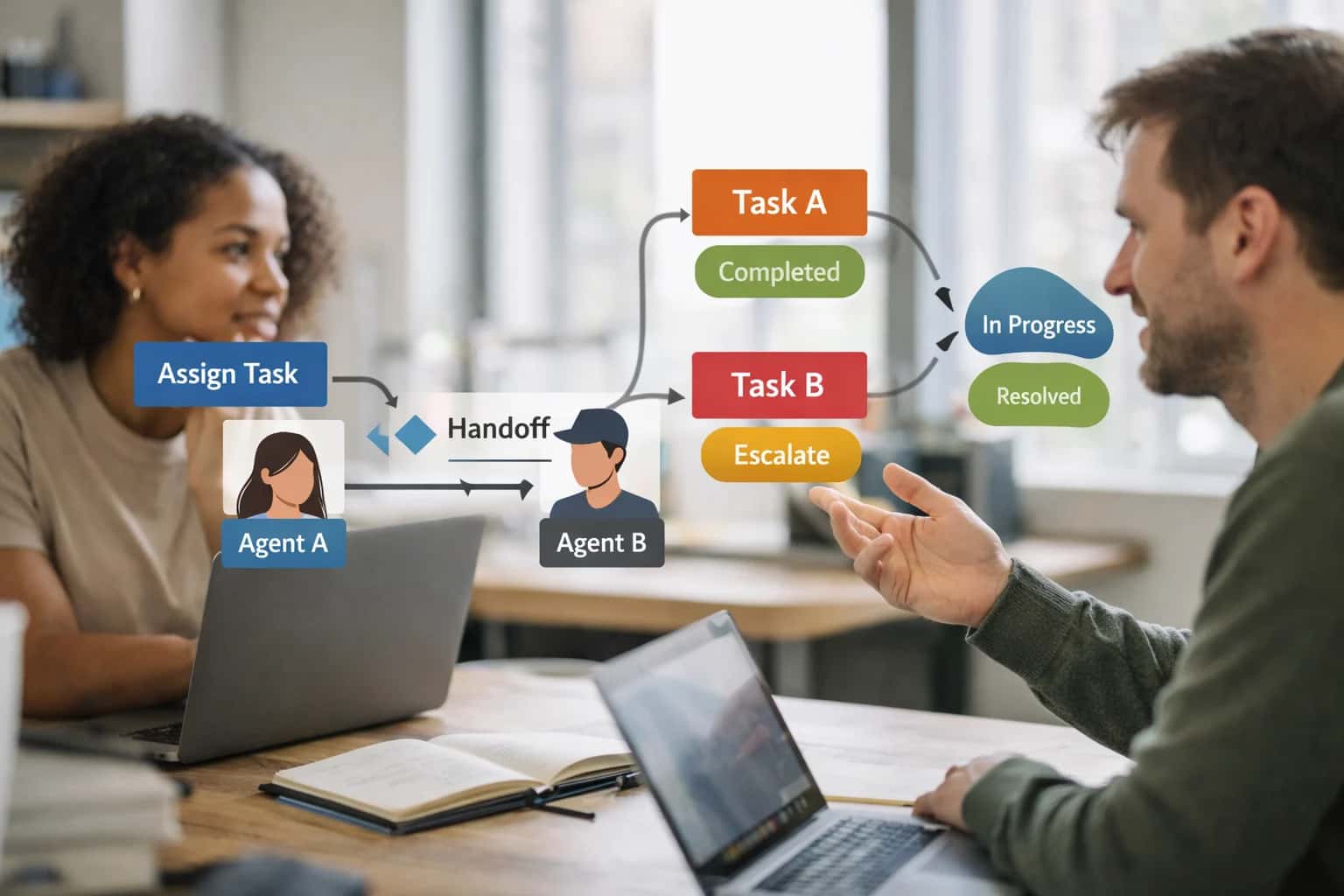
Agent Protocol Security and Encryption
Comparisons related to securing agent-to-agent communication channels, including encryption standards, secure handoff mechanisms, prompt injection defenses, and malicious agent detection. Target: Security Architects and DevSecOps Leads.
mTLS vs API Key Authentication for Agent Handshakes
Comparing mutual TLS certificate-based identity verification against static API key exchange for securing the initial connection and trust establishment between autonomous agents in A2A or MCP meshes.
OAuth 2.0 Client Credentials vs JWT-Bound Access Tokens for Agent Delegation
Evaluating standard OAuth 2.0 machine-to-machine flows against token binding with JWTs to prevent replay attacks and ensure secure, scoped task delegation across agent protocols.
SPIFFE vs X.509 Certificates for Agent Identity
Comparing the SPIFFE standard for dynamic, workload-level identity issuance against traditional static X.509 certificate management for authenticating non-human agents in heterogeneous environments.
A2A Secure Task Delegation vs MCP OAuth 2.0 Authorization
Analyzing the native security models of Google's Agent-to-Agent protocol versus Anthropic's Model Context Protocol for authorizing cross-agent task execution and tool access.
Policy-as-Code (OPA) vs Hardcoded Agent Permission Rules
Comparing dynamic, auditable policy engines like Open Policy Agent against embedding static permission logic directly into agent code for governing tool-call authorization and data access.
LLM Firewall vs Input/Output Content Filtering for Agent Prompts
Evaluating dedicated LLM firewall appliances against simpler regex or classifier-based content filters for detecting and blocking prompt injection and data exfiltration in agent communication streams.
Agent Sandboxing (gVisor) vs OS-Level Process Isolation
Comparing lightweight kernel-based sandboxing with gVisor against traditional OS process and namespace isolation for containing the blast radius of a compromised or malicious agent.
Ephemeral Agent Credentials vs Long-Lived Service Accounts
Analyzing the security trade-offs of issuing short-lived, just-in-time credentials for each agent task against using persistent, long-lived service account keys for agent-to-agent communication.
Mutual TLS (mTLS) vs WireGuard for Agent-to-Agent Channel Encryption
Comparing application-layer mTLS against the WireGuard VPN protocol for encrypting point-to-point communication channels within a distributed mesh of AI agents.
End-to-End Encryption (E2EE) vs Hop-by-Hop TLS in Agent Meshes
Evaluating true end-to-end message encryption where only endpoints hold keys against hop-by-hop TLS termination at each proxy or gateway in a multi-agent coordination network.
Secure Enclave Inference vs In-Memory Agent Processing
Comparing the use of hardware-based Trusted Execution Environments for sensitive agent reasoning against standard in-memory processing to protect data from the host OS and other tenants.
Malicious Agent Behavior Detection vs Signature-Based Agent Scanning
Analyzing anomaly detection and behavioral analytics for identifying rogue agents against static, signature-based scanning of agent configurations and code for known vulnerabilities.
Decentralized Identity (DID) vs Centralized Agent Registry for Trust
Comparing a decentralized, self-sovereign identity model using DIDs and verifiable credentials against a centralized, proprietary registry for establishing agent trust and discovery.
Audit Trail Immutability (Blockchain) vs Append-Only Logging for Agent Actions
Evaluating blockchain-backed tamper-proof ledgers against traditional append-only, centralized logging systems for creating non-repudiable audit trails of agent decisions and task outcomes.
Agent Protocol Fuzzing vs Formal Verification of Agent Communication Security
Comparing dynamic, input-fuzzing techniques for finding protocol implementation bugs against the use of mathematical formal methods to prove the correctness of agent communication security protocols.
Prompt Injection Detection vs Strict Input Schema Validation
Analyzing specialized AI-driven detection of malicious instructions against enforcing rigid, structured input schemas as a primary defense against prompt injection attacks on agents.
Agent Kill Switch Mechanisms vs Gradual Permission Revocation
Comparing an immediate, global circuit-breaker for halting a rogue agent against a more nuanced, step-by-step revocation of specific tool and data permissions to contain an incident.
Secure WebSocket (WSS) vs gRPC with TLS for Agent Streaming
Evaluating the security and performance characteristics of WebSockets over TLS against gRPC's HTTP/2-based TLS for bidirectional, real-time streaming between coordinating agents.
Partnered with leading AI, data, and software stack.





How We Work
Custom AI workflows for your Business
One-fit-all AI don't work for modern businesses. At Inferensys, we aim to understand your business & custom requirements; which we use to define most efficient agentic workflows, the data, and the tools for your business.
01
Review the use case
We understand the task, the users, and where AI can actually help.
Read more02
Pick the right approach
We define what needs search, automation, or product integration.
Read more03
Build the first useful version
We implement the part that proves the value first.
Read more04
Improve from there
We add the checks and visibility needed to keep it useful.
Read moreThe first call is a practical review of your use case and the right next step.
Talk to Us