
Differences
Agent Identity and Authorization Chains

Agent Identity and Authorization Chains
Comparisons related to managing non-human identities, scoped credentials, and delegated authorization for autonomous agents. Focuses on secure token exchange, least-privilege access, and integration with enterprise IAM/PAM systems. Target: CISOs and Platform Security Architects.
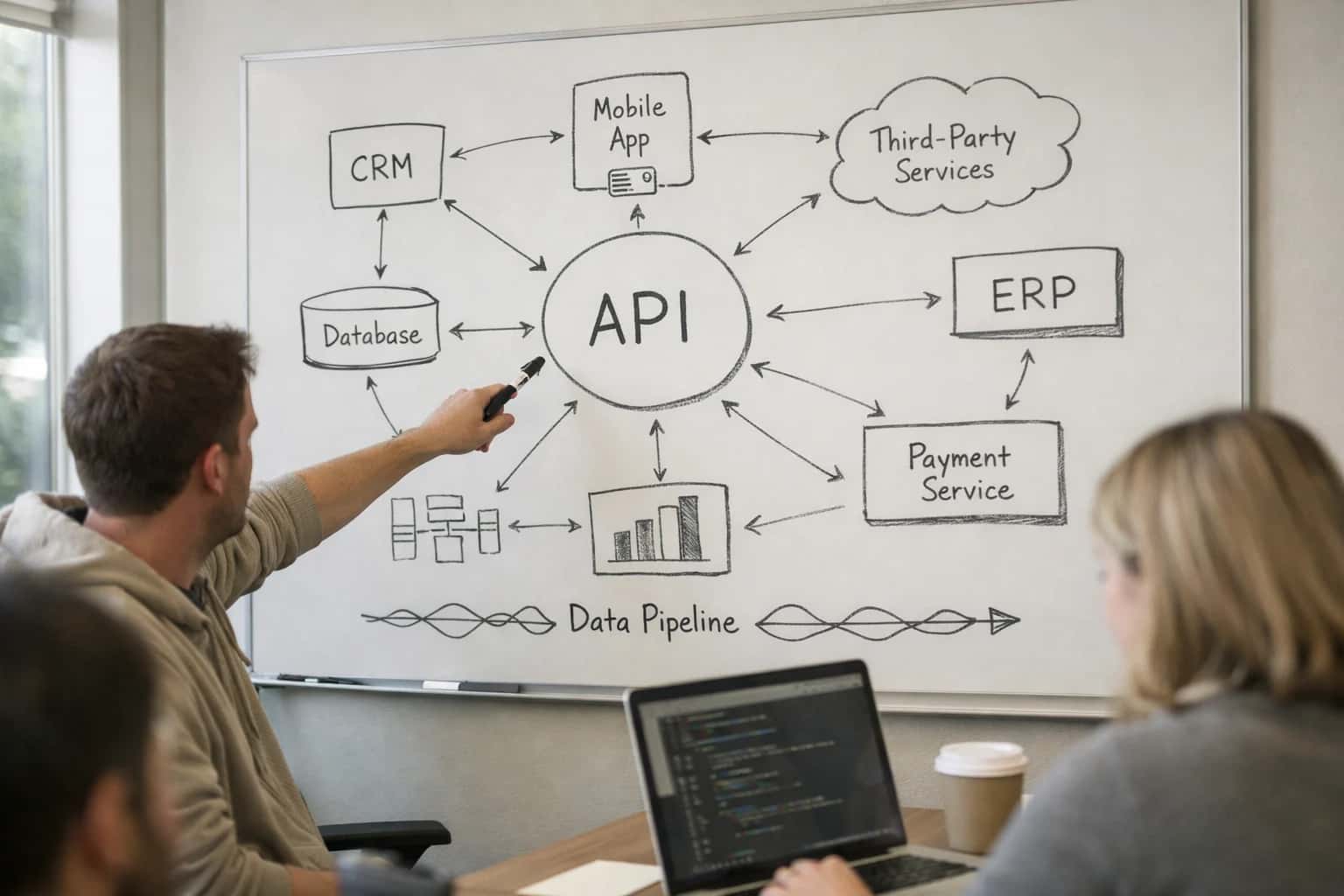
OAuth 2.0 vs SPIFFE for Agent Identity
Compares the dominant user-delegation framework against the emerging workload identity standard for non-human agents. Focuses on token exchange suitability, dynamic environment support, and integration with service meshes for autonomous agent authentication.
Short-Lived JWTs vs Certificate-Based Authentication for Agents
Evaluates the trade-offs between ephemeral JSON Web Tokens and X.509 certificates for securing agent-to-agent communication. Analyzes rotation complexity, revocation speed, and performance overhead in high-frequency agent call chains.
OAuth 2.0 Token Exchange vs On-Behalf-Of Flow for Agent Chains
Compares the standard token exchange grant against the Microsoft-specific On-Behalf-Of flow for propagating identity through multi-agent workflows. Focuses on impersonation vs. delegation semantics and cross-cloud compatibility.
Mutual TLS vs Service Mesh Identity for Agent Communication
Analyzes whether transport-layer mTLS or a dedicated service mesh identity (like Istio/SPIRE) provides better authorization granularity, observability, and policy enforcement for east-west agent traffic.
Attribute-Based Access Control vs Policy-as-Code for Agent Permissions
Compares ABAC's dynamic, tag-driven authorization against policy-as-code engines (like OPA/Cedar) for defining and enforcing fine-grained agent permissions across heterogeneous tools and data sources.
Capability-Based Security vs Scoped Credentials for Agent Tools
Evaluates the object-capability model against traditional scoped API keys for granting agents least-privilege access to specific tools. Focuses on token attenuation, delegation chains, and revocation safety.
Dynamic Secrets vs Just-in-Time Access for Agent Provisioning
Compares on-the-fly secret generation (via Vault) against ephemeral, just-in-time access grants for standing up agent instances. Analyzes the zero-standing-privilege posture and integration with CI/CD pipelines.
Workload Identity Federation vs Cross-Account IAM Roles for Agent Delegation
Compares cloud-native workload identity federation against traditional cross-account role assumption for allowing agents in one environment to securely access resources in another without long-lived static keys.
Service Control Policies vs Permission Boundaries for Agent Guardrails
Evaluates AWS Organizations' preventative SCPs against IAM permission boundaries as the outer guardrail for autonomous agents. Focuses on effective permission calculation and preventing privilege escalation.
Decentralized Identifiers vs Verifiable Credentials for Agent Trust
Compares W3C DIDs as persistent agent identifiers against W3C Verifiable Credentials for presenting claims. Analyzes which standard is more suitable for establishing decentralized trust between agents across organizational boundaries.
Centralized Policy Engines vs Distributed Policy Engines for Agent Scalability
Compares a single policy decision point (like a cloud IAM service) against a distributed sidecar or library-based enforcement model for agent authorization. Focuses on latency, consistency, and failure modes at scale.
Externalized Authorization Services vs Graph-Based Authorization for Agent Relationships
Evaluates standard externalized policy engines against graph-based authorization (like Google Zanzibar/SpiceDB) for modeling complex, multi-level relationships between agents, resources, and teams.
Risk-Based Authentication vs Continuous Authentication for Agent Sessions
Compares step-up authentication triggered by risk signals against continuous behavioral monitoring for maintaining trust in long-lived agent sessions. Focuses on anomaly detection for non-human behavioral patterns.
Automated Secrets Vaulting vs Manual Credential Injection for Agent Deployment
Evaluates the security and operational maturity of integrating a secrets vault (like HashiCorp Vault) into the agent runtime against injecting credentials via CI/CD or config maps. Focuses on secret rotation and auditability.
TPM-Backed Attestation vs Software Attestation for Agent Trustworthiness
Compares hardware-rooted trust via TPM attestation against software-based remote attestation for verifying the integrity of an agent's runtime environment before granting it an identity or secrets.
Partnered with leading AI, data, and software stack.
How We Work
Custom AI workflows for your Business
One-fit-all AI don't work for modern businesses. At Inferensys, we aim to understand your business & custom requirements; which we use to define most efficient agentic workflows, the data, and the tools for your business.
01
Review the use case
We understand the task, the users, and where AI can actually help.
Read more02
Pick the right approach
We define what needs search, automation, or product integration.
Read more03
Build the first useful version
We implement the part that proves the value first.
Read more04
Improve from there
We add the checks and visibility needed to keep it useful.
Read moreThe first call is a practical review of your use case and the right next step.
Talk to Us
