
Inferensys

Differences

MCP Authentication and Authorization Providers

Comparisons between OAuth 2.0, API key, mTLS, and scoped credential systems for MCP server access control. Target: IAM architects securing MCP tool access across enterprise systems.
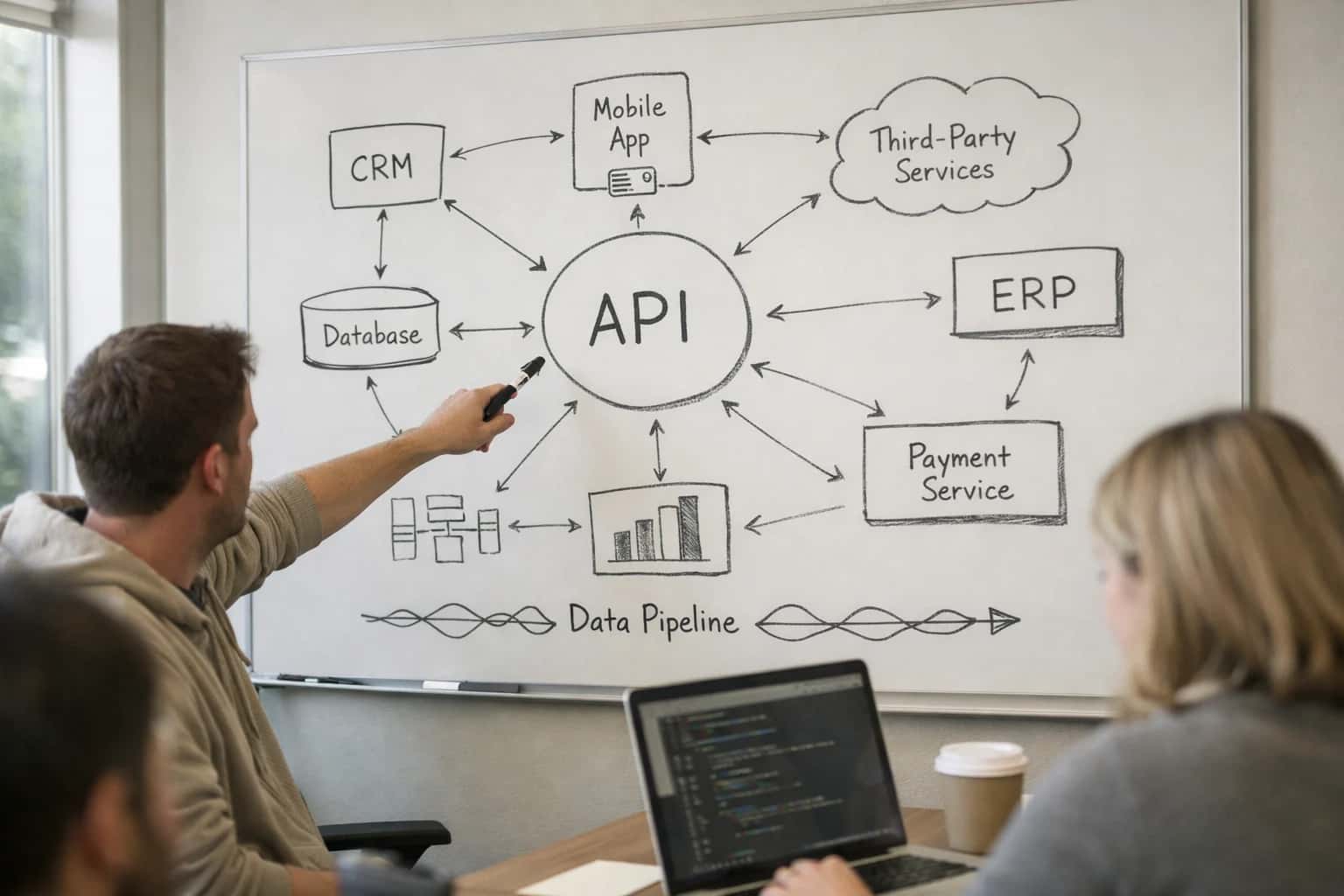
Enterprise integration architect reviewing API connections on laptop, diagram showing systems connecting, modern office setup.
Differences

MCP Authentication and Authorization Providers

Comparisons between OAuth 2.0, API key, mTLS, and scoped credential systems for MCP server access control. Target: IAM architects securing MCP tool access across enterprise systems.

OAuth 2.0 vs API Key Authentication for MCP

A direct comparison of delegated authorization versus static bearer tokens for securing Model Context Protocol servers. We analyze the trade-offs in token lifecycle management, granular scoping for specific tools, and the operational overhead of integrating with enterprise identity providers versus the simplicity of API key rotation.

mTLS vs JWT-Based Auth for MCP

Comparing transport-layer mutual TLS authentication against application-layer JSON Web Tokens for MCP server access. This analysis focuses on performance overhead, certificate management complexity, and the suitability of each method for zero-trust architectures and service-to-service communication in AI agent meshes.

Scoped Credential Systems vs RBAC for MCP Tools

Evaluating fine-grained, capability-based scoped credentials against traditional Role-Based Access Control for governing which tools an AI agent can invoke. We examine how each model handles dynamic permissioning, the principle of least privilege, and auditability in high-stakes enterprise environments.

OPA Policy Enforcement vs Cedar Policy Language for MCP

A technical comparison of Open Policy Agent's Rego language versus AWS's Cedar language for defining and enforcing authorization policies on MCP tool calls. The analysis covers expressiveness, policy authoring experience, and integration patterns with existing MCP gateway infrastructure.

JWT-Based Auth vs Macaroons for MCP Delegation

Comparing standard JWT bearer tokens against contextual caveat-based Macaroons for delegating limited MCP access. We focus on attenuation and contextual restriction capabilities, analyzing which is better suited for complex, multi-step agent workflows requiring third-party tool access.

SPIFFE vs Certificate-Based Auth for MCP Workloads

Comparing the SPIFFE standard for workload identity against traditional certificate-based authentication for MCP servers running in Kubernetes. This analysis focuses on automated identity issuance, rotation, and the elimination of shared secrets in dynamic, cloud-native AI infrastructure.

Gateway-Level Auth vs Service Mesh Auth for MCP

Evaluating centralized authentication at an API gateway versus decentralized, sidecar-proxy enforcement in a service mesh for MCP traffic. We compare latency implications, policy consistency, and the operational burden of managing auth logic at different layers of the network stack.

Token Exchange vs JWT-Based Auth for MCP

Comparing on-behalf-of token exchange flows against direct JWT issuance for MCP authorization. The analysis focuses on scenarios where an AI host application must access an MCP server on behalf of a user, examining identity propagation, refresh token handling, and security boundaries.

Biscuit Tokens vs Macaroons for MCP Attenuation

A deep dive into two token formats supporting offline attenuation for MCP authorization. We compare Biscuit's Datalog-based logic against Macaroons' simpler caveat system for expressing complex, data-dependent policies on tool access and resource exposure.

ABAC vs ReBAC for MCP Resource Hierarchies

Comparing Attribute-Based Access Control against Relationship-Based Access Control for managing permissions on MCP resources like files, databases, or channels. We analyze which model more naturally maps to organizational structures and complex resource hierarchies.

PASETO Tokens vs JWT-Based Auth for MCP

A security-focused comparison of the Platform-Agnostic SEcurity TOkens standard against JSON Web Tokens for MCP authentication. We examine cryptographic agility, protection against common JWT implementation vulnerabilities, and library support across MCP client SDKs.

Capability-Based Security vs Scoped Credential Systems for MCP

Comparing pure object-capability models against scoped credential systems for granting AI agents access to MCP tools. The analysis focuses on revocation complexity, composability of permissions, and how each model prevents confused deputy attacks in agentic workflows.
