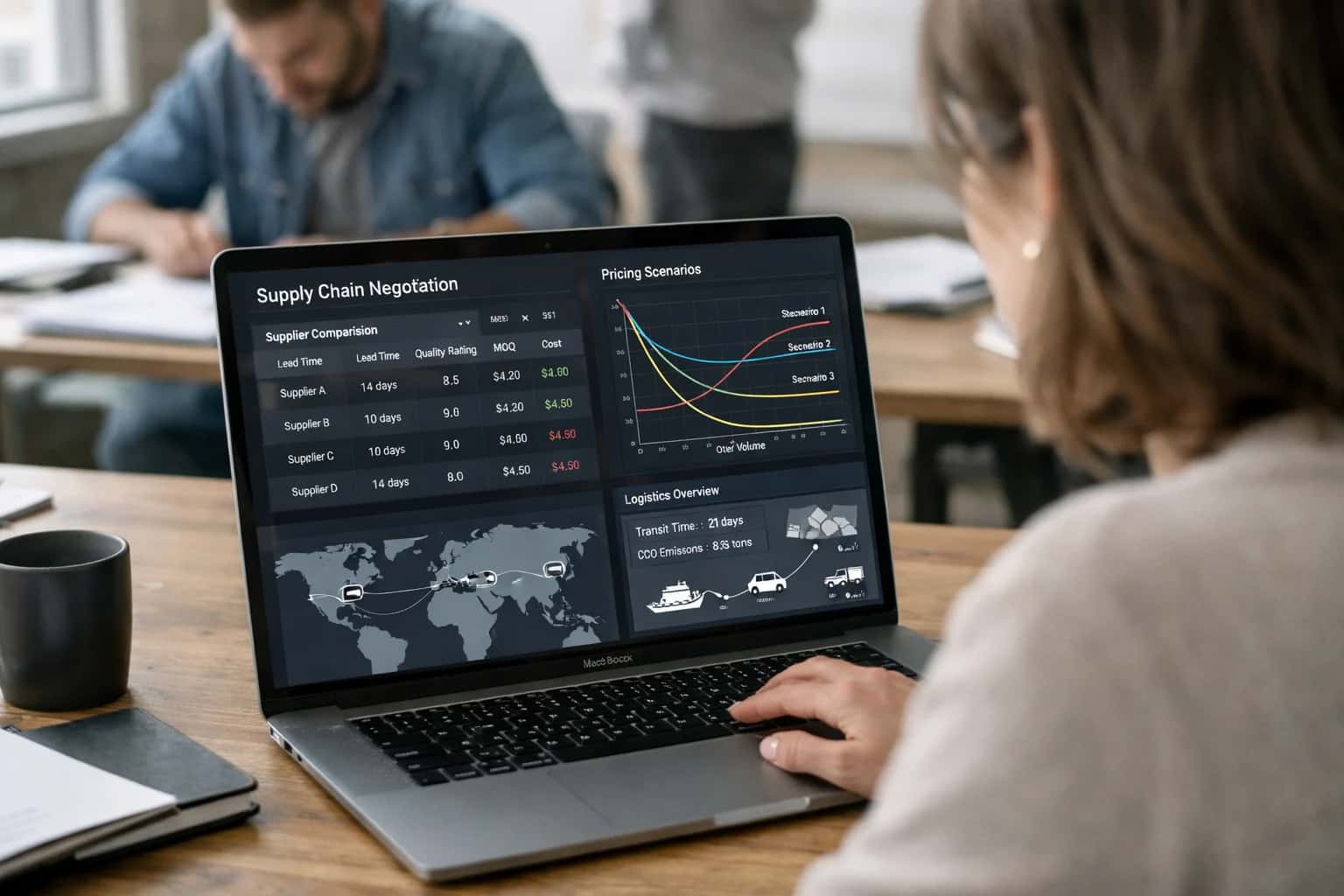
[Digital Twin for Carbon] excels at continuous, scenario-based optimization because it ingests real-time operational data from IoT sensors, TMS platforms, and ERP systems. For example, a digital twin can simulate the carbon impact of rerouting 10,000 shipments through alternative ports before execution, achieving a 15-20% reduction in Scope 3 emissions through dynamic planning, a feat impossible with static methods.

Difference
Digital Twin for Carbon vs Physical Energy Audit
A technical comparison for Sustainability Directors and Supply Chain VPs evaluating continuous, scenario-based carbon optimization via digital twins against the point-in-time accuracy of traditional physical energy audits.
THE ANALYSIS
Introduction
A direct comparison of continuous digital simulation against point-in-time physical verification for enterprise carbon management.
[Physical Energy Audit] takes a fundamentally different approach by providing verified, point-in-time accuracy through on-site inspection of facilities, metered energy consumption, and direct fuel receipts. This results in an audit-grade, defensible baseline that satisfies regulatory requirements like the EU CSRD's limited assurance mandate, but it lacks the agility to model daily operational trade-offs between cost, service level, and carbon.
The key trade-off: If your priority is dynamic optimization and daily decision-making to reduce emissions across a complex logistics network, choose a Digital Twin. If you prioritize regulatory-grade accuracy and a legally defensible baseline for annual reporting, choose a Physical Energy Audit. For most enterprises, the optimal strategy is a hybrid model: using the audit to calibrate the digital twin, ensuring both agility and accuracy.
HEAD-TO-HEAD COMPARISON
Feature Comparison
Direct comparison of key metrics and features for carbon optimization methodologies.
| Metric | Digital Twin for Carbon | Physical Energy Audit |
|---|---|---|
Data Frequency | Continuous (Real-time/Streaming) | Point-in-Time (Annual/Bi-annual) |
Scenario Simulation | ||
Primary Accuracy Basis | Model Prediction (Physics + AI) | Direct Measurement (Meter/Invoice) |
Implementation Cost | $50k - $250k+ (Setup & Integration) | $10k - $50k (Per Audit Cycle) |
Time to Insight | Instant (Dashboard) | 4-8 Weeks (Report Generation) |
Optimization Capability | Prescriptive (Dynamic Routing/Inventory) | Descriptive (Static Recommendations) |
Regulatory Audit Readiness | Emerging (Model Validation Required) | Mature (Certified Verifier Standard) |
Digital Twin vs. Physical Audit
TL;DR Summary
A side-by-side comparison of continuous, scenario-based carbon optimization against point-in-time, verified measurement.
01
Digital Twin: Continuous Optimization
Dynamic scenario modeling: Simulates millions of logistics permutations (route, mode, carrier) to predict carbon impact before execution. This matters for transportation and supply chain VPs needing to reduce Scope 3 emissions without sacrificing service levels. A digital twin can ingest real-time IoT and carrier data to forecast a shipment's well-to-wheel footprint, enabling proactive adjustments rather than historical reporting.
02
Digital Twin: Speed & Scale
Enterprise-wide visibility in hours, not months: An AI-driven twin can map the carbon footprint of thousands of SKUs and trade lanes simultaneously. This matters for sustainability directors facing quarterly ESG disclosures who cannot wait for an annual audit cycle. The trade-off is accuracy; models rely on secondary data and assumptions, making them powerful for steering but less defensible for compliance without physical validation.
03
Physical Audit: Verifiable Accuracy
Audit-grade primary data: A physical energy audit measures actual fuel consumption, utility bills, and on-site equipment loads. This provides the 'ground truth' required for regulatory filings like the EU CSRD or SEC climate rule. The output is a static, defensible snapshot that satisfies third-party assurance providers but lacks the agility to guide daily operational decisions.
04
Physical Audit: Deep Facility Insight
Identifies physical inefficiencies: Engineers can pinpoint energy waste from compressed air leaks, poor insulation, or inefficient HVAC schedules that a software model would miss. This matters for warehouse operations directors targeting Scope 1 and 2 reductions. The limitation is cost and cadence; audits are labor-intensive, expensive, and often outdated the moment they are completed.
CHOOSE YOUR PRIORITY
When to Choose What
Digital Twin for Carbon\n**Verdict**: The clear winner for dynamic, ongoing carbon management. A digital twin ingests real-time IoT, TMS, and ERP data to simulate 'what-if' scenarios—like rerouting a shipment or shifting a production schedule—and instantly calculates the Scope 1, 2, and 3 emissions impact. It excels at **empty miles reduction** and **predictive fleet maintenance** by modeling the carbon cost of asset downtime before it happens.\n\n**Key Strength**: Enables a **continuous improvement** cycle, turning sustainability from a periodic report into an operational KPI.\n\n### Physical Energy Audit\n**Verdict**: Not designed for this use case. Audits provide a static baseline, not a living model. You cannot run a simulation on an audit report to see the real-time carbon impact of a supply chain disruption.
Enabling Efficiency, Speed & Accuracy
Intelligent Analysis, Decision & Execution
We build AI systems for teams that need search across company data, workflow automation across tools, or AI features inside products and internal software.
Talk to Us
Search across company data
Give teams answers from docs, tickets, runbooks, and product data with sources and permissions.
Useful when people spend too long searching or get different answers from different systems.
Enterprise searchRAGPermissions
Read more
Automate internal workflows
Use AI to route work, draft outputs, trigger actions, and keep approvals and logs in place.
Useful when repetitive work moves across multiple tools and teams.
AI agentsWorkflow automationGovernance
Read more
Add AI to products and internal tools
Build assistants, guided actions, or decision support into the software your team or customers already use.
Useful when AI needs to be part of the product, not a separate tool.
AI integrationDecision supportModel routing
Read moreHEAD-TO-HEAD COMPARISON
Cost and Resource Analysis
Direct comparison of key cost, resource, and operational metrics for carbon footprinting methodologies.
| Metric | Digital Twin for Carbon | Physical Energy Audit |
|---|---|---|
Data Freshness | Continuous (Real-time/Streaming) | Point-in-Time (Annual/Bi-annual) |
Scenario Simulation Cost | $0 (Marginal compute cost) | $15,000 - $50,000+ (Re-engagement fee) |
Primary Data Dependency | High (Requires IoT/API integration) | Low (Auditor collects samples) |
Labor Requirement | Low (Automated analysis) | High (On-site engineers) |
Time to Insight | < 1 second (Streaming) | 4 - 8 weeks (Report generation) |
Scope 3 Calculation | Dynamic (Supplier data integration) | Static (Spend-based estimation) |
Audit Readiness | Continuous monitoring trail | Formal assurance report |
THE ANALYSIS
Verdict
A direct comparison of continuous digital twin simulation against point-in-time physical audits for enterprise carbon management.
Digital Twin for Carbon excels at continuous, scenario-based optimization because it ingests real-time IoT, telematics, and ERP data to create a living model of the supply chain. For example, a digital twin can simulate the carbon impact of rerouting a shipment through a different port before the decision is made, potentially reducing a specific lane's emissions by 12-15% through dynamic mode shifting. This approach provides a strategic control layer for ongoing decarbonization, but its accuracy is entirely dependent on the quality of the underlying data feeds and the fidelity of the emission factor models used.
Physical Energy Audits take a fundamentally different approach by providing a verified, point-in-time ground truth. An auditor physically inspects facilities and assets, validating meter readings and nameplate data, which results in a legally defensible, audit-ready data set for regulatory filings like the EU CSRD. This method offers unmatched accuracy for a specific reporting period but creates a static, backward-looking snapshot. It cannot predict how a disruption in the Suez Canal will alter next quarter's Scope 3 footprint.
The key trade-off: If your priority is dynamic operational control, continuous improvement, and future-state scenario planning, choose a Digital Twin for Carbon. If your primary need is regulatory compliance, audit assurance, and establishing a verified baseline with zero model risk, invest in a Physical Energy Audit. For mature organizations, the optimal strategy is a hybrid model: use the audit to calibrate and validate the digital twin, then use the twin for daily decision-making and predictive forecasting.

About the author
Prasad Kumkar
CEO & MD, Inference Systems
Prasad Kumkar is the CEO & MD of Inference Systems and writes about AI systems architecture, LLM infrastructure, model serving, evaluation, and production deployment. Over 5+ years, he has worked across computer vision models, L5 autonomous vehicle systems, and LLM research, with a focus on taking complex AI ideas into real-world engineering systems.
His work and writing cover AI systems, large language models, AI agents, multimodal systems, autonomous systems, inference optimization, RAG, evaluation, and production AI engineering.
LinkedIn
Limited slotsGet a Free AI Consultation
Partnered with leading AI, data, and software stack.





How We Work
Custom AI workflows for your Business
One-fit-all AI don't work for modern businesses. At Inferensys, we aim to understand your business & custom requirements; which we use to define most efficient agentic workflows, the data, and the tools for your business.
01
Review the use case
We understand the task, the users, and where AI can actually help.
Read more02
Pick the right approach
We define what needs search, automation, or product integration.
Read more03
Build the first useful version
We implement the part that proves the value first.
Read more04
Improve from there
We add the checks and visibility needed to keep it useful.
Read moreThe first call is a practical review of your use case and the right next step.
Talk to Us