AI-powered demand sensing excels at capturing short-term market volatility by ingesting real-time point-of-sale (POS) data, social sentiment, and weather patterns. This approach uses machine learning to detect non-linear relationships that traditional models miss. For example, a consumer goods company using a demand sensing model from o9 Solutions reduced its near-term forecast error by 30-40% during a promotional period, directly translating to a 15% reduction in safety stock requirements.

Difference
AI-Powered Demand Sensing vs Traditional Demand Planning Integration
A technical comparison for Chief Supply Chain Officers and IT Directors evaluating short-term, pattern-recognition-based demand sensing against traditional statistical forecasting for near-real-time inventory decisions within a control tower.
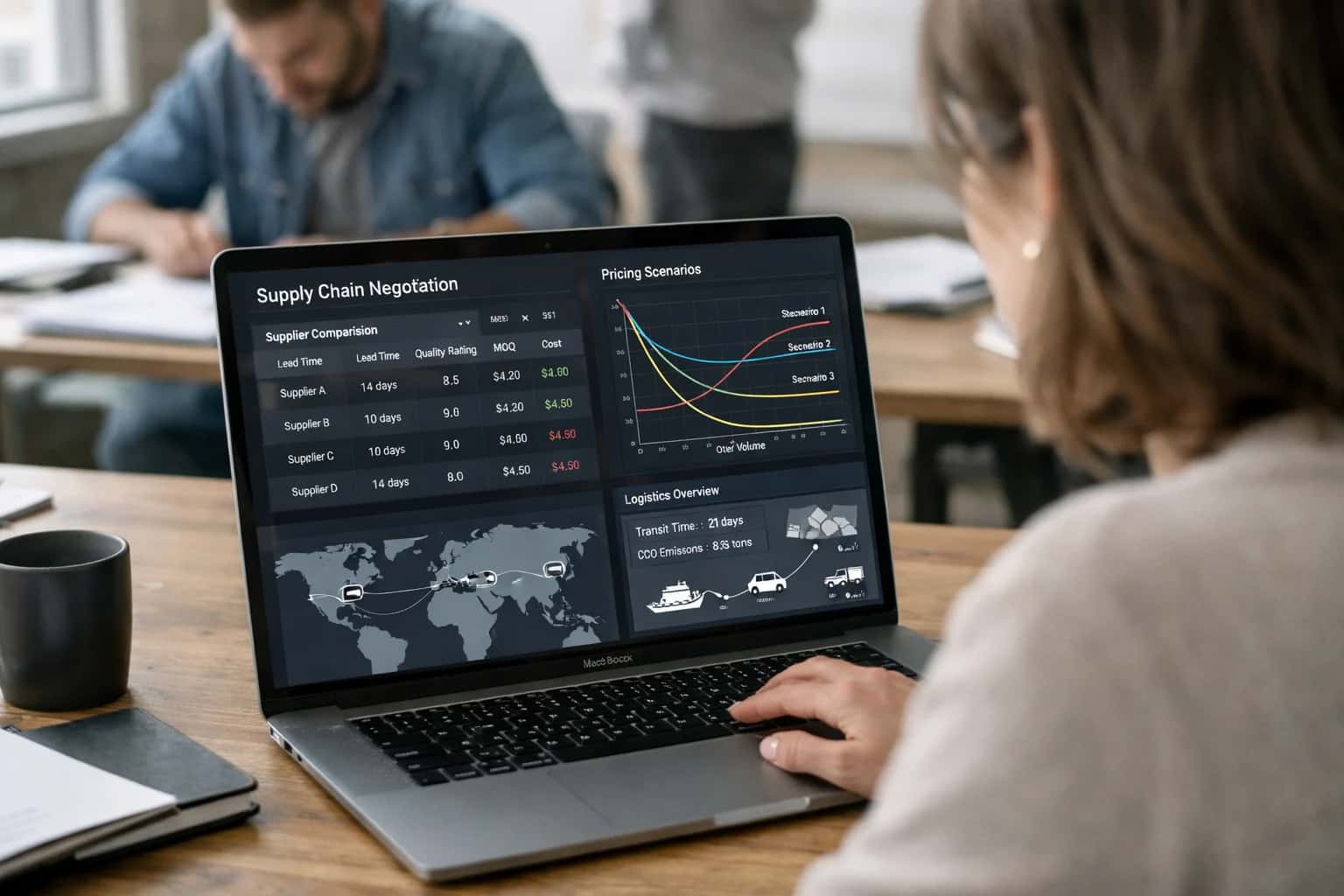
THE ANALYSIS
Introduction
A data-driven comparison of short-term, pattern-recognition-based demand sensing models against traditional statistical forecasting integrations for near-real-time inventory decisions.
Traditional demand planning integration takes a different approach by relying on proven statistical methods like ARIMA and exponential smoothing, fed by historical shipment data and ERP batch processes. This results in a highly auditable, stable forecast that is deeply embedded in the S&OP process. The trade-off is a structural inability to react to sudden demand shifts, as these models are optimized for long-term trend analysis rather than daily signal detection.
The key trade-off: If your priority is reducing stock-outs and inventory waste during volatile, short-term windows (days to 2 weeks), choose an AI-powered demand sensing model. If you prioritize forecast stability, long-range planning, and full integration with a rigid financial planning cycle, choose a traditional demand planning integration. For a modern control tower, a composite approach that uses AI for near-term execution and traditional models for tactical planning often yields the highest ROI.
HEAD-TO-HEAD COMPARISON
Feature Comparison Matrix
Direct comparison of AI-powered demand sensing and traditional demand planning integration for near-real-time inventory decisions.
| Metric | AI-Powered Demand Sensing | Traditional Demand Planning |
|---|---|---|
Forecast Horizon | 1-14 days (near-real-time) | 30-90 days (monthly buckets) |
Data Latency | < 1 hour (streaming ingestion) | 24-72 hours (batch ETL) |
Signal Types Processed | POS, social sentiment, weather, IoT | Historical shipments, orders |
Model Retraining Cycle | Continuous (online learning) | Weekly/Monthly (offline batch) |
Anomaly Detection | Unsupervised ML (autoencoder-based) | Rule-based threshold alerting |
Integration with Control Tower | API-first, event-driven architecture | Flat-file or scheduled DB sync |
Root Cause Analysis | Automated (SHAP/LIME explainability) | Manual investigation required |
AI-Powered Demand Sensing
TL;DR Summary
Key strengths and trade-offs at a glance.
01
Near-Real-Time Pattern Recognition
Specific advantage: Ingests live POS data, social sentiment, and weather signals to detect demand shifts in hours, not weeks. Traditional models rely on lagging historical shipments. This matters for short-lifecycle products and promotional responsiveness.
02
Granular Anomaly Detection
Specific advantage: Machine learning models automatically isolate SKU-location outliers that aggregate statistical forecasts miss. Reduces forecast error by 20-30% at the item level. This matters for inventory positioning and avoiding localized stockouts.
03
Autonomous Replenishment Triggers
Specific advantage: Directly feeds a control tower to trigger purchase order adjustments without human review. Traditional integration requires a planner to interpret the forecast first. This matters for reducing decision latency from days to minutes.
HEAD-TO-HEAD COMPARISON
Accuracy and Forecast Error Benchmarks
Direct comparison of key metrics for AI-Powered Demand Sensing vs Traditional Demand Planning Integration.
| Metric | AI-Powered Demand Sensing | Traditional Demand Planning |
|---|---|---|
Forecast Error (MAPE at SKU-Location) | 10-20% | 25-35% |
Forecast Horizon | 1-14 days | Monthly/Quarterly |
Data Latency (Ingestion to Signal) | < 1 hour | 24-72 hours |
Pattern Recognition | Real-time POS, social, weather | Historical shipments |
New Product Introduction Forecast | Uses attribute-based clustering | Requires 12+ months of history |
Promotion Lift Accuracy | 85-92% | 60-75% |
Automated Exception Handling | ||
Granularity | Daily, SKU-Location | Weekly, DC-Level |
Contender A Pros
AI-Powered Demand Sensing: Pros and Cons
Key strengths and trade-offs at a glance.
01
Near-Real-Time Signal Capture
Specific advantage: Ingests and processes point-of-sale (POS) data, social sentiment, and weather patterns within minutes to detect demand shifts. Traditional models relying on historical shipments often have a 1-2 week latency. This matters for short-lifecycle products like fresh food or fast fashion, where a 24-hour delay in replenishment can lead to a 10% stock-out rate.
02
Pattern Recognition Beyond Human Bias
Specific advantage: Deep learning models identify non-linear, multi-variable correlations (e.g., a local sports event + weather change + a viral TikTok) that statistical models miss. This matters for demand shaping in consumer goods, where a model can autonomously trigger a localized promotion uplift forecast without a planner manually adjusting the baseline.
03
Granular SKU-Location Accuracy
Specific advantage: Achieves a 15-30% reduction in forecast error at the SKU-location level compared to traditional ARIMA or exponential smoothing models, as measured by Weighted Mean Absolute Percentage Error (WMAPE). This matters for multi-echelon inventory optimization, where a 1% accuracy gain at the distribution center level can translate to a 5% reduction in safety stock investment.
Enabling Efficiency, Speed & Accuracy
Intelligent Analysis, Decision & Execution
We build AI systems for teams that need search across company data, workflow automation across tools, or AI features inside products and internal software.
Talk to Us
Search across company data
Give teams answers from docs, tickets, runbooks, and product data with sources and permissions.
Useful when people spend too long searching or get different answers from different systems.
Enterprise searchRAGPermissions
Read more
Automate internal workflows
Use AI to route work, draft outputs, trigger actions, and keep approvals and logs in place.
Useful when repetitive work moves across multiple tools and teams.
AI agentsWorkflow automationGovernance
Read more
Add AI to products and internal tools
Build assistants, guided actions, or decision support into the software your team or customers already use.
Useful when AI needs to be part of the product, not a separate tool.
AI integrationDecision supportModel routing
Read moreCHOOSE YOUR PRIORITY
When to Choose Which: Decision Guide by Persona
AI-Powered Demand Sensing for Demand Planners
Strengths: Near-real-time signal capture from POS, social sentiment, and weather data. Models like Transformer-based architectures detect short-term demand shifts that weekly statistical forecasts miss. Ideal for volatile SKUs, promotions, and new product launches.
Key Metrics:
- Forecast error reduction: 30-50% for short-term (1-4 week) horizons
- Signal latency: Sub-hour ingestion vs. weekly batch
- Granularity: SKU-location-day level
Traditional Demand Planning Integration for Demand Planners
Strengths: Mature, auditable, and well-understood by cross-functional stakeholders. Statistical models (ARIMA, exponential smoothing) provide stable baselines for annual budgeting and S&OP processes. Integration with ERP systems like SAP IBP ensures process consistency.
Key Metrics:
- Forecast stability: Lower week-over-week volatility
- Audit trail: Full explainability for compliance
- Planning horizon: Superior for 3-18 month strategic planning
Verdict: Use AI sensing for weekly replenishment decisions; rely on traditional models for quarterly financial planning. The two should be fused, not replaced.
THE ANALYSIS
Verdict
A data-driven comparison of short-term pattern recognition against long-term statistical forecasting for inventory and replenishment decisions.
AI-Powered Demand Sensing excels at capturing short-term, real-time demand shifts because it ingests live point-of-sale (POS) data, social sentiment, and weather patterns. For example, implementations using models like Transformer-based time-series architectures have demonstrated a 30-50% reduction in forecast error at the SKU-location level for a 1-4 week horizon, directly improving on-shelf availability during promotions.
Traditional Demand Planning Integration takes a different approach by relying on historical shipments and established statistical methods like ARIMA or exponential smoothing. This results in a more stable, explainable baseline that excels at long-term, aggregate planning for annual budgeting and supplier capacity reservations, where the coefficient of variation is lower and the cost of a stock-out is balanced against holding costs.
The key trade-off: If your priority is reacting to volatile, short-term demand signals to minimize lost sales and reduce safety stock in a fast-moving consumer goods (FMCG) environment, choose AI-powered sensing. If you prioritize a stable, auditable forecast for long-term financial planning and supplier contracts in a more predictable industry, choose traditional integration. The most mature supply chains deploy a hybrid model, using traditional forecasts as a baseline and AI sensing for dynamic adjustments within the execution window.

About the author
Prasad Kumkar
CEO & MD, Inference Systems
Prasad Kumkar is the CEO & MD of Inference Systems and writes about AI systems architecture, LLM infrastructure, model serving, evaluation, and production deployment. Over 5+ years, he has worked across computer vision models, L5 autonomous vehicle systems, and LLM research, with a focus on taking complex AI ideas into real-world engineering systems.
His work and writing cover AI systems, large language models, AI agents, multimodal systems, autonomous systems, inference optimization, RAG, evaluation, and production AI engineering.
LinkedIn
Limited slotsGet a Free AI Consultation
Partnered with leading AI, data, and software stack.





How We Work
Custom AI workflows for your Business
One-fit-all AI don't work for modern businesses. At Inferensys, we aim to understand your business & custom requirements; which we use to define most efficient agentic workflows, the data, and the tools for your business.
01
Review the use case
We understand the task, the users, and where AI can actually help.
Read more02
Pick the right approach
We define what needs search, automation, or product integration.
Read more03
Build the first useful version
We implement the part that proves the value first.
Read more04
Improve from there
We add the checks and visibility needed to keep it useful.
Read moreThe first call is a practical review of your use case and the right next step.
Talk to Us