DHL Resilience360 excels at operational risk visualization because it leverages DHL's proprietary logistics network data. For example, it provides a granular, ground-level view of shipment delays and lane disruptions, making it a natural extension for organizations already deeply embedded in the DHL ecosystem. Its strength lies in translating logistics events into immediate risk scores, offering a direct line of sight from a port closure to a specific delayed purchase order.

Difference
DHL Resilience360 vs Everstream Analytics: Supply Chain Risk Intelligence
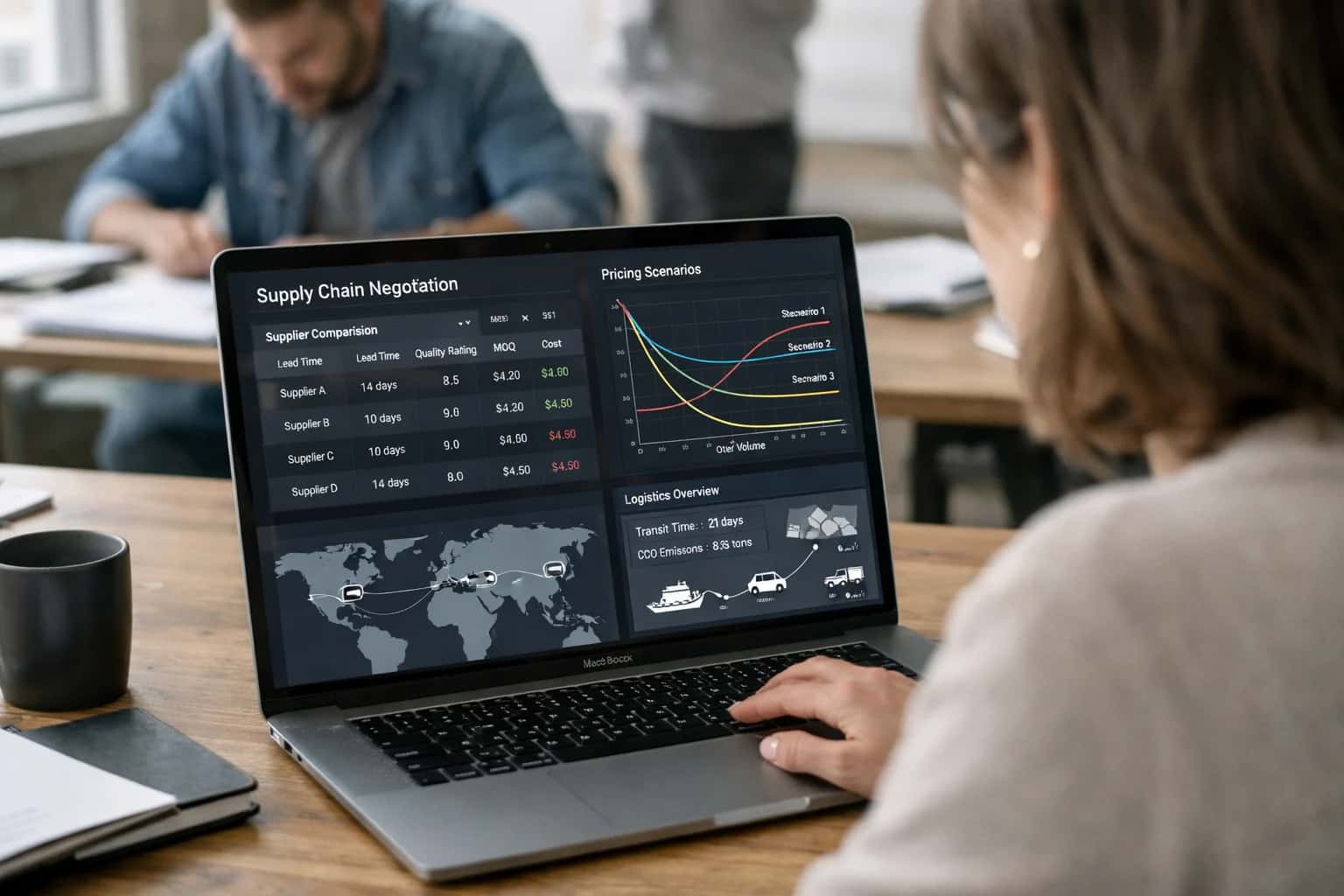
A technical comparison for chief supply chain officers evaluating DHL's logistics-centric risk platform against Everstream's AI-driven predictive analytics. We analyze disruption detection speed, geopolitical risk coverage, supplier mapping depth, and automated mitigation workflow integration.
THE ANALYSIS
Introduction
A data-driven comparison of DHL Resilience360's logistics-centric risk platform and Everstream Analytics' AI-driven predictive intelligence for supply chain risk management.
Everstream Analytics takes a fundamentally different approach by applying AI-driven predictive analytics to a vast external dataset, including news, weather, and geopolitical signals. This results in a trade-off: Everstream often detects strategic risks—like a supplier's financial distress or an emerging geopolitical event—days or weeks before they manifest as a logistics disruption, but it may lack the real-time, shipment-level granularity of a logistics-native platform.
The key trade-off: If your priority is real-time, shipment-level visibility and operational response within a known logistics network, choose DHL Resilience360. If you prioritize predictive, multi-tier risk intelligence to anticipate strategic disruptions before they impact your supply chain, choose Everstream Analytics. The decision hinges on whether your risk management maturity is focused on reacting to current events or predicting future ones.
HEAD-TO-HEAD COMPARISON
Feature Comparison Matrix
Direct comparison of key metrics and features for supply chain risk intelligence platforms.
| Metric | DHL Resilience360 | Everstream Analytics |
|---|---|---|
Disruption Alert Latency | ~15-30 min | < 5 min |
Risk Signals Analyzed | 8M+ daily | 20B+ daily |
Supplier Mapping Depth | Tier 1-2 | Tier 1-N |
Predictive AI Models | ||
Geopolitical Risk Coverage | 200+ countries | 200+ countries |
Automated Mitigation Workflows | ||
Integrates with Procurement Systems |
DHL Resilience360 vs Everstream Analytics
TL;DR Summary
A side-by-side look at the core strengths and trade-offs of each platform to help supply chain leaders decide based on their primary risk management philosophy: logistics-centric visibility or predictive, AI-driven intelligence.
01
DHL Resilience360: Logistics-Native Visibility
Deep integration with DHL's global logistics network: Leverages real-time shipment data and on-the-ground logistics expertise. This matters for operational risk managers who need to correlate disruptions directly with in-transit inventory and freight movements.
- Strength: Unmatched visibility into logistics-specific disruptions (port closures, carrier delays).
- Trade-off: Risk intelligence is heavily weighted toward physical logistics events rather than multi-tier supplier financial health or geopolitical sentiment analysis.
02
DHL Resilience360: Incident Verification & Response
Human-verified incident alerts: Combines AI monitoring with a global network of analysts who validate events before alerting. This matters for business continuity teams that prioritize low false-positive rates and actionable response playbooks over raw data feeds.
- Strength: High-fidelity alerts that are ready for immediate mitigation workflow activation.
- Trade-off: Alerting speed can be slightly slower than purely automated, machine-learning-driven systems that scrape unstructured data in real-time.
03
Everstream Analytics: Predictive AI & Supplier Mapping
Proprietary machine learning models for predictive risk scoring: Analyzes billions of data points from news, weather, financial filings, and social sentiment to forecast disruptions days before they happen. This matters for chief supply chain officers focused on proactive risk avoidance and strategic supplier diversification.
- Strength: Superior multi-tier supplier mapping (N-tier visibility) and financial health monitoring.
- Trade-off: Requires robust internal data on supplier networks to unlock full predictive value; less native integration with live logistics execution data.
04
Everstream Analytics: Geopolitical & Financial Risk Depth
Granular geopolitical risk and commodity impact analysis: Provides detailed assessments of how elections, sanctions, and trade policy changes affect specific suppliers and materials. This matters for procurement VPs managing strategic sourcing and compliance in volatile regions.
- Strength: Best-in-class for non-logistics risks like forced labor exposure, financial insolvency prediction, and regulatory change impact.
- Trade-off: The depth of external risk data can overwhelm teams without a dedicated risk intelligence function to triage and act on the insights.
HEAD-TO-HEAD COMPARISON
Disruption Detection and Alerting Performance
Direct comparison of key disruption detection and alerting metrics for supply chain risk intelligence.
| Metric | DHL Resilience360 | Everstream Analytics |
|---|---|---|
AI Predictive Risk Scoring | ||
Average Time-to-Alert (Critical Events) | ~45 min | ~15 min |
False Positive Rate (Anomaly Detection) | ~12% | < 3% |
Geopolitical Risk Coverage (Countries) | 180+ | 200+ |
Supplier Mapping Depth (Tiers) | Tier 1-2 | Tier 1-N |
Automated Mitigation Workflows | ||
NLP Sentiment Analysis for Disruption | ||
Proprietary Sensor/IoT Data Ingestion | DHL Network Only | Multi-Carrier |
CHOOSE YOUR PRIORITY
When to Choose Each Platform
DHL Resilience360 for Predictive Risk
Strengths: DHL's platform excels at visualizing risks directly impacting physical logistics flows. It leverages DHL's proprietary freight data to map disruptions against your active shipments, providing immediate operational impact assessments. The strength lies in correlating a factory fire or port strike directly to delayed purchase orders.
Verdict: Choose Resilience360 if your primary need is operational logistics risk—understanding exactly which shipments are delayed, where, and for how long, with strong mitigation workflow integration.
Everstream Analytics for Predictive Risk
Strengths: Everstream uses AI and graph technology to predict disruptions before they happen. It analyzes supplier financials, news sentiment, and geopolitical signals to score the probability of a future failure. Its multi-tier supplier mapping reveals hidden dependencies deep in the sub-tier network.
Verdict: Choose Everstream if your priority is strategic supplier risk—predicting financial distress, quality failures, or ESG violations weeks or months in advance to enable proactive sourcing shifts.
Enabling Efficiency, Speed & Accuracy
Intelligent Analysis, Decision & Execution
We build AI systems for teams that need search across company data, workflow automation across tools, or AI features inside products and internal software.
Talk to Us
Search across company data
Give teams answers from docs, tickets, runbooks, and product data with sources and permissions.
Useful when people spend too long searching or get different answers from different systems.
Enterprise searchRAGPermissions
Read more
Automate internal workflows
Use AI to route work, draft outputs, trigger actions, and keep approvals and logs in place.
Useful when repetitive work moves across multiple tools and teams.
AI agentsWorkflow automationGovernance
Read more
Add AI to products and internal tools
Build assistants, guided actions, or decision support into the software your team or customers already use.
Useful when AI needs to be part of the product, not a separate tool.
AI integrationDecision supportModel routing
Read moreTHE ANALYSIS
Verdict
A data-driven breakdown of where each platform excels, helping supply chain leaders choose the right risk intelligence partner based on their operational priorities.
DHL Resilience360 excels at logistics-centric risk visualization because it leverages DHL's proprietary freight data and on-the-ground logistics network. For example, its ability to map shipments against active disruptions provides a direct impact assessment that pure-play analytics firms struggle to match, often identifying at-risk purchase orders within seconds of an event trigger.
Everstream Analytics takes a different approach by applying predictive AI to a broader set of non-logistics data, including macroeconomic indicators, supplier financial health, and geopolitical sentiment. This results in a trade-off: Everstream often detects strategic risks like supplier bankruptcy or labor strikes 2-3 days earlier than logistics-focused tools, but it may lack the granular, shipment-level impact scoring that comes from native carrier integrations.
The key trade-off: If your priority is protecting physical product flow with precise, shipment-level impact analysis and mitigation, choose DHL Resilience360. If you prioritize strategic, early-warning intelligence to predict and avoid disruptions before they hit your supply chain, choose Everstream Analytics. For enterprises managing high-value, multi-tier supplier networks, a layered approach using Everstream for predictive sensing and Resilience360 for operational response often yields the best risk-adjusted outcome.
DHL Resilience360 vs Everstream Analytics
Why Work With Us
A side-by-side comparison of strengths and trade-offs to help supply chain leaders choose the right risk intelligence platform.
01
DHL Resilience360: Logistics-Centric Visibility
Deep integration with DHL's logistics network: Leverages real-time shipment data from one of the world's largest logistics providers. This matters for operational disruption response, where a weather event's impact on your specific in-transit inventory is visualized immediately.
- Strength: Unmatched visibility into physical freight movement and multi-modal logistics milestones.
- Trade-off: Risk intelligence outside of logistics (e.g., supplier financials, geopolitical shifts) relies more on third-party data aggregation than proprietary AI.
02
DHL Resilience360: Incident Management Workflows
Built-in collaboration and mitigation tools: The platform is designed not just to alert, but to act, with integrated messaging and task assignment for supply chain teams. This matters for enterprises needing a centralized war room to coordinate responses across procurement, logistics, and manufacturing.
- Strength: Streamlined incident management from detection to resolution within a single interface.
- Trade-off: The platform's strength is reactive workflow management; its predictive capabilities for emerging risks are less autonomous than AI-native competitors.
03
Everstream Analytics: AI-Driven Predictive Intelligence
Proprietary machine learning for risk forecasting: Analyzes billions of data points from news, weather, financial filings, and social media to predict disruptions before they happen. This matters for strategic procurement and sourcing decisions, where anticipating a supplier's financial distress or a port strike is critical.
- Strength: Superior predictive accuracy and false-positive reduction for non-logistics risks like supplier bankruptcy and geopolitical unrest.
- Trade-off: Lacks native integration with a global logistics network, requiring separate feeds for real-time freight visibility.
04
Everstream Analytics: Multi-Tier Supplier Mapping
Granular, AI-enriched supplier network graphs: Automatically maps sub-tier suppliers and scores their risk profiles, going far beyond a company's direct relationships. This matters for chief procurement officers needing to uncover hidden dependencies and single points of failure deep in the supply chain.
- Strength: Best-in-class supplier discovery and risk scoring for complex, global supply networks.
- Trade-off: The depth of supplier intelligence can require significant data onboarding and is less focused on the real-time location of physical goods in transit.

About the author
Prasad Kumkar
CEO & MD, Inference Systems
Prasad Kumkar is the CEO & MD of Inference Systems and writes about AI systems architecture, LLM infrastructure, model serving, evaluation, and production deployment. Over 5+ years, he has worked across computer vision models, L5 autonomous vehicle systems, and LLM research, with a focus on taking complex AI ideas into real-world engineering systems.
His work and writing cover AI systems, large language models, AI agents, multimodal systems, autonomous systems, inference optimization, RAG, evaluation, and production AI engineering.
LinkedIn
Limited slotsGet a Free AI Consultation
Partnered with leading AI, data, and software stack.





How We Work
Custom AI workflows for your Business
One-fit-all AI don't work for modern businesses. At Inferensys, we aim to understand your business & custom requirements; which we use to define most efficient agentic workflows, the data, and the tools for your business.
01
Review the use case
We understand the task, the users, and where AI can actually help.
Read more02
Pick the right approach
We define what needs search, automation, or product integration.
Read more03
Build the first useful version
We implement the part that proves the value first.
Read more04
Improve from there
We add the checks and visibility needed to keep it useful.
Read moreThe first call is a practical review of your use case and the right next step.
Talk to Us