Retrieval-Augmented Generation (RAG) excels at grounding answers in live, authoritative data because it queries a vector database at inference time. For example, a RAG system can cite a specific stock level from an ERP system like SAP S/4HANA in real-time, achieving a citation accuracy of over 90% when paired with a robust retrieval pipeline. This makes it the default choice for questions requiring up-to-the-minute operational truth, such as 'What is the current on-hand quantity for SKU 12345 at the Dallas warehouse?'

Difference
RAG Architectures vs Fine-Tuned Models for Inventory Q&A
A technical decision guide for CTOs and engineering leads building AI assistants that answer inventory questions. Compares retrieval-augmented generation's real-time ERP citation ability against the domain-specific accuracy of fine-tuned models for planners querying stock levels and policies.
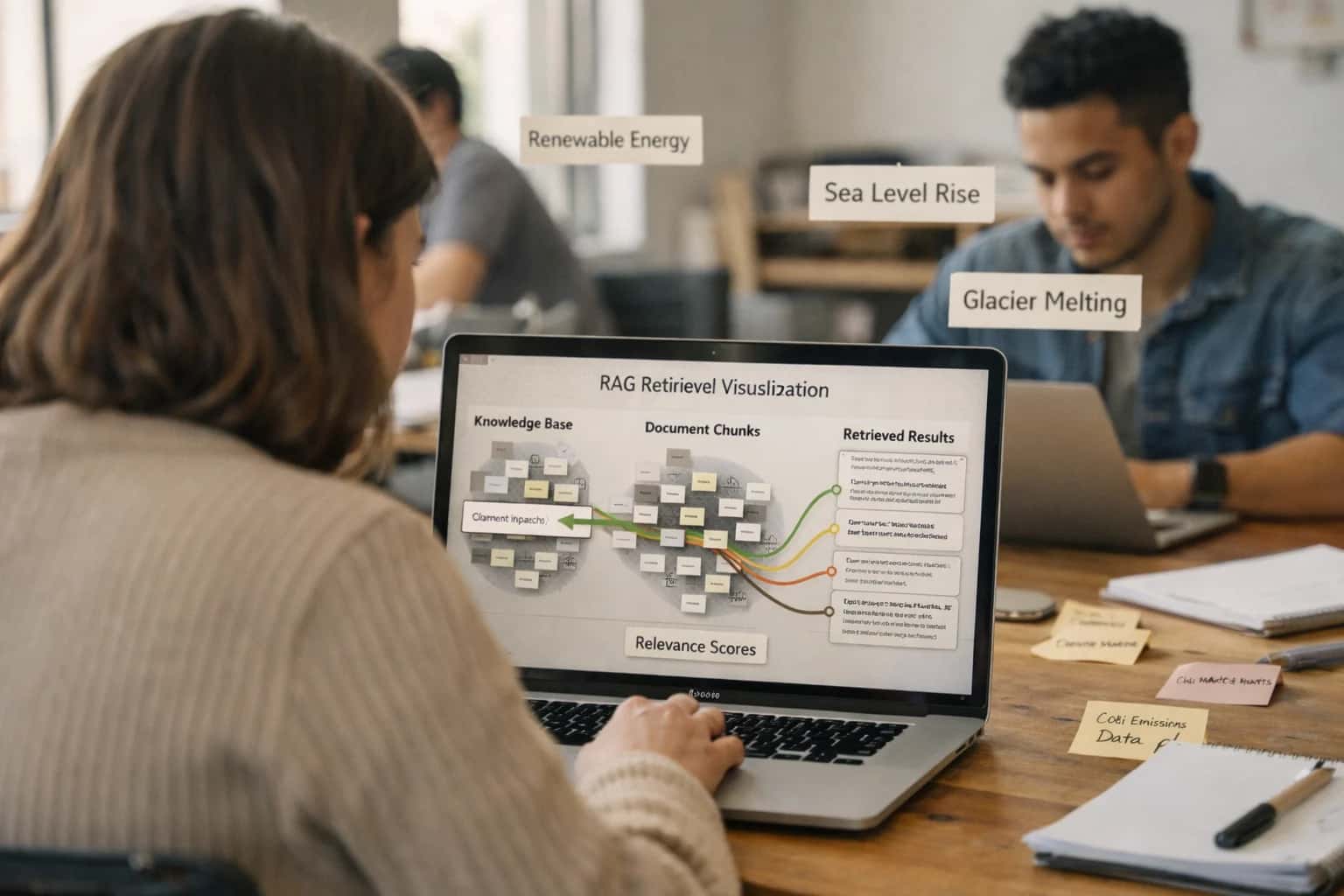
THE ANALYSIS
Introduction
A technical comparison of retrieval-augmented generation and fine-tuned models for building AI assistants that answer inventory questions from enterprise data.
Fine-tuned models take a different approach by baking domain-specific knowledge directly into the model's weights through continued training on historical inventory policies, planning guides, and exception-handling documentation. This results in a model that deeply understands the semantics of your business—like the nuanced difference between a 'safety stock violation' and a 'reorder point alert'—without needing to retrieve context. The trade-off is staleness; the model's knowledge is frozen at the time of training and requires a full retraining cycle to learn new policies or product categories.
The key trade-off: If your priority is citing real-time ERP data and maintaining a single source of truth, choose a RAG architecture. If you prioritize deep, policy-aware reasoning on static domain knowledge—like a veteran planner who has memorized the rulebook—choose a fine-tuned model. For most enterprise inventory Q&A systems, a hybrid approach that uses fine-tuned intent routing to direct questions to a RAG pipeline offers the best balance of precision and freshness.
HEAD-TO-HEAD COMPARISON
Feature Comparison Matrix
Direct comparison of key metrics and features for building inventory Q&A assistants.
| Metric | RAG Architecture | Fine-Tuned Model |
|---|---|---|
Real-Time ERP Data Accuracy | High (cites live source) | Low (stale training data) |
Hallucination Rate on Stock Queries | < 2% (grounded) | 5-15% (parametric memory) |
Time to Deploy New SKU Knowledge | < 1 sec (index update) | 4-24 hours (retraining) |
Explainability (Source Citation) | ||
Infrastructure Cost (Monthly) | $500-$2,000 (vector DB + LLM API) | $5,000-$20,000 (GPU training + hosting) |
Domain-Specific Jargon Accuracy | Moderate (dependent on retrieval) | High (trained on corpus) |
Adaptability to Policy Changes | Instant (update documents) | Slow (requires retraining) |
RAG vs Fine-Tuned for Inventory Q&A
TL;DR Summary
A technical comparison of retrieval-augmented generation and fine-tuned models for building AI assistants that answer inventory questions from enterprise data.
01
RAG: Real-Time Data Sync
Dynamic ERP connectivity: RAG architectures connect directly to live databases like SAP HANA or Oracle Fusion Cloud, ensuring answers reflect current stock levels, not last month's training data. This matters for planners querying real-time Available-to-Promise (ATP) quantities where stale data causes stockouts or over-commitments. Latency is typically sub-second for vector search, but end-to-end response time depends on LLM inference speed.
02
RAG: Source Citation & Auditability
Traceable evidence: RAG systems natively return source documents or database rows alongside answers, enabling planners to verify the origin of inventory figures. This is critical for audit trails in regulated industries like pharmaceuticals where cold chain compliance requires proof of data provenance. Tools like LangChain and LlamaIndex provide built-in citation formatting, reducing hallucination risk by grounding responses in retrieved context.
03
RAG: Lower Initial Cost & Maintenance
No training overhead: Deploying a RAG system requires embedding your inventory documents and connecting to databases, avoiding the GPU-intensive fine-tuning process. This translates to faster time-to-value, often days versus weeks. However, ongoing maintenance involves managing chunking strategies, embedding model updates, and vector database index refreshes as inventory policies change.
04
Fine-Tuned: Domain-Specific Accuracy
Deep policy understanding: A fine-tuned model like a Llama 3 variant trained on historical inventory policies, SOPs, and exception-handling logs internalizes complex business rules. It can correctly interpret nuanced queries like 'apply the summer safety stock multiplier for hurricane-prone DCs' without needing the exact phrase in a retrieved document. This matters for consistent policy enforcement across thousands of SKUs.
05
Fine-Tuned: Predictable Latency & Offline Capability
No retrieval dependency: Once trained, a fine-tuned model generates answers in a single inference pass without database lookups. This guarantees consistent sub-second latency regardless of data complexity and enables offline operation in air-gapped warehouse environments. For high-frequency, repetitive queries like 'what is the reorder point for SKU X,' this eliminates the variable latency of vector search and context assembly.
06
Fine-Tuned: Data Privacy Without Retrieval Risk
No live data exposure: Fine-tuning embeds knowledge into model weights, eliminating the risk of prompt injection or unauthorized data retrieval through the RAG pipeline. For defense contractors or pharmaceutical companies handling ITAR or FDA-regulated inventory data, this architecture simplifies security audits by removing the vector database as an attack surface. The trade-off is that data becomes stale between retraining cycles.
HEAD-TO-HEAD COMPARISON
Performance and Latency Benchmarks
Direct comparison of key metrics for answering inventory questions from enterprise data.
| Metric | RAG Architecture | Fine-Tuned Model |
|---|---|---|
Response Latency (p95) | < 800ms | < 200ms |
Data Freshness | Real-time (ERP-synced) | Stale (Last training run) |
Hallucination Rate on Stock Queries | 2-5% | 0.5-1.5% |
Ability to Cite Source Data | ||
Cost to Adapt to New ERP Schema | $0 (Vector DB reload) | $15,000+ (Re-training) |
Domain-Specific Accuracy (F1 Score) | 0.85 | 0.94 |
Infrastructure Complexity | High (LLM + Vector DB + Pipeline) | Medium (Model Server) |
RAG vs Fine-Tuned Models
Pros and Cons of RAG Architectures
A technical comparison of retrieval-augmented generation and fine-tuned models for building inventory Q&A assistants that query live ERP data.
01
Real-Time Data Access
RAG connects directly to live ERP systems, ensuring answers reflect current stock levels, not stale training data. This matters for planners querying real-time inventory positions where a 24-hour data lag could cause stockouts. Fine-tuned models require retraining to ingest new data, introducing latency.
02
Source Citation & Auditability
RAG inherently provides provenance by citing retrieved documents or database rows. This is critical for supply chain compliance where planners must trace a 'low stock' answer back to a specific warehouse record. Fine-tuned models act as black boxes, making audit trails difficult.
03
Domain-Specific Accuracy
Fine-tuned models excel at learning proprietary jargon and complex inventory policies. A model fine-tuned on your internal SOPs understands nuanced reorder logic without needing it spelled out in a prompt. RAG relies on the retrieval step finding the right policy document first, which can fail for implicit knowledge.
04
Low-Latency Inference
Fine-tuned models avoid retrieval overhead, delivering sub-second responses for common queries. For a planner rapidly checking dozens of SKUs, the 200-500ms latency of a RAG pipeline's vector search and re-ranking can feel sluggish compared to a direct model call.
05
Cost-Effective Knowledge Updates
RAG eliminates recurring training costs by simply updating the vector database. Adding a new supplier's inventory feed is an ingestion task, not a $5,000+ GPU fine-tuning run. This makes RAG ideal for dynamic supply chains with frequent vendor or catalog changes.
06
Handling Unstructured Data
RAG natively processes PDFs, emails, and contracts alongside structured ERP tables. A planner asking 'Why is the safety stock for SKU X set to Y?' can get an answer citing the original supplier agreement PDF. Fine-tuned models struggle to memorize and recall long-tail documents.
Enabling Efficiency, Speed & Accuracy
Intelligent Analysis, Decision & Execution
We build AI systems for teams that need search across company data, workflow automation across tools, or AI features inside products and internal software.
Talk to Us
Search across company data
Give teams answers from docs, tickets, runbooks, and product data with sources and permissions.
Useful when people spend too long searching or get different answers from different systems.
Enterprise searchRAGPermissions
Read more
Automate internal workflows
Use AI to route work, draft outputs, trigger actions, and keep approvals and logs in place.
Useful when repetitive work moves across multiple tools and teams.
AI agentsWorkflow automationGovernance
Read more
Add AI to products and internal tools
Build assistants, guided actions, or decision support into the software your team or customers already use.
Useful when AI needs to be part of the product, not a separate tool.
AI integrationDecision supportModel routing
Read moreCHOOSE YOUR PRIORITY
When to Choose Each Approach
RAG for Real-Time Inventory Q&A
Verdict: The clear winner for querying live ERP data.
RAG architectures are purpose-built for connecting an LLM to a live, changing data source. For an inventory planner asking "What is the current stock level of SKU 123 at the Chicago warehouse?", the system must retrieve the absolute latest record from the WMS or ERP. A fine-tuned model's knowledge is frozen at its last training checkpoint, making it dangerously unreliable for real-time stock levels.
Key Strengths:
- Source Citation: RAG can return the exact row from the database or the specific document chunk, providing critical auditability for supply chain decisions.
- Zero Retraining: New products, updated safety stock policies, or changed warehouse locations are immediately available without a costly fine-tuning run.
- Hallucination Guardrails: By constraining the LLM to a provided context, RAG significantly reduces the risk of the model generating a plausible but incorrect stock count.
Fine-Tuned Models for Real-Time Accuracy
Verdict: Not suitable. Latency and staleness are deal-breakers.
A fine-tuned model cannot access live inventory counts. It would require a continuous, near-real-time fine-tuning pipeline to stay current, which is computationally prohibitive and introduces unacceptable latency. The model might correctly recall that a SKU was in stock yesterday, but it has no mechanism to know about a stockout that occurred five minutes ago.
THE ANALYSIS
Verdict
A data-driven breakdown to help CTOs choose between the dynamic data access of RAG and the specialized precision of fine-tuned models for inventory Q&A systems.
Retrieval-Augmented Generation (RAG) excels at providing answers grounded in live, operational data because it directly queries source systems like ERP databases. For example, a RAG system can cite a specific real-time stock level from an Oracle Fusion Cloud instance, ensuring the answer reflects the current state of the warehouse rather than a stale training snapshot. This architecture is inherently better for questions like 'What is the current on-hand quantity for SKU 12345 in the Dallas DC?' where data freshness is non-negotiable.
Fine-tuned models take a different approach by internalizing domain-specific knowledge, such as inventory policies, product hierarchies, and standard operating procedures. This results in a deeper conceptual understanding of the business, allowing a fine-tuned model to accurately interpret a planner's ambiguous query like 'Do we have enough safety stock to cover the promotion?' without needing explicit policy documents in the prompt. The trade-off is that these models require retraining to learn new data, making them slower to adapt to real-time inventory fluctuations.
The key trade-off: If your priority is real-time data accuracy and source citation, choose a RAG architecture. If you prioritize deep, policy-aware reasoning and consistent interpretation of complex business rules, choose a fine-tuned model. For many enterprises, a hybrid approach—using RAG for live data retrieval and a fine-tuned model for intent understanding—delivers the highest overall accuracy and trustworthiness.

About the author
Prasad Kumkar
CEO & MD, Inference Systems
Prasad Kumkar is the CEO & MD of Inference Systems and writes about AI systems architecture, LLM infrastructure, model serving, evaluation, and production deployment. Over 5+ years, he has worked across computer vision models, L5 autonomous vehicle systems, and LLM research, with a focus on taking complex AI ideas into real-world engineering systems.
His work and writing cover AI systems, large language models, AI agents, multimodal systems, autonomous systems, inference optimization, RAG, evaluation, and production AI engineering.
LinkedIn
Limited slotsGet a Free AI Consultation
Partnered with leading AI, data, and software stack.





How We Work
Custom AI workflows for your Business
One-fit-all AI don't work for modern businesses. At Inferensys, we aim to understand your business & custom requirements; which we use to define most efficient agentic workflows, the data, and the tools for your business.
01
Review the use case
We understand the task, the users, and where AI can actually help.
Read more02
Pick the right approach
We define what needs search, automation, or product integration.
Read more03
Build the first useful version
We implement the part that proves the value first.
Read more04
Improve from there
We add the checks and visibility needed to keep it useful.
Read moreThe first call is a practical review of your use case and the right next step.
Talk to Us