Custom AI Development excels at creating a truly bespoke financial brain because it can model unique cost-to-serve algorithms and dynamic pricing agents that reflect your specific business reality. For example, a custom agent can ingest real-time spot market rates, weather data, and port congestion metrics to autonomously re-calculate the profitability of a shipment mid-voyage, a level of granularity that often reduces expediting costs by 15-20% by enabling smarter, faster trade-off decisions.

Difference
Custom AI Development vs Oracle Supply Chain Financial Orchestration: Custom FinOps vs Packaged Financials
A technical decision guide for CTOs and VPs of Supply Chain comparing bespoke AI agents for financial orchestration against Oracle's pre-integrated cloud suite. Focuses on cost-to-serve modeling, dynamic pricing, and total cost of ownership.
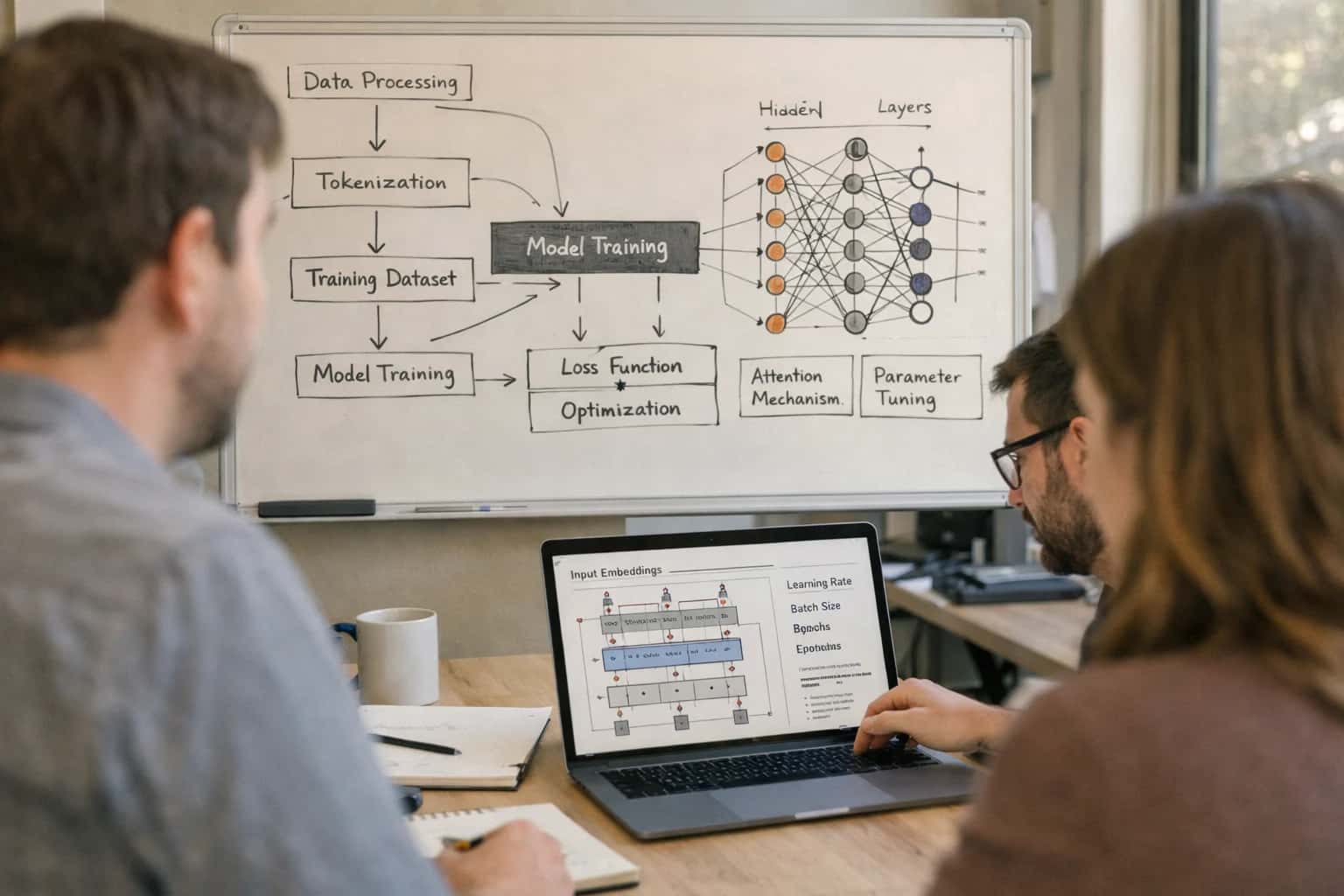
THE ANALYSIS
The Financial Brain of Your Supply Chain: Bespoke AI or Oracle's Ecosystem?
A data-driven comparison of custom AI development versus Oracle's packaged Supply Chain Financial Orchestration for building the financial brain of a modern supply chain.
Oracle's Supply Chain Financial Orchestration takes a different approach by embedding financial controls directly into the physical supply chain flow within a unified ecosystem. This results in a tightly integrated process where a goods receipt in Oracle SCM Cloud automatically triggers a trade compliance check, calculates landed cost, and creates a supplier invoice in Oracle Financials. The key trade-off is a massive reduction in reconciliation time and audit risk, with Oracle reporting that its pre-integrated flows can accelerate period-end close by up to 50%.
The key trade-off: If your priority is building a proprietary, competitive advantage through unique financial modeling and autonomous decision-making, choose a custom AI agent. If you prioritize a low-risk, pre-integrated financial flow that accelerates your period-end close and ensures ironclad audit trails within a single vendor ecosystem, choose Oracle's packaged orchestration.
Consider the total cost of ownership (TCO) carefully. A custom agent requires an upfront investment in data science and ongoing maintenance of its model and data pipelines, but it avoids the perpetual licensing fees of a platform you may not fully utilize. Oracle's solution has a lower initial development cost but locks you into its ecosystem, where the true cost lies in the change management and the potential inability to adapt to a novel business model that the packaged software wasn't designed to handle.
Ultimately, the decision hinges on your data. A custom AI agent is only as good as the proprietary data it learns from; if your historical financial and logistics data is fragmented or siloed, the agent will fail to deliver value. Oracle's strength is its pre-built data model, which forces standardization and provides immediate value from best-practice KPIs. Choose the custom path when your data is a unique asset ready to be exploited, and choose Oracle when your primary need is to clean up and standardize a chaotic financial-operational process.
HEAD-TO-HEAD COMPARISON
Head-to-Head Feature Matrix
Direct comparison of key metrics and features for supply chain financial orchestration.
| Metric | Custom AI Development | Oracle SCM Financial Orchestration |
|---|---|---|
Cost-to-Serve Model Fidelity | Bespoke, multi-variable | Standard, pre-configured |
Dynamic Pricing Agent Autonomy | Full autonomous execution | Rule-based alerts only |
Integration with Non-Oracle ERPs | ||
Time to Deploy Custom Financial Logic | 2-4 weeks | 3-6 months (customization) |
Pre-built Financial Controls Library | ||
Data Model Ownership | Full, proprietary | Oracle-defined schema |
Upfront License Cost | $0 (build cost) | $150K+/year |
Custom FinOps vs Packaged Financials
TL;DR: The Core Trade-Offs
Key strengths and trade-offs at a glance for AI-driven supply chain financial operations.
01
Bespoke Cost-to-Serve Models
Custom AI Development: You can build a cost-to-serve model that ingests your unique telematics, contract rates, and commodity indexes. This matters for 3PLs and manufacturers with complex, multi-modal cost structures where a generic allocation model would misprice services by 15-20%.
Oracle SCFO: Provides a pre-built, best-practice cost allocation engine that is deeply integrated with Oracle Transportation Management and E-Business Suite. This matters for organizations that want to map costs to a standard chart of accounts without building a data science team.
02
Dynamic Pricing & Rate Management
Custom AI Agent: An autonomous agent can be designed to adjust spot quotes in real-time based on capacity, demand signals, and competitor pricing scraped from the web. This matters for freight brokerages and carriers in volatile markets where margin optimization requires sub-second decision-making.
Oracle SCFO: Excels at managing contracted rates, tariffs, and complex charge structures within a governed workflow. It ensures that every invoice matches a pre-approved rate card, which is critical for shippers focused on audit compliance and preventing overbilling.
03
Integration & Ecosystem Lock-In
Custom AI Development: Offers the flexibility to integrate financial logic with any TMS, WMS, or ERP via API. This matters for enterprises with a best-of-breed technology stack who want to avoid vendor lock-in and can invest in maintaining custom integration middleware.
Oracle SCFO: Provides zero-latency, native integration with the Oracle ecosystem. Financial orchestration flows seamlessly from order to cash. This matters for organizations already committed to Oracle Cloud, where the total cost of ownership is reduced by eliminating integration tax.
04
Time-to-Value & Innovation Velocity
Custom AI Agent: The initial build requires 3-6 months of development and data engineering, but allows for continuous, rapid iteration on financial logic. This matters for companies with a unique competitive advantage in financial operations who view their pricing logic as proprietary IP.
Oracle SCFO: Can be deployed in weeks with quarterly updates managed by Oracle. Innovation is constrained to the vendor's roadmap. This matters for organizations that prioritize stability, predictable costs, and rapid adoption of standardized financial processes over bespoke innovation.
CHOOSE YOUR PRIORITY
When to Choose Which: Decision by Persona
Custom AI Development for CTOs
Verdict: Choose this if your competitive advantage relies on proprietary cost-to-serve models and dynamic pricing algorithms that cannot be replicated by competitors using the same off-the-shelf software.
Strengths:
- Data Model Ownership: You retain complete control over the data structures and logic that define your financial orchestration, avoiding vendor lock-in.
- Differentiation Velocity: You can deploy bespoke AI agents for autonomous freight audit and pay or real-time margin analysis faster than Oracle's release cycle.
- Integration Flexibility: A custom stack can be designed to sit on top of a heterogeneous ERP landscape (e.g., legacy systems + SAP + niche TMS), whereas Oracle Financial Orchestration works best in a greenfield Oracle ecosystem.
Oracle Supply Chain Financial Orchestration for CTOs
Verdict: Choose this if your primary mandate is to reduce technical debt and consolidate systems onto a single, secure, and compliant platform where financial and supply chain data are natively unified.
Strengths:
- Pre-Integrated Financial Flow: Eliminates the risk and maintenance burden of building and supporting custom APIs between supply chain events (shipments, receipts) and financial transactions (invoicing, accruals).
- Security & Compliance: Inherits Oracle's enterprise-grade security model, audit trails, and segregation of duties, which are complex and expensive to build from scratch for a custom FinOps agent.
- Total Cost of Ownership (TCO): While license costs are high, you avoid the ongoing cost of hiring and retaining a specialized team of AI/ML engineers and supply chain data scientists.
HEAD-TO-HEAD COMPARISON
Total Cost of Ownership Analysis
Direct comparison of key financial and operational metrics for custom FinOps agents versus Oracle's packaged financial orchestration.
| Metric | Custom AI FinOps Agent | Oracle Supply Chain Financial Orchestration |
|---|---|---|
Cost-to-Serve Model Fidelity | Bespoke, multi-variable models | Standardized, best-practice models |
Dynamic Pricing Latency | < 100ms (real-time API) | Batch-dependent (minutes) |
Integration Complexity | High (custom API connectors) | Low (pre-integrated Oracle ecosystem) |
Annual License/Infrastructure Cost | $150,000 - $500,000+ | $100,000 - $300,000 (subscription) |
Time-to-Value | 6-12 months (development + training) | 1-3 months (configuration) |
Autonomous Settlement Execution | ||
Regulatory Adaptability | High (direct model updates) | Medium (vendor release cycle) |
Enabling Efficiency, Speed & Accuracy
Intelligent Analysis, Decision & Execution
We build AI systems for teams that need search across company data, workflow automation across tools, or AI features inside products and internal software.
Talk to Us
Search across company data
Give teams answers from docs, tickets, runbooks, and product data with sources and permissions.
Useful when people spend too long searching or get different answers from different systems.
Enterprise searchRAGPermissions
Read more
Automate internal workflows
Use AI to route work, draft outputs, trigger actions, and keep approvals and logs in place.
Useful when repetitive work moves across multiple tools and teams.
AI agentsWorkflow automationGovernance
Read more
Add AI to products and internal tools
Build assistants, guided actions, or decision support into the software your team or customers already use.
Useful when AI needs to be part of the product, not a separate tool.
AI integrationDecision supportModel routing
Read moreARCHITECTURAL TRADE-OFFS
Technical Deep Dive: Architecture and Integration
A technical comparison of the architectural paradigms, integration patterns, and data models underpinning custom AI agents versus Oracle's packaged Supply Chain Financial Orchestration. This analysis targets engineering leads evaluating the build-vs-buy decision for AI-driven FinOps in the supply chain.
A custom AI agent uses a flexible, schema-on-read data model, while Oracle enforces a rigid, pre-defined schema. Custom agents built with frameworks like LangGraph can ingest unstructured data (e.g., carrier contracts, spot market rates) directly into a vector database like Qdrant for semantic search. Oracle's Supply Chain Financial Orchestration relies on a fixed relational data model within Oracle Database, requiring all financial transactions, invoices, and purchase orders to conform to its pre-built tables. This makes custom agents superior for modeling unique cost-to-serve components, but Oracle provides immediate transactional consistency for standard financial flows.
THE ANALYSIS
The Verdict: Innovation Velocity vs. Safe Standardization
A data-driven breakdown of the core trade-off between building custom FinOps agents and deploying Oracle's packaged financial orchestration.
Custom AI Development excels at creating a competitive moat through hyper-specific cost-to-serve models because it can ingest non-standard operational data. For example, a custom agent can correlate real-time IoT fuel consumption from a proprietary fleet with dynamic spot-market freight rates to generate a true, per-mile profitability metric that a generic system would miss. This results in a financial model that is a direct reflection of your unique logistics network, not an industry average.
Oracle Supply Chain Financial Orchestration takes a different approach by embedding financial controls directly into the physical supply chain flow. This strategy results in a 'zero-latency' financial close where a goods receipt in Oracle WMS automatically triggers a trade compliance check, a landed cost calculation, and an accrual in Oracle Financials. The trade-off is a reliance on Oracle's pre-configured cost structures, which standardize operations but limit the ability to model highly bespoke, multi-variable pricing algorithms.
The key trade-off: If your priority is creating a proprietary, dynamic pricing engine that reacts to granular operational signals (like individual driver behavior or machine-level energy usage), choose a custom AI build. If you prioritize a guaranteed, audit-proof financial flow that accelerates period-end close and reduces reconciliation risk across a standardized ERP ecosystem, choose Oracle's packaged orchestration.

About the author
Prasad Kumkar
CEO & MD, Inference Systems
Prasad Kumkar is the CEO & MD of Inference Systems and writes about AI systems architecture, LLM infrastructure, model serving, evaluation, and production deployment. Over 5+ years, he has worked across computer vision models, L5 autonomous vehicle systems, and LLM research, with a focus on taking complex AI ideas into real-world engineering systems.
His work and writing cover AI systems, large language models, AI agents, multimodal systems, autonomous systems, inference optimization, RAG, evaluation, and production AI engineering.
LinkedIn
Limited slotsGet a Free AI Consultation
Partnered with leading AI, data, and software stack.





How We Work
Custom AI workflows for your Business
One-fit-all AI don't work for modern businesses. At Inferensys, we aim to understand your business & custom requirements; which we use to define most efficient agentic workflows, the data, and the tools for your business.
01
Review the use case
We understand the task, the users, and where AI can actually help.
Read more02
Pick the right approach
We define what needs search, automation, or product integration.
Read more03
Build the first useful version
We implement the part that proves the value first.
Read more04
Improve from there
We add the checks and visibility needed to keep it useful.
Read moreThe first call is a practical review of your use case and the right next step.
Talk to Us