
Differences
Model Quantization Engines
Model Quantization Engines
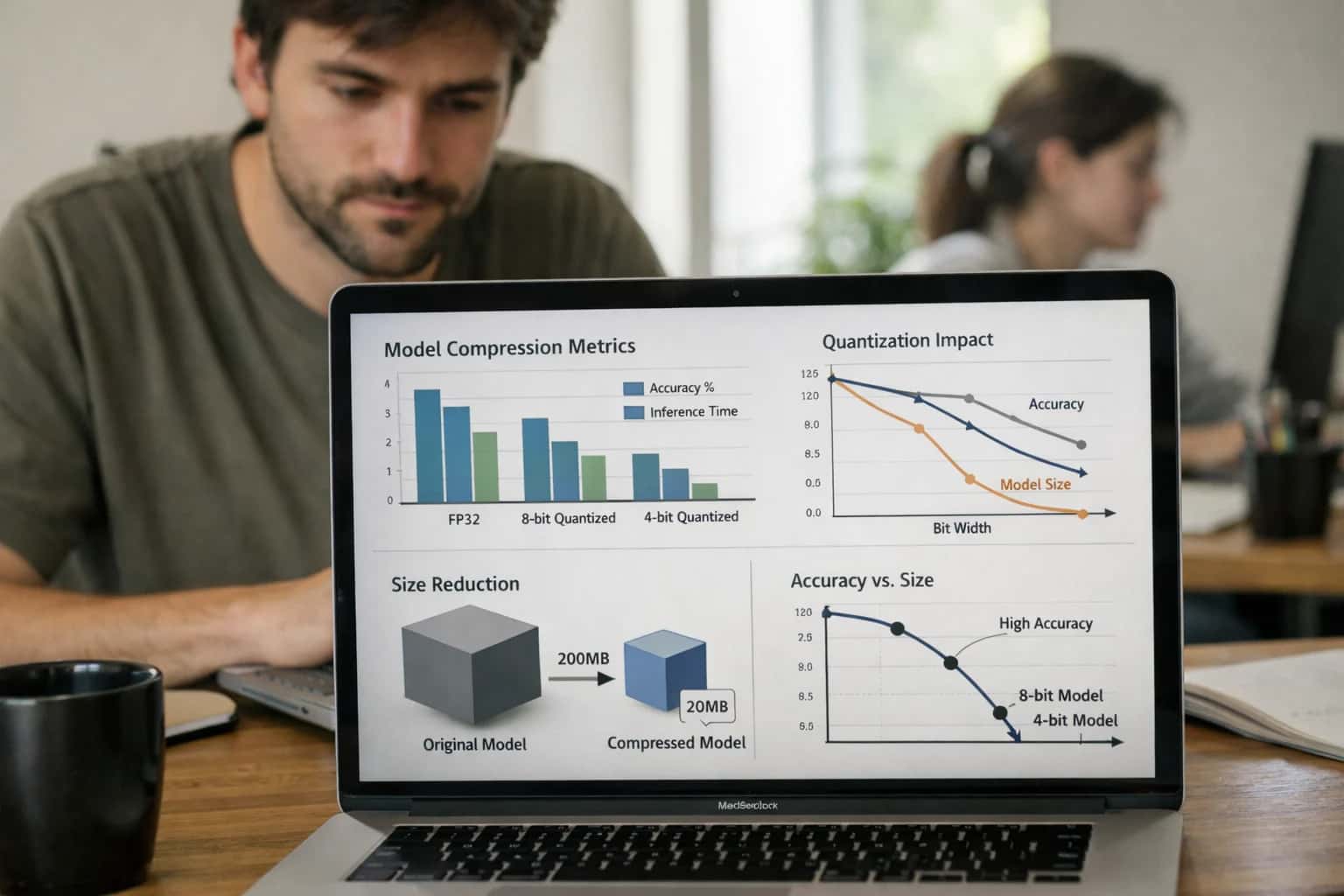
Comparisons related to compression tools that reduce model size and memory footprint for efficient local inference. Target: Performance Engineers comparing llama.cpp, AutoGPTQ, and AWQ for optimizing models to run on consumer-grade hardware.
llama.cpp vs AutoGPTQ: Quantization Engine Showdown
A direct comparison of the two most popular local model quantization engines. We evaluate llama.cpp's GGUF format and CPU-first philosophy against AutoGPTQ's GPU-optimized GPTQ kernel, focusing on inference speed, perplexity, and hardware compatibility for CTOs standardizing a local AI stack.
AWQ vs GPTQ: Activation-Aware vs Classic Quantization
Compares Activation-aware Weight Quantization (AWQ) against the established GPTQ method. This analysis covers the trade-offs in accuracy retention, quantization speed, and inference throughput on consumer GPUs, helping ML engineers choose the best compression technique for preserving model quality.
ExLlamaV2 vs llama.cpp: GPU Speed vs Universal Compatibility
Pits the highly optimized, GPU-specific ExLlamaV2 kernel against the universally compatible llama.cpp runtime. We benchmark tokens-per-second on NVIDIA hardware versus the ability to run on Apple Silicon and CPU-only servers for diverse deployment environments.
bitsandbytes vs GPTQ: On-the-Fly vs Pre-Quantized Models
Evaluates the convenience of bitsandbytes' on-the-fly 4-bit/8-bit quantization against the storage efficiency and speed of pre-quantized GPTQ models. This comparison is critical for teams deciding between dynamic loading in research and optimized serving in production.
GGUF vs AWQ: File Format Face-Off for Local Inference
Analyzes the GGUF file format's ecosystem and offloading capabilities against the AWQ format's GEMM kernel performance. We determine which format offers the best balance of model availability, inference speed, and memory management for local agent deployment.
HQQ vs bitsandbytes: Calibration-Free vs Calibration-Dependent Quantization
Compares Half-Quadratic Quantization (HQQ), which requires no calibration data, against the calibration-dependent bitsandbytes library. We assess the impact on quantization time, data privacy, and accuracy for air-gapped environments where calibration datasets are sensitive.
AQLM vs QuIP: Extreme Compression for Consumer Hardware
Examines two cutting-edge extreme compression methods: Additive Quantization of Language Models (AQLM) and QuIP with Incoherence Processing. We compare their ability to compress models to 2-bit precision while maintaining usable perplexity for running large models on limited VRAM.
TensorRT-LLM vs vLLM: NVIDIA Optimization vs Open-Source Serving
Compares NVIDIA's closed-source, hardware-specific TensorRT-LLM quantization and serving stack against the open-source vLLM engine. This analysis focuses on peak throughput, latency, and vendor lock-in for enterprises building on-premises inference servers.
MLC LLM vs llama.cpp: Universal Deployment vs Desktop Dominance
Evaluates MLC LLM's cross-platform approach targeting mobile and web against llama.cpp's stronghold on desktop and server environments. We compare WebGPU performance, mobile GPU support, and the developer experience for building local-first applications.
ONNX Runtime vs llama.cpp: Enterprise Standard vs Community Standard
Compares the enterprise-grade ONNX Runtime with its hardware-agnostic execution providers against the community-driven llama.cpp. We analyze integration with existing Microsoft ecosystems, language bindings, and performance across diverse hardware backends.
SmoothQuant vs AWQ: Activation Smoothing vs Weight Saliency
A technical deep dive comparing SmoothQuant's method of migrating quantization difficulty from activations to weights against AWQ's salient weight protection. We benchmark both on the challenging task of quantizing large models without degrading long-context reasoning.
SpQR vs GPTQ: Sparse-Quantized Representation vs Uniform Compression
Compares the Sparse-Quantized Representation (SpQR) technique, which isolates outlier weights, against standard uniform GPTQ compression. We evaluate the trade-off between SpQR's higher accuracy at low bit-widths and GPTQ's faster, simpler inference kernel.
Partnered with leading AI, data, and software stack.





How We Work
Custom AI workflows for your Business
One-fit-all AI don't work for modern businesses. At Inferensys, we aim to understand your business & custom requirements; which we use to define most efficient agentic workflows, the data, and the tools for your business.
01
Review the use case
We understand the task, the users, and where AI can actually help.
Read more02
Pick the right approach
We define what needs search, automation, or product integration.
Read more03
Build the first useful version
We implement the part that proves the value first.
Read more04
Improve from there
We add the checks and visibility needed to keep it useful.
Read moreThe first call is a practical review of your use case and the right next step.
Talk to Us