
Differences
Model Evaluation Frameworks
Model Evaluation Frameworks
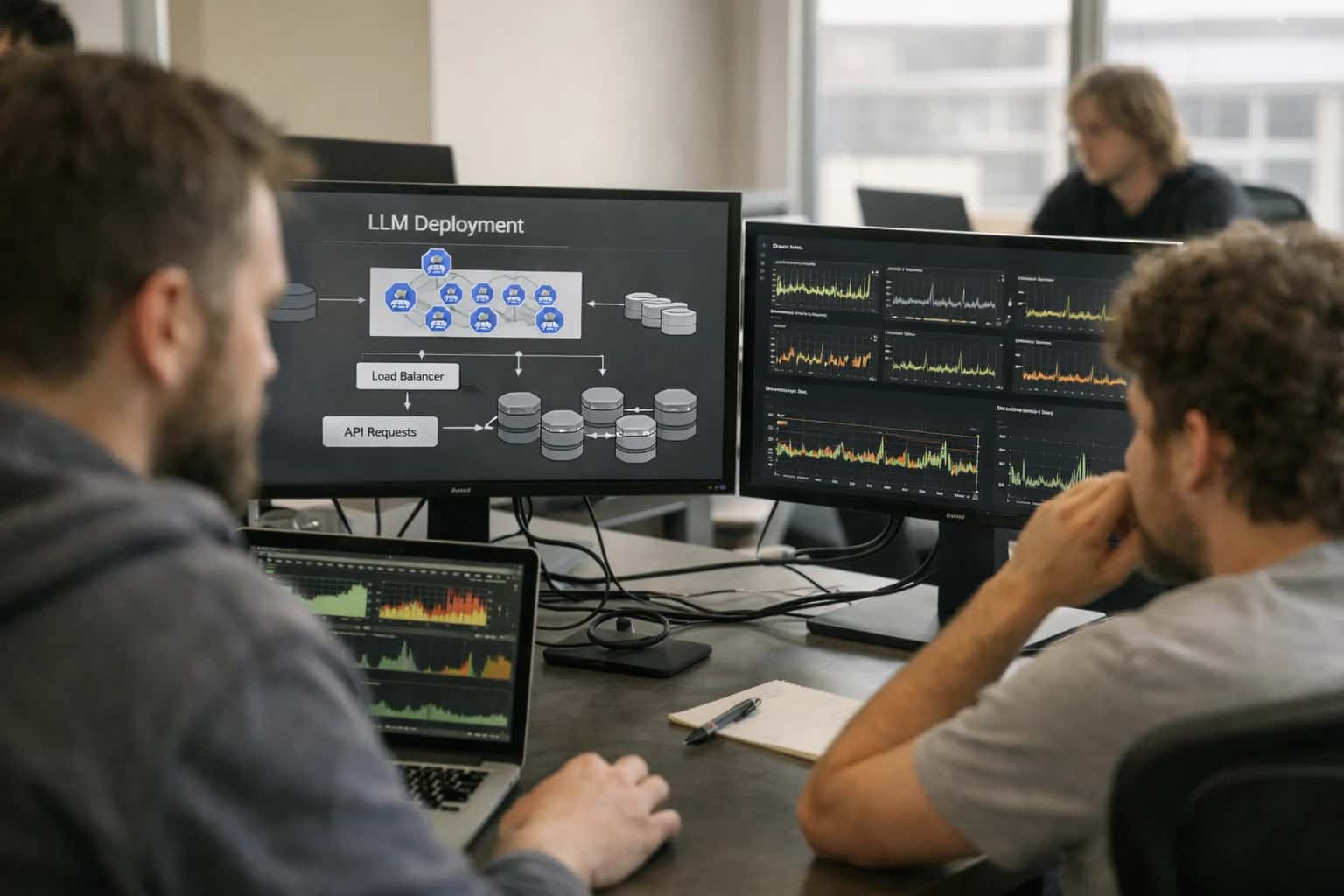
Comparisons related to benchmarking suites, regression testing, and quality scoring for LLMs and agentic workflows. Target: VPs of AI and engineering leads defining evaluation strategies for production deployments.
DeepEval vs RAGAS
Compares the open-source evaluation framework DeepEval, known for its CI/CD integration and unit-testing approach, against RAGAS, the specialized library for scoring retrieval-augmented generation pipelines on faithfulness and relevance. Focuses on whether teams need a general-purpose LLM evaluation suite or a RAG-specific scoring toolkit for production quality gates.
LangSmith vs Arize Phoenix
Evaluates LangSmith's tight integration with the LangChain ecosystem for prompt debugging and chain visualization against Arize Phoenix's open-source observability platform for LLM traces, embedding drift, and performance analytics. Targets teams choosing between a developer-centric debugging hub and a production-focused observability backbone.
TruLens vs DeepEval
Compares TruLens' feedback-function architecture for app-level evaluation and chain tracking against DeepEval's pytest-like unit-testing framework for LLM outputs. Focuses on the trade-off between holistic application feedback loops and granular, deterministic test assertions in CI/CD pipelines.
Giskard vs LangSmith
Analyzes Giskard's AI quality management system with its focus on vulnerability scanning, bias detection, and regulatory compliance against LangSmith's developer-centric tracing and evaluation platform. Targets VPs of AI deciding between a governance-first testing suite and a rapid-iteration development platform.
MLflow Evaluate vs DeepEval
Compares MLflow Evaluate's native integration within the broader MLOps lifecycle for model registry and deployment against DeepEval's standalone, library-agnostic evaluation framework. Focuses on whether teams need evaluation tightly coupled to experiment tracking or a flexible, pluggable testing library.
Arize Phoenix vs Weights & Biases
Evaluates Arize Phoenix's specialized LLM tracing and embedding drift monitoring against Weights & Biases' broader experiment tracking and model registry platform. Targets MLOps leads deciding between a dedicated generative AI observability tool and a consolidated platform for classical ML and LLM workflows.
LangFuse vs Galileo
Compares LangFuse's open-source tracing and cost analytics for LLM applications against Galileo's focus on data quality scoring and hallucination detection for enterprise workflows. Focuses on the choice between a developer-first observability stack and a data-centric evaluation platform for high-stakes deployments.
RAGAS vs TruLens
Analyzes RAGAS's specialized metrics for retrieval quality, faithfulness, and relevance against TruLens' broader feedback functions and app tracking for LLM chains. Targets search architects and RAG developers choosing between a dedicated RAG scoring library and a general-purpose evaluation framework.
LangSmith vs Galileo
Compares LangSmith's prompt debugging, chain visualization, and human annotation workflows against Galileo's emphasis on data error potential and hallucination risk scoring. Focuses on whether teams prioritize developer velocity and debugging or proactive data quality and output safety.
DeepEval vs LangFuse
Evaluates DeepEval's deterministic, unit-testing approach for LLM outputs against LangFuse's tracing and observability platform for monitoring production agent workflows. Targets teams deciding between pre-deployment testing rigor and post-deployment performance monitoring.
Giskard vs RAGAS
Compares Giskard's comprehensive AI quality and security scanning suite against RAGAS's focused metrics for retrieval-augmented generation accuracy. Focuses on the trade-off between a broad governance and vulnerability detection platform and a specialized RAG evaluation toolkit.
Arize Phoenix vs LangFuse
Analyzes Arize Phoenix's embedding drift monitoring and performance analytics against LangFuse's open-source tracing and cost tracking for LLM chains. Targets platform engineers choosing between a production observability platform with ML roots and a developer-native LLM monitoring tool.
MLflow Evaluate vs RAGAS
Compares MLflow Evaluate's lifecycle-integrated evaluation for general ML and LLM tasks against RAGAS's specialized metrics for retrieval-augmented generation. Focuses on whether teams need a unified evaluation pane within their MLOps stack or a dedicated RAG scoring library.
Giskard vs Arize Phoenix
Evaluates Giskard's governance-first approach with bias and security scanning against Arize Phoenix's performance-first observability with embedding drift and trace analysis. Targets VPs of AI balancing regulatory compliance needs with production performance monitoring.
TruLens vs LangFuse
Compares TruLens' feedback-function evaluation and chain tracking against LangFuse's tracing, cost analytics, and playground features. Focuses on the choice between a structured evaluation framework and an integrated observability platform for LLM application development.
LangSmith vs MLflow Evaluate
Analyzes LangSmith's LangChain-native debugging and human annotation workflows against MLflow Evaluate's vendor-agnostic, lifecycle-integrated evaluation. Targets ML engineering managers choosing between a specialized LLM development hub and a consolidated MLOps evaluation standard.
Galileo vs DeepEval
Compares Galileo's data-centric error analysis and hallucination detection against DeepEval's code-centric unit-testing framework. Focuses on whether teams need to identify bad data and unsafe outputs proactively or enforce deterministic quality gates in CI/CD.
Weights & Biases vs MLflow Evaluate
Evaluates Weights & Biases' experiment tracking and model registry with its LLM evaluation suite against MLflow Evaluate's open-source, lifecycle-integrated approach. Targets platform leads standardizing on a single vendor for experiment tracking and model evaluation or adopting a modular open-source stack.
Partnered with leading AI, data, and software stack.





How We Work
Custom AI workflows for your Business
One-fit-all AI don't work for modern businesses. At Inferensys, we aim to understand your business & custom requirements; which we use to define most efficient agentic workflows, the data, and the tools for your business.
01
Review the use case
We understand the task, the users, and where AI can actually help.
Read more02
Pick the right approach
We define what needs search, automation, or product integration.
Read more03
Build the first useful version
We implement the part that proves the value first.
Read more04
Improve from there
We add the checks and visibility needed to keep it useful.
Read moreThe first call is a practical review of your use case and the right next step.
Talk to Us