
Differences
LLM Observability Platforms
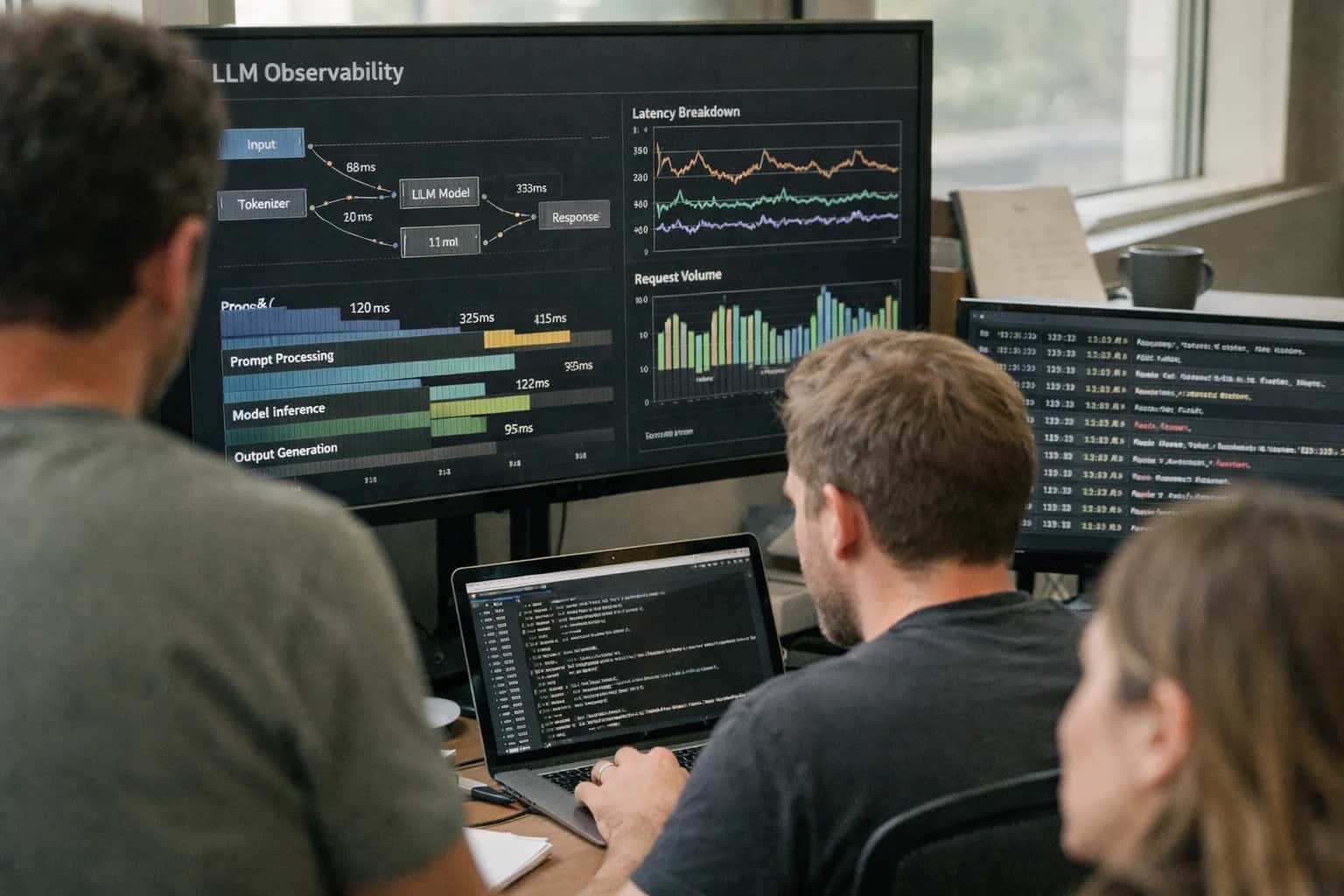
LLM Observability Platforms
Comparisons related to trace-level logging, agent trajectory replay, and production monitoring for LLM-powered applications. Target: CTOs and MLOps engineers selecting observability stacks for generative AI systems.
LangSmith vs Arize Phoenix: LLM Observability
Compares LangChain's native tracing and evaluation platform against Arize's open-source observability library for monitoring, debugging, and testing LLM applications in production, focusing on trace-level logging, agent trajectory replay, and cost analysis.
Langfuse vs LangSmith: Open-Source vs Managed Tracing
Evaluates the self-hosted, open-source tracing platform Langfuse against the managed LangSmith service for LLM application monitoring, comparing data residency control, pricing models, and integration depth with the LangChain ecosystem.
Weights & Biases vs LangSmith: Experiment Tracking vs Production Monitoring
Compares W&B's experiment tracking and prompt engineering platform against LangSmith's production observability suite, focusing on the handoff between development iteration and live deployment monitoring for generative AI systems.
Datadog LLM Observability vs LangSmith: APM vs Specialized AI Monitoring
Analyzes Datadog's extension of its infrastructure monitoring into LLM observability against LangSmith's purpose-built AI tracing, comparing unified dashboards for SREs versus specialized debugging workflows for AI engineers.
Helicone vs Langfuse: Lightweight vs Full-Stack Observability
Compares Helicone's focus on cost tracking and simple request logging against Langfuse's comprehensive tracing, evaluation, and prompt management features for teams scaling generative AI applications.
Arize Phoenix vs Langfuse: Open-Source Observability Standards
Evaluates two leading open-source LLM observability frameworks, comparing Arize Phoenix's focus on embedding drift and evaluation alongside Langfuse's trace-based debugging and prompt management capabilities.
Portkey vs Helicone: AI Gateway vs Observability Proxy
Compares Portkey's full AI gateway with routing, fallbacks, and canary testing against Helicone's observability-focused proxy for logging, cost tracking, and caching LLM requests.
Traceloop vs Arize Phoenix: OpenTelemetry-Native vs Custom Tracing
Analyzes Traceloop's OpenTelemetry-based approach to LLM observability against Arize Phoenix's custom instrumentation, comparing standardization benefits against specialized AI evaluation features.
Galileo vs Arize Phoenix: Evaluation-First vs Monitoring-First Observability
Compares Galileo's emphasis on hallucination detection and prompt evaluation metrics against Arize Phoenix's broader monitoring suite for drift, performance, and data quality in production AI systems.
WhyLabs vs Arize Phoenix: Data-Centric vs Model-Centric Monitoring
Evaluates WhyLabs' data logging and statistical profiling approach against Arize Phoenix's embedding and performance monitoring, comparing data quality monitoring versus model behavior analysis for AI observability.
Fiddler AI vs Arize Phoenix: Explainability vs Observability
Compares Fiddler AI's focus on model explainability, fairness, and bias detection against Arize Phoenix's broader observability platform for tracing, evaluation, and drift monitoring in LLM applications.
Aporia vs WhyLabs: Real-Time Guardrails vs Statistical Monitoring
Analyzes Aporia's real-time model guardrails and hallucination mitigation against WhyLabs' statistical data monitoring, comparing proactive blocking versus retrospective analysis for AI safety.
Arthur AI vs Fiddler AI: Enterprise AI Performance Management
Compares two enterprise-focused AI observability platforms, evaluating Arthur AI's emphasis on performance monitoring and model registry against Fiddler AI's explainability and fairness auditing capabilities.
MLflow vs Weights & Biases: Traditional MLOps vs LLMOps
Evaluates the classic MLflow experiment tracking and model registry against Weights & Biases' modern platform for prompt engineering, LLM evaluation, and generative AI workflow management.
Comet ML vs MLflow: Experiment Management for AI Teams
Compares Comet ML's collaborative experiment tracking and visualization against MLflow's open-source modular approach, focusing on team workflows, reproducibility, and integration with modern AI stacks.
Neptune.ai vs Comet ML: Metadata-First vs Visualization-First Tracking
Analyzes Neptune.ai's flexible metadata store and query capabilities against Comet ML's visualization-rich experiment tracking, comparing data organization philosophies for machine learning teams.
ClearML vs MLflow: Full-Stack MLOps vs Modular Tracking
Compares ClearML's end-to-end orchestration, experiment tracking, and deployment platform against MLflow's modular, best-of-breed approach for managing the machine learning lifecycle.
BentoML vs MLflow: Model Serving vs Experiment Tracking
Evaluates BentoML's focus on high-performance model serving and API generation against MLflow's broader experiment tracking and model registry, comparing deployment optimization versus lifecycle management.
Partnered with leading AI, data, and software stack.





How We Work
Custom AI workflows for your Business
One-fit-all AI don't work for modern businesses. At Inferensys, we aim to understand your business & custom requirements; which we use to define most efficient agentic workflows, the data, and the tools for your business.
01
Review the use case
We understand the task, the users, and where AI can actually help.
Read more02
Pick the right approach
We define what needs search, automation, or product integration.
Read more03
Build the first useful version
We implement the part that proves the value first.
Read more04
Improve from there
We add the checks and visibility needed to keep it useful.
Read moreThe first call is a practical review of your use case and the right next step.
Talk to Us