
Differences
Guardrail Integration Platforms
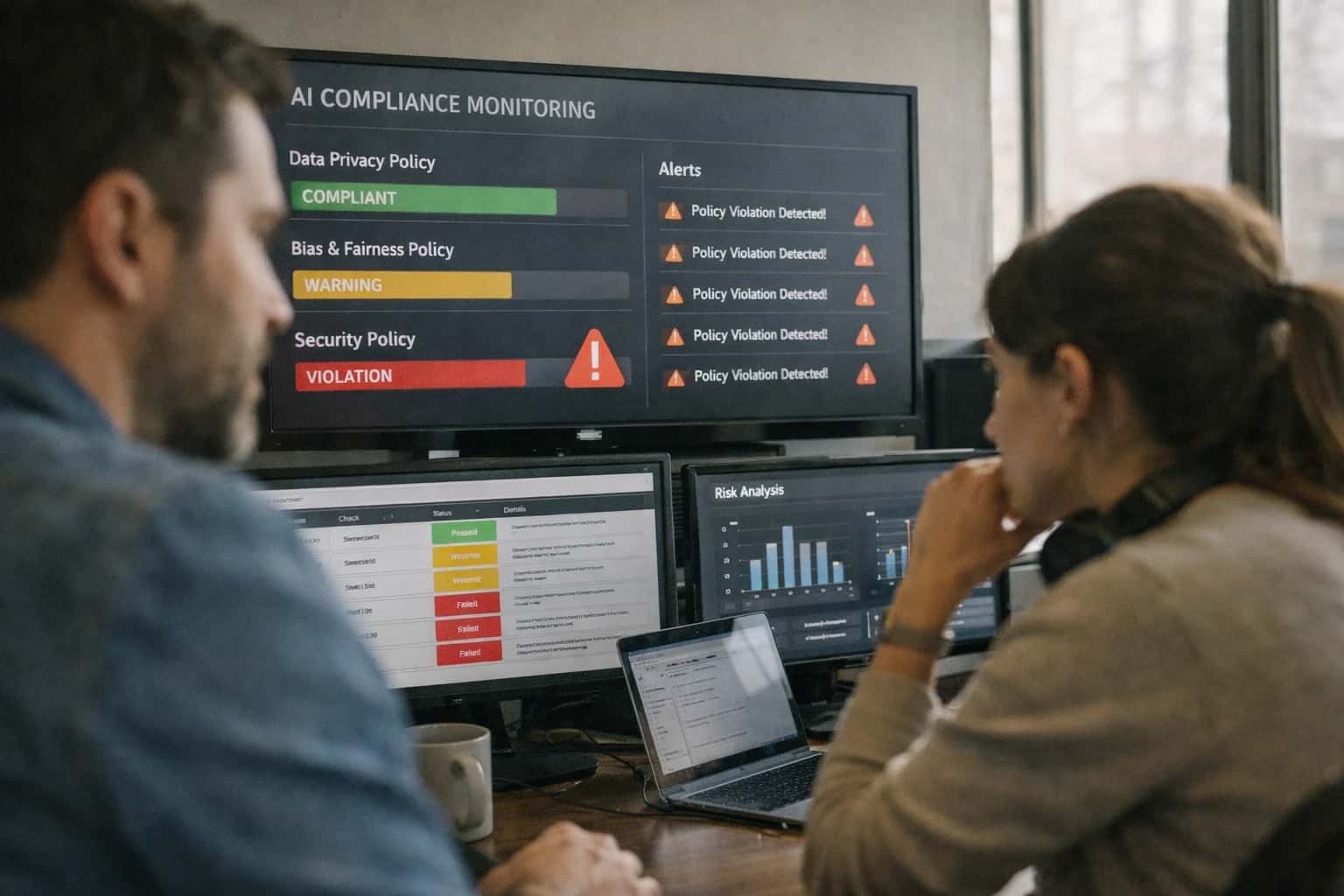
Guardrail Integration Platforms
Comparisons related to content moderation filters, PII redaction, and safety policy enforcement at the gateway layer. Target: Security and Compliance Officers ensuring safe and compliant AI outputs.
Guardrails AI vs NVIDIA NeMo Guardrails
Comparing the open-source Guardrails AI framework against NVIDIA's NeMo Guardrails for implementing dialog safety, topical boundaries, and custom validators in production LLM gateways. Focus on self-hosted deployment complexity, integration with LangChain/LlamaIndex, and real-time policy enforcement latency.
Guardrails AI vs Lakera Guard
Evaluating Guardrails AI's programmable validation approach versus Lakera Guard's specialized prompt injection and malicious intent detection API. Comparison centers on defense-in-depth strategies, false positive rates for injection attacks, and whether to build custom rails or adopt a dedicated security firewall.
Guardrails AI vs Aporia
Comparing Guardrails AI's code-defined safety policies against Aporia's real-time model monitoring and policy enforcement platform. Focus on the trade-off between developer-centric guardrail definition and centralized governance dashboards for hallucination detection and drift monitoring.
NVIDIA NeMo Guardrails vs LLM Guard
Comparing NVIDIA's dialog management safety framework against LLM Guard's input/output sanitization engine for self-hosted moderation. Focus on regex vs ML-based PII redaction accuracy, custom pattern support, and suitability for regulated enterprise environments.
NVIDIA NeMo Guardrails vs WhyLabs Secure
Evaluating NeMo Guardrails' operational safety rails versus WhyLabs Secure's statistical monitoring approach for LLM toxicity and drift. Comparison centers on active blocking versus observability-driven alerting for compliance teams managing AI safety posture.
LLM Guard vs Lakera Guard
Comparing LLM Guard's open-source PII redaction and anonymization engine against Lakera Guard's API-based prompt injection defense. Focus on on-premise data residency requirements, throughput for high-volume scanning, and the choice between regex-based and ML-based detection.
LLM Guard vs Private AI
Evaluating LLM Guard's regex and ML-based redaction against Private AI's contextual PII handling for structured and unstructured data. Comparison focuses on redaction accuracy, throughput, and integration complexity within existing gateway pipelines.
Lakera Guard vs Aporia
Comparing Lakera Guard's real-time prompt injection and malicious intent blocking against Aporia's policy enforcement and model integrity monitoring. Focus on whether to prioritize security firewalling or broader model governance for production LLM applications.
Aporia vs WhyLabs Secure
Evaluating Aporia's real-time policy enforcement and hallucination detection against WhyLabs Secure's statistical drift monitoring and anomaly detection. Comparison centers on root cause analysis for policy violations and the choice between active blocking and observability-first approaches.
Guardrails AI vs Patronus AI
Comparing Guardrails AI's programmable validation rails against Patronus AI's LLM-as-judge evaluation and scoring guardrails. Focus on pre-deployment testing versus runtime enforcement, and the trade-off between deterministic rules and AI-based assessment for safety and compliance.
NVIDIA NeMo Guardrails vs Credo AI
Evaluating NeMo Guardrails' operational dialog safety against Credo AI's governance and risk assessment platform. Comparison centers on technical guardrail enforcement versus organizational responsible AI documentation and audit evidence for EU AI Act compliance.
Lakera Guard vs Fiddler AI
Comparing Lakera Guard's security firewall and prompt injection defense against Fiddler AI's NLP observability and explainability platform. Focus on whether to prioritize real-time threat blocking or deep model performance monitoring and fairness metrics.
Guardrails AI vs TruLens
Evaluating Guardrails AI's guard validation framework against TruLens' feedback functions and app instrumentation for LLM evaluation. Comparison focuses on runtime safety enforcement versus holistic evaluation tracking for honesty, relevance, and groundedness.
LLM Guard vs Nightfall AI
Comparing LLM Guard's open-source PII scanner against Nightfall AI's SaaS data leak prevention for prompts and LLM outputs. Focus on custom regex pattern support, deployment flexibility, and the choice between self-hosted and managed data loss prevention.
Aporia vs Robust Intelligence
Evaluating Aporia's real-time policy enforcement and drift detection against Robust Intelligence's AI firewall and adversarial testing. Comparison centers on production guardrails versus pre-deployment validation and threat modeling for LLM vulnerabilities.
Partnered with leading AI, data, and software stack.





How We Work
Custom AI workflows for your Business
One-fit-all AI don't work for modern businesses. At Inferensys, we aim to understand your business & custom requirements; which we use to define most efficient agentic workflows, the data, and the tools for your business.
01
Review the use case
We understand the task, the users, and where AI can actually help.
Read more02
Pick the right approach
We define what needs search, automation, or product integration.
Read more03
Build the first useful version
We implement the part that proves the value first.
Read more04
Improve from there
We add the checks and visibility needed to keep it useful.
Read moreThe first call is a practical review of your use case and the right next step.
Talk to Us