
Differences
Policy-Triggered Review Workflow Comparisons
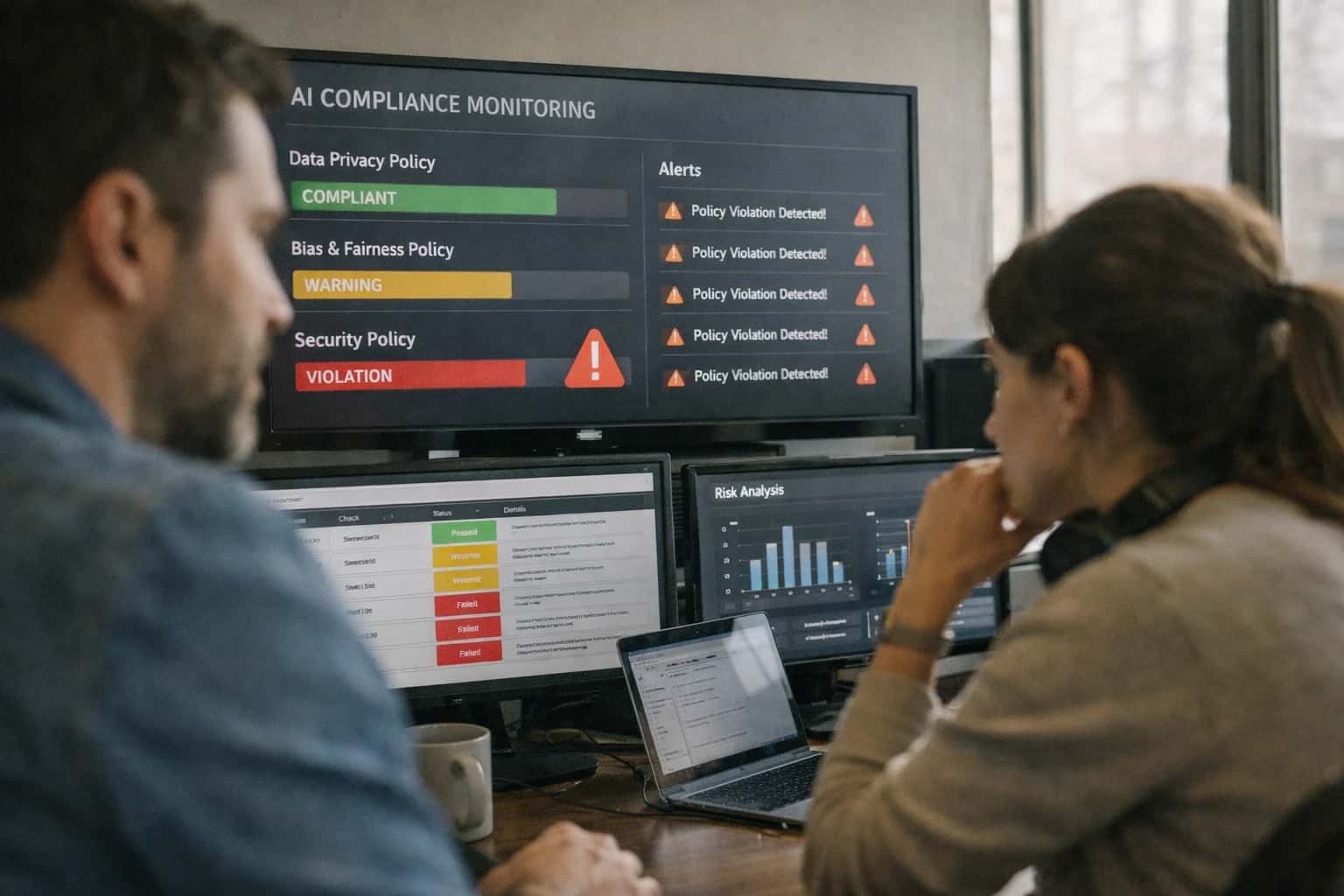
Policy-Triggered Review Workflow Comparisons
Comparisons related to rule engines that dynamically route agent actions for human approval based on risk thresholds. Target: compliance officers and AI governance leads.
LangGraph vs AutoGen: Policy-Triggered Human Approval
Compares LangGraph's stateful graph execution and built-in interrupt capabilities against AutoGen's event-driven, conversation-centric agent patterns for implementing dynamic, risk-based human-in-the-loop approval workflows in production AI systems.
CrewAI vs AutoGen: Dynamic Risk-Based Routing
Evaluates CrewAI's role-based agent orchestration and task delegation model versus AutoGen's flexible multi-agent conversation framework for building systems that dynamically route high-risk actions to human reviewers based on policy thresholds.
LangGraph vs CrewAI: Compliance Workflow Orchestration
Analyzes the trade-offs between LangGraph's explicit state machine control and CrewAI's higher-level abstraction for orchestrating complex, multi-step compliance review processes where auditability and deterministic execution are critical.
Camunda vs Temporal: HITL Approval State Machines
Compares Camunda's BPMN-standard workflow engine against Temporal's durable execution platform for building long-running, SLA-bound human approval state machines that require high resilience and visibility into agentic decision pipelines.
AWS Step Functions vs Azure Durable Functions: SLA-Bound Escalation Paths
Evaluates the serverless workflow orchestration capabilities of AWS Step Functions and Azure Durable Functions for implementing time-bound, multi-stage escalation paths that trigger human review when AI agents fail to meet service-level agreements.
Google Cloud Workflows vs AWS Step Functions: Audit Trail Integrity
Compares the logging, replay, and compliance enforcement features of Google Cloud Workflows and AWS Step Functions to determine which provides a more robust and immutable audit trail for agent actions requiring human approval.
IBM watsonx.governance vs OneTrust: Risk Threshold Configuration
Analyzes IBM watsonx.governance's model risk management capabilities against OneTrust's broader privacy and compliance platform for defining, tuning, and enforcing risk-based approval thresholds for AI agent decisions.
Microsoft Purview vs IBM watsonx.governance: Agent Decision Explainability
Compares the AI governance and explainability features of Microsoft Purview and IBM watsonx.governance, focusing on their ability to provide human-readable summaries and replay of agent reasoning to support reviewer decisions.
OneTrust vs Credo AI: AI Act Compliance Triggers
Evaluates OneTrust's comprehensive risk management suite against Credo AI's specialized responsible AI platform for operationalizing policy-triggered review workflows that meet the EU AI Act's high-risk compliance requirements.
Arize Phoenix vs LangSmith: Agent Evaluation Feedback Loops
Compares Arize Phoenix's observability and evaluation focus against LangSmith's LLM application lifecycle platform for capturing human reviewer corrections and building feedback loops that systematically improve agent behavior over time.
PagerDuty vs Opsgenie: Agent Exception Escalation Routing
Analyzes PagerDuty's incident management platform against Atlassian's Opsgenie for routing agent-generated exceptions and approval requests to the correct human on-call teams based on dynamic policies and on-call schedules.
Jira Service Management vs ServiceNow ITSM: Manual Approval Ticket Queues
Compares Jira Service Management and ServiceNow ITSM for managing queues of agent-generated tickets that require manual human approval, focusing on workflow customization, SLA tracking, and integration with agentic systems.
Okta Workflows vs SailPoint: Role-Based Approval Policy Enforcement
Evaluates Okta Workflows' identity automation against SailPoint's identity security platform for enforcing role-based and policy-driven approval gates that control what actions an AI agent can take based on its assigned identity.
CyberArk vs HashiCorp Vault: Just-in-Time Agent Credential Approval
Compares CyberArk's privileged access management against HashiCorp Vault's secrets management for implementing just-in-time approval workflows that grant AI agents temporary, scoped credentials to execute sensitive tasks.
Splunk vs Elastic Security: Agent Audit Log Analysis
Analyzes Splunk's data platform against Elastic Security's SIEM capabilities for ingesting, searching, and analyzing agent audit logs to detect anomalies, trigger reviews, and support forensic investigations of agent actions.
NVIDIA NeMo Guardrails vs Guardrails AI: Dynamic Risk Threshold Enforcement
Compares NVIDIA's NeMo Guardrails framework against the open-source Guardrails AI library for defining and enforcing dynamic, policy-based risk thresholds that can trigger a human review before an agent executes a constrained action.
Lakera Guard vs Robust Intelligence: Prompt Injection Review Triggers
Evaluates Lakera Guard's real-time AI security against Robust Intelligence's model risk platform for detecting prompt injection and other adversarial inputs that should automatically trigger a human review workflow before agent processing.
WhyLabs vs Fiddler AI: Drift-Based Retraining Approval Workflows
Compares WhyLabs' AI observability platform against Fiddler AI's model performance management for detecting data and concept drift that triggers a policy-based human approval gate before a model retraining or deployment pipeline can proceed.
Partnered with leading AI, data, and software stack.





How We Work
Custom AI workflows for your Business
One-fit-all AI don't work for modern businesses. At Inferensys, we aim to understand your business & custom requirements; which we use to define most efficient agentic workflows, the data, and the tools for your business.
01
Review the use case
We understand the task, the users, and where AI can actually help.
Read more02
Pick the right approach
We define what needs search, automation, or product integration.
Read more03
Build the first useful version
We implement the part that proves the value first.
Read more04
Improve from there
We add the checks and visibility needed to keep it useful.
Read moreThe first call is a practical review of your use case and the right next step.
Talk to Us