
Differences
Edge AI Container Runtimes
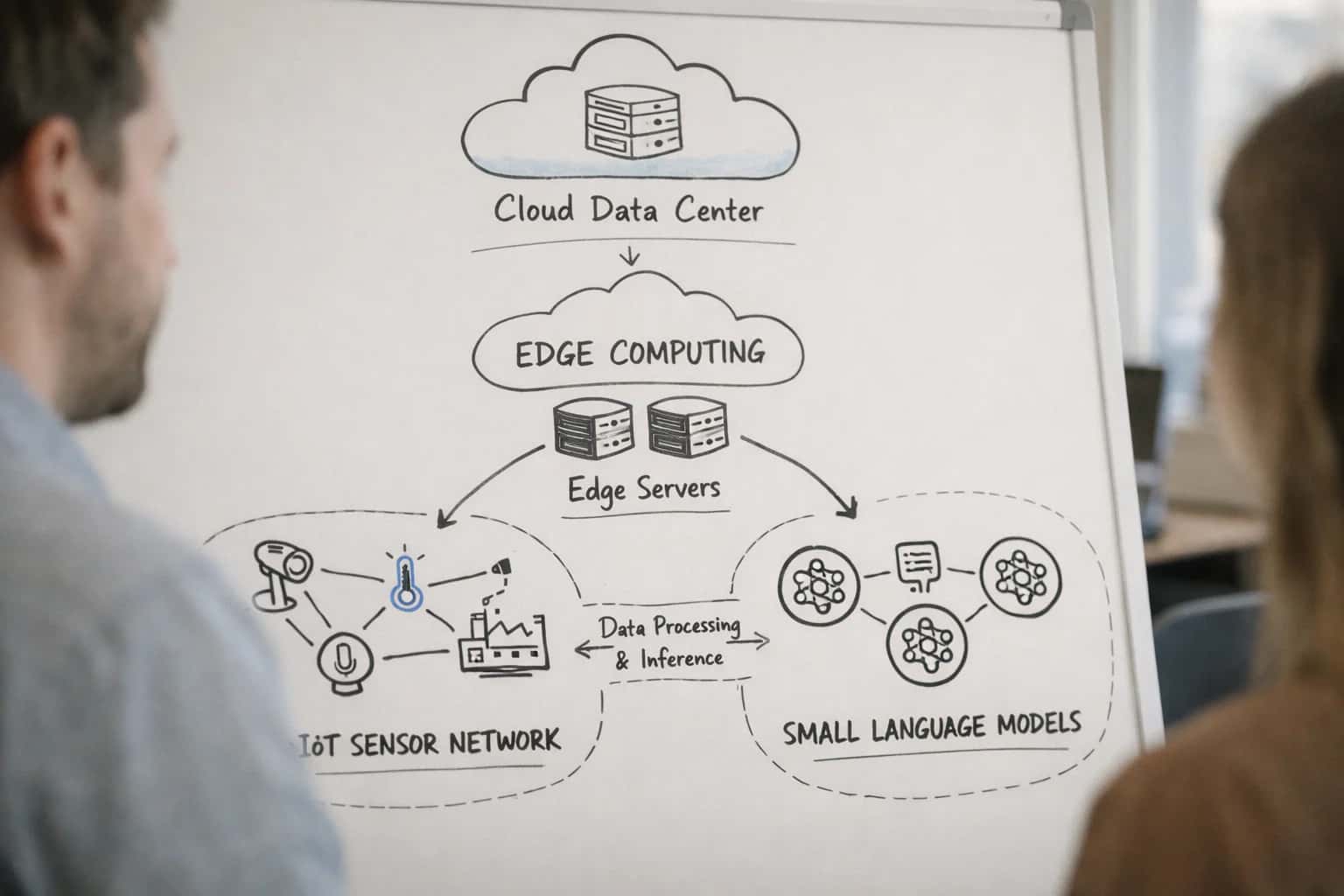
Edge AI Container Runtimes
Comparisons related to lightweight containerization for deploying AI workloads on edge gateways. Target: DevOps engineers managing OTA updates and application lifecycle on distributed edge nodes.
K3s vs MicroK8s: Lightweight Kubernetes for Edge AI
A direct comparison of the two most popular lightweight Kubernetes distributions for edge AI workloads. We evaluate K3s (Rancher/SUSE) against MicroK8s (Canonical) on ARM64 resource consumption, GPU passthrough simplicity, air-gapped deployment, and OTA update integration for distributed inference nodes.
K3s vs KubeEdge: Cloud-Native Edge Orchestration
Compares the general-purpose K3s Kubernetes distribution against the purpose-built KubeEdge framework for edge AI. Analysis focuses on network reliability over unstable WAN links, MQTT broker integration for IoT data ingestion, and the architectural trade-offs of extending the cloud control plane to the edge.
Azure IoT Edge vs AWS Greengrass Nucleus: Hyperscaler Edge Runtimes
A feature-by-feature comparison of the two dominant cloud-managed edge AI runtimes. We benchmark module lifecycle management, offline operation capabilities, local inference pipeline support, and the developer experience for deploying containerized AI models at scale.
BalenaEngine vs Podman: Container Engines for Embedded AI
Evaluates Balena's IoT-optimized container engine against Red Hat's daemonless Podman for edge AI deployments. Comparison focuses on delta OTA update efficiency, resource footprint on constrained gateways, and compatibility with NVIDIA Jetson and other edge AI accelerators.
K3s vs Docker Swarm: Orchestration Simplicity for Edge Clusters
Compares the lightweight K3s Kubernetes distribution against the native Docker Swarm mode for small-scale edge AI clusters. We assess operational simplicity, YAML complexity, built-in load balancing for inference APIs, and the learning curve for DevOps teams managing on-premise edge nodes.
BalenaOS vs Ubuntu Core: Immutable OS for Edge AI Appliances
A comparison of two leading minimal, immutable operating systems designed for containerized edge AI appliances. Analysis covers atomic OTA update mechanisms, strict application confinement via snaps vs. containers, and long-term support strategies for AI inference hardware in the field.
K3s vs WasmEdge: Containers vs WebAssembly for Edge Inference
Explores the emerging paradigm of WebAssembly (Wasm) runtimes against traditional containers for edge AI. We compare WasmEdge's cold-start latency and sandboxed security model against K3s container orchestration for running lightweight inference pipelines on resource-constrained gateways.
Portainer vs Rancher: Edge AI Cluster Management UI
Compares Portainer's container management GUI against Rancher's multi-cluster management platform for edge AI operations. Focuses on the ease of deploying inference containers at the edge, role-based access control for field technicians, and GitOps integration for model updates.
K3s vs Red Hat Device Edge: Enterprise Kubernetes at the Far Edge
A comparison of SUSE's K3s against Red Hat's Device Edge (MicroShift) for deploying AI on industrial gateways. We evaluate SELinux security enforcement, integration with enterprise container registries, and support for real-time kernels required by low-latency inference workloads.
KubeEdge vs OpenYurt: Extending Kubernetes to the Edge
Compares two CNCF projects that extend Kubernetes natively to edge environments. Analysis focuses on node autonomy during cloud disconnection, edge-side service mesh capabilities, and the efficiency of managing large-scale fleets of AI inference gateways.
BalenaEngine vs NVIDIA Fleet Command: Managed Edge AI Deployments
Compares Balena's container-centric fleet management against NVIDIA's specialized Fleet Command platform for AI workloads. We benchmark GPU-accelerated inference deployment, monitoring dashboards, and the integration with NVIDIA Triton Inference Server for edge AI pipelines.
K3s vs Talos Linux: API-Managed Kubernetes for Edge AI
Evaluates the general-purpose K3s distribution against Talos Linux, an API-driven, immutable Kubernetes OS. Comparison focuses on security hardening for edge gateways, declarative configuration management, and the elimination of SSH and shell access for compliance-sensitive AI deployments.
Azure IoT Edge vs Siemens Industrial Edge: IT vs OT Edge AI
Compares Microsoft's cloud-native edge runtime against Siemens' industrial automation-focused edge platform. Analysis covers protocol translation for factory floor data, real-time deterministic behavior, and the convergence of IT-managed AI containers with OT-managed industrial control systems.
K3s vs Zededa: Virtualized Edge AI Infrastructure
Compares the container-centric K3s approach against Zededa's Type-1 hypervisor-based edge virtualization for AI. We assess hardware abstraction, support for mixed-criticality workloads (real-time control + AI inference), and zero-touch provisioning for distributed edge nodes.
Podman vs containerd: Daemonless Containers for Edge AI
A technical comparison of two lightweight container runtimes for single-node edge AI deployments. We benchmark Podman's rootless mode and systemd integration against containerd's simplicity and native Kubernetes compatibility for running inference servers on embedded Linux.
Partnered with leading AI, data, and software stack.





How We Work
Custom AI workflows for your Business
One-fit-all AI don't work for modern businesses. At Inferensys, we aim to understand your business & custom requirements; which we use to define most efficient agentic workflows, the data, and the tools for your business.
01
Review the use case
We understand the task, the users, and where AI can actually help.
Read more02
Pick the right approach
We define what needs search, automation, or product integration.
Read more03
Build the first useful version
We implement the part that proves the value first.
Read more04
Improve from there
We add the checks and visibility needed to keep it useful.
Read moreThe first call is a practical review of your use case and the right next step.
Talk to Us