
Differences
Virtual Try-On Technology
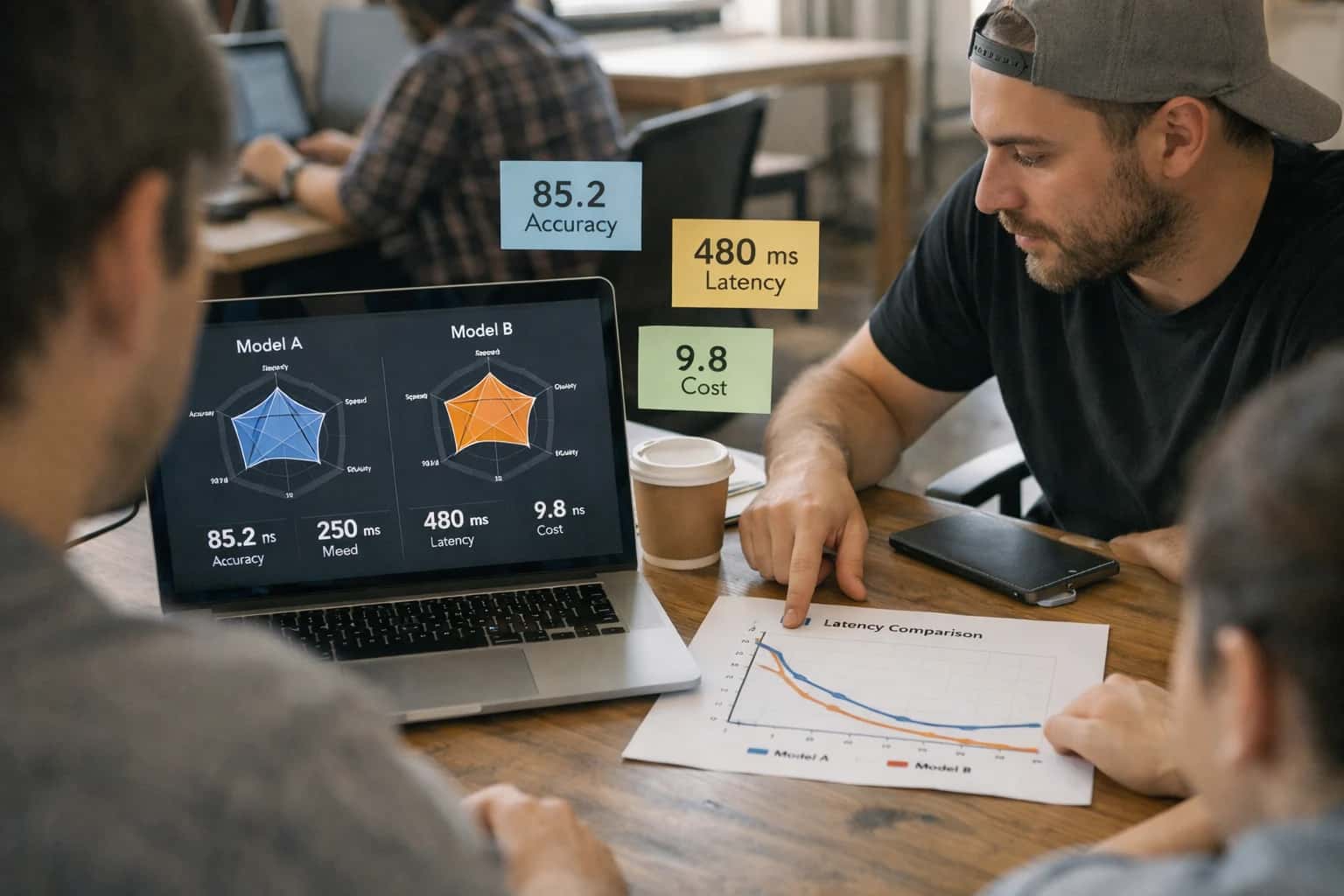
Virtual Try-On Technology
Comparisons related to generative AR and AI visual try-on for apparel and beauty. Target: VPs of Digital Innovation comparing Google's ARCore, Perfect Corp, and generative diffusion models for real-time rendering and prompt fidelity.
Warping-Based Try-On vs Diffusion-Based Try-On
Compares traditional geometric warping (e.g., VITON-HD) against generative diffusion models (e.g., OutfitAnyone) for virtual try-on. Focuses on texture preservation, identity fidelity, and computational cost for real-time retail rendering.
Google ARCore vs Perfect Corp
Evaluates Google's general-purpose AR platform against Perfect Corp's beauty-specific SDK for virtual makeup and accessory try-on. Compares face mesh accuracy, cross-platform support, and brand customization options.
Stable Diffusion vs Midjourney for Virtual Try-On
Analyzes open-source Stable Diffusion against proprietary Midjourney for generating on-model apparel imagery. Focuses on prompt fidelity, compositional reasoning, and API integration costs for e-commerce catalog automation.
ControlNet vs IP-Adapter for Pose-Guided Try-On
Compares ControlNet's structural conditioning against IP-Adapter's image-prompting approach for preserving garment details and model poses. Targets engineering leads optimizing diffusion pipelines for fashion visualization.
VITON-HD vs OutfitAnyone for Full-Body Rendering
Pits the academic standard VITON-HD against the newer OutfitAnyone model for high-resolution full-body try-on. Compares garment warping quality, limb occlusion handling, and background preservation.
8th Wall WebAR vs Zappar for Browser-Based Try-On
Compares Niantic's 8th Wall against Zappar for markerless AR try-on directly in mobile browsers. Focuses on SLAM tracking stability, WebXR performance, and ease of deployment for marketing campaigns.
Snap AR Enterprise Suite vs Meta Spark Studio for Branded Lenses
Evaluates Snap's AR shopping tools against Meta's Spark platform for creating branded virtual try-on lenses. Compares reach, analytics depth, and 3D asset integration for social commerce strategies.
Banuba Face AR SDK vs DeepAR SDK for Real-Time Makeup
Compares Banuba's lightweight face tracking against DeepAR's feature set for real-time beauty filters and hair color simulation. Focuses on latency, battery consumption, and skin smoothing accuracy on mobile devices.
ModiFace vs Perfect Corp YouCam for Scientific Color Matching
Analyzes L'Oréal's ModiFace against Perfect Corp's YouCam for AI-powered foundation shade matching and skin analysis. Compares spectral rendering accuracy and diagnostic AI capabilities.
3DLOOK vs True Fit for Body Measurement Accuracy
Compares 3DLOOK's computer vision body scanning against True Fit's data-driven size recommendation engine. Focuses on measurement precision, return rate reduction, and integration with apparel e-commerce platforms.
NVIDIA Omniverse vs Unity MARS for 3D Garment Simulation
Evaluates NVIDIA's physically accurate fabric simulation against Unity's mixed reality authoring tool for creating digital garment twins. Compares real-time rendering fidelity and workflow complexity for fashion designers.
CLO 3D vs Browzwear for Digital Fabric Twins
Compares CLO 3D's GPU-based simulation against Browzwear's pattern-focused approach for creating accurate digital fabric representations. Focuses on drape physics, avatar customization, and PLM integration.
NeRF vs Gaussian Splatting for Product Capture
Compares Neural Radiance Fields against 3D Gaussian Splatting for capturing photorealistic 3D product assets for virtual try-on. Focuses on training speed, real-time viewing performance, and relighting capabilities.
Segment Anything Model (SAM) vs Mask R-CNN for Garment Segmentation
Evaluates Meta's promptable SAM against the classic Mask R-CNN for isolating garments in user-uploaded photos. Compares edge detection accuracy, generalization to diverse clothing, and inference speed.
MediaPipe Pose vs OpenPose for Pose Estimation
Compares Google's lightweight MediaPipe against CMU's OpenPose for detecting body keypoints to drive virtual try-on alignment. Focuses on mobile latency, multi-person detection, and API ease of use.
DensePose vs SMPLify-X for 3D Body Mesh Recovery
Analyzes Facebook's DensePose UV mapping against the SMPLify-X parametric model for recovering 3D body shape from 2D images. Compares mesh precision and suitability for fitting virtual garments.
IP-Adapter FaceID vs InstantID for Zero-Shot Face Transfer
Compares IP-Adapter's face fidelity module against InstantID for preserving user identity during AI-driven virtual try-on. Focuses on character consistency, processing speed, and compatibility with diffusion backbones.
AnimateDiff vs SVD (Stable Video Diffusion) for Dynamic Try-On
Evaluates AnimateDiff's motion module against Stable Video Diffusion for generating short video clips of garments in motion. Compares temporal coherence, flicker reduction, and generation speed for video commerce.
Partnered with leading AI, data, and software stack.





How We Work
Custom AI workflows for your Business
One-fit-all AI don't work for modern businesses. At Inferensys, we aim to understand your business & custom requirements; which we use to define most efficient agentic workflows, the data, and the tools for your business.
01
Review the use case
We understand the task, the users, and where AI can actually help.
Read more02
Pick the right approach
We define what needs search, automation, or product integration.
Read more03
Build the first useful version
We implement the part that proves the value first.
Read more04
Improve from there
We add the checks and visibility needed to keep it useful.
Read moreThe first call is a practical review of your use case and the right next step.
Talk to Us