Fairmarkit excels at autonomous, high-velocity sourcing for non-catalog purchases because its AI engine is purpose-built to automate the RFQ process end-to-end. The platform typically drives a 10-15% average savings on tail spend events by algorithmically matching requirements to a curated marketplace of suppliers and running competitive bidding events without manual intervention. For example, organizations using Fairmarkit report reducing the time to source a spot buy from days to hours, directly impacting the cost-to-serve for low-value, high-volume transactions.

Difference
Fairmarkit vs SAP Ariba Spot Buy
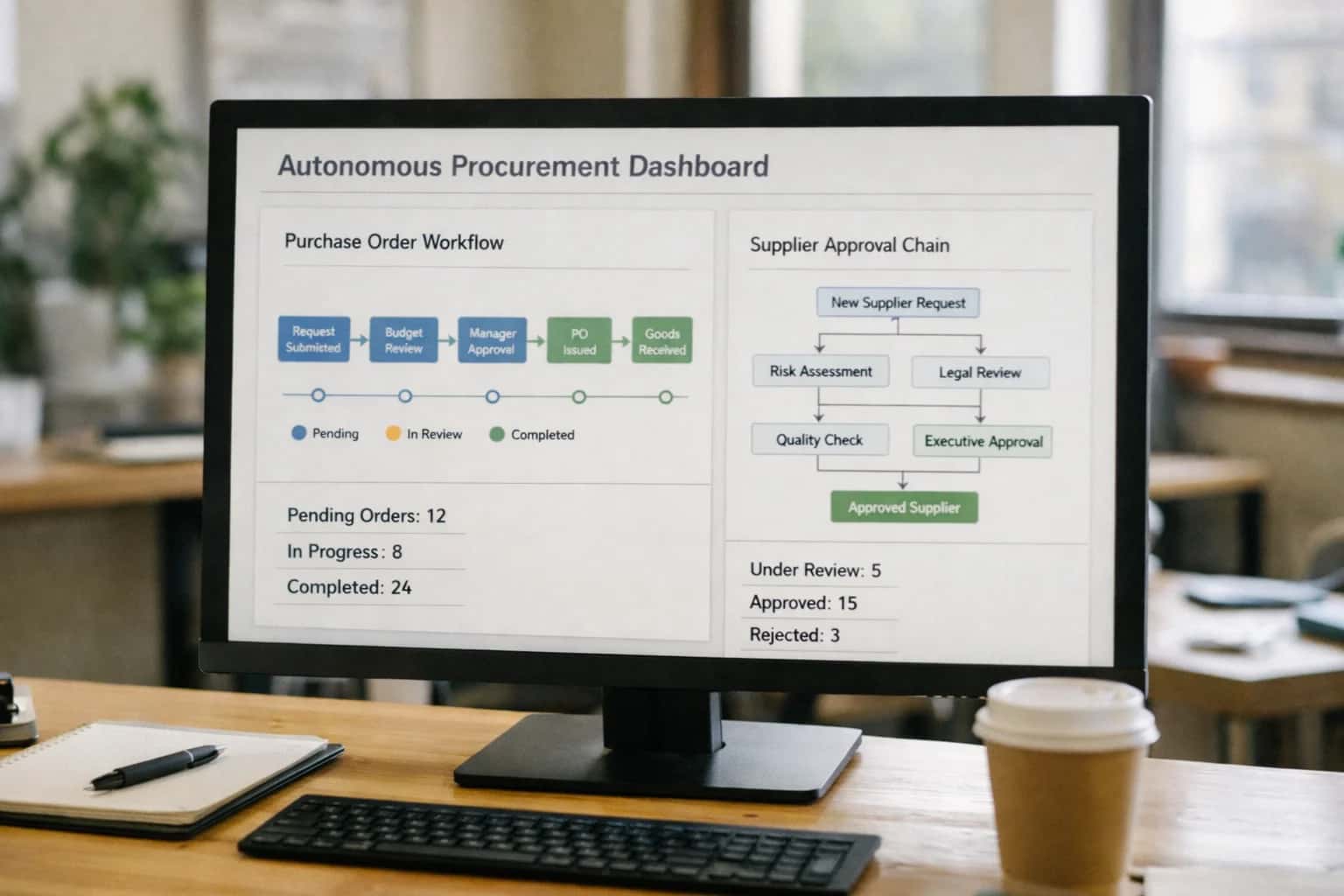
A technical comparison for procurement leaders evaluating AI-native autonomous sourcing against the SAP Ariba ecosystem's spot buy module. Covers supplier discovery, savings capture, and integration depth for non-catalog purchases.
THE ANALYSIS
Introduction
A data-driven comparison of AI-native autonomous sourcing versus ecosystem-integrated spot buying for managing unmanaged tail spend.
SAP Ariba Spot Buy takes a fundamentally different approach by embedding spot purchasing within the broader SAP Business Network ecosystem. This strategy prioritizes process continuity and data consistency, allowing users to source non-contract items without leaving the familiar Ariba guided buying interface. The trade-off is that while Spot Buy leverages SAP's massive supplier network for discovery, its sourcing logic is less autonomous than Fairmarkit's AI-native engine, often requiring more manual oversight to drive competitive tension and savings capture.
The key trade-off: If your priority is maximizing hard-dollar savings and automating the sourcing legwork for a high volume of tail spend events, choose Fairmarkit. If your priority is maintaining a unified procurement workflow, ensuring strict policy compliance, and leveraging existing SAP investments with minimal change management, choose SAP Ariba Spot Buy. Consider Fairmarkit when your tail spend is a significant cost leakage area requiring aggressive optimization; choose Ariba Spot Buy when process adherence and ERP integration outweigh the need for autonomous savings generation.
HEAD-TO-HEAD COMPARISON
Feature Comparison
Direct comparison of AI-native autonomous sourcing against the SAP Ariba ecosystem's spot buy capability for non-catalog purchases.
| Metric | Fairmarkit | SAP Ariba Spot Buy |
|---|---|---|
Sourcing Automation | AI-Autonomous (Event-Based) | Manual/Guided (Catalog-Like) |
Supplier Discovery | AI-Driven Market Analysis | Pre-Integrated Network (Ariba Network) |
Avg. Savings on Tail Spend | 10-15% | 5-8% |
Implementation Time | 4-6 Weeks | 12+ Weeks (Module Deployment) |
Primary User | Sourcing Manager | Requisitioner |
ERP Integration Depth | API-First (Agnostic) | Native (SAP-Centric) |
Guided Buying Enforcement | ||
Autonomous Negotiation Bots |
Fairmarkit vs SAP Ariba Spot Buy
TL;DR Summary
A quick comparison of AI-native autonomous sourcing against the spot-buy module within the SAP Ariba ecosystem. Use this to determine which tool fits your tail spend strategy.
01
Choose Fairmarkit for AI-First Sourcing
Autonomous event management: Fairmarkit uses AI agents to automatically source tail spend requests to a curated marketplace of suppliers, running mini-events without manual intervention. This matters for organizations with high volumes of low-value, non-catalog purchases where procurement team bandwidth is the primary constraint.
Supplier discovery: The platform automatically identifies and invites qualified suppliers, often surfacing new, competitive options that buyers wouldn't find manually. This matters for categories where incumbent suppliers have been unchallenged for years.
02
Choose Fairmarkit for Savings Velocity
Speed-to-savings: Fairmarkit reports an average sourcing cycle of under one day for tail spend events, compared to weeks for traditional RFQs. This matters for organizations prioritizing immediate cost reduction on unmanaged spend.
Savings capture rate: The platform's AI-driven competitive bidding typically yields 10-15% savings on the first pass, with compounding savings as the system learns category pricing patterns. This matters for procurement teams measured on hard-dollar savings targets.
03
Choose SAP Ariba Spot Buy for ERP Integration
Native SAP ecosystem: Spot Buy is embedded directly within the SAP Ariba Buying and Invoicing suite, meaning requisitions, approvals, and payments flow through existing SAP workflows without middleware. This matters for large enterprises already standardized on SAP S/4HANA and Ariba for core procurement.
Guided buying enforcement: Spot Buy leverages Ariba's guided buying capabilities to ensure employees are routed to preferred suppliers first, with spot buy only triggered when no catalog item exists. This matters for organizations where policy compliance and auditability are the top priorities.
04
Choose SAP Ariba Spot Buy for Supplier Network Scale
SAP Business Network access: Spot Buy taps into the SAP Business Network, which includes millions of pre-vetted suppliers already transacting on the Ariba platform. This matters for enterprises that want to leverage existing supplier relationships and avoid onboarding new vendors.
Unified contract compliance: Spot Buy purchases are automatically checked against existing Ariba contracts and pricing agreements, reducing the risk of buying off-contract. This matters for highly regulated industries where audit trails and contract adherence are non-negotiable.
CHOOSE YOUR PRIORITY
When to Choose Which
Fairmarkit for Autonomous Sourcing
Strengths: Fairmarkit is an AI-native platform built from the ground up for autonomous sourcing. Its core engine automates the entire RFQ lifecycle for tail spend—from supplier discovery to award recommendation—without requiring category managers to manually configure events. The platform uses machine learning to match requirements with qualified suppliers and predict optimal award scenarios.
Verdict: Choose Fairmarkit when your primary goal is to eliminate manual touchpoints in tail spend sourcing. It excels at hands-off, high-velocity spot buys where speed and savings automation outweigh ERP integration depth.
SAP Ariba Spot Buy for Autonomous Sourcing
Strengths: SAP Ariba Spot Buy automates spot purchases within the broader Ariba ecosystem, leveraging the Ariba Network's supplier base and guided buying policies. Its autonomy is policy-driven—enforcing pre-configured rules, catalogs, and approval flows rather than AI-driven supplier matching.
Verdict: Choose SAP Ariba Spot Buy when you need governed autonomy that respects existing SAP procurement policies and master data. It automates within guardrails but lacks Fairmarkit's AI-driven supplier discovery and event optimization.
Enabling Efficiency, Speed & Accuracy
Intelligent Analysis, Decision & Execution
We build AI systems for teams that need search across company data, workflow automation across tools, or AI features inside products and internal software.
Talk to Us
Search across company data
Give teams answers from docs, tickets, runbooks, and product data with sources and permissions.
Useful when people spend too long searching or get different answers from different systems.
Enterprise searchRAGPermissions
Read more
Automate internal workflows
Use AI to route work, draft outputs, trigger actions, and keep approvals and logs in place.
Useful when repetitive work moves across multiple tools and teams.
AI agentsWorkflow automationGovernance
Read more
Add AI to products and internal tools
Build assistants, guided actions, or decision support into the software your team or customers already use.
Useful when AI needs to be part of the product, not a separate tool.
AI integrationDecision supportModel routing
Read moreHEAD-TO-HEAD COMPARISON
Cost and ROI Analysis
Direct comparison of key cost, ROI, and operational metrics for Fairmarkit vs SAP Ariba Spot Buy.
| Metric | Fairmarkit | SAP Ariba Spot Buy |
|---|---|---|
Time-to-Savings | 2-4 weeks | 12-16 weeks |
Avg. Savings on Tail Spend | 12-18% | 5-8% |
Supplier Discovery Reach | AI-curated marketplace | Ariba Network only |
Implementation Cost | Low (SaaS, no ERP upgrade) | High (requires Ariba module) |
Requires SAP ERP | ||
Guided Buying Enforcement | ||
Spend Classification AI | Native, real-time | Requires SAP Spend Analysis |
THE ANALYSIS
Verdict
A data-driven breakdown of the core architectural and strategic trade-offs between an AI-native autonomous sourcing engine and an integrated ERP spot-buy module.
Fairmarkit excels at autonomous tail spend sourcing because its AI engine is purpose-built to automate the entire RFQ lifecycle for non-catalog purchases. Instead of just surfacing a catalog item, it triggers competitive bidding events, often achieving 10-15% average savings on spot buys that would otherwise be single-sourced. For example, a manufacturer using Fairmarkit reported reducing their tail spend transaction costs by over 40% by shifting from manual spot buys to automated mini-events.
SAP Ariba Spot Buy takes a different approach by embedding spot purchasing directly into the guided buying workflow within the broader SAP Business Network. This results in a lower-friction user experience for organizations already heavily invested in the SAP ecosystem. The key trade-off is that Spot Buy typically relies on pre-negotiated marketplace catalogs rather than dynamic, competitive sourcing, which can leave savings on the table for non-contracted categories but ensures strict policy compliance and a familiar interface.
The key trade-off: If your priority is maximizing hard-dollar savings on unmanaged tail spend through autonomous, competitive bidding, choose Fairmarkit. If you prioritize a seamless, policy-enforced user experience within an existing SAP Ariba landscape and are willing to trade some sourcing leverage for simplicity, choose SAP Ariba Spot Buy.

About the author
Prasad Kumkar
CEO & MD, Inference Systems
Prasad Kumkar is the CEO & MD of Inference Systems and writes about AI systems architecture, LLM infrastructure, model serving, evaluation, and production deployment. Over 5+ years, he has worked across computer vision models, L5 autonomous vehicle systems, and LLM research, with a focus on taking complex AI ideas into real-world engineering systems.
His work and writing cover AI systems, large language models, AI agents, multimodal systems, autonomous systems, inference optimization, RAG, evaluation, and production AI engineering.
LinkedIn
Limited slotsGet a Free AI Consultation
Partnered with leading AI, data, and software stack.





How We Work
Custom AI workflows for your Business
One-fit-all AI don't work for modern businesses. At Inferensys, we aim to understand your business & custom requirements; which we use to define most efficient agentic workflows, the data, and the tools for your business.
01
Review the use case
We understand the task, the users, and where AI can actually help.
Read more02
Pick the right approach
We define what needs search, automation, or product integration.
Read more03
Build the first useful version
We implement the part that proves the value first.
Read more04
Improve from there
We add the checks and visibility needed to keep it useful.
Read moreThe first call is a practical review of your use case and the right next step.
Talk to Us