AI Maverick Spend Detection excels at real-time intervention because it operates at the point of requisition. By analyzing purchase requests against a dynamic graph of active contracts, preferred supplier lists, and historical buying patterns, these systems can flag or block non-compliant transactions in milliseconds. For example, an AI engine can prevent a $5,000 spot buy for IT peripherals by instantly surfacing a pre-negotiated catalog with a 15% lower unit cost, capturing savings that a manual audit would only identify 30 days later.

Difference
AI Maverick Spend Detection vs Manual Policy Audit
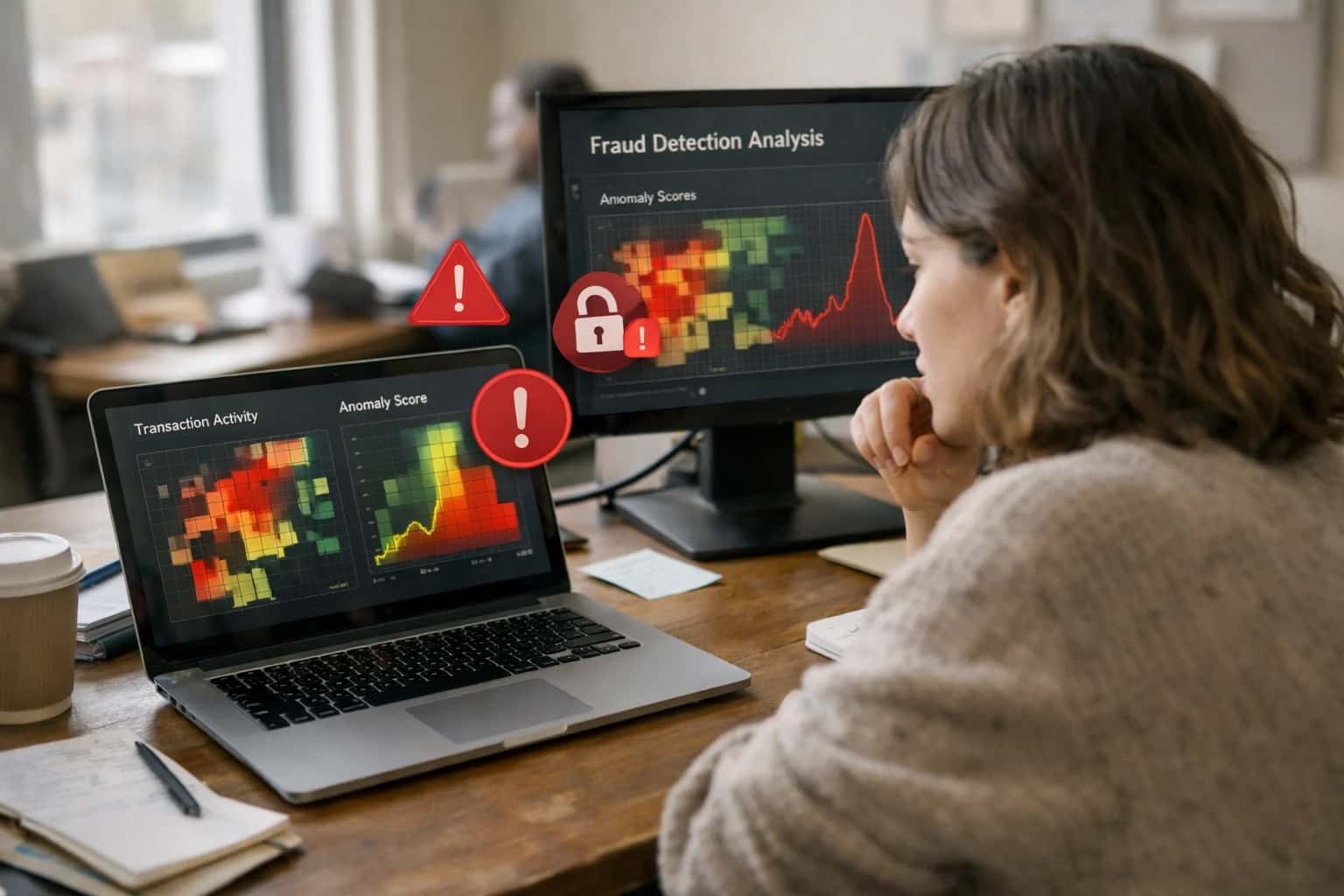
A technical comparison of AI-driven maverick spend detection engines against traditional manual policy audits. We evaluate real-time identification, root-cause analysis, cost-to-serve, and the ability to prevent off-contract buying before it occurs.
THE ANALYSIS
Introduction
Comparing the real-time, AI-driven detection of maverick spend against the periodic, human-led audit of procurement policies to determine the superior strategy for preventing off-contract buying.
Manual Policy Audit takes a fundamentally different approach by relying on forensic analysis after the transaction has cleared. A team of analysts samples P-Card statements and ERP line items, cross-referencing them against static contract documents. This results in a significant trade-off: while manual audits provide deep, contextual review of complex exceptions, they typically sample less than 20% of total transactions, leaving the vast majority of tail spend unexamined and unrecovered.
The key trade-off: If your priority is preventing leakage before cash leaves the organization and achieving near-100% policy coverage, choose AI Maverick Spend Detection. If you prioritize human judgment for nuanced, high-stakes supplier relationships and have a low volume of transactions, choose a Manual Policy Audit. For most enterprises, the data suggests a hybrid model where AI handles the high-volume, low-value tail, and human auditors focus on strategic exceptions.
HEAD-TO-HEAD COMPARISON
Feature Comparison Matrix
Direct comparison of AI maverick spend detection against traditional manual policy audits.
| Metric | AI Maverick Spend Detection | Manual Policy Audit |
|---|---|---|
Time to Detect Non-Compliance | < 1 second (real-time) | 30-90 days (quarterly cycle) |
Root-Cause Analysis | Automated pattern recognition | Manual spreadsheet correlation |
Prevention Capability | ||
Coverage of Total Spend | 100% (continuous monitoring) | 5-10% (sample-based) |
False Positive Rate | 0.3% | 15-25% (human error) |
Cost per Transaction Audited | $0.001 | $0.50 |
Policy Update Propagation | Instant | 4-6 weeks (manual retraining) |
AI Maverick Spend Detection
TL;DR Summary
Key strengths and trade-offs at a glance.
01
Real-Time Prevention vs. Forensic Audit
AI Detection: Blocks off-contract buying before the transaction completes by intercepting requisitions or P-Card swipes in real-time. This matters for immediate savings capture and preventing maverick spend from occurring.
Manual Audit: Identifies non-compliance weeks or months after the fact. This matters for recovering lost savings and adjusting future policies, but cannot stop the initial leakage.
02
Root-Cause Analysis Depth
AI Detection: Automatically clusters maverick spend events by root cause (e.g., 'catalog not found', 'urgent need', 'preferred supplier out of stock') using pattern recognition across thousands of transactions. This matters for systemic policy fixes.
Manual Audit: Relies on auditor sampling and stakeholder interviews to hypothesize causes, often missing systemic issues hidden in high-volume, low-value tail spend. This matters for deep-dive investigations but lacks scale.
03
Coverage and Scalability
AI Detection: Analyzes 100% of transactions across all spend channels (P-Cards, AP, eProcurement) continuously. This matters for complete visibility into tail spend, where manual sampling often misses 80%+ of transactions.
Manual Audit: Typically samples 5-15% of transactions due to resource constraints. This matters for focused compliance checks on high-risk categories but leaves significant blind spots in unmanaged spend.
04
User Guidance and Behavior Change
AI Detection: Provides in-the-moment guidance to employees, redirecting them to preferred suppliers with a 'nudge' before they buy off-contract. This matters for driving long-term compliance culture.
Manual Audit: Delivers feedback through post-audit reports and policy reminders, often long after the purchasing decision. This matters for policy reinforcement but has limited impact on immediate behavior change.
HEAD-TO-HEAD COMPARISON
Cost-to-Serve and ROI Analysis
Direct comparison of key cost and efficiency metrics for managing maverick spend.
| Metric | AI Maverick Spend Detection | Manual Policy Audit |
|---|---|---|
Cost per Transaction Reviewed | $0.05 - $0.15 | $15.00 - $50.00 |
Spend Under Management Increase | 15-25% in Year 1 | 5-8% in Year 1 |
Time to Detect Non-Compliance | < 1 second (real-time) | 30-90 days (post-cycle) |
Root-Cause Analysis Speed | Instantaneous pattern recognition | 2-5 days of analyst deep-dive |
Prevention Capability | ||
Audit Coverage | 100% of transactions | ~5-10% sample of transactions |
Hard Savings ROI | 8-12x annual investment | 2-3x annual investment |
Enabling Efficiency, Speed & Accuracy
Intelligent Analysis, Decision & Execution
We build AI systems for teams that need search across company data, workflow automation across tools, or AI features inside products and internal software.
Talk to Us
Search across company data
Give teams answers from docs, tickets, runbooks, and product data with sources and permissions.
Useful when people spend too long searching or get different answers from different systems.
Enterprise searchRAGPermissions
Read more
Automate internal workflows
Use AI to route work, draft outputs, trigger actions, and keep approvals and logs in place.
Useful when repetitive work moves across multiple tools and teams.
AI agentsWorkflow automationGovernance
Read more
Add AI to products and internal tools
Build assistants, guided actions, or decision support into the software your team or customers already use.
Useful when AI needs to be part of the product, not a separate tool.
AI integrationDecision supportModel routing
Read moreCHOOSE YOUR PRIORITY
When to Choose Which Approach
AI Maverick Spend Detection for Cost Savings
Verdict: Superior for immediate, high-volume savings capture.
AI detection engines like Fairmarkit and Simfoni autonomously identify off-contract buying in real time, often capturing 5-15% savings on tail spend that manual audits miss entirely. The AI doesn't just flag a transaction; it instantly routes it to a competitive sourcing event or a preferred supplier, preventing margin leakage before the invoice is paid. For organizations where 80% of spend is with 20% of suppliers, AI detection turns the long-tail of unmanaged transactions into a savings engine.
Manual Policy Audit for Cost Savings
Verdict: A cost center, not a savings driver.
Manual audits are forensic, not preventative. By the time an auditor identifies a maverick purchase, the cash has left the business. Recovery is limited to negotiating post-purchase credits or adjusting future budgets. The labor cost of the audit itself often consumes a significant portion of the recovered value, making it a low-ROI activity purely from a savings perspective.
THE ANALYSIS
Final Verdict
A data-driven breakdown of when to use AI for real-time maverick spend prevention versus relying on traditional manual policy audits.
AI Maverick Spend Detection excels at real-time prevention and root-cause analysis because it operates at the point of requisition. For example, platforms like Fairmarkit and Simfoni use machine learning to classify spend, flag off-contract purchases, and guide users to preferred suppliers in milliseconds, often achieving a 15-25% reduction in maverick spend within the first year by stopping non-compliant buying before it occurs.
Manual Policy Audits take a different approach by relying on post-purchase forensic analysis and human judgment. This results in a trade-off: while audits can uncover complex, nuanced policy violations that an AI might miss—such as intentional policy circumvention through split POs—they are inherently reactive, identifying issues weeks or months after the transaction, with recovery rates typically below 5% of audited spend.
The key trade-off: If your priority is preventing maverick spend in real-time and guiding users to compliant channels at scale, choose an AI detection engine. If you prioritize deep, contextual investigations into complex fraud or require a human touch for supplier relationship-sensitive categories, a manual audit remains valuable. For most enterprises, a hybrid model—using AI for broad, real-time prevention and reserving manual audits for high-risk, high-value exceptions—delivers the strongest closed-loop compliance.

About the author
Prasad Kumkar
CEO & MD, Inference Systems
Prasad Kumkar is the CEO & MD of Inference Systems and writes about AI systems architecture, LLM infrastructure, model serving, evaluation, and production deployment. Over 5+ years, he has worked across computer vision models, L5 autonomous vehicle systems, and LLM research, with a focus on taking complex AI ideas into real-world engineering systems.
His work and writing cover AI systems, large language models, AI agents, multimodal systems, autonomous systems, inference optimization, RAG, evaluation, and production AI engineering.
LinkedIn
Limited slotsGet a Free AI Consultation
Partnered with leading AI, data, and software stack.





How We Work
Custom AI workflows for your Business
One-fit-all AI don't work for modern businesses. At Inferensys, we aim to understand your business & custom requirements; which we use to define most efficient agentic workflows, the data, and the tools for your business.
01
Review the use case
We understand the task, the users, and where AI can actually help.
Read more02
Pick the right approach
We define what needs search, automation, or product integration.
Read more03
Build the first useful version
We implement the part that proves the value first.
Read more04
Improve from there
We add the checks and visibility needed to keep it useful.
Read moreThe first call is a practical review of your use case and the right next step.
Talk to Us