EcoVadis excels at providing a standardized, globally recognized sustainability scorecard that benchmarks suppliers across 21 criteria in four themes: Environment, Labor & Human Rights, Ethics, and Sustainable Procurement. Its strength lies in the depth of its evidence-based assessment methodology, which requires suppliers to submit documentation for expert analyst review. For example, EcoVadis has rated over 130,000 companies globally, creating a vast network where a supplier's scorecard is portable across multiple buying organizations, reducing duplicate assessment requests.

Difference
EcoVadis vs IntegrityNext: Sustainability & Compliance Monitoring
A technical comparison for supply chain leaders evaluating EcoVadis's structured sustainability scorecards against IntegrityNext's real-time AI-driven media monitoring for proactive ESG compliance.
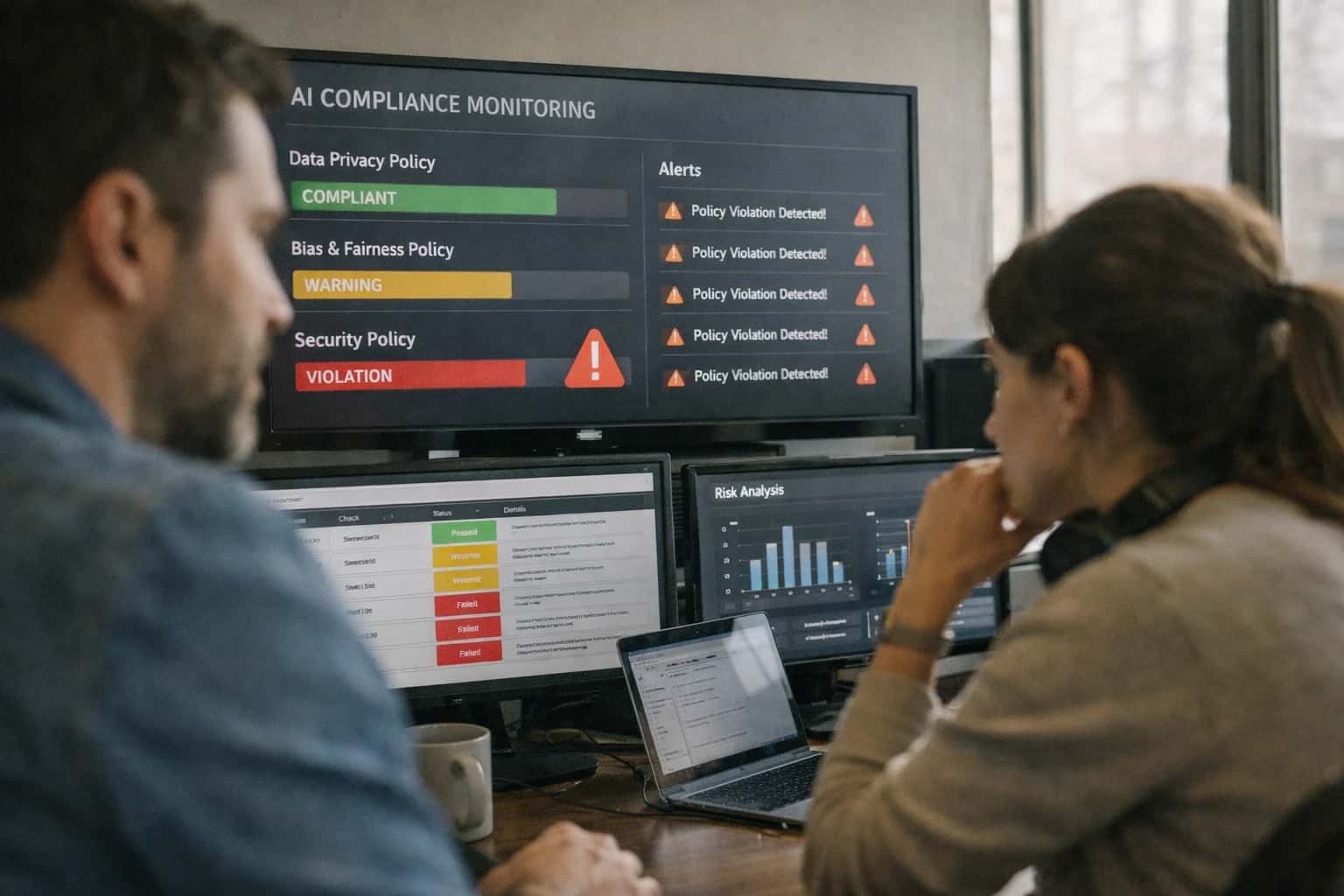
THE ANALYSIS
Introduction
A data-driven comparison of EcoVadis's sustainability scorecards against IntegrityNext's real-time compliance monitoring for enterprise supply chains.
IntegrityNext takes a fundamentally different approach by focusing on real-time, automated monitoring of supplier compliance and ESG risks. Instead of relying solely on periodic questionnaires, IntegrityNext scans millions of public media sources, government databases, and sanctions lists daily to detect non-compliance events—such as environmental violations or labor disputes—as they happen. This results in a trade-off: faster time-to-alert for emerging risks, but less depth in the structured, analyst-validated evidence that EcoVadis provides for corrective action planning.
The key trade-off: If your priority is a deep, auditable sustainability rating that drives long-term corrective action plans and is widely accepted by procurement teams, choose EcoVadis. If you prioritize continuous, automated monitoring for immediate risk alerts and regulatory compliance screening across a large, dynamic supply base, choose IntegrityNext. For many enterprises, the two platforms are complementary rather than mutually exclusive, with EcoVadis providing the strategic scorecard and IntegrityNext providing the operational radar.
HEAD-TO-HEAD COMPARISON
Feature Comparison: EcoVadis vs IntegrityNext
Direct comparison of key metrics and features for sustainability and compliance monitoring platforms.
| Metric | EcoVadis | IntegrityNext |
|---|---|---|
Core Monitoring Method | Periodic Scorecards & Corrective Action Plans | Real-Time Media & Regulatory Monitoring |
Data Collection Approach | Supplier-submitted evidence + 360° Watch | Automated evidence collection from public sources |
Assessment Frequency | Annual / On-Demand | Continuous |
ESG Framework Coverage | GRI, UNGC, ISO 26000 | LkSG, CSRD, CSDDD, EUDR |
Risk Alert Latency | Days (Watch alerts) | < 1 hour (Real-time) |
Supplier Onboarding Burden | High (Questionnaire + Docs) | Low (Automated Discovery) |
Corrective Action Management | ||
Scope 3 Carbon Tracking |
EcoVadis vs IntegrityNext: Quick Comparison
TL;DR Summary
A high-level breakdown of strengths and trade-offs for sustainability and compliance monitoring platforms.
01
EcoVadis: Deep Corrective Action Plans
Specific advantage: Provides structured, maturity-based scorecards (0-100) across 21 sustainability criteria with guided corrective action plans. This matters for strategic supplier development where you need to improve supplier ESG maturity over time, not just monitor for violations.
02
EcoVadis: Broad Industry Acceptance
Specific advantage: A network of over 130,000 rated companies globally, making it a de facto standard for supplier sustainability assessments. This matters for large enterprises requiring a common rating framework accepted by their entire supply base and stakeholders.
03
IntegrityNext: Real-Time Media Monitoring
Specific advantage: Scans over 1 million online sources and social media daily for immediate ESG risk alerts (e.g., environmental violations, labor strikes). This matters for rapid response compliance where detecting a violation in hours, not months, prevents supply chain disruptions.
04
IntegrityNext: Automated Evidence Collection
Specific advantage: Automatically gathers supplier self-assessments and uploads certificates, mapping them to regulations like the German Supply Chain Due Diligence Act (LkSG). This matters for legal compliance teams needing auditable proof trails without manual chasing of supplier documents.
Enabling Efficiency, Speed & Accuracy
Intelligent Analysis, Decision & Execution
We build AI systems for teams that need search across company data, workflow automation across tools, or AI features inside products and internal software.
Talk to Us
Search across company data
Give teams answers from docs, tickets, runbooks, and product data with sources and permissions.
Useful when people spend too long searching or get different answers from different systems.
Enterprise searchRAGPermissions
Read more
Automate internal workflows
Use AI to route work, draft outputs, trigger actions, and keep approvals and logs in place.
Useful when repetitive work moves across multiple tools and teams.
AI agentsWorkflow automationGovernance
Read more
Add AI to products and internal tools
Build assistants, guided actions, or decision support into the software your team or customers already use.
Useful when AI needs to be part of the product, not a separate tool.
AI integrationDecision supportModel routing
Read moreCHOOSE YOUR PRIORITY
When to Choose EcoVadis vs IntegrityNext
EcoVadis for ESG Scorecards
Strengths: EcoVadis provides a structured, human-validated sustainability scorecard based on 21 criteria across four themes (Environment, Labor & Human Rights, Ethics, Sustainable Procurement). The methodology is aligned with GRI, UNGC, and ISO 26000, making it ideal for formal supplier benchmarking and corrective action plans. The platform excels at generating a single, comparable score (0-100) that procurement teams can use in sourcing decisions and supplier segmentation.
IntegrityNext for ESG Scorecards
Strengths: IntegrityNext focuses less on a single composite score and more on automated evidence collection and real-time compliance monitoring. Instead of a survey-based scorecard, it maps supplier declarations and certifications against specific regulatory frameworks like the German Supply Chain Due Diligence Act (LkSG) or the EU CSRD. This makes it stronger for audit-ready documentation trails.
Verdict: Choose EcoVadis if you need a universally recognized, benchmarkable scorecard to compare thousands of suppliers. Choose IntegrityNext if your priority is automating evidence collection for specific regulatory filings.
THE ANALYSIS
Verdict
A data-driven breakdown of the core trade-offs between EcoVadis's broad scorecard network and IntegrityNext's real-time compliance monitoring.
EcoVadis excels at providing a standardized, universally recognized sustainability scorecard that scales across massive, global supply chains. Its strength lies in its network effect; with over 130,000 rated companies, it offers a common language for ESG maturity. For example, a procurement team can quickly benchmark a new supplier's environmental score of 65/100 against the industry average of 52, enabling rapid, data-driven sourcing decisions without needing deep internal sustainability expertise.
IntegrityNext takes a fundamentally different approach by prioritizing real-time, automated evidence collection over periodic surveys. Instead of relying on a supplier's self-attestation once a year, the platform continuously monitors millions of public media sources and internet records for red flags like environmental violations or labor disputes. This results in a trade-off: you get immediate risk alerts and automated document verification, but you lose the broad, comparative benchmarking that a static, network-wide scorecard provides.
The key trade-off centers on proactive risk detection versus scalable benchmarking. If your priority is to screen thousands of suppliers for a baseline ESG score to satisfy investor reporting and broad supplier segmentation, choose EcoVadis. If you operate in a high-risk industry where a single forced-labor allegation or environmental spill can halt production overnight, and you need automated, real-time proof of compliance, choose IntegrityNext. Consider EcoVadis for strategic supplier scorecarding and IntegrityNext for operational, always-on compliance monitoring.

About the author
Prasad Kumkar
CEO & MD, Inference Systems
Prasad Kumkar is the CEO & MD of Inference Systems and writes about AI systems architecture, LLM infrastructure, model serving, evaluation, and production deployment. Over 5+ years, he has worked across computer vision models, L5 autonomous vehicle systems, and LLM research, with a focus on taking complex AI ideas into real-world engineering systems.
His work and writing cover AI systems, large language models, AI agents, multimodal systems, autonomous systems, inference optimization, RAG, evaluation, and production AI engineering.
LinkedIn
Limited slotsGet a Free AI Consultation
Partnered with leading AI, data, and software stack.





How We Work
Custom AI workflows for your Business
One-fit-all AI don't work for modern businesses. At Inferensys, we aim to understand your business & custom requirements; which we use to define most efficient agentic workflows, the data, and the tools for your business.
01
Review the use case
We understand the task, the users, and where AI can actually help.
Read more02
Pick the right approach
We define what needs search, automation, or product integration.
Read more03
Build the first useful version
We implement the part that proves the value first.
Read more04
Improve from there
We add the checks and visibility needed to keep it useful.
Read moreThe first call is a practical review of your use case and the right next step.
Talk to Us