Zip excels at connecting systems through an AI-native orchestration layer, acting as an intelligent middleware that unifies ERPs, CLMs, and supplier portals into a single intake-to-procure workflow. Instead of mimicking human clicks, Zip's agentic approach understands the context of a purchase request—such as budget codes, approval chains, and supplier risk scores—and dynamically routes it across integrated systems. This results in a 62% faster requisition-to-PO cycle for clients like Snowflake, as the platform prevents maverick spend at the point of intake rather than detecting it post-hoc.

Difference
Zip vs UiPath: Agentic vs Robotic Automation
A technical comparison of Zip's AI-native procurement orchestration and UiPath's RPA platform. We analyze the architectural trade-offs between an intelligent workflow layer that connects systems via APIs and a bot that mimics human clicks to bridge legacy application gaps, helping CTOs and procurement leaders choose the right automation strategy.
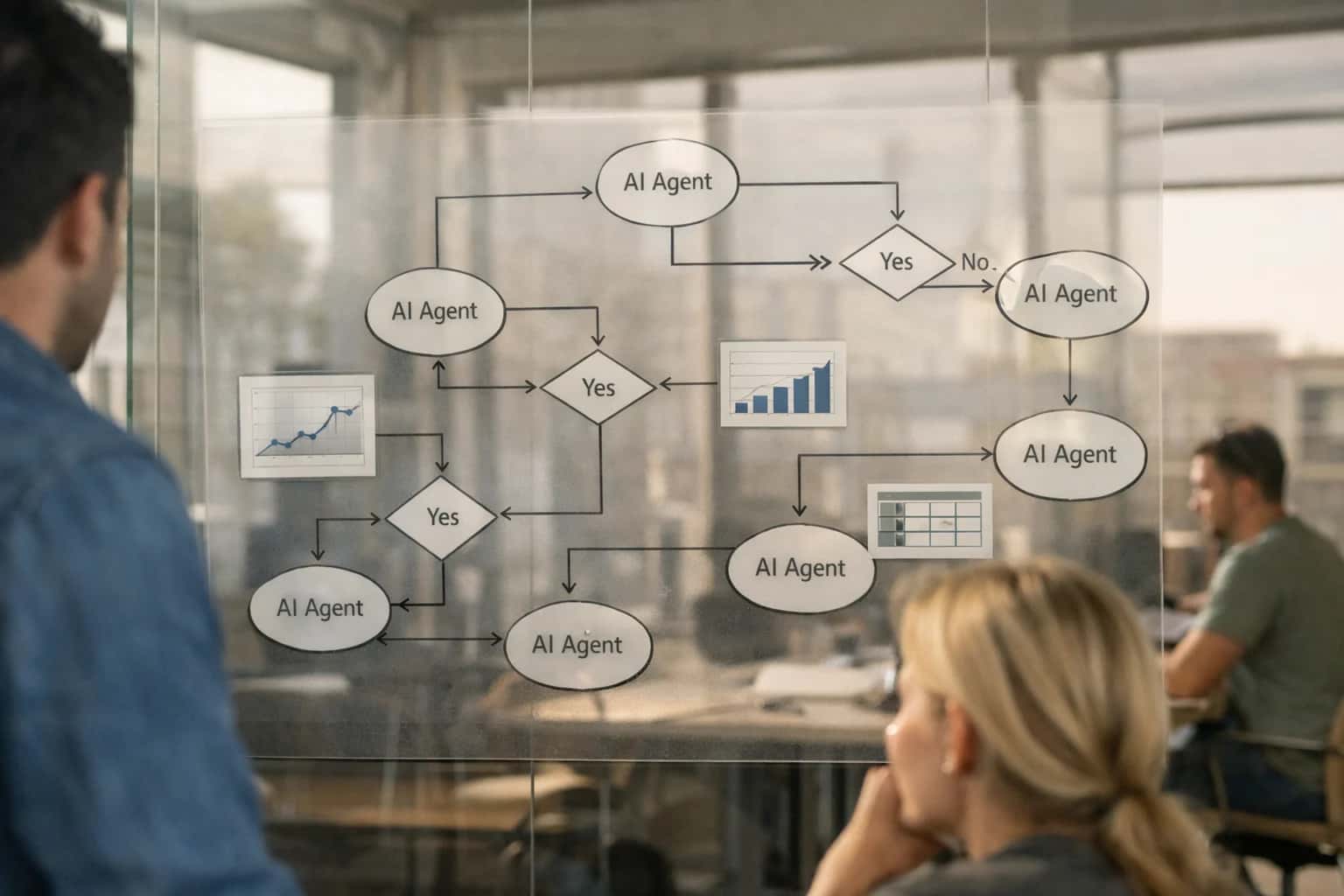
THE ANALYSIS
Introduction
A foundational comparison of architectural philosophies: AI-native orchestration versus robotic process automation for the modern procurement function.
UiPath takes a fundamentally different approach by deploying software robots that mimic human interactions with legacy application UIs. This robotic process automation (RPA) strategy excels at bridging gaps where APIs are nonexistent or unstable, such as extracting data from a 20-year-old on-premise ERP screen or automating invoice data entry across disparate, unintegrated systems. The trade-off is that these bots are inherently brittle; a simple UI change in the underlying application can break the automation, requiring maintenance that consumes up to 30% of the projected efficiency gains.
The key trade-off: If your priority is building a resilient, intelligent procurement workflow that enforces policy and connects modern cloud applications, choose Zip's agentic orchestration. If your immediate challenge is automating high-volume, deterministic keystrokes across unintegrated legacy systems where API access is impossible, choose UiPath's RPA. For a future-proof procurement stack, the architecture is shifting toward orchestration layers that can call RPA bots as a last-resort connector, making Zip the strategic choice for long-term spend control.
HEAD-TO-HEAD COMPARISON
Feature Comparison
Direct comparison of architectural approach, core intelligence, and operational metrics for Zip's agentic orchestration vs. UiPath's robotic process automation.
| Metric | Zip (Agentic AI) | UiPath (RPA) |
|---|---|---|
Core Paradigm | API-First Orchestration | UI-Based Screen Scraping |
Exception Handling | LLM Reasoning & Self-Healing | Pre-Defined Rule Escalation |
Integration Depth | Direct System-to-System | Surface-Level UI Mimicry |
Process Change Adaptability | Dynamic Prompt Adjustment | Full Bot Re-Development |
Unstructured Data Processing | Native (NLP/LLM) | Requires IDP Add-on |
Deployment Speed (Avg.) | 2-4 Weeks | 8-12 Weeks |
Maintenance Overhead | Low (Policy Updates) | High (UI Breakage Fixes) |
Best For | Strategic Intake & Sourcing | Legacy System Bridge Tasks |
Zip Pros
TL;DR Summary
Key strengths and trade-offs at a glance.
01
AI-Native Orchestration Layer
Architectural advantage: Zip is built as an intelligent workflow layer that connects existing systems (ERP, CLM, ITSM) without replacing them. This matters for enterprise architects who need to unify a fragmented tech stack without a rip-and-replace migration. The platform orchestrates approvals, risk checks, and supplier onboarding across 50+ integrated systems.
02
Intake-to-Procure User Experience
Adoption advantage: Zip's consumer-grade intake interface captures requests at the point of origin, preventing maverick spend before it happens. This matters for procurement operations directors struggling with low catalog adoption. Organizations report 80%+ user compliance within the first quarter, compared to 30-40% for traditional requisition modules.
03
Rapid Deployment Velocity
Time-to-value advantage: Zip deploys in 4-8 weeks by sitting on top of existing infrastructure rather than requiring ERP reconfiguration. This matters for mid-market and growth-stage companies that need procurement governance immediately but cannot afford a 12-month suite implementation. No-code workflow builders enable business-led configuration.
HEAD-TO-HEAD COMPARISON
Cost and Licensing Analysis
Direct comparison of key cost, licensing, and deployment metrics for Zip's agentic orchestration vs. UiPath's robotic automation.
| Metric | Zip (Agentic AI) | UiPath (RPA) |
|---|---|---|
Core Licensing Model | SaaS Platform Fee (per user) | Bot/Unattended Runtime License |
Typical Annual Cost (Mid-Market) | $50K - $150K | $80K - $200K+ |
Infrastructure Requirement | Cloud-Native (No VMs) | VM/Server per Bot (Windows) |
Deployment Time (Initial MVP) | 2-4 weeks | 3-6 months |
Cost Driver | Connected Systems & Users | Number of Bots & Orchestrators |
Maintenance Overhead (% of License) | ~15% (Configuration) | ~25% (Bot Breakage & Script Fixes) |
Vendor Lock-in Risk | Moderate (Workflow Logic) | High (Proprietary Automation Code) |
Free Tier / POC |
Enabling Efficiency, Speed & Accuracy
Intelligent Analysis, Decision & Execution
We build AI systems for teams that need search across company data, workflow automation across tools, or AI features inside products and internal software.
Talk to Us
Search across company data
Give teams answers from docs, tickets, runbooks, and product data with sources and permissions.
Useful when people spend too long searching or get different answers from different systems.
Enterprise searchRAGPermissions
Read more
Automate internal workflows
Use AI to route work, draft outputs, trigger actions, and keep approvals and logs in place.
Useful when repetitive work moves across multiple tools and teams.
AI agentsWorkflow automationGovernance
Read more
Add AI to products and internal tools
Build assistants, guided actions, or decision support into the software your team or customers already use.
Useful when AI needs to be part of the product, not a separate tool.
AI integrationDecision supportModel routing
Read moreCHOOSE YOUR PRIORITY
When to Use What
Zip for Intake Orchestration
Strengths: Zip is purpose-built for the 'intake-to-procure' moment. Its AI-native workflow layer intercepts requests before they become maverick spend, routing them through dynamic approval chains and guiding employees to preferred suppliers. This prevents rogue purchasing at the source.
UiPath for Intake Orchestration
Verdict: Not ideal. UiPath bots can automate form-filling in legacy intake portals, but they lack the native, user-facing guided buying interface. Using RPA here means building a brittle bot on top of a bad process, rather than replacing the process with an intelligent orchestration layer.
Bottom Line: For preventing maverick spend at intake, Zip's agentic orchestration is architecturally superior to UiPath's robotic screen-scraping of outdated requisition tools.
THE ANALYSIS
Verdict
A data-driven breakdown of when to choose an AI-native orchestration layer versus a traditional robotic process automation bot for procurement.
Zip excels at intelligent workflow orchestration because it functions as an AI-native middleware layer that connects disparate systems via APIs. Instead of mimicking human clicks, Zip's agentic AI interprets unstructured intake requests, enforces procurement policies, and routes approvals across ERPs, CLMs, and P2P suites. For example, enterprises using Zip for intake-to-procure workflows report a significant reduction in maverick spend by guiding employees to preferred suppliers at the point of request, a feat achieved through system-level logic rather than screen-level automation.
UiPath takes a fundamentally different approach by deploying software robots that mimic human interactions with legacy application user interfaces. This robotic process automation (RPA) strategy excels at bridging gaps in systems that lack modern APIs, such as mainframes or highly customized on-premise ERPs. The trade-off is clear: UiPath can automate a repetitive, deterministic task like copying invoice data from a scanned PDF into a legacy accounting system with high reliability, but it struggles when the process requires contextual judgment, such as interpreting a complex supplier contract clause or dynamically re-routing a non-standard purchase order.
The key trade-off: If your priority is building a flexible, intelligent procurement layer that prevents maverick spend at intake and orchestrates complex, non-deterministic workflows across modern cloud applications, choose Zip. If your priority is automating high-volume, rule-based tasks on legacy systems that cannot be easily integrated via APIs, and you are willing to manage the maintenance overhead of UI-based bots, choose UiPath. For a modern enterprise architect, Zip represents the strategic orchestration layer, while UiPath often serves as a tactical bridge to automate the last mile of a legacy process until the underlying system can be modernized.

About the author
Prasad Kumkar
CEO & MD, Inference Systems
Prasad Kumkar is the CEO & MD of Inference Systems and writes about AI systems architecture, LLM infrastructure, model serving, evaluation, and production deployment. Over 5+ years, he has worked across computer vision models, L5 autonomous vehicle systems, and LLM research, with a focus on taking complex AI ideas into real-world engineering systems.
His work and writing cover AI systems, large language models, AI agents, multimodal systems, autonomous systems, inference optimization, RAG, evaluation, and production AI engineering.
LinkedIn
Limited slotsGet a Free AI Consultation
Partnered with leading AI, data, and software stack.





How We Work
Custom AI workflows for your Business
One-fit-all AI don't work for modern businesses. At Inferensys, we aim to understand your business & custom requirements; which we use to define most efficient agentic workflows, the data, and the tools for your business.
01
Review the use case
We understand the task, the users, and where AI can actually help.
Read more02
Pick the right approach
We define what needs search, automation, or product integration.
Read more03
Build the first useful version
We implement the part that proves the value first.
Read more04
Improve from there
We add the checks and visibility needed to keep it useful.
Read moreThe first call is a practical review of your use case and the right next step.
Talk to Us