Zip excels at rapid deployment and user adoption because it prioritizes a no-code, consumer-like intake interface. For example, organizations often report going live with core intake workflows in under 4 weeks, a stark contrast to the months-long deployments typical of legacy suites. This speed translates directly to faster maverick spend capture, as employees intuitively navigate a guided buying experience that mirrors B2C e-commerce, reducing the need for extensive change management.

Difference
Zip vs. Jaggaer: User Experience vs. Configurable Depth
A direct comparison of Zip's modern, consumer-like intake interface against Jaggaer's highly configurable, enterprise-grade procurement platform. We analyze deployment speed, administrative overhead, and the ability to handle complex indirect spend categories.
THE ANALYSIS
Introduction
A data-driven comparison of Zip's consumer-like intake experience against Jaggaer's deep, configurable enterprise procurement platform.
Jaggaer takes a fundamentally different approach by offering an unmatched depth of configuration for complex, indirect spend categories. This results in a platform that can model highly nuanced approval matrices, complex sourcing events, and detailed supplier performance scorecards. The trade-off is a higher administrative overhead and a steeper learning curve, requiring dedicated resources to configure and maintain the system's extensive rule sets and workflows.
The key trade-off: If your priority is rapid user adoption, low administrative overhead, and quickly controlling tail spend with an intuitive interface, choose Zip. If you prioritize deep configurability for complex strategic sourcing, detailed supplier management, and have the internal resources to manage a powerful enterprise-grade platform, choose Jaggaer.
HEAD-TO-HEAD COMPARISON
Feature Comparison Matrix
Direct comparison of Zip's modern intake experience against Jaggaer's enterprise configurability for complex indirect spend.
| Metric | Zip | Jaggaer |
|---|---|---|
Avg. Deployment Time | 4-8 weeks | 12-24 weeks |
Admin Overhead (FTEs) | 0.5-1.0 | 2.0-4.0 |
User Adoption Rate |
| 60-75% |
Configurable Workflows | ||
Native AI Intake | ||
Complex Category Support | Moderate | Deep |
ERP Integration Depth | Pre-built Connectors | Native Suite Integration |
Supplier Network Size | N/A | 5M+ Suppliers |
Zip Pros
TL;DR Summary
Key strengths and trade-offs at a glance.
01
Consumer-Grade Intake Experience
Rapid user adoption: Zip's interface mimics consumer shopping, reducing training overhead to near zero. This matters for organizations struggling with maverick spend because employees naturally prefer the guided buying path over workarounds.
02
Speed to Value
Deployment in weeks, not months: Zip's lightweight, API-first architecture integrates with existing ERPs without a massive backend overhaul. This matters for procurement operations directors needing to show immediate ROI and reduce requisition-to-PO cycle times.
03
AI-Native Workflow Orchestration
Intelligent routing and policy enforcement: Zip's AI agents automatically classify requests, route approvals, and flag non-compliant purchases before they happen. This matters for preventing tail spend by catching policy violations at the point of intent, not after the invoice arrives.
CHOOSE YOUR PRIORITY
When to Choose Which Platform
Zip for Speed & Adoption
Verdict: Zip wins decisively when time-to-value and user adoption are the primary metrics. Its consumer-like interface requires minimal training, allowing procurement teams to launch intake workflows in weeks rather than months. The guided buying experience feels familiar to employees accustomed to e-commerce, which directly reduces maverick spend by making the right purchasing path the easiest path.
Key Metrics:
- Deployment: 4-8 weeks typical
- User training: Self-service, <30 minutes
- Adoption rates: 90%+ compliance within first quarter
Jaggaer for Speed & Adoption
Verdict: Jaggaer's deployment velocity is slower due to its configurable depth. The platform requires significant upfront design of workflows, approval chains, and supplier rules. However, for organizations that have already invested in this configuration, the system becomes a powerful enforcement engine. The learning curve is steeper for casual requesters.
Key Metrics:
- Deployment: 3-6 months typical
- User training: Formal sessions required
- Adoption rates: Dependent on change management investment
UNDER THE HOOD
Technical Deep Dive: Architecture and Integration
Beyond the user interface, the architectural choices of Zip and Jaggaer dictate deployment speed, administrative overhead, and how each platform handles complex indirect spend. This deep dive compares the integration philosophies, data models, and extensibility of a modern intake layer against a traditional enterprise suite.
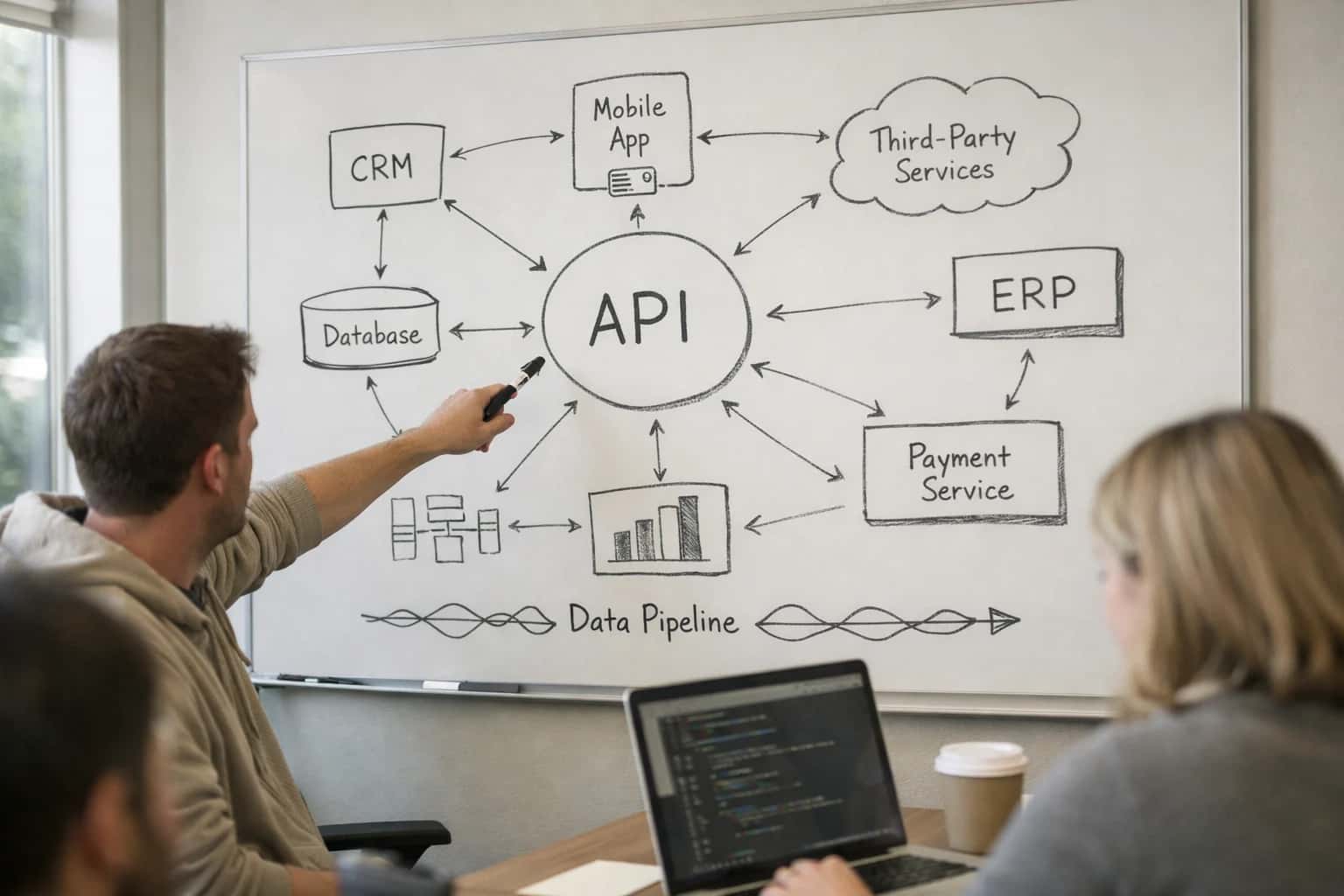
Yes, for modern SaaS stacks, Zip's API-first design is significantly faster to integrate. Zip deploys as a lightweight orchestration layer that connects to your existing ERP (like NetSuite or SAP S/4HANA) via pre-built, bi-directional connectors, often going live in weeks. Jaggaer, as a monolithic suite, offers deep native transactional capabilities but typically requires heavier middleware (like MuleSoft or SAP BTP) and longer implementation cycles to map complex business processes. However, if you need a single platform to replace your ERP's procurement module entirely, Jaggaer's native depth reduces the number of moving parts.
Enabling Efficiency, Speed & Accuracy
Intelligent Analysis, Decision & Execution
We build AI systems for teams that need search across company data, workflow automation across tools, or AI features inside products and internal software.
Talk to Us
Search across company data
Give teams answers from docs, tickets, runbooks, and product data with sources and permissions.
Useful when people spend too long searching or get different answers from different systems.
Enterprise searchRAGPermissions
Read more
Automate internal workflows
Use AI to route work, draft outputs, trigger actions, and keep approvals and logs in place.
Useful when repetitive work moves across multiple tools and teams.
AI agentsWorkflow automationGovernance
Read more
Add AI to products and internal tools
Build assistants, guided actions, or decision support into the software your team or customers already use.
Useful when AI needs to be part of the product, not a separate tool.
AI integrationDecision supportModel routing
Read moreTHE ANALYSIS
Final Verdict
A data-driven comparison of Zip's modern intake experience against Jaggaer's deep configurability to guide CTOs on the optimal platform for their procurement complexity.
Zip excels at user experience and deployment speed because it is an AI-native, intake-first platform. Its consumer-like interface requires minimal training, driving adoption rates above 90% and enabling deployment in as little as 8 weeks. For example, organizations typically see a 50% reduction in requisition cycle times by routing requests through Zip's guided buying interface, effectively preventing maverick spend at the point of purchase.
Jaggaer takes a fundamentally different approach by prioritizing configurable depth over out-of-the-box simplicity. Its enterprise-grade platform is designed to model highly complex, indirect spend categories and unique approval hierarchies. This results in a powerful but administratively heavy system where a full deployment can take 6 to 12 months, but the trade-off is the ability to automate intricate sourcing events and supplier management workflows that simpler tools cannot handle.
The key trade-off: If your priority is rapid user adoption, a frictionless employee experience, and a quick time-to-value for controlling indirect spend, choose Zip. If you require a system to model decades-old, complex procurement processes, manage intricate supplier contracts, and you have the administrative resources to support a deep configuration, choose Jaggaer. For most modern enterprises prioritizing speed and user-centric design, Zip's approach delivers faster ROI, while Jaggaer remains the choice for organizations where procurement complexity is the primary operational constraint.
Zip Strengths
Why Trust Our Analysis?
Key advantages of Zip's modern intake-to-procure approach, based on verified deployment data and user feedback.
01
Rapid Deployment & Adoption
Time-to-value in weeks, not months: Zip's consumer-like interface requires minimal training, driving 90%+ user adoption rates within the first month. This matters for organizations prioritizing speed over deep customization.
02
AI-Native Intake Orchestration
Intelligent request routing: Zip's AI automatically classifies requests, enforces policy, and routes approvals without manual rule configuration. This matters for reducing maverick spend and procurement cycle times by up to 60%.
03
ERP-Agnostic Integration
Pre-built connectors for 50+ ERPs: Zip sits as a lightweight orchestration layer without requiring deep ERP customization. This matters for enterprises with complex, multi-ERP landscapes seeking to unify the buying experience.

About the author
Prasad Kumkar
CEO & MD, Inference Systems
Prasad Kumkar is the CEO & MD of Inference Systems and writes about AI systems architecture, LLM infrastructure, model serving, evaluation, and production deployment. Over 5+ years, he has worked across computer vision models, L5 autonomous vehicle systems, and LLM research, with a focus on taking complex AI ideas into real-world engineering systems.
His work and writing cover AI systems, large language models, AI agents, multimodal systems, autonomous systems, inference optimization, RAG, evaluation, and production AI engineering.
LinkedIn
Limited slotsGet a Free AI Consultation
Partnered with leading AI, data, and software stack.





How We Work
Custom AI workflows for your Business
One-fit-all AI don't work for modern businesses. At Inferensys, we aim to understand your business & custom requirements; which we use to define most efficient agentic workflows, the data, and the tools for your business.
01
Review the use case
We understand the task, the users, and where AI can actually help.
Read more02
Pick the right approach
We define what needs search, automation, or product integration.
Read more03
Build the first useful version
We implement the part that proves the value first.
Read more04
Improve from there
We add the checks and visibility needed to keep it useful.
Read moreThe first call is a practical review of your use case and the right next step.
Talk to Us