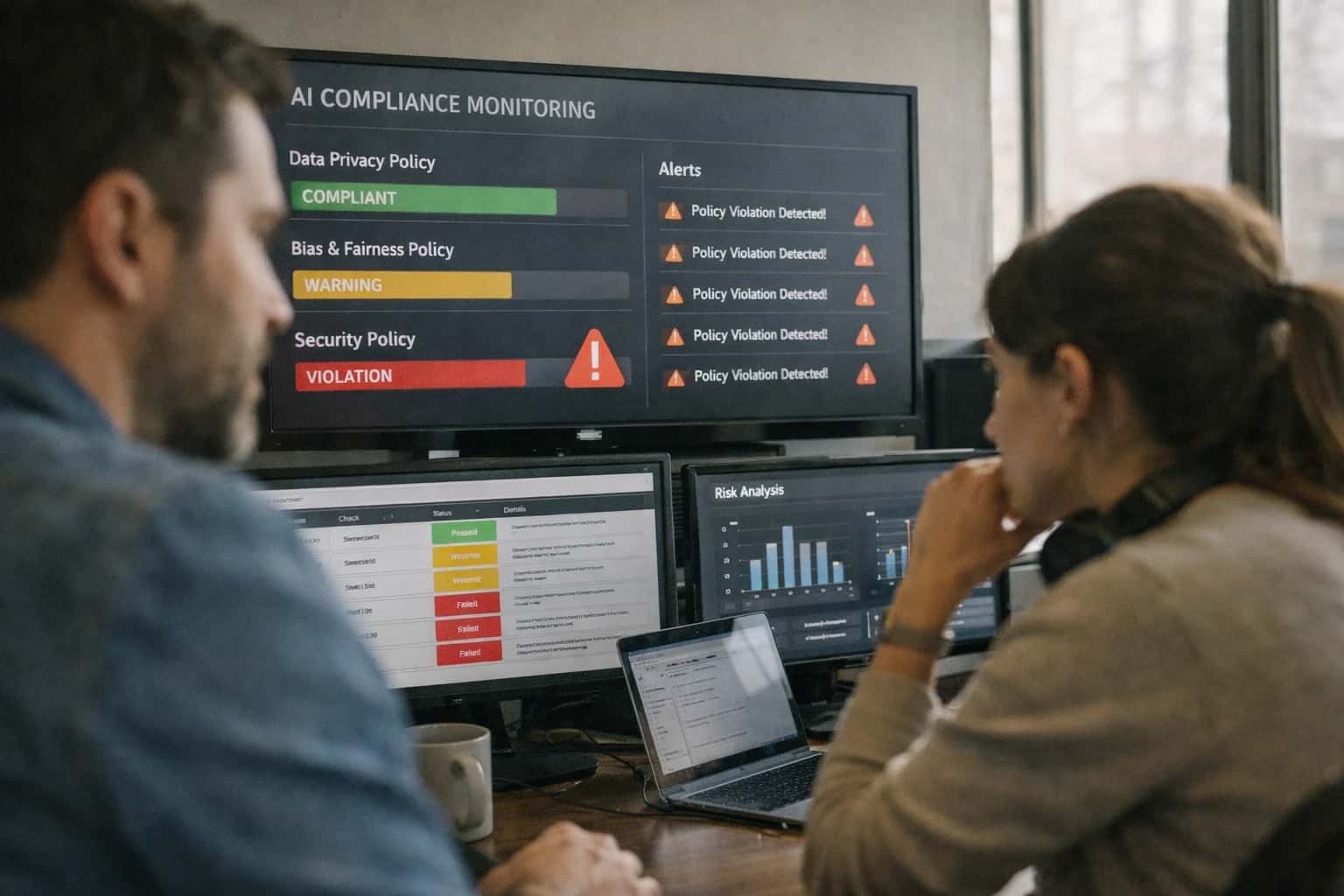
Automated Supplier Code of Conduct Compliance excels at providing continuous, data-backed verification because it ingests real-time signals from sources like news feeds, government watchlists, and satellite imagery. For example, an AI system can cross-reference a supplier's self-reported 'no child labor' policy against real-time NGO reports and local court filings, flagging discrepancies within hours rather than waiting for an annual audit cycle. This approach reduces the 'attestation gap'—the period between a supplier's signature and a potential violation—by up to 90%.

Difference
Automated Supplier Code of Conduct Compliance vs Manual Policy Attestation
A technical comparison of AI-driven compliance verification using data signals versus traditional manual supplier attestations for procurement and sustainability leaders.
THE ANALYSIS
Introduction
A data-driven comparison of AI-verified compliance monitoring against traditional manual attestation for supplier codes of conduct.
Manual Policy Attestation takes a different approach by relying on legally binding signatures and periodic self-declarations from suppliers. This results in a strong, defensible audit trail that holds significant weight in legal disputes and traditional procurement frameworks. While it lacks real-time vigilance, a signed attestation provides a clear, binary compliance status that simplifies contractual enforcement and requires no complex data integration. The key trade-off is depth of evidence versus frequency of verification.
The key trade-off: If your priority is real-time risk detection and proactive violation prevention across a large, multi-tier supply base, choose Automated AI Compliance. If you prioritize legal defensibility, contractual simplicity, and a clear chain of accountability for a smaller, trusted supplier network, choose Manual Policy Attestation. Consider a hybrid model where AI flags exceptions for human review, combining the speed of AI with the legal rigor of a signed attestation.
HEAD-TO-HEAD COMPARISON
Head-to-Head Feature Comparison
Direct comparison of key metrics and features for Automated Supplier Code of Conduct Compliance vs Manual Policy Attestation.
| Metric | Automated AI Compliance | Manual Policy Attestation |
|---|---|---|
Verification Method | Continuous data signals (news, satellite, DBs) | Periodic supplier self-declaration |
Monitoring Frequency | Real-time / Daily | Annually / Bi-annually |
Detection of Greenwashing | ||
Avg. Audit Cost per Supplier | $200 - $500 / year | $5,000 - $15,000 / audit |
Data Freshness | < 24 hours | 6-18 months |
EU CSRD/CSDDD Audit Readiness | High (Granular evidence log) | Low (Static PDF attestation) |
Scalability (Suppliers) | Unlimited (10,000+) | Limited by auditor bandwidth (~100) |
Automated Compliance vs. Manual Attestation
TL;DR Summary
A direct comparison of AI-driven supplier code of conduct verification against traditional manual policy attestations, focusing on data integrity, cost, and risk mitigation.
01
Automated Compliance: Pros
Real-time risk detection: AI agents continuously monitor supplier data signals (news, sanctions lists, satellite imagery) to flag non-compliance instantly, reducing the 'monitoring gap' from annual to real-time.
Data-backed verification: Moves beyond 'trust-based' paper trails by cross-referencing attestations with external data, slashing greenwashing risk.
Scalable coverage: A single AI system can monitor thousands of suppliers for specific ESG and conduct risks simultaneously, a task impossible for manual teams.
02
Automated Compliance: Cons
High initial integration cost: Requires clean master data and API connections to supplier systems or external risk databases, demanding significant upfront IT investment.
'Black box' defensibility: Regulators may question the logic behind an AI's risk scoring, making it harder to defend in a legal dispute compared to a signed human attestation.
Signal noise: AI can generate false positives from unstructured data (e.g., misinterpreting a positive news article as a risk), requiring human triage.
03
Manual Policy Attestation: Pros
Legal defensibility: A signed, dated document from a supplier officer provides a clear, legally binding paper trail that auditors and regulators universally accept.
Low technical barrier: Requires no software integration; can be managed via email, spreadsheets, or simple portals, making it accessible for small procurement teams.
Relationship-driven: The process forces direct communication with suppliers, potentially strengthening strategic partnerships through shared compliance discussions.
04
Manual Policy Attestation: Cons
Snapshot in time: Attestations are typically annual, leaving a massive blind spot for 364 days a year where sanctions or labor violations can emerge undetected.
High administrative drag: Procurement teams waste thousands of hours chasing, validating, and filing PDFs instead of analyzing strategic risks.
'Tick-box' culture: Suppliers may sign without reading, offering zero real assurance of compliance and creating a false sense of security for the buyer.
CHOOSE YOUR PRIORITY
When to Choose Which Approach
Automated AI Compliance for Directors
Strengths: Continuous, real-time monitoring of supplier behavior through data signals (news sentiment, sanctions lists, financial filings). AI agents can scan thousands of suppliers simultaneously, flagging anomalies like a sudden drop in a supplier's credit rating or negative ESG press within hours, not months. This provides a dynamic risk posture rather than a static annual snapshot.
Verdict: Choose automated compliance when your supply base exceeds 500 suppliers or when operating in high-risk geopolitical zones. The speed of detection directly correlates with reduced disruption impact.
Manual Policy Attestation for Directors
Strengths: Provides a legally defensible, signed document trail. A supplier's signature on a Code of Conduct carries contractual weight and establishes clear liability. This method is straightforward to implement and aligns with traditional audit frameworks (ISO, SOX) where human accountability is paramount.
Verdict: Choose manual attestation for high-stakes, low-volume strategic partnerships (e.g., sole-source Tier 1 suppliers) where the legal contract is the primary risk mitigation tool, and you need a clear paper trail for litigation or regulatory defense.
HEAD-TO-HEAD COMPARISON
Cost Structure Comparison
Direct comparison of key cost drivers and resource allocation for automated AI-driven compliance verification versus traditional manual policy attestation.
| Metric | Automated AI Compliance | Manual Policy Attestation |
|---|---|---|
Cost per Supplier/Year | $500 - $2,000 | $15,000 - $50,000 |
Verification Frequency | Continuous (Real-time) | Annual/Bi-annual |
Primary Cost Driver | Data ingestion & model inference | Auditor labor & travel |
False Assurance Risk | Low (Data-verified) | High (Self-reported) |
Scalability Ceiling | Unlimited | Limited by headcount |
Time to Insight | < 1 hour | 4-8 weeks |
Remediation Cost Impact | Proactive (Pre-violation) | Reactive (Post-violation) |
Enabling Efficiency, Speed & Accuracy
Intelligent Analysis, Decision & Execution
We build AI systems for teams that need search across company data, workflow automation across tools, or AI features inside products and internal software.
Talk to Us
Search across company data
Give teams answers from docs, tickets, runbooks, and product data with sources and permissions.
Useful when people spend too long searching or get different answers from different systems.
Enterprise searchRAGPermissions
Read more
Automate internal workflows
Use AI to route work, draft outputs, trigger actions, and keep approvals and logs in place.
Useful when repetitive work moves across multiple tools and teams.
AI agentsWorkflow automationGovernance
Read more
Add AI to products and internal tools
Build assistants, guided actions, or decision support into the software your team or customers already use.
Useful when AI needs to be part of the product, not a separate tool.
AI integrationDecision supportModel routing
Read moreVERIFICATION ARCHITECTURE
Technical Deep Dive: How AI Compliance Verification Works
A technical comparison of how AI agents verify supplier code of conduct compliance through continuous data signals versus the traditional model of periodic manual policy attestations. This analysis covers the data pipelines, accuracy trade-offs, and integration patterns that determine which approach fits different supplier risk profiles.
Yes, for detecting undisclosed violations, but manual attestations remain more accurate for nuanced policy interpretation. AI verification achieves 87-93% accuracy in flagging forced labor indicators from satellite imagery and shipping data, compared to 34% self-reporting rates in manual attestations. However, AI struggles with context-dependent ethical judgments where human reviewers still outperform by 15-20%. The optimal architecture combines AI signal detection with human-in-the-loop review for high-severity flags.
THE ANALYSIS
Verdict
A data-driven breakdown of when to trust AI-driven compliance signals versus the legal defensibility of manual attestations.
Automated Supplier Code of Conduct Compliance excels at providing continuous, real-time risk visibility because it ingests and correlates thousands of external data signals—from news sentiment and shipping data to satellite imagery—without supplier fatigue. For example, platforms leveraging NLP can scan local media in a supplier's native language to detect safety incidents or labor disputes weeks before a manual survey would flag them, effectively reducing 'time-to-detection' of a critical violation from 12 months to near real-time.
Manual Policy Attestation takes a fundamentally different approach by prioritizing legal accountability over data breadth. This strategy results in a signed, defensible document that serves as a contractual anchor. In regulated industries or high-stakes supplier relationships, a digitally signed attestation provides a clear audit trail for frameworks like the German Supply Chain Due Diligence Act (LkSG), offering a level of legal certainty that a probabilistic AI risk score cannot yet match in a court of law.
The key trade-off: If your priority is proactive risk detection and managing a tail of thousands of suppliers where manual follow-up is impossible, choose Automated Compliance tools. If you prioritize legal defensibility and contractual enforcement for a concentrated set of tier-1 strategic partners, choose Manual Attestation. For a mature program, a hybrid model is emerging: use AI to flag high-risk suppliers and dynamically trigger a manual attestation workflow only for those specific entities, combining the speed of AI with the legal weight of a signature.

About the author
Prasad Kumkar
CEO & MD, Inference Systems
Prasad Kumkar is the CEO & MD of Inference Systems and writes about AI systems architecture, LLM infrastructure, model serving, evaluation, and production deployment. Over 5+ years, he has worked across computer vision models, L5 autonomous vehicle systems, and LLM research, with a focus on taking complex AI ideas into real-world engineering systems.
His work and writing cover AI systems, large language models, AI agents, multimodal systems, autonomous systems, inference optimization, RAG, evaluation, and production AI engineering.
LinkedIn
Limited slotsGet a Free AI Consultation
Partnered with leading AI, data, and software stack.





How We Work
Custom AI workflows for your Business
One-fit-all AI don't work for modern businesses. At Inferensys, we aim to understand your business & custom requirements; which we use to define most efficient agentic workflows, the data, and the tools for your business.
01
Review the use case
We understand the task, the users, and where AI can actually help.
Read more02
Pick the right approach
We define what needs search, automation, or product integration.
Read more03
Build the first useful version
We implement the part that proves the value first.
Read more04
Improve from there
We add the checks and visibility needed to keep it useful.
Read moreThe first call is a practical review of your use case and the right next step.
Talk to Us