Oz Forensics excels at document-centric liveness and injection attack defense because its architecture is built around a comprehensive KYC orchestration layer. For example, Oz's platform combines passive facial liveness with document authenticity checks and age estimation in a single SDK, achieving iBeta Level 2 compliance for presentation attack detection. This integrated approach reduces vendor sprawl for compliance teams but can introduce higher latency when all modules are chained sequentially.

Difference
Oz Forensics vs ID R&D: Biometric Anti-Spoofing
A technical comparison of Oz Forensics and ID R&D for biometric anti-spoofing, focusing on liveness detection, injection attack defense, and KYC compliance architecture. Evaluate edge AI vs cloud AI trade-offs for enterprise deployment.
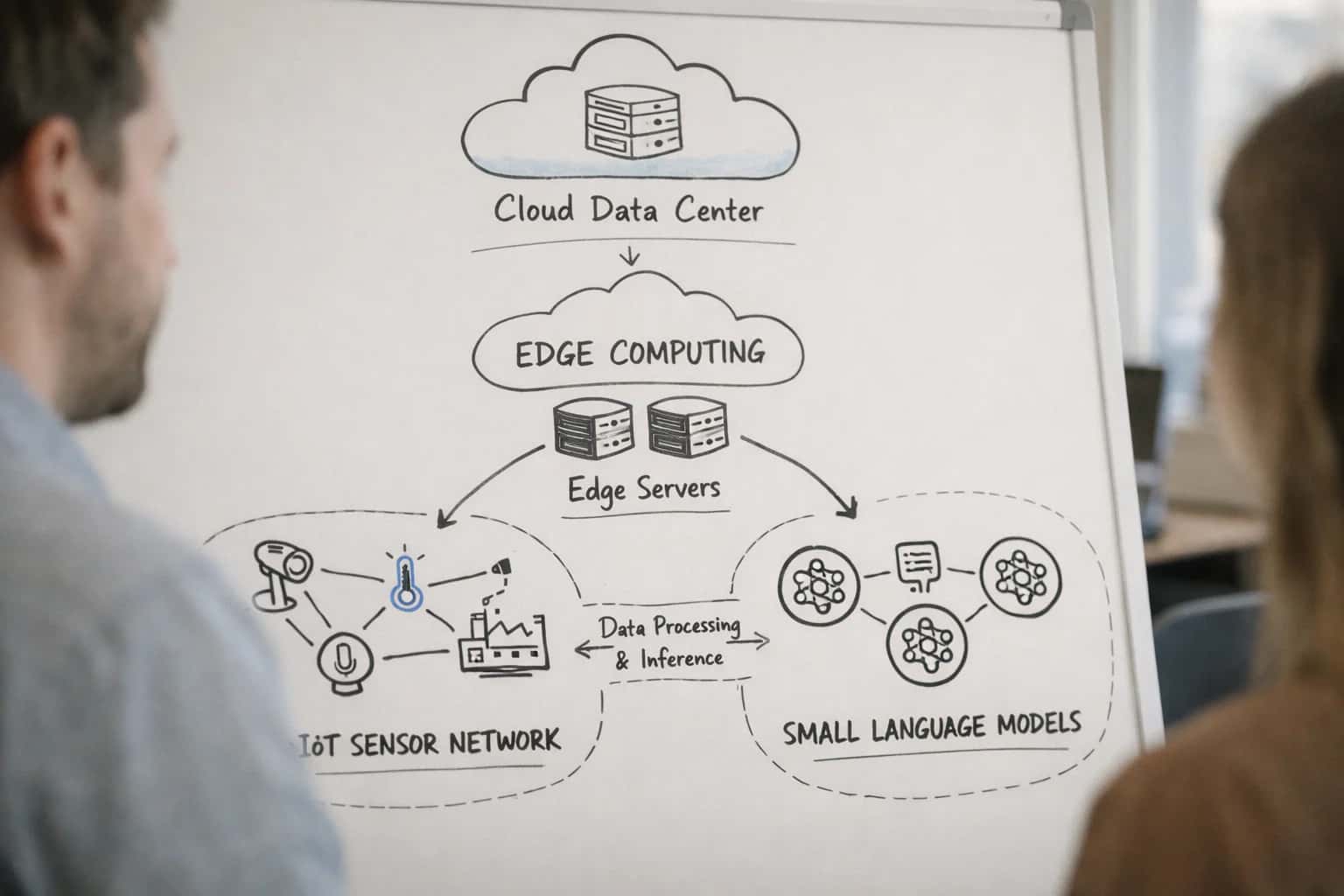
THE ANALYSIS
Introduction
A technical comparison of Oz Forensics and ID R&D for CTOs evaluating biometric anti-spoofing, liveness detection, and deepfake defense in KYC workflows.
ID R&D takes a different approach by prioritizing on-device, privacy-preserving inference for passive facial liveness. Their IDLive Face product runs entirely on the user's device without sending video streams to a server, which minimizes data exposure and eliminates cloud processing costs. This results in a trade-off: superior privacy posture and sub-100ms inference speeds on edge hardware, but a narrower scope that requires separate integrations for document verification or age estimation.
The key trade-off: If your priority is a unified KYC stack with document checks, age estimation, and injection attack defense in a single vendor relationship, choose Oz Forensics. If you prioritize privacy-preserving, on-device liveness with minimal latency and no biometric data transmission, choose ID R&D. For defense against sophisticated deepfake injection attacks specifically targeting camera feeds, Oz Forensics' server-side analysis offers more robust detection, while ID R&D's edge-first model excels in bandwidth-constrained or air-gapped environments.
HEAD-TO-HEAD COMPARISON
Head-to-Head Feature Matrix
Direct comparison of key metrics and features for biometric anti-spoofing and deepfake detection.
| Metric | Oz Forensics | ID R&D |
|---|---|---|
ISO 30107-3 Compliance | ||
Passive Liveness Detection | ||
Deepfake Video Detection | ||
On-Device Inference (Edge AI) | ||
Injection Attack Defense | ||
Document Liveness Check | ||
Age Estimation Capability |
Oz Forensics vs ID R&D
TL;DR Summary
A quick comparison of strengths for biometric anti-spoofing, KYC compliance, and deepfake detection.
01
Oz Forensics: Document Liveness & Injection Defense
Specific advantage: Specializes in document liveness and injection attack defense, aligning with ISO 30107-3 Level A and B compliance. This matters for regulated KYC workflows where proving a physical ID document is present and untampered is critical.
- Architecture: Cloud-native with edge processing capabilities.
- Best for: Banks and fintechs needing a one-stop shop for face and document anti-spoofing with strong regulatory audit trails.
02
Oz Forensics: Age Estimation Accuracy
Specific advantage: Offers integrated age estimation models that are iBeta Level 2 compliant. This matters for age-restricted platforms (gaming, adult content, e-commerce) needing to comply with child safety regulations without storing identity documents.
- Metric: Claims a mean absolute error of under 2.5 years for age estimation.
- Trade-off: Less focused on general deepfake detection outside of biometric presentation attacks.
03
ID R&D: Passive Liveness & Edge AI
Specific advantage: Industry-leading passive liveness detection that requires no user interaction, analyzing micro-expressions and texture in a single frame. This matters for high-volume, low-friction user onboarding where drop-off rates directly impact revenue.
- Architecture: Optimized for on-device inference with a tiny SDK footprint (< 5 MB).
- Metric: Achieved a 0% attack presentation classification error rate (APCER) in iBeta Level 2 testing.
04
ID R&D: Deepfake & Voice Anti-Spoofing
Specific advantage: Extends anti-spoofing beyond faces to include voice liveness and deepfake detection for both audio and video streams. This matters for call centers and video conferencing platforms facing injection attacks and real-time voice cloning threats.
- Feature: IDLive Voice detects TTS and voice conversion attacks without requiring a passphrase.
- Trade-off: Primarily a software-focused solution; hardware root-of-trust integration is partner-dependent.
Enabling Efficiency, Speed & Accuracy
Intelligent Analysis, Decision & Execution
We build AI systems for teams that need search across company data, workflow automation across tools, or AI features inside products and internal software.
Talk to Us
Search across company data
Give teams answers from docs, tickets, runbooks, and product data with sources and permissions.
Useful when people spend too long searching or get different answers from different systems.
Enterprise searchRAGPermissions
Read more
Automate internal workflows
Use AI to route work, draft outputs, trigger actions, and keep approvals and logs in place.
Useful when repetitive work moves across multiple tools and teams.
AI agentsWorkflow automationGovernance
Read more
Add AI to products and internal tools
Build assistants, guided actions, or decision support into the software your team or customers already use.
Useful when AI needs to be part of the product, not a separate tool.
AI integrationDecision supportModel routing
Read moreCHOOSE YOUR PRIORITY
When to Choose Oz Forensics vs ID R&D
Oz Forensics for KYC Compliance
Strengths: Oz Forensics is purpose-built for regulated KYC and AML workflows, offering deep integration with identity verification platforms. Its liveness detection is certified to ISO 30107-3 Level 2, making it a strong choice for financial institutions that need to prove compliance to auditors. The platform excels at document liveness checks, verifying that identity documents are physically present and not screenshots or photocopies. Oz also provides a unified dashboard that correlates biometric anti-spoofing with document authenticity, reducing integration complexity for compliance teams.
Verdict: Choose Oz Forensics when your primary use case is regulatory KYC onboarding and you need a single vendor for both biometric and document anti-spoofing with clear audit trails.
ID R&D for KYC Compliance
Strengths: ID R&D takes a passive liveness-first approach, requiring no user interaction like head turns or smiles. This reduces friction during onboarding, which directly improves conversion rates. ID R&D's strength lies in its pure-play biometric focus; it doesn't handle document verification itself but integrates seamlessly with leading identity proofing platforms. Its edge AI architecture keeps biometric data on the user's device, a critical advantage for GDPR and data residency requirements.
Verdict: Choose ID R&D when you need frictionless, passive liveness as part of a best-of-breed KYC stack and prioritize user experience and privacy over an all-in-one vendor.
THE ANALYSIS
Verdict
A direct comparison of Oz Forensics and ID R&D for biometric anti-spoofing, helping CTOs choose the right architecture for their KYC compliance needs.
Oz Forensics excels at providing a comprehensive, cloud-ready biometric security suite that goes beyond simple liveness detection. Its strength lies in combining passive facial liveness with document liveness checks and injection attack defense in a single platform. For example, Oz Forensics reports a near-zero False Acceptance Rate (FAR) for sophisticated 3D mask and replay attacks, making it a strong choice for financial institutions needing an all-in-one KYC compliance layer that meets ISO 30107-3 standards.
ID R&D takes a fundamentally different architectural approach by prioritizing on-device, edge-based inference. This strategy results in a significant trade-off: superior privacy preservation and ultra-low latency, as biometric data never leaves the user's device. ID R&D's passive liveness detection, which analyzes micro-expressions and texture without requiring user interaction, achieves a reported Equal Error Rate (EER) of less than 1%, making it ideal for high-volume mobile onboarding where data sovereignty and user experience are paramount.
The key trade-off: If your priority is a unified, server-side platform for defending against a broad spectrum of presentation and injection attacks across web and mobile channels, choose Oz Forensics. If you prioritize privacy-preserving, on-device processing with minimal latency for a mobile-first user experience, choose ID R&D. Consider your infrastructure: a cloud-native security suite versus a decentralized, edge-AI model that keeps sensitive biometric data local.

About the author
Prasad Kumkar
CEO & MD, Inference Systems
Prasad Kumkar is the CEO & MD of Inference Systems and writes about AI systems architecture, LLM infrastructure, model serving, evaluation, and production deployment. Over 5+ years, he has worked across computer vision models, L5 autonomous vehicle systems, and LLM research, with a focus on taking complex AI ideas into real-world engineering systems.
His work and writing cover AI systems, large language models, AI agents, multimodal systems, autonomous systems, inference optimization, RAG, evaluation, and production AI engineering.
LinkedIn
Limited slotsGet a Free AI Consultation
Partnered with leading AI, data, and software stack.





How We Work
Custom AI workflows for your Business
One-fit-all AI don't work for modern businesses. At Inferensys, we aim to understand your business & custom requirements; which we use to define most efficient agentic workflows, the data, and the tools for your business.
01
Review the use case
We understand the task, the users, and where AI can actually help.
Read more02
Pick the right approach
We define what needs search, automation, or product integration.
Read more03
Build the first useful version
We implement the part that proves the value first.
Read more04
Improve from there
We add the checks and visibility needed to keep it useful.
Read moreThe first call is a practical review of your use case and the right next step.
Talk to Us