The Digital Twin Consortium (DTC) Framework excels at defining technical interoperability for dynamic, AI-driven systems because it focuses on the practical integration of data, models, and simulations. For example, its Capabilities Periodic Table provides a structured taxonomy for mapping specific geospatial AI functions—like real-time LiDAR classification or predictive traffic flow—to system requirements, directly aiding in writing precise procurement specifications for a city's digital twin platform.

Difference
Digital Twin Consortium Framework vs ISO 37106
A technical comparison of the industry-led Digital Twin Consortium interoperability framework and the international standard ISO 37106 for sustainable smart city operating models, focusing on AI-driven geospatial analytics integration.
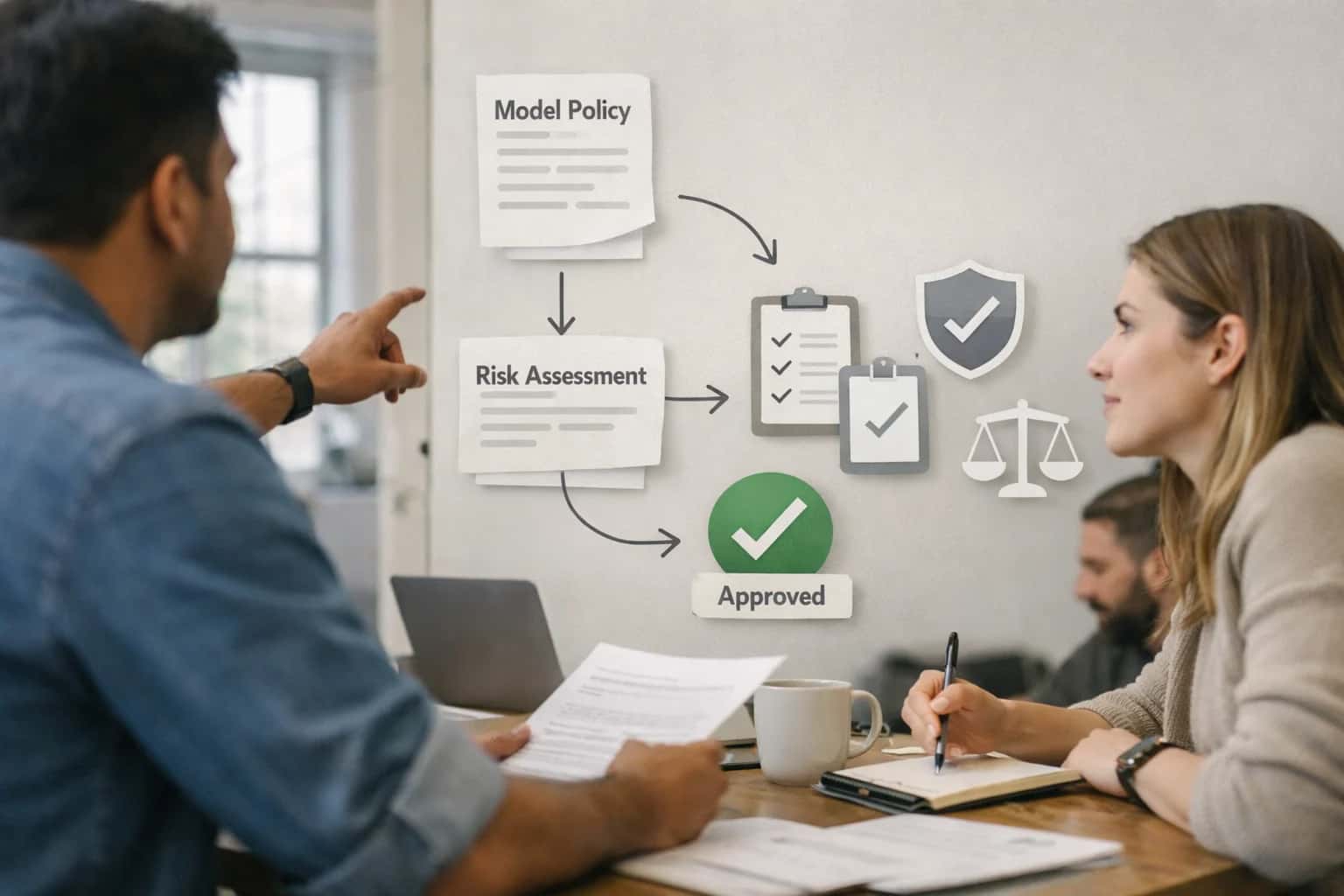
THE ANALYSIS
Introduction
A data-driven comparison of the Digital Twin Consortium Framework and ISO 37106 for guiding AI-driven geospatial analytics in smart city procurement.
ISO 37106 takes a different approach by providing a high-level, process-oriented management standard for a city's entire smart city operating model. This results in a governance-first framework that prioritizes citizen-centric outcomes, risk management, and the long-term sustainability of cross-agency collaboration. It guides how a city should organize its leadership and stakeholder engagement to deliver a smart city vision, rather than specifying the technical architecture of the AI tools themselves.
The key trade-off: If your priority is technical integration, AI model portability, and creating a seamless ecosystem of geospatial analytics vendors, choose the DTC Framework. If you prioritize establishing a robust governance structure, securing cross-departmental buy-in, and ensuring that AI deployments align with long-term public value and sustainability goals, choose ISO 37106. For a comprehensive smart city AI strategy, they are complementary, with ISO 37106 providing the 'why and who' and the DTC Framework providing the 'what and how'.
HEAD-TO-HEAD COMPARISON
Head-to-Head Feature Matrix
Direct comparison of the industry-led Digital Twin Consortium Framework against the international standard ISO 37106 for sustainable smart city operating models.
| Metric | Digital Twin Consortium Framework | ISO 37106 |
|---|---|---|
Primary Focus | Technical Interoperability & System Integration | Sustainable City Management & Governance |
AI/Geospatial Integration Guidance | Explicit (via AI Working Groups & Reference Architectures) | Implicit (as an enabling technology for service delivery) |
Procurement Specification Utility | High (detailed technical blueprints for RFP requirements) | Medium (focuses on outcomes-based service specifications) |
Stakeholder Engagement Model | Industry-led (vendors, integrators, platform providers) | Multi-stakeholder consensus (city leaders, citizens, academia) |
Data Interoperability Standard | Proprietary & Open-Source Connectors (e.g., OPC UA, MQTT) | Open Data Principles & City Data Platform (CDP) Strategy |
Maturity Assessment Tool | ||
Certification Path | true (ISO 37101/37106 Certification) |
Digital Twin Consortium Framework vs ISO 37106
TL;DR Summary
A quick comparison of strengths and ideal use cases for the industry-led interoperability framework versus the international standard for sustainable smart city operating models.
01
Choose DTC Framework for Technical Interoperability
Best for integrating AI-driven geospatial analytics. The Digital Twin Consortium's framework provides detailed technical architecture guidance, reference implementations, and platform-agnostic interoperability standards. This matters for municipal CIOs building a composable city data platform from heterogeneous sensor networks, legacy GIS, and real-time IoT streams without vendor lock-in.
02
Choose ISO 37106 for Procurement & Governance
Best for defining the 'operating model' for a smart city. ISO 37106 provides a formal, certifiable management standard focused on strategy, citizen-centric service delivery, and cross-agency governance. This matters for procurement officers who need a defensible, vendor-neutral specification to embed in RFPs and for establishing a citywide digital transformation board with clear accountability.
03
DTC Framework: Rapid Innovation Cycles
Advantage: Agile, industry-driven evolution. The DTC framework is continuously updated by a consortium of technology vendors and practitioners, allowing it to quickly incorporate new capabilities like AI-driven simulation and real-time 3D visualization. This matters for cities piloting advanced digital twin concepts that outpace the slower, consensus-driven ISO revision cycle.
04
ISO 37106: Citizen Trust & Compliance
Advantage: Legitimacy and risk management. As an international standard, ISO 37106 carries the weight of a formal consensus process, making it easier to justify to elected officials and auditors. It explicitly addresses risk, resilience, and the societal outcomes of digital transformation. This matters for public sector leaders who must demonstrate compliance with sovereign AI mandates and build public trust in algorithmic governance.
Enabling Efficiency, Speed & Accuracy
Intelligent Analysis, Decision & Execution
We build AI systems for teams that need search across company data, workflow automation across tools, or AI features inside products and internal software.
Talk to Us
Search across company data
Give teams answers from docs, tickets, runbooks, and product data with sources and permissions.
Useful when people spend too long searching or get different answers from different systems.
Enterprise searchRAGPermissions
Read more
Automate internal workflows
Use AI to route work, draft outputs, trigger actions, and keep approvals and logs in place.
Useful when repetitive work moves across multiple tools and teams.
AI agentsWorkflow automationGovernance
Read more
Add AI to products and internal tools
Build assistants, guided actions, or decision support into the software your team or customers already use.
Useful when AI needs to be part of the product, not a separate tool.
AI integrationDecision supportModel routing
Read moreCHOOSE YOUR PRIORITY
When to Choose Which Framework
Digital Twin Consortium Framework for Procurement
Strengths: The DTC's interoperability framework provides a vendor-agnostic reference architecture that procurement teams can use to write technical specifications without locking into a single vendor ecosystem. Its Capabilities and Maturity Model allows agencies to score vendor solutions against standardized criteria for data integration, AI readiness, and system-of-systems connectivity.
Verdict: Choose the DTC Framework when drafting RFPs for smart city platforms that must integrate geospatial AI with existing infrastructure. It gives you a checklist to evaluate vendor claims objectively.
ISO 37106 for Procurement
Strengths: ISO 37106 provides a governance and operating model standard that procurement teams can reference for contractual service-level agreements and delivery milestones. It defines roles, leadership commitments, and citizen engagement processes that vendors must support.
Verdict: Choose ISO 37106 when you need to bind vendors to a governance framework with clear accountability structures and delivery management processes. It is stronger for contracts requiring ongoing service delivery rather than technology specification.
THE ANALYSIS
Verdict
A final trade-off analysis to help CTOs and smart city program managers choose the right governance framework for their AI-driven geospatial initiatives.
The Digital Twin Consortium Framework excels at providing technical interoperability guidance for integrating AI-driven geospatial analytics into a city's data platform. Its strength lies in its industry-led, consensus-driven reference architectures that prioritize system connectivity and data exchange. For example, a city using the Consortium's Capabilities and Maturity Model can benchmark its current Digital Twin readiness against peers, creating a clear technical roadmap for integrating IoT sensor feeds with 3D GIS models for real-time traffic management.
ISO 37106 takes a fundamentally different approach by focusing on a holistic, citizen-centric operating model for a sustainable smart city. This standard provides guidance on governance, procurement, and stakeholder collaboration, not just technology. The trade-off is that while ISO 37106 ensures a project aligns with broader city strategy and public trust, it offers less granular technical specification for the AI models themselves. This results in stronger public accountability but potentially slower technical execution.
The key trade-off: If your priority is to build a technically robust, interoperable Digital Twin that seamlessly integrates AI analytics, choose the Digital Twin Consortium Framework. If your priority is to establish a defensible governance and procurement process that ensures long-term public value and compliance with sovereign AI mandates, choose ISO 37106. For a comprehensive strategy, leading cities often use the Consortium's framework for technical architecture and ISO 37106 for the overarching governance and citizen engagement model.

About the author
Prasad Kumkar
CEO & MD, Inference Systems
Prasad Kumkar is the CEO & MD of Inference Systems and writes about AI systems architecture, LLM infrastructure, model serving, evaluation, and production deployment. Over 5+ years, he has worked across computer vision models, L5 autonomous vehicle systems, and LLM research, with a focus on taking complex AI ideas into real-world engineering systems.
His work and writing cover AI systems, large language models, AI agents, multimodal systems, autonomous systems, inference optimization, RAG, evaluation, and production AI engineering.
LinkedIn
Limited slotsGet a Free AI Consultation
Partnered with leading AI, data, and software stack.





How We Work
Custom AI workflows for your Business
One-fit-all AI don't work for modern businesses. At Inferensys, we aim to understand your business & custom requirements; which we use to define most efficient agentic workflows, the data, and the tools for your business.
01
Review the use case
We understand the task, the users, and where AI can actually help.
Read more02
Pick the right approach
We define what needs search, automation, or product integration.
Read more03
Build the first useful version
We implement the part that proves the value first.
Read more04
Improve from there
We add the checks and visibility needed to keep it useful.
Read moreThe first call is a practical review of your use case and the right next step.
Talk to Us