Digital Sovereignty for Public Sector AI excels at balancing security with scalability by leveraging domestically controlled cloud infrastructure. This approach ensures data residency within national borders while still allowing agencies to access elastic compute, managed AI services, and continuous updates. For example, a national health service might use a sovereign cloud to train diagnostic models on sensitive patient data, achieving 99.95% uptime without the capital expenditure of building a private data center. The key benefit is maintaining a modern AI development velocity while satisfying legal mandates like GDPR or local data protection acts.

Difference
Digital Sovereignty for Public Sector AI vs Air-Gapped Government AI
A technical comparison of domestically controlled cloud AI deployments versus fully disconnected, on-premises AI infrastructure for government agencies prioritizing national security, data residency, and sovereign compliance mandates.
THE ANALYSIS
Introduction
Weighing the trade-offs between domestically controlled cloud AI and fully disconnected on-premises infrastructure for maximum national security and data residency.
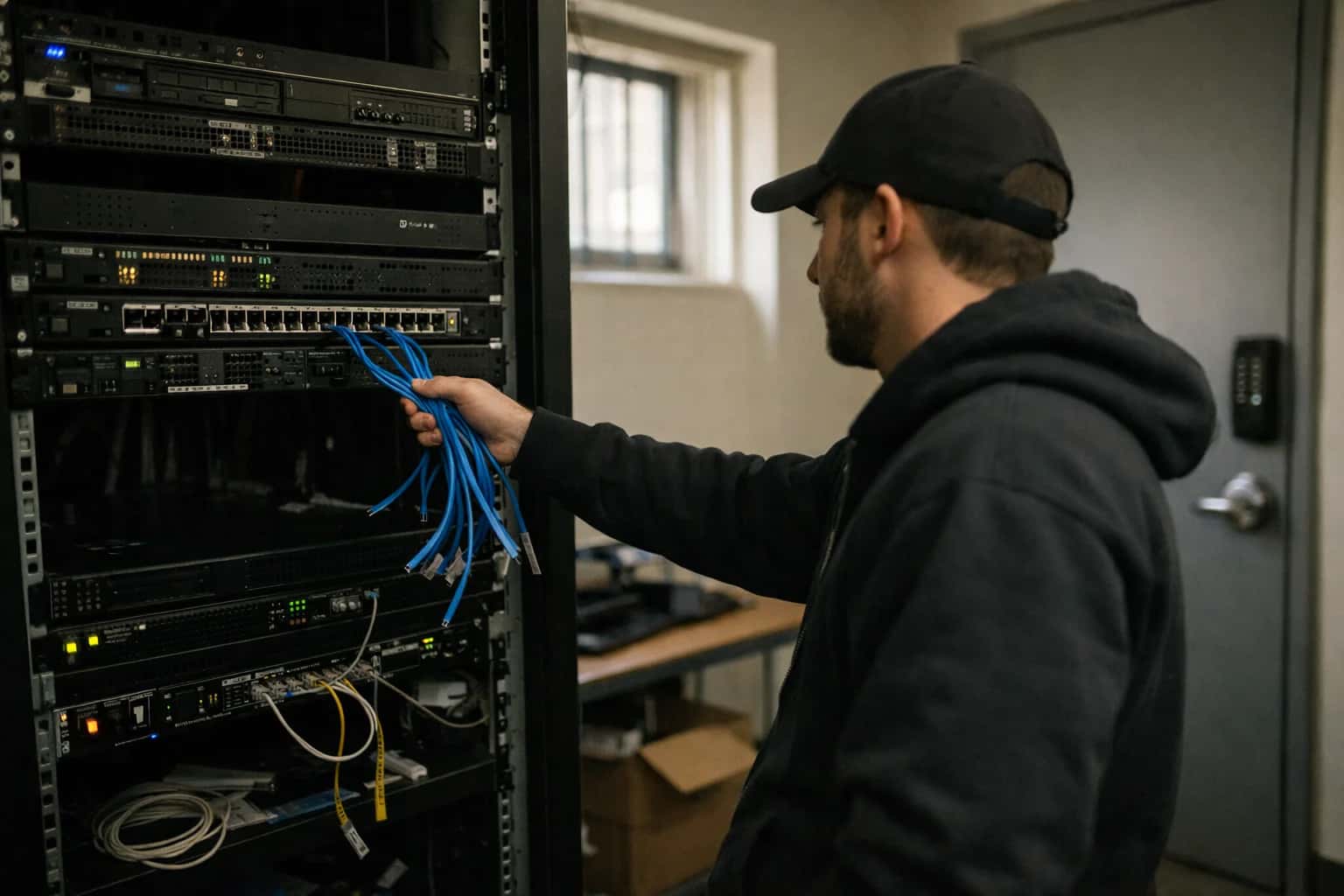
Air-Gapped Government AI takes a fundamentally different approach by completely isolating AI infrastructure from any external network, including the internet. This strategy results in the highest possible assurance against remote cyber threats, espionage, and supply chain attacks. A defense agency processing classified satellite imagery, for instance, would deploy an air-gapped Llama 3 cluster to ensure zero data exfiltration risk. The trade-off is significant: operational overhead increases dramatically, as model updates, security patches, and new libraries must be manually transferred via 'sneakernet,' often leading to software stacks that are 6-12 months behind current versions.
The key trade-off: If your priority is maintaining a dynamic, continuously improving AI capability with strong—but not absolute—data residency controls, choose a Digital Sovereignty cloud deployment. If your mission demands an uncompromising security posture where the risk of any remote exploit is unacceptable, and you can absorb higher operational costs and slower innovation cycles, choose an Air-Gapped architecture. Consider the former for citizen services and the latter for national security and critical infrastructure protection.
HEAD-TO-HEAD COMPARISON
Feature Comparison Matrix
Direct comparison of key architectural and compliance metrics for sovereign public sector AI deployments.
| Metric | Digital Sovereignty (Domestic Cloud) | Air-Gapped Government AI |
|---|---|---|
Data Exposure to Internet | Limited (API calls only) | |
Data Residency Guarantee | Legal contract + regional zones | Physical isolation |
Model Update Frequency | Continuous (vendor-managed) | Scheduled (manual air-gap transfer) |
Latency (p99) | < 50ms (regional edge) | < 10ms (local inference) |
Compliance Standard | NIST AI RMF / ISO 42001 | NIST SP 800-53 / ICD 503 |
Infrastructure Cost | $$ (OpEx, pay-as-you-go) | $$$$ (CapEx, dedicated hardware) |
Supply Chain Risk | Moderate (foreign software) | Low (fully vetted stack) |
Digital Sovereignty vs. Air-Gapped AI
TL;DR Summary
A quick comparison of strengths and trade-offs between domestically controlled cloud AI and fully disconnected on-premises infrastructure for public sector use.
01
Digital Sovereignty: Strengths
Scalable compliance: Leverages a domestic cloud's elasticity while enforcing strict data residency and jurisdictional control. This matters for agencies needing to scale citizen services rapidly without violating national data laws.
- Lower upfront cost: Avoids massive capital expenditure on hardware, shifting to an operational expense model.
- Managed security: The cloud provider handles physical security and infrastructure-level patching, reducing the burden on internal IT teams.
02
Digital Sovereignty: Trade-offs
Shared responsibility model: Security of the data and application layer remains the agency's duty, creating potential gaps. This matters when a misconfiguration can expose sensitive citizen data.
- Vendor dependency: Relies on the cloud provider's continued compliance and operational stability, which can be a geopolitical risk.
- Network attack surface: Requires secure connectivity; the system is technically accessible over a network, even if heavily restricted.
03
Air-Gapped AI: Strengths
Maximum security isolation: A physical 'air gap' eliminates remote network attacks, making it the gold standard for classified intelligence and defense workloads. This matters for protecting national security secrets.
- Absolute data control: The agency has full physical and logical custody of all hardware and data, ensuring verifiable sovereignty.
- No external dependency: Operates independently of any external cloud provider's uptime, policy changes, or geopolitical pressures.
04
Air-Gapped AI: Trade-offs
High total cost of ownership: Requires massive upfront investment in specialized hardware, facilities, and a dedicated team for 24/7 operations. This matters for agencies with constrained budgets.
- Limited model agility: Updating foundation models requires complex, manual 'sneakernet' processes, leading to slower access to the latest AI capabilities.
- Scalability constraints: Expansion is limited by physical hardware procurement and installation cycles, not instant cloud elasticity.
CHOOSE YOUR PRIORITY
When to Choose Each Approach
Digital Sovereignty for Maximum Security
Verdict: Best for classified intelligence and defense workloads.
Strengths:
- Complete Physical Isolation: No external network connection eliminates remote exfiltration risks entirely.
- Supply Chain Integrity: Hardware and software are fully vetted and sourced domestically, mitigating foreign interference.
- Ultimate Data Residency: Data never leaves the secured facility, satisfying the strictest national security mandates.
Trade-offs:
- High Operational Burden: Manual updates, physical media transfers, and on-site maintenance increase costs and slow innovation cycles.
- Limited Model Access: Cannot easily leverage the latest frontier models from global hyperscalers without complex, delayed import processes.
Air-Gapped Government AI for Maximum Security
Verdict: The only acceptable architecture for Top Secret/SCI-level workloads.
Strengths:
- Zero-Trust Network: The air gap is the strongest possible network security control, making remote attacks physically impossible.
- Full Control: Agencies have complete authority over the hardware, software, and data lifecycle, enabling custom cryptographic and security protocols.
Trade-offs:
- Innovation Lag: Access to pre-trained models, open-source libraries, and security patches is slow and requires rigorous manual screening.
- Cost Prohibitive: Building and maintaining redundant, physically secure data centers is exponentially more expensive than sovereign cloud options.
Enabling Efficiency, Speed & Accuracy
Intelligent Analysis, Decision & Execution
We build AI systems for teams that need search across company data, workflow automation across tools, or AI features inside products and internal software.
Talk to Us
Search across company data
Give teams answers from docs, tickets, runbooks, and product data with sources and permissions.
Useful when people spend too long searching or get different answers from different systems.
Enterprise searchRAGPermissions
Read more
Automate internal workflows
Use AI to route work, draft outputs, trigger actions, and keep approvals and logs in place.
Useful when repetitive work moves across multiple tools and teams.
AI agentsWorkflow automationGovernance
Read more
Add AI to products and internal tools
Build assistants, guided actions, or decision support into the software your team or customers already use.
Useful when AI needs to be part of the product, not a separate tool.
AI integrationDecision supportModel routing
Read moreHEAD-TO-HEAD COMPARISON
Cost Structure Comparison
Direct comparison of key cost drivers and financial metrics for domestically controlled cloud AI versus fully disconnected on-premises infrastructure.
| Metric | Digital Sovereignty (Cloud) | Air-Gapped Government AI |
|---|---|---|
Data Egress Cost (per TB) | $0.05 - $0.12 | $0.00 |
Annual Infrastructure Premium | 15-25% over standard cloud | 40-60% over standard cloud |
Hardware Refresh Cycle | Managed by provider | 3-5 years (CapEx heavy) |
Compliance Audit Cost | Moderate (shared responsibility) | High (full ownership) |
Scalability Elasticity | High (burst to sovereign region) | Low (fixed capacity) |
Remote Hands/Support Cost | Included in premium | $150-$300 per hour |
Network Isolation Verification | Logical (audited) | Physical (air-gap) |
THE ANALYSIS
Verdict
A direct comparison of domestically controlled cloud AI against fully disconnected on-premises infrastructure for maximum national security and data residency.
Digital Sovereignty for Public Sector AI excels at balancing security with the innovation velocity of cloud-native services. This approach leverages a domestic hyperscaler or a sovereign cloud partner, ensuring data residency within national borders while still accessing managed AI services, continuous model updates, and scalable compute. For example, a national health agency can deploy a citizen-facing diagnostic portal using a local Azure or AWS region, achieving p99 latency under 50ms for domestic users while maintaining compliance with national data protection laws. The key benefit is a faster time-to-mission, as agencies avoid the capital expenditure and 12-18 month procurement cycles required for bespoke hardware.
Air-Gapped Government AI takes a fundamentally different approach by physically isolating the entire AI stack from any external network, including the internet and other government intranets. This strategy results in the highest possible assurance against remote cyber threats, supply chain attacks, and foreign surveillance. The trade-off is a significant operational burden: all model updates, software patches, and data ingress must occur via sneakernet (manual transfer) through strict cross-domain solutions, often adding 72-96 hours to any update cycle. This model is the standard for intelligence agencies and military command systems where a data leak is an existential, not just a regulatory, risk.
The key trade-off: If your priority is achieving compliance with data residency laws and accelerating the deployment of citizen services with modern AI capabilities, choose a Digital Sovereignty model with a vetted domestic cloud provider. If your agency handles classified national security information or critical infrastructure control systems where the threat model includes state-level advanced persistent threats (APTs), and you can accept a 3-5x higher total cost of ownership for isolated infrastructure, choose an Air-Gapped deployment. For most civilian public sector agencies, a well-architected sovereign cloud deployment provides the optimal balance of security and operational agility.

About the author
Prasad Kumkar
CEO & MD, Inference Systems
Prasad Kumkar is the CEO & MD of Inference Systems and writes about AI systems architecture, LLM infrastructure, model serving, evaluation, and production deployment. Over 5+ years, he has worked across computer vision models, L5 autonomous vehicle systems, and LLM research, with a focus on taking complex AI ideas into real-world engineering systems.
His work and writing cover AI systems, large language models, AI agents, multimodal systems, autonomous systems, inference optimization, RAG, evaluation, and production AI engineering.
LinkedIn
Limited slotsGet a Free AI Consultation
Partnered with leading AI, data, and software stack.





How We Work
Custom AI workflows for your Business
One-fit-all AI don't work for modern businesses. At Inferensys, we aim to understand your business & custom requirements; which we use to define most efficient agentic workflows, the data, and the tools for your business.
01
Review the use case
We understand the task, the users, and where AI can actually help.
Read more02
Pick the right approach
We define what needs search, automation, or product integration.
Read more03
Build the first useful version
We implement the part that proves the value first.
Read more04
Improve from there
We add the checks and visibility needed to keep it useful.
Read moreThe first call is a practical review of your use case and the right next step.
Talk to Us