[NIST AI RMF Profiling] excels at providing a flexible, context-driven governance layer because it is not a checklist but a voluntary framework. For example, the NIST AI RMF 1.0 maps 72 subcategories across Map, Measure, Manage, and Govern functions, allowing an agency to profile specific adversarial testing controls relevant to a citizen-facing chatbot without overhauling an entire legacy risk management system. This results in faster iteration for red-teaming exercises, as profiles can be updated dynamically to address novel prompt injection attacks without waiting for a formal recertification cycle.

Difference
NIST AI RMF Profiling vs ISO/IEC 42001 Compliance Testing
A technical comparison for agency security leads structuring adversarial testing programs. Weigh the voluntary, flexible NIST AI RMF against the certifiable, audit-ready ISO/IEC 42001 standard to determine which framework best validates public-sector AI safety.
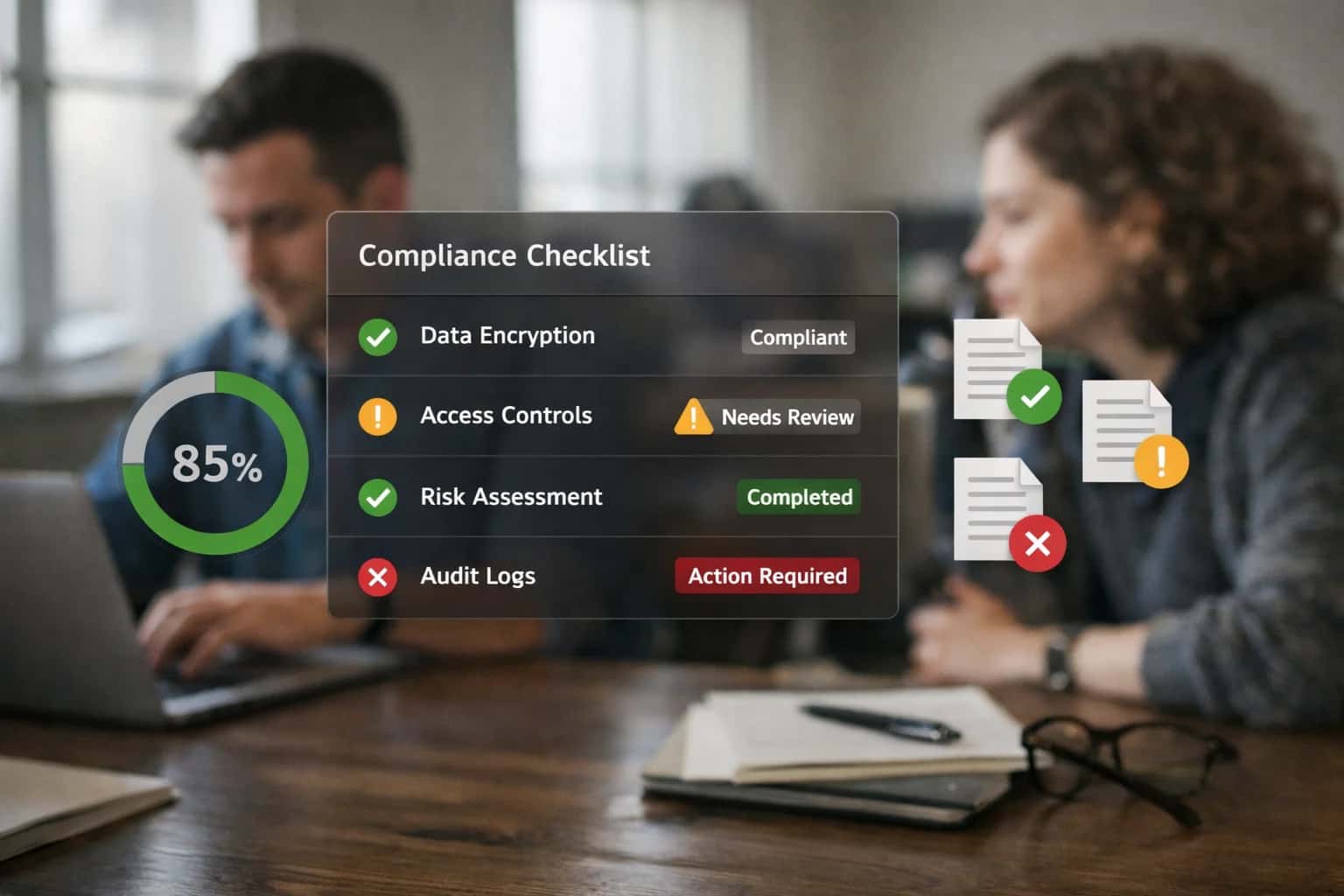
THE ANALYSIS
Introduction
Contrasting the voluntary, flexible NIST AI RMF framework against the certifiable ISO/IEC 42001 standard for structuring adversarial testing programs in government agencies.
[ISO/IEC 42001 Compliance Testing] takes a fundamentally different approach by establishing a certifiable management system. This standard requires a formalized, auditable process for 'AI system impact assessments' and continuous improvement loops. The key trade-off is that while ISO/IEC 42001 provides irrefutable legal and procurement-grade evidence of due diligence—critical for high-risk automated decision-making in benefits allocation—its rigid Plan-Do-Check-Act cycle can slow down the integration of emergent adversarial test results, such as a new jailbreak technique, into the live security posture.
The key trade-off: If your priority is rapid, iterative security adaptation and mapping adversarial testing to existing federal risk appetites, choose NIST AI RMF Profiling. If you prioritize a certifiable, internationally recognized governance posture that simplifies vendor procurement and withstands legal scrutiny for high-stakes autonomous decisions, choose ISO/IEC 42001 Compliance Testing. For many government agencies, a hybrid model is emerging: using NIST profiles to operationalize the technical controls required by an overarching ISO/IEC 42001 management system.
HEAD-TO-HEAD COMPARISON
Feature Comparison Matrix
Direct comparison of key metrics and features for structuring adversarial testing programs.
| Metric | NIST AI RMF Profiling | ISO/IEC 42001 Compliance Testing |
|---|---|---|
Certification Outcome | ||
Primary Driver | Voluntary Best Practice | Third-Party Audit Requirement |
Implementation Cost (Relative) | Low (Internal Resources) | High (External Auditors) |
Time to Initial Framework Adoption | 3-6 months | 12-18 months |
Flexibility for Novel AI Risks | High (Continuous Profiling) | Moderate (Standardized Controls) |
Regulatory Presumption of Conformity | ||
Core Focus | Risk Mapping & Impact | Management System Process |
NIST AI RMF Profiling vs ISO/IEC 42001 Compliance Testing
TL;DR Summary
A strategic breakdown of strengths and trade-offs for government agencies structuring adversarial testing programs.
01
NIST AI RMF: Flexible & Innovation-Friendly
Voluntary framework: No mandatory certification, allowing agencies to tailor controls to specific mission needs without a rigid compliance checklist. This matters for research and pilot programs where rapid iteration is prioritized over formal audit readiness.
- Strength: Maps directly to NIST SP 800-53 controls already used in federal systems.
- Trade-off: Lacks a certifiable 'stamp of approval,' which can complicate vendor procurement and inter-agency trust.
02
NIST AI RMF: Deep Risk Granularity
Comprehensive risk taxonomy: The RMF Core breaks down AI risks into specific sub-categories (e.g., 'harmful bias,' 'lack of explainability') rather than generic clauses. This matters for adversarial testing scoping because red teams can map specific attacks to discrete risk categories.
- Strength: The AI RMF Playbook provides actionable testing profiles for generative AI.
- Trade-off: Requires significant internal expertise to interpret and operationalize the 72 sub-categories effectively.
03
ISO/IEC 42001: Certifiable & Procurement-Ready
Internationally recognized certification: Provides a hard, auditable standard (ISO/IEC 42001:2023) that agencies can mandate in RFPs. This matters for high-risk citizen-facing systems where a third-party audit trail is legally necessary.
- Strength: Integrates seamlessly with existing ISO 27001 (security) and ISO 27701 (privacy) management systems.
- Trade-off: The Plan-Do-Check-Act cycle can be slower to adapt to novel adversarial threats compared to the RMF's iterative profiling.
04
ISO/IEC 42001: Prescriptive Control Objectives
Defined Annex A controls: Specifies concrete requirements for AI system impact assessments, data quality, and continuous monitoring. This matters for adversarial testing validation because it provides a clear pass/fail criteria for security controls.
- Strength: Reduces ambiguity for external auditors and simplifies cross-border data-sharing agreements.
- Trade-off: The prescriptive nature can lead to 'checkbox compliance' that misses novel prompt injection or jailbreak techniques not yet codified in the standard.
CHOOSE YOUR PRIORITY
When to Choose NIST AI RMF vs ISO/IEC 42001
NIST AI RMF for Security Architects\n**Strengths**: The NIST AI RMF is inherently designed for technical practitioners. Its core functions—Map, Measure, Manage, and Govern—map directly to existing cybersecurity workflows. For adversarial testing, it provides granular guidance on identifying threats like data poisoning, evasion attacks, and prompt injection. It integrates seamlessly with NIST SP 800-53 controls and existing FedRAMP authorizations, making it the natural choice for embedding AI risk into a broader [AI Red-Teaming and Adversarial Testing Services](/ai-red-teaming-and-adversarial-testing-services) program.\n\n**Verdict**: Choose NIST when you need to operationalize red-teaming findings into technical controls and continuous monitoring dashboards.\n\n### ISO/IEC 42001 for Security Architects\n**Strengths**: ISO/IEC 42001 frames security testing within a certifiable management system. It requires documented processes for 'information security for AI systems' (Annex A.8.2), which includes adversarial testing. The standard forces you to define the scope of your AI management system, conduct internal audits, and undergo external validation. This creates a defensible, auditable posture that proves due diligence to oversight bodies.\n\n**Verdict**: Choose ISO/IEC 42001 when the primary goal is to demonstrate a certified, auditable security management process to external stakeholders, rather than just internal technical rigor.
HEAD-TO-HEAD COMPARISON
Cost and Timeline Comparison
Direct comparison of key metrics and features for NIST AI RMF Profiling vs ISO/IEC 42001 Compliance Testing.
| Metric | NIST AI RMF Profiling | ISO/IEC 42001 Compliance Testing |
|---|---|---|
Certification Achievable | ||
Avg. Time to Initial Implementation | 3-6 months | 12-18 months |
Avg. External Audit Cost (Annual) | $0 (Voluntary) | $40,000 - $100,000+ |
Framework Update Cycle | Continuous (Draft Feedback) | 5-Year Review Cycle |
Primary Cost Driver | Internal Staff Hours | External Auditor Fees |
Mandatory for Government Contracts | Emerging (EU/Defense) | |
Prescriptive Control Set |
Enabling Efficiency, Speed & Accuracy
Intelligent Analysis, Decision & Execution
We build AI systems for teams that need search across company data, workflow automation across tools, or AI features inside products and internal software.
Talk to Us
Search across company data
Give teams answers from docs, tickets, runbooks, and product data with sources and permissions.
Useful when people spend too long searching or get different answers from different systems.
Enterprise searchRAGPermissions
Read more
Automate internal workflows
Use AI to route work, draft outputs, trigger actions, and keep approvals and logs in place.
Useful when repetitive work moves across multiple tools and teams.
AI agentsWorkflow automationGovernance
Read more
Add AI to products and internal tools
Build assistants, guided actions, or decision support into the software your team or customers already use.
Useful when AI needs to be part of the product, not a separate tool.
AI integrationDecision supportModel routing
Read moreFRAMEWORK COMPARISON
Technical Deep Dive: Adversarial Testing Integration
A detailed comparison of how NIST AI RMF Profiling and ISO/IEC 42001 Compliance Testing structure adversarial testing programs, focusing on their operational integration, auditability, and suitability for government agencies with varying risk appetites.
Yes, NIST AI RMF Profiling is significantly faster to initiate. Because it is a voluntary, non-certifiable framework, an agency can begin mapping and profiling risks immediately without establishing a formal management system. A preliminary profile can be drafted in weeks. ISO/IEC 42001 requires building a full AI management system (AIMS) with documented processes, internal audits, and management reviews, often taking 6-12 months before it's ready for a certification audit. However, the speed of NIST comes at the cost of lacking a certifiable proof point for external stakeholders.
THE ANALYSIS
Verdict
A direct comparison of NIST AI RMF profiling and ISO/IEC 42001 compliance testing to guide government agencies in structuring their adversarial testing programs.
NIST AI RMF Profiling excels at providing a flexible, risk-based framework that adapts to the specific context of an AI system. Because it is voluntary and non-prescriptive, it allows agencies to map adversarial testing directly to the severity of potential harm in use cases like citizen-facing chatbots or benefits eligibility. For example, a NIST profile for a social services AI might prioritize fairness and explainability testing over security, creating a tailored governance map without requiring a rigid set of controls. This results in faster iteration and lower initial overhead for exploratory or low-risk deployments.
ISO/IEC 42001 Compliance Testing takes a fundamentally different approach by providing a certifiable management system. This strategy mandates a formal, auditable structure for AI governance, including documented processes for risk treatment, continuous improvement, and leadership accountability. The key trade-off is that while this creates robust, internationally recognized evidence of due diligence—critical for high-stakes procurement or cross-border data sharing—it introduces significant process overhead. Achieving certification requires a comprehensive audit by an accredited body, which can take 6-12 months and demands substantial documentation of every control, including adversarial test results.
The key trade-off: If your priority is rapid, context-specific risk mitigation for a diverse portfolio of AI systems without a legal mandate for certification, choose NIST AI RMF Profiling. It allows you to direct your red-teaming budget precisely where the risk is highest. If you prioritize a defensible, auditable governance posture that satisfies strict regulatory requirements or international partners, choose ISO/IEC 42001 Compliance Testing. The certification provides a powerful signal of organizational maturity but at the cost of agility. A practical path for many agencies is to use NIST AI RMF to operationalize risk management and then pursue ISO/IEC 42001 certification as the capstone evidence of a mature program.

About the author
Prasad Kumkar
CEO & MD, Inference Systems
Prasad Kumkar is the CEO & MD of Inference Systems and writes about AI systems architecture, LLM infrastructure, model serving, evaluation, and production deployment. Over 5+ years, he has worked across computer vision models, L5 autonomous vehicle systems, and LLM research, with a focus on taking complex AI ideas into real-world engineering systems.
His work and writing cover AI systems, large language models, AI agents, multimodal systems, autonomous systems, inference optimization, RAG, evaluation, and production AI engineering.
LinkedIn
Limited slotsGet a Free AI Consultation
Partnered with leading AI, data, and software stack.





How We Work
Custom AI workflows for your Business
One-fit-all AI don't work for modern businesses. At Inferensys, we aim to understand your business & custom requirements; which we use to define most efficient agentic workflows, the data, and the tools for your business.
01
Review the use case
We understand the task, the users, and where AI can actually help.
Read more02
Pick the right approach
We define what needs search, automation, or product integration.
Read more03
Build the first useful version
We implement the part that proves the value first.
Read more04
Improve from there
We add the checks and visibility needed to keep it useful.
Read moreThe first call is a practical review of your use case and the right next step.
Talk to Us