Standard IT Vendor Assessments excel at evaluating the security posture of deterministic software. They rely on established frameworks like SIG or CAIQ to verify SOC 2 reports, encryption standards, and patching cadences. For example, a typical questionnaire can effectively determine if a SaaS vendor encrypts data at rest, a binary, verifiable control. This process is mature, scalable, and understood by procurement teams globally.

Difference
AI Procurement Frameworks vs Standard IT Vendor Assessments
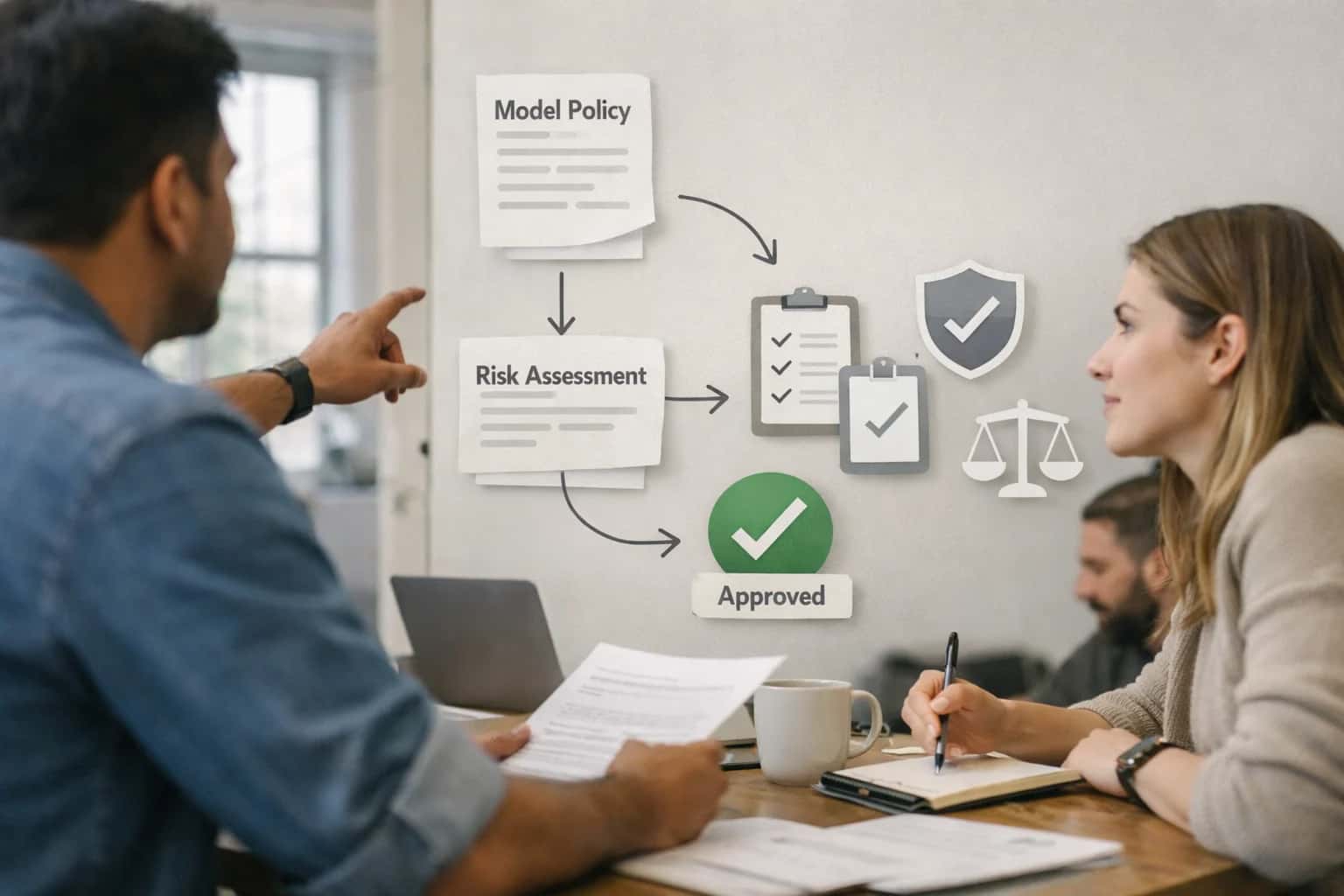
A technical comparison of AI-specific procurement frameworks and standard IT security questionnaires, highlighting critical gaps in algorithmic bias detection, vendor governance maturity, and sovereign AI mandate compliance for public sector acquisitions.
THE ANALYSIS
Introduction
Why traditional IT vendor security questionnaires fail to capture the unique, non-deterministic risks of AI systems, and how AI-specific procurement frameworks fill the gap.
AI Procurement Frameworks take a fundamentally different approach by evaluating the governance maturity of an algorithmic system. Instead of just checking for a security certificate, these frameworks—like those based on the NIST AI RMF or the EU AI Act—require vendors to disclose training data provenance, model drift monitoring capabilities, and bias testing results. This shifts the assessment from a static checklist to a continuous risk evaluation, acknowledging that an AI model's behavior changes over time.
The key trade-off is between operational efficiency and risk depth. Standard IT assessments can be completed in days using automated platforms, but they create a dangerous blind spot for algorithmic discrimination or 'black-box' failures. AI-specific frameworks demand deep technical evidence—like model cards and AI Bills of Materials (AI BOMs)—which can extend procurement cycles by weeks. If your priority is rapid vendor onboarding for low-risk tools, standard assessments suffice. If you are acquiring a high-stakes system for citizen services, an AI-specific framework is not optional; it is a fiduciary necessity.
HEAD-TO-HEAD COMPARISON
Feature Comparison Matrix
Direct comparison of AI-specific procurement frameworks against standard IT vendor assessments for public sector acquisitions.
| Metric | AI Procurement Frameworks | Standard IT Vendor Assessments |
|---|---|---|
Algorithmic Bias Evaluation | ||
Training Data Provenance Audit | ||
Model Drift Monitoring Clause | ||
Avg. Assessment Completion Time | 4-6 weeks | 1-2 weeks |
NIST AI RMF Alignment | ||
Automated Decision-Making Transparency Review | ||
Vendor Governance Maturity Scoring | AI-specific maturity model | Generic IT maturity model |
AI Procurement Frameworks: Pros
TL;DR Summary
Key strengths and trade-offs at a glance.
01
Algorithmic Bias & Fairness Evaluation
Specific advantage: Mandates pre-deployment bias audits and fairness metrics (e.g., disparate impact ratio, equal opportunity difference) as a pass/fail criterion. This matters for high-stakes public service delivery (benefits, justice) where standard IT security questionnaires completely ignore civil rights implications.
02
Vendor AI Governance Maturity Scoring
Specific advantage: Assesses a vendor's internal AI ethics board, model risk management processes, and adherence to NIST AI RMF or ISO/IEC 42001. This matters for agency risk officers needing to verify that a vendor's 'responsible AI' claims are operationally substantive, not just marketing.
03
Sovereign Data & Model Provenance Requirements
Specific advantage: Includes contractual clauses for data residency, training data lineage, and model explainability that are absent from standard IT assessments. This matters for compliance with sovereign AI mandates and ensuring public trust in government AI decisions.
HEAD-TO-HEAD COMPARISON
Cost and Resource Implications
Direct comparison of key metrics and features for AI Procurement Frameworks vs Standard IT Vendor Assessments.
| Metric | AI Procurement Frameworks | Standard IT Vendor Assessments |
|---|---|---|
Algorithmic Bias Audit Cost | Included in framework; 15-25% of total assessment budget | Not covered; requires separate $50k-$150k engagement |
Assessment Cycle Time | 8-12 weeks (includes red-teaming and bias testing) | 2-4 weeks (questionnaire-based) |
Vendor Governance Maturity Evaluation | ||
Continuous Model Monitoring Requirement | ||
Contract Clause Library for AI | Pre-built sovereign AI and EU AI Act clauses | Generic IT terms; no AI-specific liability language |
Staff Training Overhead | High; requires cross-functional AI ethics, legal, and technical team | Low; standard IT procurement team sufficient |
Post-Procurement Risk Management | Integrated model risk management and drift monitoring | Ends at vendor onboarding; no ongoing AI oversight |
Enabling Efficiency, Speed & Accuracy
Intelligent Analysis, Decision & Execution
We build AI systems for teams that need search across company data, workflow automation across tools, or AI features inside products and internal software.
Talk to Us
Search across company data
Give teams answers from docs, tickets, runbooks, and product data with sources and permissions.
Useful when people spend too long searching or get different answers from different systems.
Enterprise searchRAGPermissions
Read more
Automate internal workflows
Use AI to route work, draft outputs, trigger actions, and keep approvals and logs in place.
Useful when repetitive work moves across multiple tools and teams.
AI agentsWorkflow automationGovernance
Read more
Add AI to products and internal tools
Build assistants, guided actions, or decision support into the software your team or customers already use.
Useful when AI needs to be part of the product, not a separate tool.
AI integrationDecision supportModel routing
Read moreCHOOSE YOUR PRIORITY
When to Use Which Approach
AI Procurement Frameworks for Acquisition Teams
Strengths: Designed to evaluate algorithmic governance maturity, not just server uptime. These frameworks mandate vendors disclose training data provenance, bias testing results, and model explainability methods before contract award. They align directly with sovereign AI mandates and the NIST AI RMF core functions.
Verdict: Essential when acquiring high-risk AI systems that impact citizen rights, benefits, or legal status. Use this to avoid buying 'black boxes' that fail constitutional or civil rights muster.
Standard IT Vendor Assessments for Acquisition Teams
Strengths: Mature, fast, and universally understood. Excellent for assessing data center security (SOC 2, ISO 27001), financial viability, and standard SLA performance.
Verdict: Insufficient for AI. Standard questionnaires miss critical AI-specific risks like data drift, adversarial robustness, and proxy discrimination. Using only a standard IT assessment for an AI vendor creates a dangerous 'governance gap' that exposes the agency to reputational and legal harm.
THE ANALYSIS
Verdict
A direct comparison of AI procurement frameworks against standard IT vendor assessments, highlighting the critical gaps in traditional risk management for algorithmic systems.
AI Procurement Frameworks excel at surfacing the unique, non-deterministic risks that standard IT assessments miss entirely. Because they mandate the evaluation of training data provenance, model bias metrics, and explainability thresholds, they provide a governance depth that is impossible to achieve with a generic SIG questionnaire. For example, the UK's Algorithmic Transparency Recording Standard requires public sector bodies to publish specific details on how an algorithm supports a decision, a level of granularity that a standard IT security review, focused on SOC 2 reports and encryption at rest, simply does not request.
Standard IT Vendor Assessments take a different approach by prioritizing operational resilience, data center security, and business continuity—areas that remain critically important for AI systems. This results in a faster, more standardized procurement cycle for low-risk automation. However, these assessments treat the model as a black box, failing to evaluate if a recidivism risk score is racially biased or if a benefits eligibility model produces unfair outcomes for protected groups, which can lead to significant legal and reputational exposure under the EU AI Act.
The key trade-off: If your priority is constitutional compliance, algorithmic fairness, and public trust in high-stakes decisions, choose an AI-specific procurement framework. If you are procuring a non-critical, back-office automation tool and prioritize speed and operational security, a standard IT assessment may suffice, but you must accept the unquantified risk of embedded model bias.

About the author
Prasad Kumkar
CEO & MD, Inference Systems
Prasad Kumkar is the CEO & MD of Inference Systems and writes about AI systems architecture, LLM infrastructure, model serving, evaluation, and production deployment. Over 5+ years, he has worked across computer vision models, L5 autonomous vehicle systems, and LLM research, with a focus on taking complex AI ideas into real-world engineering systems.
His work and writing cover AI systems, large language models, AI agents, multimodal systems, autonomous systems, inference optimization, RAG, evaluation, and production AI engineering.
LinkedIn
Limited slotsGet a Free AI Consultation
Partnered with leading AI, data, and software stack.





How We Work
Custom AI workflows for your Business
One-fit-all AI don't work for modern businesses. At Inferensys, we aim to understand your business & custom requirements; which we use to define most efficient agentic workflows, the data, and the tools for your business.
01
Review the use case
We understand the task, the users, and where AI can actually help.
Read more02
Pick the right approach
We define what needs search, automation, or product integration.
Read more03
Build the first useful version
We implement the part that proves the value first.
Read more04
Improve from there
We add the checks and visibility needed to keep it useful.
Read moreThe first call is a practical review of your use case and the right next step.
Talk to Us