Automated AI inventory management platforms excel at providing a real-time, dynamic system of record for all AI assets across an agency. These tools, designed for compliance with frameworks like the NIST AI RMF and ISO/IEC 42001, use discovery agents to continuously scan for new models, shadow AI deployments, and associated data pipelines. For example, a platform might automatically detect a new fine-tuned model deployed in a citizen-facing benefits portal, immediately cataloging its training data provenance, intended use, and risk classification without manual intervention, ensuring the inventory is never more than a few hours out of date.

Difference
AI Inventory Management vs Manual Model Tracking
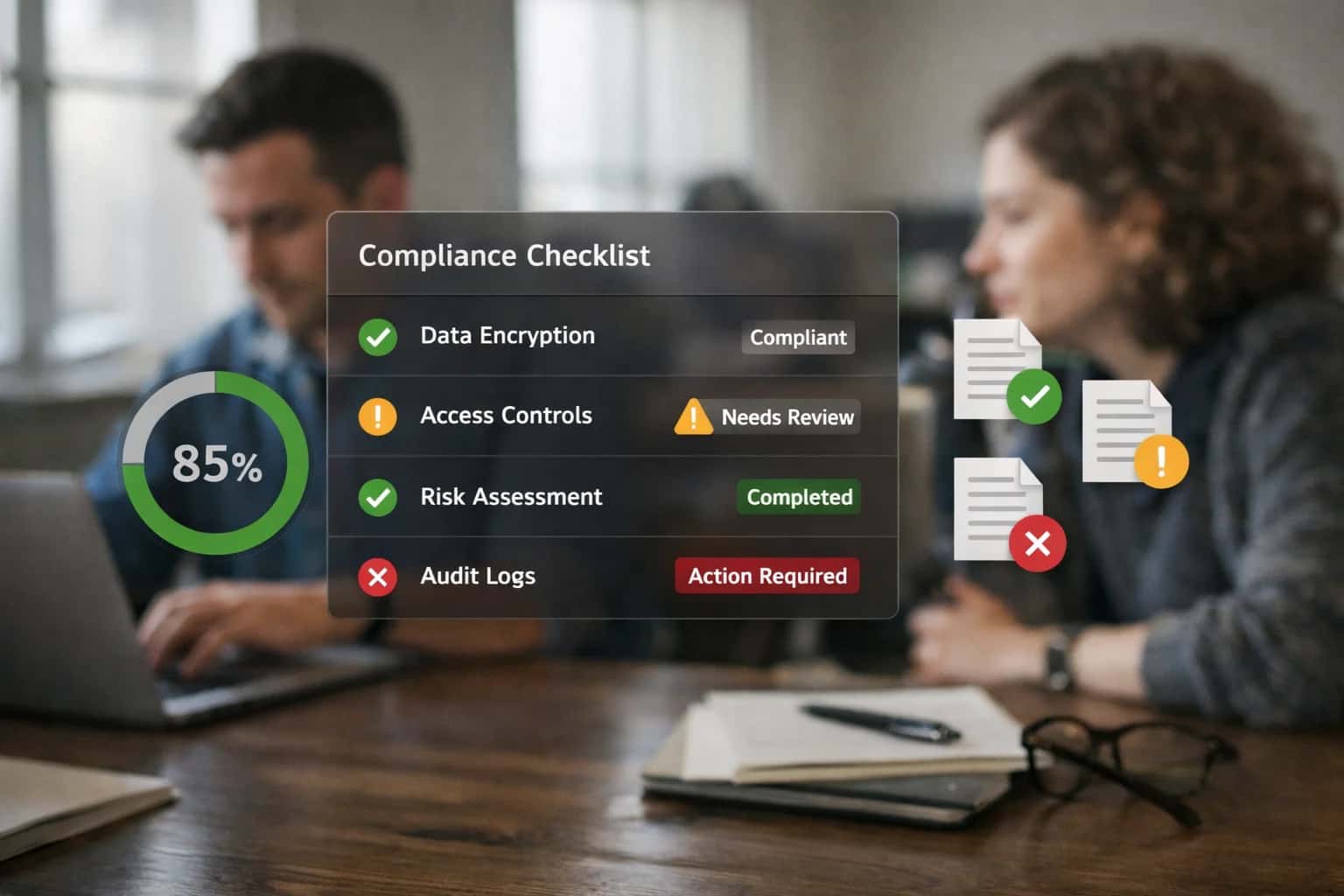
A detailed comparison of automated AI inventory platforms and manual spreadsheet-based tracking for maintaining a complete system of record, ensuring compliance with NIST AI RMF and emerging AI registry mandates.
THE ANALYSIS
Introduction
A data-driven comparison of automated AI inventory platforms versus manual spreadsheet-based tracking for public sector model risk management and compliance.
Manual model tracking, typically managed in spreadsheets, takes a fundamentally different approach by prioritizing human oversight and contextual understanding over automation. This strategy results in a highly curated, deeply contextual record where each entry is the result of a deliberate human decision. The trade-off is significant: a manual system can capture nuanced policy justifications and qualitative risk assessments that an automated scanner might miss, but it struggles with scale and timeliness. A single unreported model deployed by a data science team creates an immediate blind spot, making the spreadsheet incomplete and potentially non-compliant with emerging AI registry mandates.
The key trade-off centers on completeness and speed versus depth and context. Automated platforms offer near-perfect discovery and continuous monitoring, which is critical for detecting shadow AI and managing model drift at scale. Manual tracking provides richer qualitative context for high-stakes decisions but fails to provide the real-time, comprehensive asset inventory now required for sovereign AI mandates and public trust. If your priority is maintaining a complete, audit-ready system of record for hundreds of models and ensuring no AI asset is unaccounted for, choose an automated AI inventory management platform. If you prioritize deep, deliberative oversight of a small number of extremely high-risk models where every entry requires multi-stakeholder review, a manual process may still have a role, but it will not satisfy emerging regulatory requirements for a complete inventory.
HEAD-TO-HEAD COMPARISON
Feature Comparison Matrix
Direct comparison of key metrics and features for AI inventory management platforms versus manual spreadsheet-based model tracking.
| Metric | AI Inventory Management | Manual Model Tracking |
|---|---|---|
Time to Complete Full Inventory | < 1 hour | 2-4 weeks |
Shadow AI Discovery | ||
Real-Time Drift Detection | ||
Audit Trail Immutability | ||
Avg. Data Entry Error Rate | 0.1% | 3-5% |
Compliance Report Generation | Automated (minutes) | Manual (days) |
Integration with CI/CD Pipelines | ||
Cost of Ownership (Annual) | Platform license | FTE salary + risk |
AI Inventory Management vs Manual Model Tracking
TL;DR Summary
Key strengths and trade-offs at a glance for maintaining a complete AI system of record.
01
Automated Discovery & Real-Time Sync
AI inventory platforms automatically scan code repositories, cloud environments, and MLOps pipelines to discover models, datasets, and agents. This eliminates 'shadow AI' blind spots. Manual tracking relies on humans updating spreadsheets, which is often 30-60 days out of date and misses shadow deployments entirely. For compliance with NIST AI RMF and emerging AI registry mandates, automated discovery is the only way to maintain a reliable, real-time system of record.
02
Risk Classification & Policy Enforcement
Automated platforms apply risk-tiering rules (e.g., 'high-risk' if model impacts fundamental rights) and enforce pre-deployment controls programmatically. Manual processes depend on email approvals and policy documents that are easily bypassed. For agency risk officers, automated enforcement ensures no model reaches production without passing governance gates, a critical requirement for EU AI Act high-risk compliance.
03
Audit-Ready Evidence & Reporting
AI inventory tools generate immutable audit trails, model cards, and compliance reports on demand, mapping directly to NIST AI RMF or ISO/IEC 42001 controls. Manual spreadsheets require weeks of cross-referencing emails, Jira tickets, and validation documents to prepare for an audit. For FOIA requests or regulatory filings, automated platforms reduce reporting effort from weeks to minutes.
04
Cost & Resource Overhead
Manual tracking has near-zero software cost but imposes a heavy human tax: dedicated governance analysts spending 40-60% of their time on inventory maintenance. AI inventory platforms require licensing investment but free teams for higher-value risk analysis. For agencies with more than 10 models in production, the ROI of automation typically breaks even within 6 months through reduced audit prep and risk incident avoidance.
HEAD-TO-HEAD COMPARISON
Total Cost of Ownership Comparison
Direct comparison of key metrics for maintaining a complete AI system of record, crucial for complying with emerging AI registry mandates.
| Metric | AI Inventory Management | Manual Model Tracking |
|---|---|---|
Time to Complete Audit (500 Models) | 2-4 hours | 80-160 hours |
Asset Discovery Accuracy | 99% (Automated Scans) | ~60% (Self-Reporting) |
Annual Compliance Cost (Mid-Size Agency) | $45,000 - $85,000 | $120,000 - $250,000 |
Risk Detection Latency | Real-time (< 5 min) | Weeks to Months |
Shadow AI Detection | ||
NIST AI RMF Control Mapping | Automated | Manual |
Data Lineage Tracking | Automated Provenance | Tribal Knowledge |
Enabling Efficiency, Speed & Accuracy
Intelligent Analysis, Decision & Execution
We build AI systems for teams that need search across company data, workflow automation across tools, or AI features inside products and internal software.
Talk to Us
Search across company data
Give teams answers from docs, tickets, runbooks, and product data with sources and permissions.
Useful when people spend too long searching or get different answers from different systems.
Enterprise searchRAGPermissions
Read more
Automate internal workflows
Use AI to route work, draft outputs, trigger actions, and keep approvals and logs in place.
Useful when repetitive work moves across multiple tools and teams.
AI agentsWorkflow automationGovernance
Read more
Add AI to products and internal tools
Build assistants, guided actions, or decision support into the software your team or customers already use.
Useful when AI needs to be part of the product, not a separate tool.
AI integrationDecision supportModel routing
Read moreCHOOSE YOUR PRIORITY
When to Choose Each Approach
AI Inventory Management for Risk Officers
Strengths: Automated asset discovery provides a real-time, complete system of record, which is non-negotiable for complying with NIST AI RMF and emerging AI registry mandates. It eliminates the 'shadow AI' blind spot, ensuring no unvetted model enters production without a risk classification.
Verdict: The only viable choice for enterprise risk management. Manual tracking cannot provide the continuous, verifiable lineage required for audit defense.
Manual Model Tracking for Risk Officers
Weaknesses: Spreadsheets are a snapshot in time, not a living system. They fail to capture dynamic model drift, data provenance changes, or unsanctioned deployments, creating a massive liability during regulatory audits.
Verdict: High-risk. Suitable only for a pre-pilot phase with fewer than 5 models, where the primary goal is defining a taxonomy before tooling selection.
THE ANALYSIS
Verdict
A final, data-driven recommendation on when to choose automated AI inventory platforms over manual spreadsheets for public sector model risk management.
AI Inventory Management platforms excel at maintaining a dynamic, real-time system of record because they automate asset discovery and lineage tracking. For example, these tools can continuously scan model registries, feature stores, and even shadow IT environments to detect new or rogue models, reducing the time to identify an ungoverned asset from weeks to minutes. This automated approach is crucial for complying with emerging AI registry mandates, where a single missed model in a production system can lead to a failed audit or a front-page story on algorithmic harm.
Manual Model Tracking via spreadsheets takes a different approach by prioritizing human oversight and contextual understanding over speed. This strategy results in a highly curated inventory where every entry has been deliberately reviewed and approved by a risk officer. The key trade-off is scalability and accuracy; a 2023 survey by an AI governance consortium found that 62% of manually tracked model inventories contained at least one ghost asset—a model that was either decommissioned without documentation or deployed without being recorded.
The key trade-off: If your priority is achieving continuous, audit-ready compliance at scale and eliminating blind spots in your AI attack surface, choose an automated AI Inventory Management platform. If you prioritize deep, contextual review of a small, stable set of high-risk models where the cost of a tool outweighs the risk of a missed asset, a manual process may suffice. For any agency managing more than a dozen models or preparing for NIST AI RMF and ISO/IEC 42001 certification, automation is no longer a luxury but a foundational requirement for defensible governance.

About the author
Prasad Kumkar
CEO & MD, Inference Systems
Prasad Kumkar is the CEO & MD of Inference Systems and writes about AI systems architecture, LLM infrastructure, model serving, evaluation, and production deployment. Over 5+ years, he has worked across computer vision models, L5 autonomous vehicle systems, and LLM research, with a focus on taking complex AI ideas into real-world engineering systems.
His work and writing cover AI systems, large language models, AI agents, multimodal systems, autonomous systems, inference optimization, RAG, evaluation, and production AI engineering.
LinkedIn
Limited slotsGet a Free AI Consultation
Partnered with leading AI, data, and software stack.





How We Work
Custom AI workflows for your Business
One-fit-all AI don't work for modern businesses. At Inferensys, we aim to understand your business & custom requirements; which we use to define most efficient agentic workflows, the data, and the tools for your business.
01
Review the use case
We understand the task, the users, and where AI can actually help.
Read more02
Pick the right approach
We define what needs search, automation, or product integration.
Read more03
Build the first useful version
We implement the part that proves the value first.
Read more04
Improve from there
We add the checks and visibility needed to keep it useful.
Read moreThe first call is a practical review of your use case and the right next step.
Talk to Us