
Differences
Domain-Specific Eval Datasets
Domain-Specific Eval Datasets
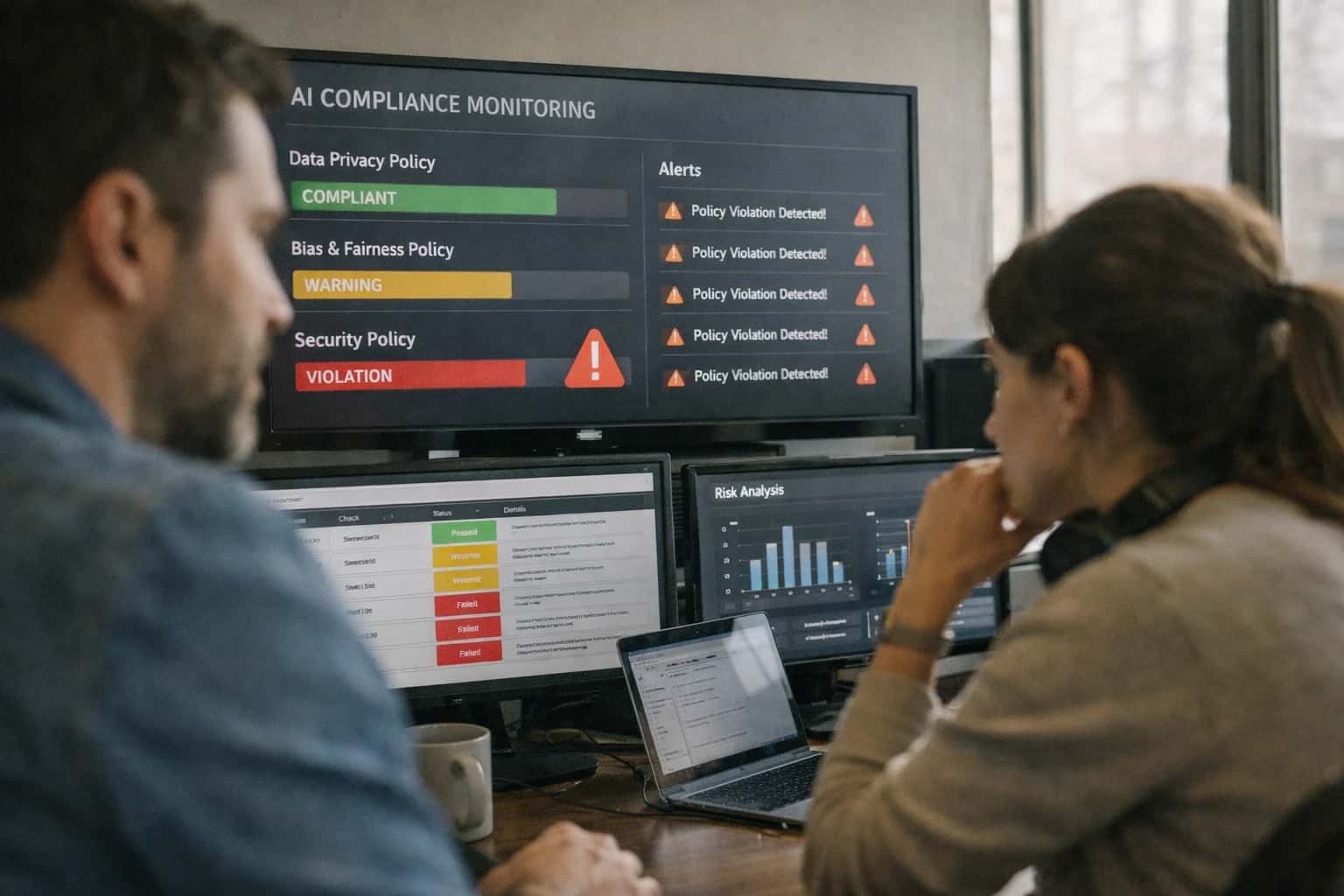
Comparisons related to industry-specific evaluation datasets for legal, finance, healthcare, and code generation agents. Target: Domain AI leads needing compliance-aligned accuracy measurement.
LegalBench vs BigBench Hard
Compares the legal-domain reasoning benchmark LegalBench against the general-reasoning BigBench Hard suite for evaluating enterprise legal agents on statutory interpretation, analogical reasoning, and domain-specific task accuracy.
Cuad vs ContractNLI
Compares CUAD's contract clause extraction accuracy against ContractNLI's natural language inference approach for contract review agents, focusing on recall, precision, and compliance workflow fit.
FinBERT vs FinQA
Compares FinBERT's sentiment analysis specialization against FinQA's numerical reasoning benchmark for financial agents, evaluating which better predicts production accuracy on earnings reports and compliance documents.
BioBERT vs ClinicalBERT
Compares BioBERT's biomedical literature pretraining against ClinicalBERT's clinical notes specialization for healthcare agents, focusing on entity extraction, relation classification, and EHR integration accuracy.
PubMedQA vs MedQA
Compares PubMedQA's research-question answering against MedQA's USMLE-style clinical reasoning for medical agents, evaluating evidence grounding, diagnostic accuracy, and real-world clinical decision support.
HumanEval vs MBPP
Compares HumanEval's function-generation benchmark against MBPP's broader programming tasks for code agents, focusing on pass@k metrics, language coverage, and correlation with real-world software engineering performance.
CodeXGLUE vs CodeBLEU
Compares the CodeXGLUE multi-task benchmark suite against the CodeBLEU evaluation metric for code generation agents, evaluating translation, summarization, and search accuracy across programming languages.
DocVQA vs TAT-QA
Compares DocVQA's document visual question answering against TAT-QA's table-and-text reasoning for document intelligence agents, focusing on layout understanding, numerical reasoning, and enterprise report accuracy.
SWE-bench vs HumanEval-X
Compares SWE-bench's real-world GitHub issue resolution against HumanEval-X's multilingual code generation for software engineering agents, evaluating production bug-fixing accuracy and cross-language generalization.
MIMIC-III vs eICU
Compares MIMIC-III's single-center ICU dataset against eICU's multi-center critical care database for clinical agents, focusing on cohort diversity, prediction task generalizability, and real-world deployment readiness.
LexGLUE vs LEDGAR
Compares the LexGLUE multi-task legal benchmark against LEDGAR's contract provision classification for legal agents, evaluating task diversity, domain coverage, and compliance workflow alignment.
FinCausal vs FinSim
Compares FinCausal's causal relation extraction against FinSim's financial semantic similarity for finance agents, focusing on event-driven reasoning, regulatory filing analysis, and risk detection accuracy.
ChemProt vs DDI
Compares ChemProt's chemical-protein relation extraction against DDI's drug-drug interaction detection for biomedical agents, evaluating pharmacological safety, extraction precision, and clinical decision support.
APPS vs CodeContests
Compares APPS's introductory-to-competition programming problems against CodeContests's competitive programming benchmarks for code agents, focusing on algorithmic reasoning, difficulty calibration, and real-world coding interview performance.
Spider vs WikiSQL
Compares Spider's complex cross-domain SQL generation against WikiSQL's single-table query tasks for database agents, evaluating join handling, nested query accuracy, and enterprise data warehouse integration.
CaseHOLD vs SARA
Compares CaseHOLD's legal citation prediction against SARA's statutory reasoning assessment for legal research agents, focusing on precedent retrieval, argument synthesis, and litigation workflow accuracy.
MedNLI vs MedRACE
Compares MedNLI's clinical natural language inference against MedRACE's medical reading comprehension for healthcare agents, evaluating entailment detection, evidence extraction, and diagnostic reasoning support.
ODEX vs DS-1000
Compares ODEX's open-domain code execution against DS-1000's data science library tasks for coding agents, focusing on API usage correctness, library-specific reasoning, and real-world data analysis accuracy.
Partnered with leading AI, data, and software stack.





How We Work
Custom AI workflows for your Business
One-fit-all AI don't work for modern businesses. At Inferensys, we aim to understand your business & custom requirements; which we use to define most efficient agentic workflows, the data, and the tools for your business.
01
Review the use case
We understand the task, the users, and where AI can actually help.
Read more02
Pick the right approach
We define what needs search, automation, or product integration.
Read more03
Build the first useful version
We implement the part that proves the value first.
Read more04
Improve from there
We add the checks and visibility needed to keep it useful.
Read moreThe first call is a practical review of your use case and the right next step.
Talk to Us