
Differences
Legal AI Governance Frameworks
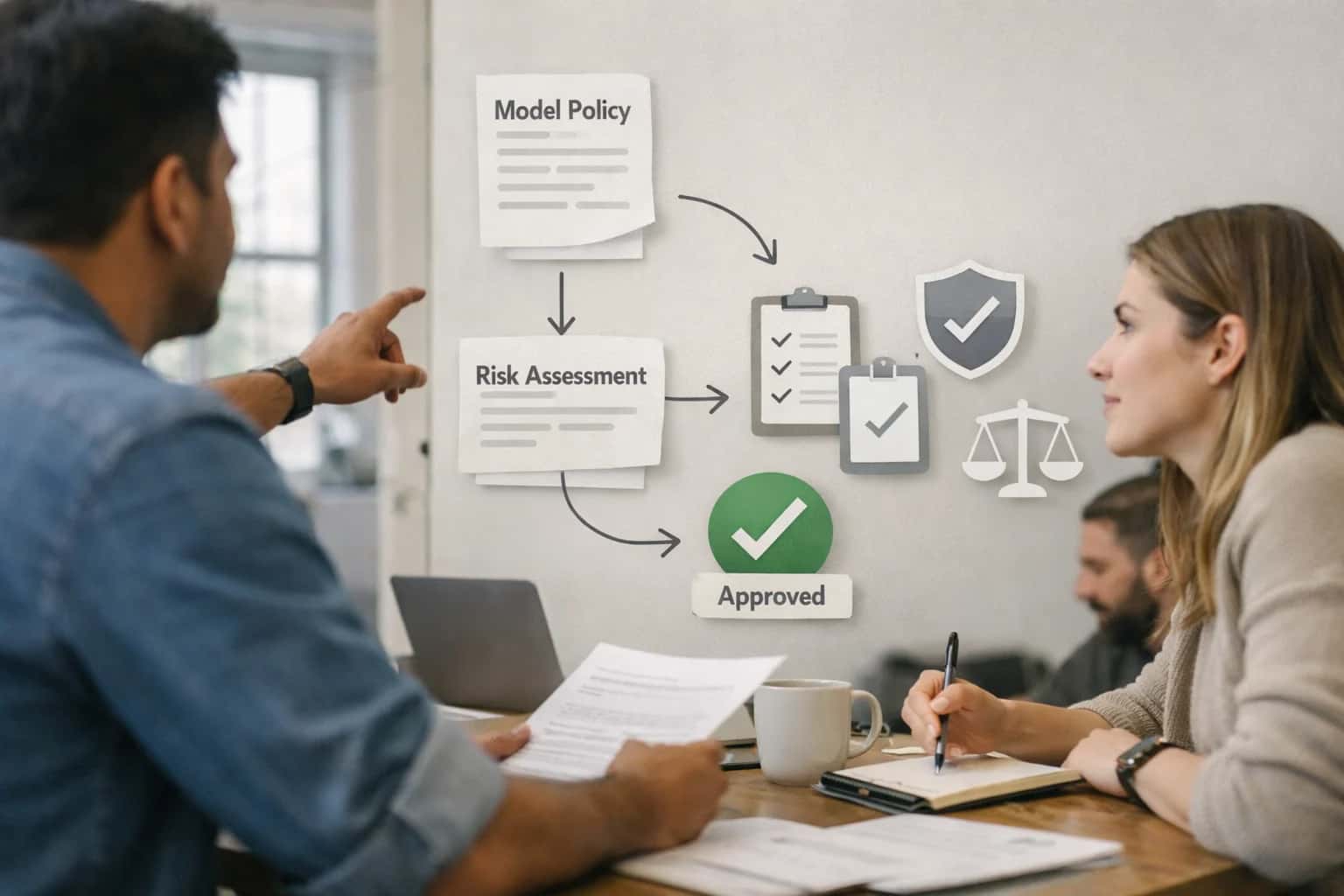
Legal AI Governance Frameworks
Comparisons related to bias detection, model versioning, and compliance with legal ethics opinions on AI use. Target: Law Firm Ethics Counsels and Risk Management Partners.
OneTrust AI Governance vs Microsoft Purview Compliance Manager
Comparing the leading dedicated AI governance platform against Microsoft's integrated compliance suite for managing AI risk, data privacy, and regulatory alignment in legal tech deployments.
IBM watsonx.governance vs Credo AI Responsible AI Platform
Evaluating IBM's enterprise-grade model risk management suite against Credo AI's specialized responsible AI platform for bias detection, model documentation, and continuous compliance monitoring.
Holistic AI Tracker vs FairNow Bias Audit Tool
Comparing two specialized tools for algorithmic auditing, focusing on their approaches to statistical parity testing, fairness metrics, and automated bias detection for legal AI systems.
Shadow AI Discovery Tools vs Network Traffic Analysis for Rogue AI
Analyzing proactive discovery platforms against passive network monitoring techniques for identifying unauthorized AI usage and shadow IT risks within law firms.
Model Versioning via Git-LFS vs Immutable Model Registries (MLflow)
Comparing lightweight Git-based model storage against dedicated MLflow registries for tracking model lineage, reproducibility, and audit trails in legal AI pipelines.
Algorithmic Bias Detection (Statistical Parity) vs Explainability (SHAP Values)
Contrasting fairness quantification through statistical parity metrics against post-hoc explainability using SHAP values for understanding and defending AI-driven contract decisions.
Differential Privacy for Training Data vs Data Minimization via Synthetic Generation
Evaluating mathematical privacy guarantees against synthetic data creation as strategies for protecting sensitive client information during legal AI model training.
Human-in-the-Loop (Approval Gate) vs Human-on-the-Loop (Asynchronous Audit)
Comparing synchronous attorney approval workflows against asynchronous review patterns for governing AI-generated redlines and risk assessments in contract review.
Attorney-Client Privilege Waiver Risk vs Trade Secret Protection for Model Weights
Analyzing the legal tension between protecting AI model internals as trade secrets and the risk of waiving privilege through discovery of AI-assisted legal work product.
On-Premise Air-Gapped Deployment vs Sovereign Cloud (VMware Sovereign)
Comparing fully isolated on-premise AI infrastructure against sovereign cloud solutions for meeting strict data residency and confidentiality requirements in legal AI.
Client Consent for AI Use (Opt-In) vs Firm-Wide Engagement Letter Disclosure
Evaluating granular, per-matter client opt-in mechanisms against blanket engagement letter disclosures for managing client consent and ethical obligations in AI adoption.
Automated Conflict Checking AI vs Manual Ethical Wall Implementation
Comparing AI-driven conflict analysis against traditional manual ethical screening processes for preventing conflicts of interest in multi-party legal AI deployments.
Retrieval-Augmented Generation (RAG) Citations vs Fine-Tuned Model Hallucination Rates
Contrasting RAG's source-attributed outputs against fine-tuned model behavior to determine which architecture better mitigates hallucination risk in legal document analysis.
Open-Source LLM Transparency (Llama 3) vs Proprietary Model Audit Rights (GPT-4)
Comparing the inherent transparency and customizability of open-weight models against the contractual audit rights and compliance guarantees of proprietary AI providers.
Continuous Model Monitoring (Drift Detection) vs Point-in-Time Validation Audits
Evaluating real-time AI performance monitoring against periodic snapshot audits for ensuring ongoing compliance and accuracy of legal AI systems over time.
Prompt Injection Firewalls (Lakera Guard) vs Input Sanitization Middleware
Comparing specialized AI security firewalls against custom middleware solutions for defending legal AI applications against prompt injection and data exfiltration attacks.
Legal Document PII Redaction (Presidio) vs Full Text Anonymization Models
Contrasting Microsoft Presidio's entity-based redaction against generative anonymization models for balancing data utility with privacy in legal document processing.
Federated Learning for Multi-Party Data vs Clean Room Collaboration (Snowflake)
Comparing decentralized model training against secure data clean rooms for enabling collaborative AI development across law firms without exposing confidential client data.
Partnered with leading AI, data, and software stack.





How We Work
Custom AI workflows for your Business
One-fit-all AI don't work for modern businesses. At Inferensys, we aim to understand your business & custom requirements; which we use to define most efficient agentic workflows, the data, and the tools for your business.
01
Review the use case
We understand the task, the users, and where AI can actually help.
Read more02
Pick the right approach
We define what needs search, automation, or product integration.
Read more03
Build the first useful version
We implement the part that proves the value first.
Read more04
Improve from there
We add the checks and visibility needed to keep it useful.
Read moreThe first call is a practical review of your use case and the right next step.
Talk to Us