
Differences
Model Risk Management (MRM) Software
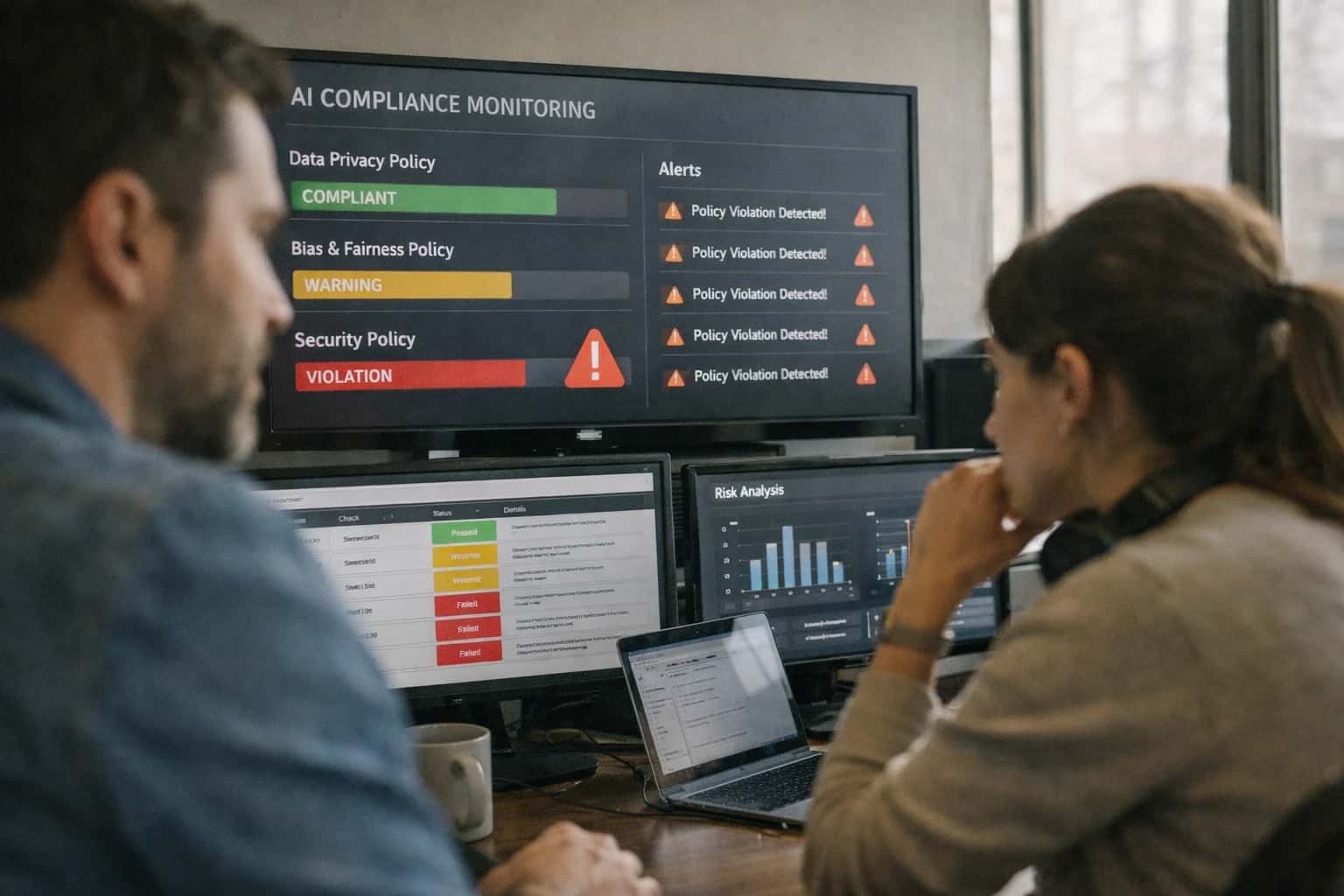
Model Risk Management (MRM) Software
Comparisons related to continuous model monitoring, drift detection, and stress testing platforms for validating AI credit models. Target: Model Risk Management directors and regulatory compliance teams.
Arize AI vs Evidently AI
Compare Arize's end-to-end ML observability platform against Evidently's open-source monitoring library for detecting data drift and model degradation in credit risk models. Focus on deployment complexity, real-time monitoring capabilities, and cost-effectiveness for Model Risk Management teams.
Fiddler AI vs NannyML
Compare Fiddler's explainable AI monitoring platform with NannyML's post-deployment performance estimation. Evaluate their approaches to detecting covariate shift and concept drift without ground truth, a critical need for validating underwriting models where outcomes are delayed.
SAS Model Manager vs IBM watsonx.governance
Compare SAS's established model risk management lifecycle tools against IBM's AI governance suite. Focus on integration with legacy banking systems, automated regulatory reporting for SR 11-7 compliance, and support for both traditional and generative AI models.
Databricks Lakehouse Monitoring vs Amazon SageMaker Model Monitor
Compare Databricks' unified data and AI monitoring against AWS's native SageMaker monitoring. Evaluate data quality checks, bias drift detection, and the architectural trade-offs for financial institutions already invested in either ecosystem.
TruEra vs ValidMind
Compare TruEra's AI quality and explainability platform against ValidMind's model risk management automation. Focus on their ability to automate model documentation, testing, and independent validation workflows required by banking regulators.
H2O Driverless AI vs DataRobot
Compare automated machine learning platforms for building and validating credit models. Evaluate built-in interpretability features, automatic compliance documentation generation, and the guardrails preventing overfitting in financial risk use cases.
MLflow vs Weights & Biases
Compare MLflow's open-source model lifecycle management against Weights & Biases' experiment tracking and model registry. Focus on reproducibility, audit trail capabilities, and suitability for governed model development environments in banking.
Collibra vs Alation
Compare data intelligence platforms for governing the data feeding AI credit models. Evaluate data lineage, metadata management, and policy enforcement capabilities essential for demonstrating data integrity to model risk auditors.
Monte Carlo vs Soda
Compare data observability platforms for detecting data quality issues that could invalidate credit models. Focus on anomaly detection, schema change monitoring, and integration with model monitoring pipelines to prevent garbage-in, garbage-out scenarios.
Immuta vs Privacera
Compare data access governance platforms for enforcing fine-grained access controls on sensitive credit data used in model training. Evaluate attribute-based access control, dynamic data masking, and integration with model development environments.
PyTorch vs TensorFlow
Compare the two dominant deep learning frameworks for building custom credit risk models. Evaluate production deployment maturity, ecosystem for model interpretability libraries, and enterprise support options for financial services.
XGBoost vs LightGBM
Compare gradient boosting frameworks that remain the workhorse of credit scoring. Evaluate training speed on large loan portfolios, built-in handling of missing values common in credit applications, and explainability tooling compatibility.
dbt vs Dataform
Compare data transformation tools for building the feature engineering pipelines that feed credit models. Focus on testing frameworks, documentation generation for audit trails, and version control integration for governed analytics workflows.
Great Expectations vs Soda
Compare data validation frameworks for enforcing quality constraints on underwriting data. Evaluate their ability to define, test, and document expectations for data used in high-stakes credit decisions, ensuring model inputs remain valid.
Atlan vs DataHub
Compare metadata platforms for creating a unified data catalog of model inputs, outputs, and lineage. Focus on active metadata capabilities, collaboration features for model risk teams, and integration with the modern data stack.
Partnered with leading AI, data, and software stack.





How We Work
Custom AI workflows for your Business
One-fit-all AI don't work for modern businesses. At Inferensys, we aim to understand your business & custom requirements; which we use to define most efficient agentic workflows, the data, and the tools for your business.
01
Review the use case
We understand the task, the users, and where AI can actually help.
Read more02
Pick the right approach
We define what needs search, automation, or product integration.
Read more03
Build the first useful version
We implement the part that proves the value first.
Read more04
Improve from there
We add the checks and visibility needed to keep it useful.
Read moreThe first call is a practical review of your use case and the right next step.
Talk to Us