AI Security Posture Management (AI-SPM) excels at real-time, continuous monitoring of AI systems because it treats agentic pipelines as live production environments. For example, an AI-SPM platform like Wiz or Lacework can detect a misconfigured agent identity with over-privileged tool access within seconds, flagging the exact API call and enforcing a remediation playbook before a data exfiltration event occurs. This approach prioritizes mean time to detect (MTTD) and mean time to contain (MTTC), making it ideal for security operations centers (SOCs) that need to stop rogue tool calls immediately.

Difference
AI Security Posture Management vs Model Risk Dashboards
A technical comparison of continuous AI-SPM tools versus periodic model risk dashboards. We analyze real-time policy enforcement, rogue tool-call detection, and board-level risk aggregation to help CISOs and governance leads choose the right approach for securing agentic AI.
THE ANALYSIS
Introduction
A data-driven comparison of continuous AI security posture management against periodic model risk dashboards for enterprise governance.
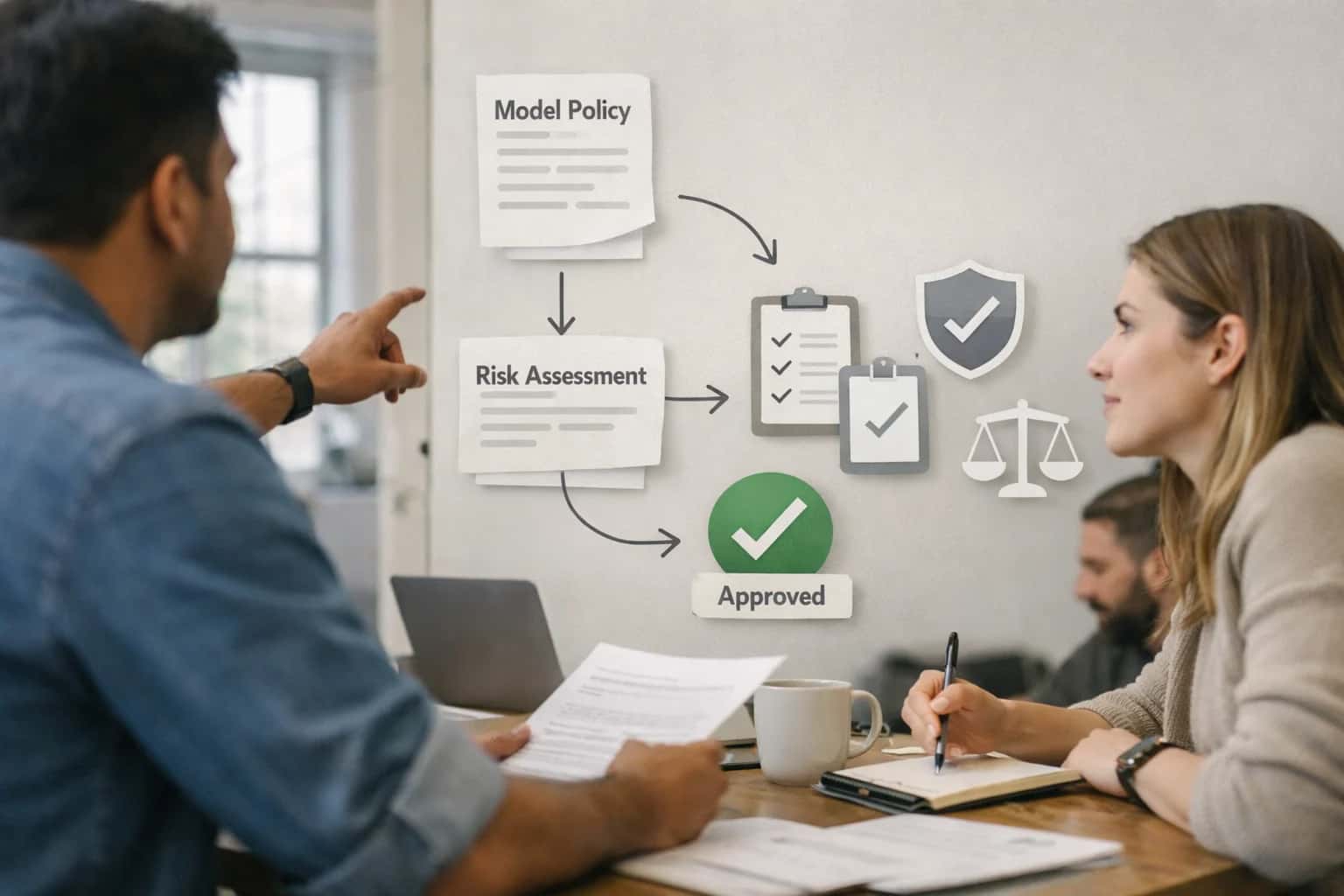
Model Risk Dashboards take a fundamentally different approach by aggregating risk data for periodic, board-level governance reporting. Platforms like IBM watsonx.governance or OneTrust compile model inventory, bias metrics, drift calculations, and compliance artifacts into structured reports aligned with frameworks like the NIST AI RMF or ISO/IEC 42001. This results in a trade-off: dashboards provide the defensible audit trails and executive summaries required for regulatory filings, but they lack the sub-second enforcement hooks needed to block a malicious prompt injection in a live agentic workflow.
The key trade-off: If your priority is real-time policy enforcement and stopping active threats in agentic pipelines, choose an AI-SPM tool. If you prioritize aggregated risk aggregation and generating compliance documentation for auditors and the board, choose a Model Risk Dashboard. For a mature enterprise security posture, these are not mutually exclusive; the dashboard defines the risk appetite that the AI-SPM enforces in real time.
HEAD-TO-HEAD COMPARISON
Feature Comparison Matrix
Direct comparison of AI Security Posture Management (AI-SPM) and Model Risk Dashboards for governing agentic AI systems.
| Metric | AI Security Posture Management | Model Risk Dashboards |
|---|---|---|
Primary Objective | Real-time policy enforcement & misconfiguration detection | Periodic governance reporting & risk aggregation |
Detection Latency | < 60 seconds | 24 hours - 7 days |
Rogue Tool-Call Blocking | ||
Board-Level Compliance Reporting | ||
Data Leakage Prevention | Active (inline blocking) | Passive (audit log review) |
Integration with SIEM/SOAR | ||
Primary User Persona | CISO / Security Operations Center | Chief Risk Officer / Compliance Lead |
AI Security Posture Management vs Model Risk Dashboards
TL;DR Summary
AI-SPM provides real-time operational security, while Model Risk Dashboards deliver periodic governance reporting. Choose based on whether you need to stop a breach now or prove compliance next quarter.
01
Choose AI-SPM for Real-Time Threat Prevention
Continuous monitoring of agentic actions: AI-SPM tools detect and alert on misconfigurations, prompt injection attempts, and anomalous tool calls as they happen. This matters for security operations teams needing to contain rogue agent behavior before data exfiltration occurs. Platforms like Wiz for AI or Lasso Security scan runtime environments for shadow AI deployments and enforce least-privilege access policies dynamically.
02
Choose AI-SPM for Operational Control
Automated remediation playbooks: AI-SPM integrates with SIEM and SOAR to trigger immediate responses—revoking credentials, quarantining agents, or rolling back infrastructure changes. This matters for platform engineering leads who need to enforce security invariants across hundreds of autonomous agents without manual intervention. Focus is on preventing the blast radius of a compromised agent from expanding.
03
Choose Model Risk Dashboards for Board-Level Governance
Aggregated risk scoring and compliance mapping: Model risk dashboards consolidate model inventory, drift metrics, and fairness evaluations into executive summaries mapped to frameworks like NIST AI RMF and ISO/IEC 42001. This matters for CISOs and Chief Risk Officers who must present residual AI risk posture to the board and demonstrate regulatory compliance during audits. Tools like IBM watsonx.governance excel here.
04
Choose Model Risk Dashboards for Periodic Validation
Scheduled attestation and lifecycle tracking: These platforms manage the governance workflow—model versioning, approval gates, and periodic bias audits—rather than real-time security events. This matters for model risk management (MRM) teams in banking and insurance who need to prove that models were validated before deployment and are re-evaluated on a fixed cadence, satisfying SR 11-7 or Solvency II requirements.
Enabling Efficiency, Speed & Accuracy
Intelligent Analysis, Decision & Execution
We build AI systems for teams that need search across company data, workflow automation across tools, or AI features inside products and internal software.
Talk to Us
Search across company data
Give teams answers from docs, tickets, runbooks, and product data with sources and permissions.
Useful when people spend too long searching or get different answers from different systems.
Enterprise searchRAGPermissions
Read more
Automate internal workflows
Use AI to route work, draft outputs, trigger actions, and keep approvals and logs in place.
Useful when repetitive work moves across multiple tools and teams.
AI agentsWorkflow automationGovernance
Read more
Add AI to products and internal tools
Build assistants, guided actions, or decision support into the software your team or customers already use.
Useful when AI needs to be part of the product, not a separate tool.
AI integrationDecision supportModel routing
Read moreCHOOSE YOUR PRIORITY
When to Use What
AI Security Posture Management (AI-SPM) for CISOs
Strengths: Continuous, real-time monitoring of AI misconfigurations, shadow AI discovery, and automated policy enforcement across the entire AI estate. AI-SPM tools like Wiz or Lasso Security scan pipelines, model registries, and agent tool permissions to detect drift and violations instantly. Verdict: Use AI-SPM when your primary concern is preventing a breach tonight. It's the operational security tool for detecting rogue agent actions, over-privileged identities, and data leakage in real time.
Model Risk Dashboards for CISOs
Strengths: Aggregates risk scores, model inventory, and compliance status into board-ready reports. Platforms like IBM watsonx.governance or OneTrust excel at mapping AI risks to frameworks like NIST AI RMF and the EU AI Act. Verdict: Use Model Risk Dashboards when you need to prove governance maturity to the board or regulators. It's a strategic reporting tool, not an operational defense system.
THE ANALYSIS
Verdict
A data-driven decision framework for choosing between real-time AI security enforcement and periodic model risk aggregation.
AI Security Posture Management (AI-SPM) excels at continuous, automated enforcement because it operates on the live control plane. For example, an AI-SPM tool can detect a misconfigured S3 bucket exposing a training dataset and automatically revoke the agent's access within seconds, achieving a mean time to detect (MTTD) and respond (MTTR) measured in minutes rather than weeks. This makes it indispensable for security operations (SOC) teams needing to prevent data leakage from agentic workflows in real time.
Model Risk Dashboards take a fundamentally different approach by aggregating risk data for periodic human review. This strategy results in a comprehensive, board-ready view of aggregate risk posture, model drift, and compliance alignment against frameworks like the EU AI Act or NIST AI RMF. The trade-off is latency; a dashboard might flag a bias drift in a lending model during a weekly review, providing deep context for a remediation project, but it cannot block a single non-compliant transaction as it occurs.
The key trade-off: If your priority is operational security and preventing a single rogue tool call from causing a data breach, choose an AI-SPM platform integrated into your agent runtime. If you prioritize strategic governance, audit readiness, and demonstrating long-term model health to regulators and the board, choose a Model Risk Dashboard. For a mature enterprise AI program, these are not mutually exclusive; the dashboard defines the risk appetite that the AI-SPM system enforces in real time.

About the author
Prasad Kumkar
CEO & MD, Inference Systems
Prasad Kumkar is the CEO & MD of Inference Systems and writes about AI systems architecture, LLM infrastructure, model serving, evaluation, and production deployment. Over 5+ years, he has worked across computer vision models, L5 autonomous vehicle systems, and LLM research, with a focus on taking complex AI ideas into real-world engineering systems.
His work and writing cover AI systems, large language models, AI agents, multimodal systems, autonomous systems, inference optimization, RAG, evaluation, and production AI engineering.
LinkedIn
Limited slotsGet a Free AI Consultation
Partnered with leading AI, data, and software stack.





How We Work
Custom AI workflows for your Business
One-fit-all AI don't work for modern businesses. At Inferensys, we aim to understand your business & custom requirements; which we use to define most efficient agentic workflows, the data, and the tools for your business.
01
Review the use case
We understand the task, the users, and where AI can actually help.
Read more02
Pick the right approach
We define what needs search, automation, or product integration.
Read more03
Build the first useful version
We implement the part that proves the value first.
Read more04
Improve from there
We add the checks and visibility needed to keep it useful.
Read moreThe first call is a practical review of your use case and the right next step.
Talk to Us