
Differences
Multi-Agent Orchestration Frameworks
Multi-Agent Orchestration Frameworks
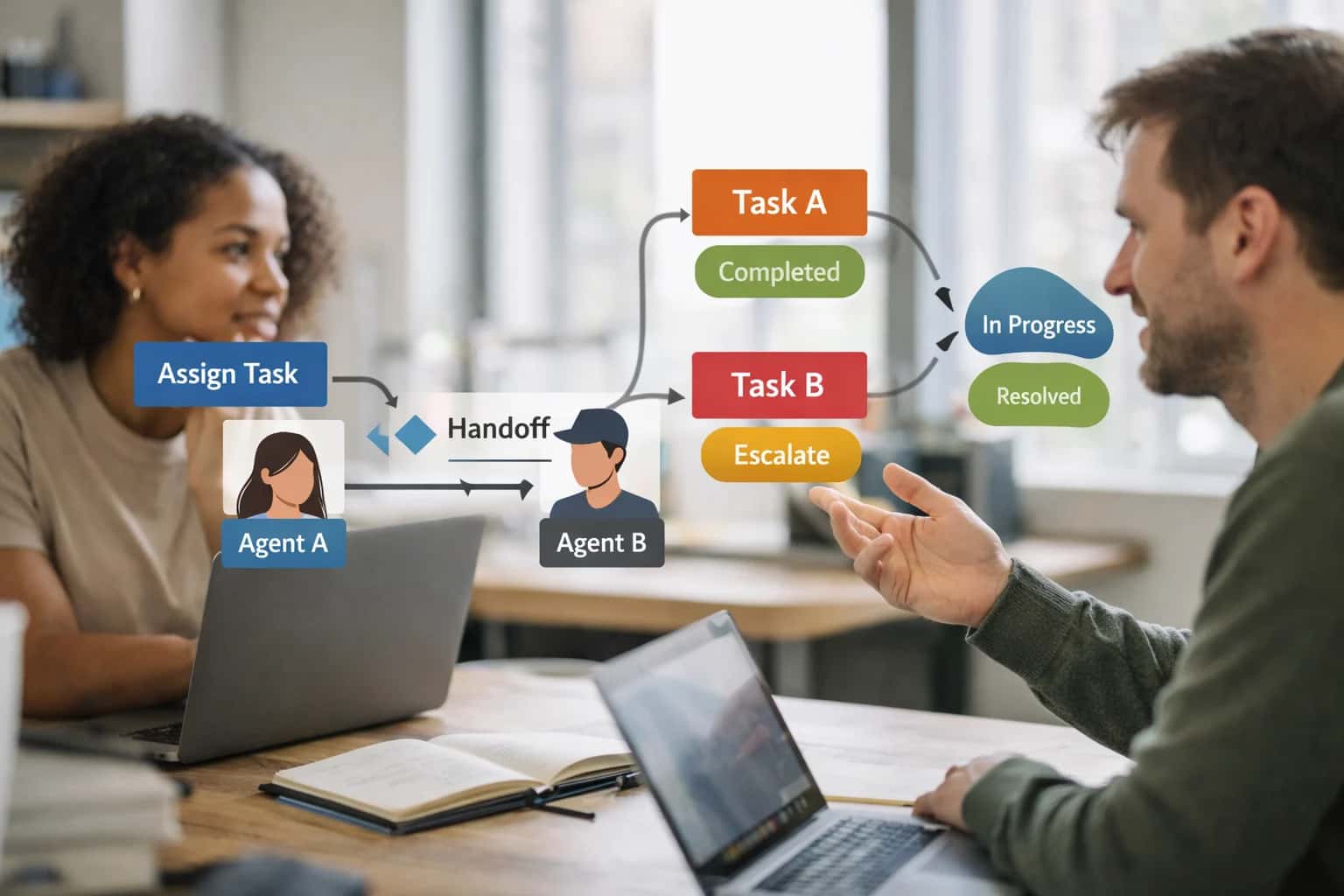
Comparisons related to frameworks for coordinating teams of specialized AI agents. Target: CTOs and engineering leads building complex, multi-step autonomous workflows.
LangGraph vs AutoGen
A direct comparison of the two dominant multi-agent orchestration frameworks. LangGraph offers fine-grained, stateful graph control for complex workflows, while AutoGen provides a flexible, conversation-driven model for agent collaboration. This analysis helps CTOs decide between deterministic execution paths and dynamic agent chat patterns for enterprise-grade autonomous systems.
CrewAI vs AutoGen
Compares CrewAI's role-based, sequential process design against AutoGen's flexible, conversation-centric agent interactions. Focuses on the trade-off between structured team management with defined roles and tasks versus emergent collaboration through multi-agent chat, helping engineering leads choose the right abstraction for their team's complexity.
LangGraph vs CrewAI
Evaluates LangGraph's low-level, graph-based state machine approach against CrewAI's high-level, role-playing framework. This comparison targets architects deciding between maximum customizability and a more opinionated, rapid-development structure for orchestrating specialized AI agents.
OpenAI Swarm vs LangGraph
Analyzes OpenAI's lightweight, educational Swarm framework against the production-grade, stateful orchestration of LangGraph. The comparison centers on simplicity and ease of experimentation versus the need for robust persistence, streaming, and complex branching in deployed agentic applications.
OpenAI Swarm vs AutoGen
Contrasts the minimalist, handoff-based design of OpenAI Swarm with AutoGen's comprehensive, conversation-driven multi-agent system. This helps developers understand when a simple, stateless routing pattern is sufficient versus when a full-fledged, extensible conversation framework is required.
MetaGPT vs AutoGen
Compares MetaGPT's software-company-inspired, SOP-driven approach to multi-agent collaboration with AutoGen's more general and flexible conversation framework. Focuses on the trade-off between structured, role-defined workflows for code generation and a customizable chat paradigm for broader agentic tasks.
ChatDev vs MetaGPT
Evaluates two leading frameworks that simulate software development teams using LLMs. ChatDev uses a chat-chain for phased waterfall development, while MetaGPT employs encoded SOPs for more realistic role interactions. This comparison helps teams choose the right simulation paradigm for automated code generation and project management.
AutoGen vs Semantic Kernel
A comparison of Microsoft's two major AI orchestration offerings. AutoGen focuses on multi-agent conversations and collaboration, while Semantic Kernel provides a broader enterprise SDK for integrating AI plugins and planners into existing applications. This helps Microsoft-centric engineering leads align the right tool with their architectural needs.
LangGraph vs Semantic Kernel
Contrasts LangGraph's graph-based, stateful agent orchestration with Semantic Kernel's enterprise plugin and planner architecture. The analysis focuses on building custom, complex agent topologies versus integrating AI capabilities into a mature, enterprise-grade application stack with native C# and Python support.
CrewAI vs Semantic Kernel
Compares CrewAI's intuitive, role-based agent team framework with Semantic Kernel's robust, enterprise-focused AI orchestration SDK. This helps decision-makers choose between rapid prototyping of multi-agent teams and building deeply integrated, production-ready AI features within a larger Microsoft ecosystem.
AutoGen vs LangChain Agents
Evaluates AutoGen's specialized multi-agent conversation framework against LangChain's general-purpose agent abstraction and tool ecosystem. The comparison focuses on the depth of multi-agent collaboration features versus the breadth of integrations and community support for building diverse LLM-powered applications.
LangGraph vs LangChain Agents
Clarifies the distinction between two tools from the LangChain ecosystem. LangGraph provides low-level, stateful graph control for custom agent runtimes, while LangChain Agents offer a higher-level, more opinionated abstraction. This helps developers decide when they need fine-grained control versus a faster, more standardized development path.
CrewAI vs LangChain Agents
Compares CrewAI's dedicated role-playing and team management features with LangChain's broader, more flexible agent toolkit. This analysis helps teams decide between a specialized framework for multi-agent collaboration and a general-purpose library that can be assembled into a custom agent solution.
AutoGen vs LlamaIndex Agents
Contrasts AutoGen's conversation-driven agent collaboration with LlamaIndex's data-centric agent framework built on top of advanced retrieval. The comparison centers on whether the primary need is complex agent-to-agent dialogue or building agents that can reason over and take action on large, structured enterprise datasets.
LangGraph vs LlamaIndex Agents
Evaluates LangGraph's customizable, stateful orchestration against LlamaIndex's opinionated agents designed for data synthesis and retrieval. This helps architects decide between building a bespoke agent control flow from scratch and leveraging a framework purpose-built for connecting agents to diverse data sources.
CrewAI vs LlamaIndex Agents
Compares CrewAI's role-based team orchestration with LlamaIndex's data-agent framework. The analysis focuses on the trade-off between managing a team of specialized agents with defined roles and building a single, powerful agent that can intelligently query and synthesize information from a complex data backbone.
AutoGen vs TaskWeaver
Analyzes AutoGen's multi-agent conversation framework against TaskWeaver's code-first, data-driven agent architecture. This comparison helps data engineers and analysts choose between a general-purpose agent collaboration tool and a specialized framework that converts user requests into executable code with rich data structure support.
LangGraph vs TaskWeaver
Contrasts LangGraph's flexible, stateful graph orchestration with TaskWeaver's structured, code-interpreting agent for data analytics. The decision point is between building a custom, general-purpose agentic workflow and deploying a specialized agent that excels at transforming analytical intent into safe, executable code.
Partnered with leading AI, data, and software stack.





How We Work
Custom AI workflows for your Business
One-fit-all AI don't work for modern businesses. At Inferensys, we aim to understand your business & custom requirements; which we use to define most efficient agentic workflows, the data, and the tools for your business.
01
Review the use case
We understand the task, the users, and where AI can actually help.
Read more02
Pick the right approach
We define what needs search, automation, or product integration.
Read more03
Build the first useful version
We implement the part that proves the value first.
Read more04
Improve from there
We add the checks and visibility needed to keep it useful.
Read moreThe first call is a practical review of your use case and the right next step.
Talk to Us