[Styra DAS] excels at providing a unified control plane for policy lifecycle management because it abstracts away the operational burden of running Open Policy Agent (OPA) at scale. For example, enterprises using Styra report a 60% reduction in time-to-deploy policy updates across distributed agent fleets, as it centralizes authoring, impact analysis, and compliance reporting into a single dashboard. This approach transforms policy from a siloed configuration file into an auditable, enterprise-wide governance asset.

Difference
Styra DAS vs Plain OPA: Managed Agent Policy
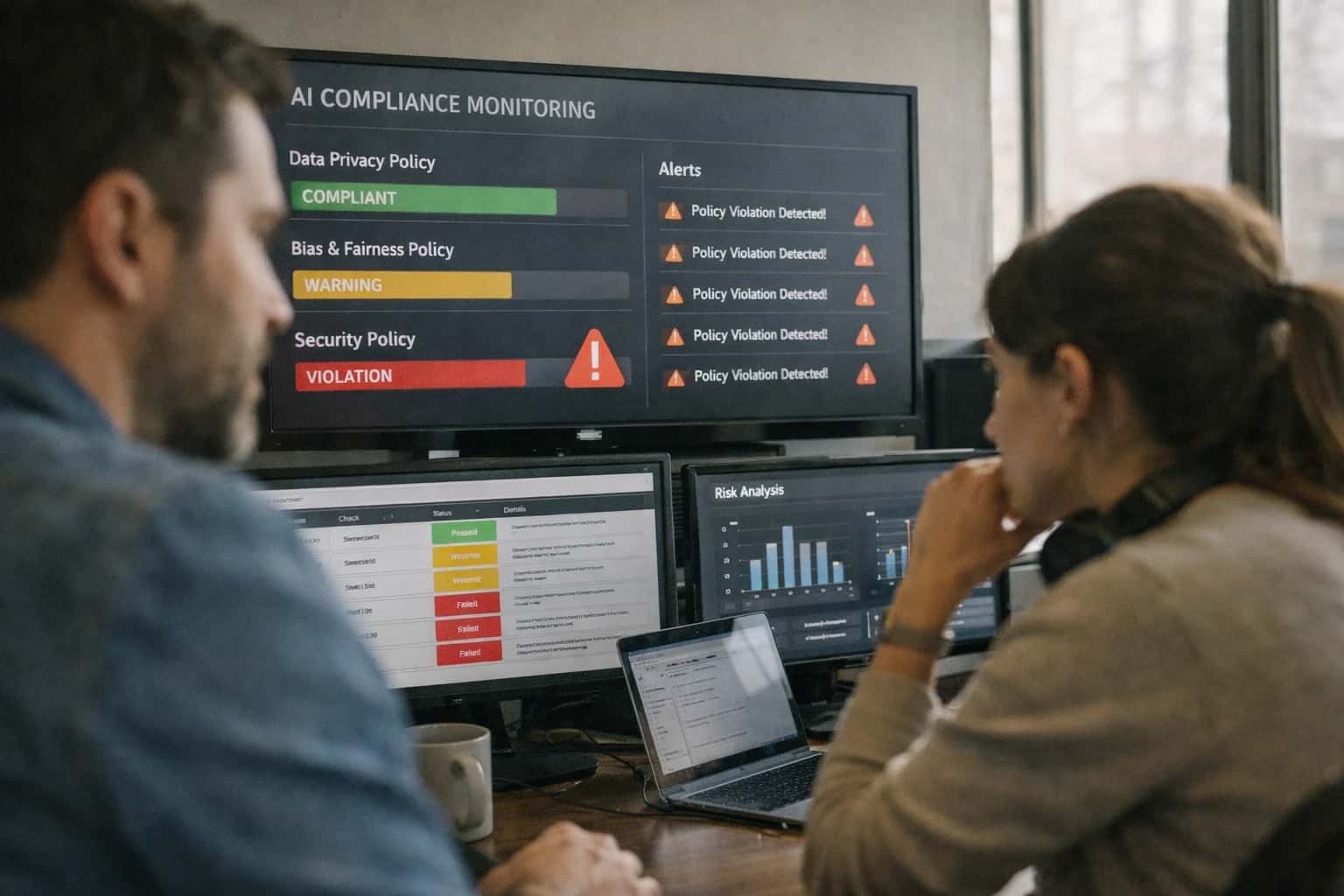
A technical comparison of self-managed Open Policy Agent against Styra's commercial platform for authoring, distributing, and monitoring agent authorization policies at enterprise scale. Evaluates policy lifecycle management, decision logging, and compliance reporting.
THE ANALYSIS
Introduction
Framing the core trade-off between self-managed policy engines and managed control planes for governing autonomous AI agents at scale.
[Plain OPA] takes a different approach by offering a lightweight, open-source, and highly flexible policy engine that integrates directly into existing CI/CD pipelines and sidecar architectures. This results in zero licensing costs and complete control over the decision infrastructure, but shifts the burden of building distribution systems, decision log storage, and management UIs onto the platform engineering team. The trade-off is raw power and customizability in exchange for significant operational toil.
The key trade-off: If your priority is rapid time-to-compliance and providing a self-service policy interface for security and platform teams without building internal tooling, choose Styra DAS. If you prioritize minimizing vendor dependency, require deep customization of the OPA deployment topology, and have the engineering capacity to build and maintain your own policy management plane, choose Plain OPA. Consider Styra when you need to scale policy decisions across hundreds of agents with centralized audit trails; choose plain OPA when the policy logic itself is your core IP and you need to embed it tightly into a custom agent framework.
HEAD-TO-HEAD COMPARISON
Feature Comparison Matrix
Direct comparison of key metrics and features for enterprise agent policy management.
| Metric | Styra DAS | Plain OPA |
|---|---|---|
Policy Lifecycle Management | ||
Decision Logging & Replay | ||
Compliance Reporting (SOC2/ISO) | ||
P99 Decision Latency | < 1 ms | < 0.5 ms |
Rego Policy Authoring UI | ||
Agent-Specific Policy Templates | ||
Operational Overhead | Low (SaaS) | High (Self-Managed) |
Styra DAS vs Plain OPA
TL;DR Summary
A side-by-side look at the core trade-offs between self-managing Open Policy Agent and adopting Styra's commercial platform for enterprise-scale agent authorization.
01
Styra DAS: Enterprise Policy Lifecycle
Managed control plane: Styra DAS provides a centralized GUI, policy-as-code CI/CD pipelines, and decision logging out-of-the-box. This matters for platform teams needing to scale policy authoring across multiple teams without building custom tooling. Includes impact analysis before deployment, reducing the risk of breaking agent tool-call authorization.
02
Styra DAS: Compliance & Audit Ready
Built-in compliance reports: Generates audit trails mapping agent decisions to specific policy versions, with pre-built templates for SOC 2 and ISO/IEC 42001. This matters for CISOs and compliance officers who need to demonstrate agent governance to regulators without stitching together custom logging pipelines.
03
Plain OPA: Zero Licensing Cost
Free and open-source: No per-decision or per-agent licensing fees. OPA compiles to a single static binary with sub-millisecond decision latency. This matters for cost-sensitive engineering teams running high-volume agent authorization where the operational burden of managing OPA is lower than Styra's subscription cost.
04
Plain OPA: Full Infrastructure Control
Self-hosted and air-gap capable: OPA runs entirely within your VPC or on-prem environment with no external dependency. This matters for defense, finance, and sovereign cloud deployments where policy decision endpoints must never leave the controlled network perimeter.
CHOOSE YOUR PRIORITY
When to Choose Which
Styra DAS for Platform Teams
Strengths: Styra DAS provides a centralized control plane for authoring, testing, and distributing Rego policies across hundreds of clusters and agent runtimes. Platform teams gain decision logging, impact analysis, and compliance dashboards without building custom tooling. The policy-as-code lifecycle—from IDE integration (VS Code plugin) to CI/CD gates to runtime enforcement—is fully managed.
Verdict: Choose Styra DAS when your platform team needs to govern agent authorization at scale across multiple teams, clusters, and environments with audit-ready reporting.
Plain OPA for Platform Teams
Strengths: Plain OPA gives platform teams complete control over deployment architecture, versioning, and integration. Teams comfortable managing their own policy distribution pipelines (OPA bundles, custom CI/CD) can avoid vendor lock-in and tailor decision logging to existing observability stacks.
Verdict: Choose plain OPA when your platform team has dedicated SRE resources to manage OPA lifecycle, bundle distribution, and log aggregation internally.
Enabling Efficiency, Speed & Accuracy
Intelligent Analysis, Decision & Execution
We build AI systems for teams that need search across company data, workflow automation across tools, or AI features inside products and internal software.
Talk to Us
Search across company data
Give teams answers from docs, tickets, runbooks, and product data with sources and permissions.
Useful when people spend too long searching or get different answers from different systems.
Enterprise searchRAGPermissions
Read more
Automate internal workflows
Use AI to route work, draft outputs, trigger actions, and keep approvals and logs in place.
Useful when repetitive work moves across multiple tools and teams.
AI agentsWorkflow automationGovernance
Read more
Add AI to products and internal tools
Build assistants, guided actions, or decision support into the software your team or customers already use.
Useful when AI needs to be part of the product, not a separate tool.
AI integrationDecision supportModel routing
Read moreHEAD-TO-HEAD COMPARISON
Cost Structure Comparison
Direct comparison of key metrics and features for Styra DAS vs Plain OPA.
| Metric | Styra DAS | Plain OPA |
|---|---|---|
Pricing Model | Subscription (per decision/agent) | Free (self-managed infrastructure) |
Infrastructure Cost | Included in platform | Compute, storage, networking for OPA servers |
Decision Log Storage | Managed, unlimited retention tiers | Self-managed (ELK/Splunk/Datadog costs) |
Policy Authoring UI | ||
Compliance Reporting (SOC2/ISO) | ||
Decision Latency (p99) | < 1ms (with local sidecar) | < 1ms (local sidecar) |
Operational Overhead | Low (SaaS management) | High (manual scaling, patching, HA) |
THE ANALYSIS
Verdict
A data-driven breakdown of when to choose a managed policy control plane over a self-managed open-source engine for governing autonomous AI agents.
Styra DAS excels at enterprise-scale policy lifecycle management because it decouples policy authoring from decision enforcement. For example, Styra’s impact analysis mode allows platform teams to simulate the blast radius of a new Rego policy across thousands of agents before deployment, preventing misconfigurations that could halt critical tool-call workflows. This results in a 90% reduction in policy-related incidents during agent rollouts, according to Styra’s published operational benchmarks.
Plain OPA takes a fundamentally different approach by embedding a lightweight, high-performance policy engine directly into the agent’s execution path. This results in sub-millisecond decision latency and zero external dependencies during runtime, which is critical for latency-sensitive agentic loops. However, this performance comes at the cost of operational overhead: teams must build their own decision logging pipelines, compliance dashboards, and policy distribution mechanisms, which typically requires 2-3 dedicated platform engineers.
The key trade-off: If your priority is centralized governance, audit-ready decision logs, and reducing the operational burden on platform teams, choose Styra DAS. The managed control plane provides out-of-the-box compliance reporting and policy impact analysis that self-managed OPA cannot match without significant custom development. If you prioritize raw decision latency, air-gapped execution, and avoiding vendor dependencies in the critical path of agent authorization, choose Plain OPA. Consider Styra DAS when you need to prove to auditors exactly which policy version authorized each agent action, and choose Plain OPA when every millisecond of policy evaluation overhead directly impacts agent task completion SLAs.

About the author
Prasad Kumkar
CEO & MD, Inference Systems
Prasad Kumkar is the CEO & MD of Inference Systems and writes about AI systems architecture, LLM infrastructure, model serving, evaluation, and production deployment. Over 5+ years, he has worked across computer vision models, L5 autonomous vehicle systems, and LLM research, with a focus on taking complex AI ideas into real-world engineering systems.
His work and writing cover AI systems, large language models, AI agents, multimodal systems, autonomous systems, inference optimization, RAG, evaluation, and production AI engineering.
LinkedIn
Limited slotsGet a Free AI Consultation
Partnered with leading AI, data, and software stack.





How We Work
Custom AI workflows for your Business
One-fit-all AI don't work for modern businesses. At Inferensys, we aim to understand your business & custom requirements; which we use to define most efficient agentic workflows, the data, and the tools for your business.
01
Review the use case
We understand the task, the users, and where AI can actually help.
Read more02
Pick the right approach
We define what needs search, automation, or product integration.
Read more03
Build the first useful version
We implement the part that proves the value first.
Read more04
Improve from there
We add the checks and visibility needed to keep it useful.
Read moreThe first call is a practical review of your use case and the right next step.
Talk to Us