Google's A2A (Agent-to-Agent) protocol excels at structured, synchronous approval gates because it is designed for explicit, stateful workflows. For example, a procurement agent can pause at a predefined spending threshold, present a structured decision payload to a human via a dedicated interface, and block execution until a APPROVE or DENY signal is received, ensuring strict compliance in high-stakes financial operations. This pattern is ideal for scenarios requiring clear audit trails and deterministic control flow.

Comparison
A2A vs MCP for Human-in-the-Loop Support
A technical comparison of Google's A2A and Anthropic's MCP protocols for integrating human oversight into agentic workflows. We evaluate approval gates, asynchronous review, and supervised autonomy patterns to determine the best fit for regulated and high-stakes applications.
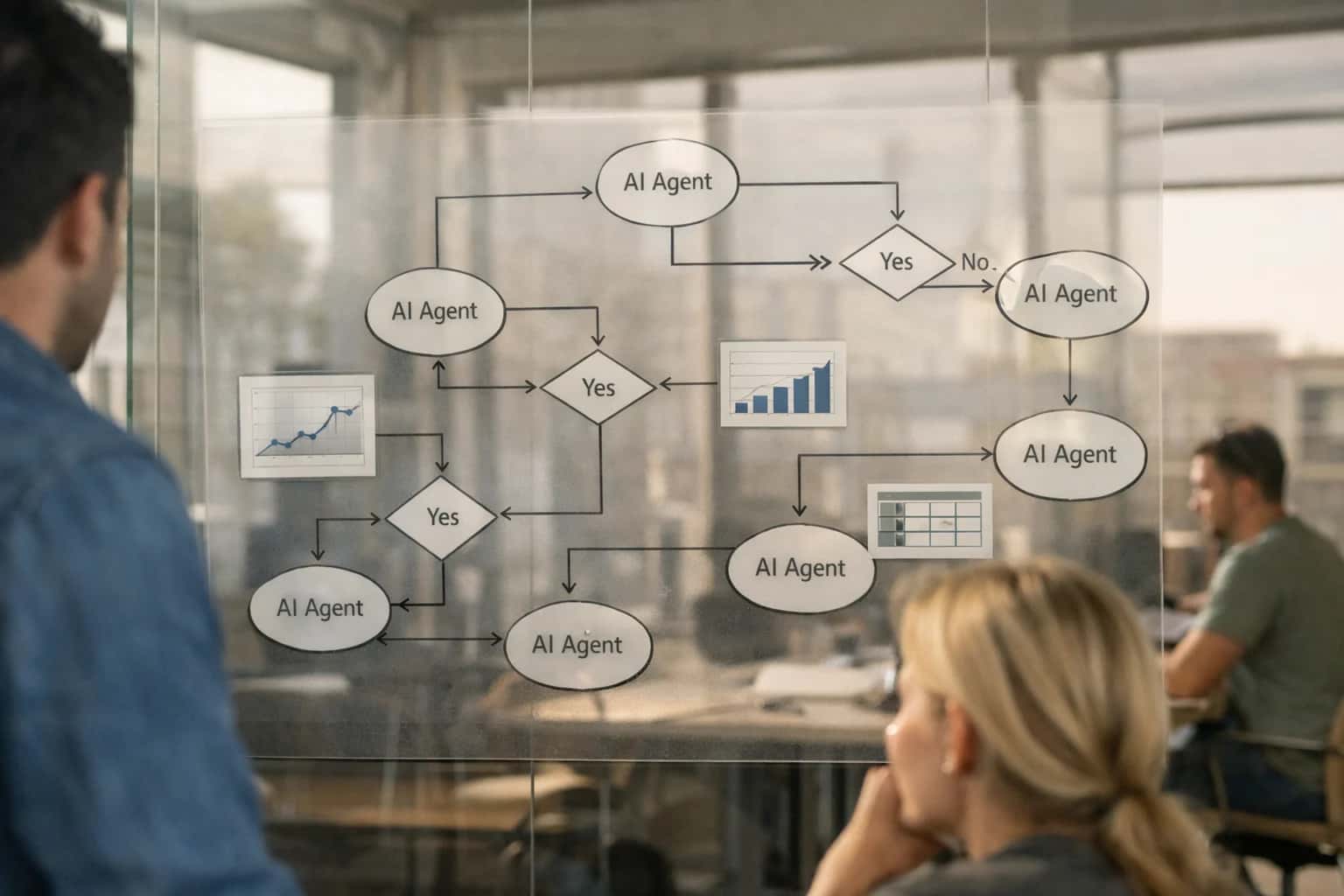
THE ANALYSIS
Introduction
A comparison of how Google's A2A and Anthropic's MCP protocols architect human oversight into autonomous agent workflows.
Anthropic's MCP (Model Context Protocol) takes a different approach by enabling asynchronous, context-rich review. Its strength lies in streaming real-time tool calls and reasoning steps to any MCP-compliant client, allowing a human supervisor to monitor multiple agents concurrently and intervene contextually. This results in a trade-off: it offers greater flexibility for supervisory dashboards and supervised autonomy patterns but requires more custom front-end development to implement formal approval gates compared to A2A's built-in primitives.
The key trade-off: If your priority is enforcing strict, gated compliance in regulated processes (e.g., contract signing, fund transfers), choose A2A. If you prioritize fluid, contextual oversight and agent learning from sparse human feedback in dynamic environments (e.g., customer support triage, creative content review), choose MCP. For a deeper dive into the foundational differences between these coordination layers, see our pillar on Multi-Agent Coordination Protocols (A2A vs. MCP).
HEAD-TO-HEAD COMPARISON
Feature Comparison: A2A vs MCP for HITL
Direct comparison of how Google's A2A and Anthropic's MCP protocols facilitate human oversight in agentic workflows, focusing on approval patterns, review latency, and integration complexity.
| Metric / Feature | Google A2A | Anthropic MCP |
|---|---|---|
Native Approval-Gate Pattern | ||
Asynchronous Review Latency |
| < 100ms |
Human Feedback Integration | Custom SDK Required | Built-in via MCP Servers |
Supervised Autonomy Support | Limited (Event-Driven) | Advanced (Stateful Delegation) |
Risk-Threshold Definition | Code-Level Implementation | Declarative Policy Layer |
Audit Trail Granularity | Per-Agent Logs | End-to-End Task Trace |
Protocol Maturity (2026) | Emerging | Established with Tool Ecosystem |
A2A vs MCP for Human-in-the-Loop Support
TL;DR Summary
Key strengths and trade-offs at a glance for integrating human oversight into agentic workflows.
01
Choose A2A for Structured Approval Gates
Built-in workflow orchestration: A2A's native support for state machines and task graphs makes it ideal for designing explicit approval steps. This matters for regulated processes where every human decision must be logged and linked to a specific workflow state, such as loan underwriting or medical diagnosis review.
02
Choose MCP for Asynchronous, Context-Rich Review
Universal tool integration: MCP's strength is connecting agents to any external tool (e.g., Jira, Slack, a custom dashboard) where a human can asynchronously review context. This matters for creative or investigative workflows where humans need full access to the agent's reasoning, retrieved documents, and tool outputs before providing feedback.
03
Choose A2A for Supervised Autonomy & Escalation
Fine-grained delegation control: A2A allows defining precise confidence thresholds and escalation policies within a task's lifecycle. An agent can operate autonomously until a low-confidence signal triggers an automatic handoff to a human. This matters for high-volume customer support or IT ticketing where most tasks are routine, but exceptions need expert review.
04
Choose MCP for Human-Agent Collaborative Tools
Seamless UI embedding: MCP servers can expose interactive tools directly to agents, which can render interfaces for human collaboration. This enables patterns like an agent populating a form for human verification inside an existing app. This matters for integrating HITL into existing enterprise software without rebuilding frontends, common in procurement or legal contract analysis.
CHOOSE YOUR PRIORITY
When to Choose A2A vs MCP
A2A for Approval Gates
Verdict: The superior choice for structured, high-stakes workflows requiring explicit human sign-off. Strengths: A2A's explicit task delegation and stateful workflow model allows for clear checkpoint creation. You can design a task where an agent halts execution and pushes a structured decision payload (e.g., a contract clause, a purchase order) to a designated human queue via a dedicated approval tool. Its audit trail is inherently linked to the task lifecycle, providing clear accountability for governance. Trade-off: This structure adds overhead. Setting up the approval tool integration and defining the handoff logic requires more upfront configuration compared to a simple chat-based review.
MCP for Approval Gates
Verdict: Better for lightweight, conversational reviews integrated directly into chat-based agent interactions. Strengths: MCP excels at exposing tools and data sources. A human-in-the-loop can be integrated as a 'human tool' that the agent can call. The agent can present its reasoning and a proposed action in the chat, and the human provides a 'yes/no' or a corrected response. This is lower friction for ad-hoc reviews and benefits from MCP's strong context sharing capabilities. Trade-off: The audit trail is less formalized than A2A's stateful model. Tracking the approval as part of a specific business process requires additional instrumentation on top of the chat history.
Enabling Efficiency, Speed & Accuracy
Intelligent Analysis, Decision & Execution
We build AI systems for teams that need search across company data, workflow automation across tools, or AI features inside products and internal software.
Talk to Us
Search across company data
Give teams answers from docs, tickets, runbooks, and product data with sources and permissions.
Useful when people spend too long searching or get different answers from different systems.
Enterprise searchRAGPermissions
Read more
Automate internal workflows
Use AI to route work, draft outputs, trigger actions, and keep approvals and logs in place.
Useful when repetitive work moves across multiple tools and teams.
AI agentsWorkflow automationGovernance
Read more
Add AI to products and internal tools
Build assistants, guided actions, or decision support into the software your team or customers already use.
Useful when AI needs to be part of the product, not a separate tool.
AI integrationDecision supportModel routing
Read moreTHE ANALYSIS
Final Verdict and Recommendation
Choosing between A2A and MCP for human-in-the-loop support depends on whether you prioritize structured governance or flexible, context-aware oversight.
Google's A2A protocol excels at providing a formal, auditable framework for human oversight because it is designed for explicit, stateful workflows. For example, its native support for structured approval gates and session persistence allows you to define precise risk thresholds and mandatory review steps, which is critical for regulated processes in finance or healthcare where every agentic decision must be logged and defensible.
Anthropic's MCP takes a different approach by treating human oversight as another tool or resource within its universal context protocol. This results in greater flexibility for asynchronous, context-rich review patterns—a human can be dynamically consulted with the full task history and tool outputs—but offers less built-in structure for enforcing strict governance chains compared to A2A's workflow-centric design.
The key trade-off: If your priority is compliance and auditable control for moderate-to-high-risk agentic tasks, choose A2A. Its formalized gates and state management are ideal for scenarios requiring strict Human-in-the-Loop (HITL) architectures. If you prioritize developer flexibility and context-aware collaboration where humans provide sparse, expert supervision within a fluid workflow, choose MCP. Its tool-based model integrates oversight seamlessly into the agent's reasoning process. For a deeper dive into state management, see our comparison on A2A vs MCP for Stateful Agent Workflows.

About the author
Prasad Kumkar
CEO & MD, Inference Systems
Prasad Kumkar is the CEO & MD of Inference Systems and writes about AI systems architecture, LLM infrastructure, model serving, evaluation, and production deployment. Over 5+ years, he has worked across computer vision models, L5 autonomous vehicle systems, and LLM research, with a focus on taking complex AI ideas into real-world engineering systems.
His work and writing cover AI systems, large language models, AI agents, multimodal systems, autonomous systems, inference optimization, RAG, evaluation, and production AI engineering.
LinkedIn
Limited slotsGet a Free AI Consultation
Partnered with leading AI, data, and software stack.





How We Work
Custom AI workflows for your Business
One-fit-all AI don't work for modern businesses. At Inferensys, we aim to understand your business & custom requirements; which we use to define most efficient agentic workflows, the data, and the tools for your business.
01
Review the use case
We understand the task, the users, and where AI can actually help.
Read more02
Pick the right approach
We define what needs search, automation, or product integration.
Read more03
Build the first useful version
We implement the part that proves the value first.
Read more04
Improve from there
We add the checks and visibility needed to keep it useful.
Read moreThe first call is a practical review of your use case and the right next step.
Talk to Us