AI-Powered Double Materiality Assessment excels at speed and scale because it uses NLP models like GPT-4 or Claude 3.5 to analyze vast volumes of unstructured stakeholder data—earnings calls, news, social media, and internal documents—in hours, not months. For example, an AI system can process 10,000+ documents to identify emerging risks with quantifiable metrics like a 95% recall rate on material topics, dramatically accelerating the initial analysis phase compared to manual methods.

Comparison
AI-Powered Double Materiality Assessment vs Traditional Materiality Assessment
A technical comparison for CTOs and compliance leads evaluating AI-driven NLP analysis of stakeholder data against traditional, workshop-based methods for ESG double materiality. Focus on speed, cost, auditability, and defensibility trade-offs.
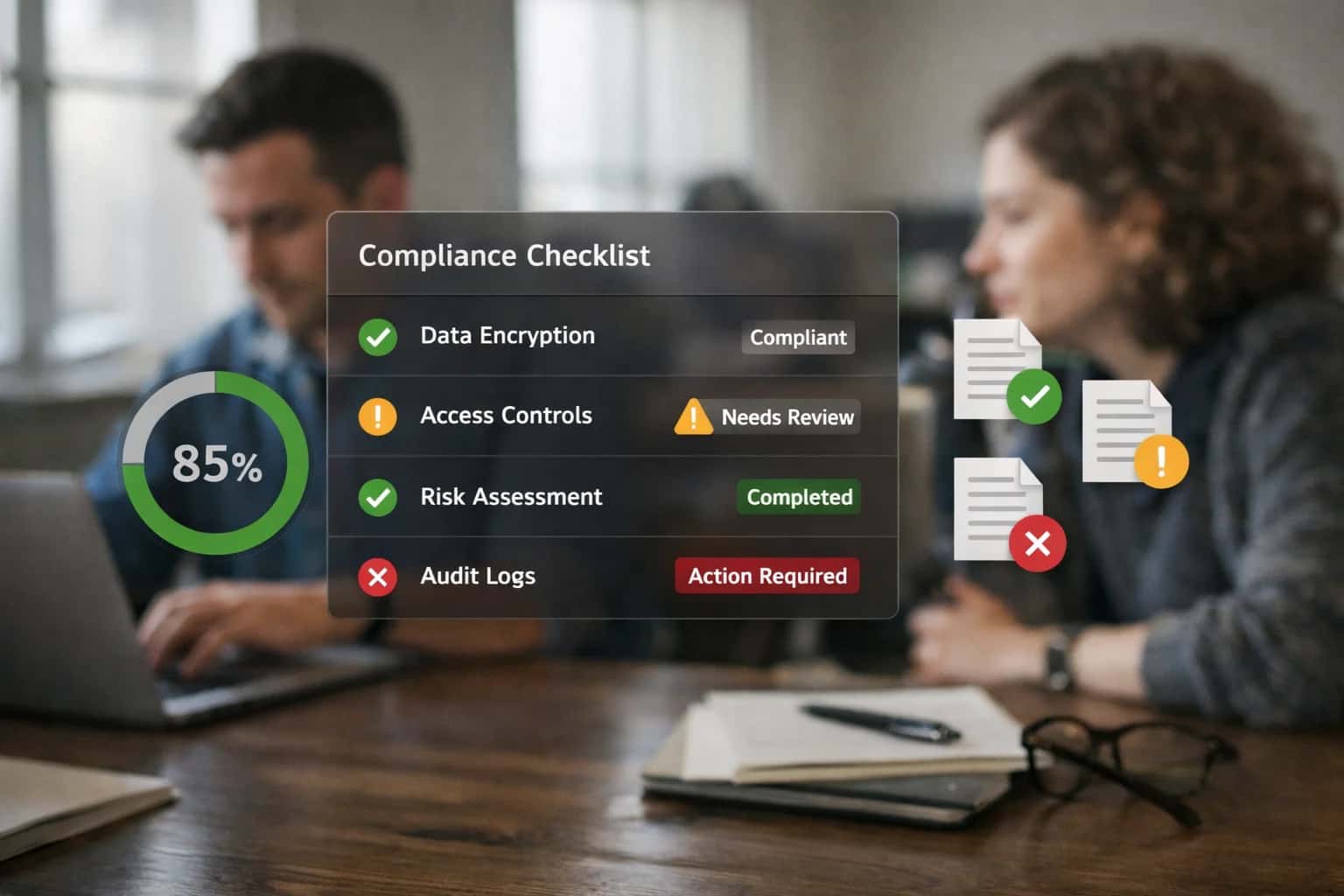
THE ANALYSIS
Introduction
A data-driven comparison of AI-powered and traditional methods for identifying financially and impactfully material ESG topics.
Traditional Materiality Assessment takes a different approach by relying on structured stakeholder workshops, surveys, and expert panels. This results in high defensibility and stakeholder buy-in through direct human engagement, but introduces significant time lags (often 3-6 months) and limits the data scope to what is practically feasible to gather and analyze manually, potentially missing weak signals in broader datasets.
The key trade-off: If your priority is operational speed, data comprehensiveness, and continuous monitoring—essential for dynamic reporting under frameworks like the EU's CSRD—choose the AI-powered approach. If you prioritize established audit trails, deep qualitative insight, and building consensus through direct engagement for a one-time, high-stakes assessment, the traditional method remains robust. For a complete view of the AI compliance landscape, explore our comparisons on AI Governance and Compliance Platforms and LLMOps and Observability Tools.
HEAD-TO-HEAD COMPARISON
AI-Powered vs Traditional Materiality Assessment
Direct comparison of AI-driven NLP analysis against traditional workshop-based methods for ESG double materiality.
| Metric | AI-Powered Assessment | Traditional Assessment |
|---|---|---|
Analysis Time (Per Framework) | < 48 hours | 4-8 weeks |
Stakeholder Data Volume Analyzed | 10,000+ documents | ~50 interview transcripts |
Cost per Assessment | $5,000 - $15,000 | $50,000 - $200,000+ |
Defensibility & Audit Trail | ||
Real-Time Regulatory Updates | ||
Financial & Impact Linkage Precision |
| Subjective consensus |
Dynamic Re-assessment Capability |
AI-Powered vs Traditional Assessment
TL;DR: Key Differentiators
A rapid comparison of the core strengths and trade-offs between AI-driven and traditional workshop-based materiality assessment methods.
01
AI-Powered: Speed & Scalability
Specific advantage: Processes thousands of stakeholder comments, news articles, and financial reports in hours, not weeks. This matters for rapidly evolving regulatory landscapes like the EU CSRD, where material topics can shift quarterly and require near-real-time reassessment.
02
AI-Powered: Data-Driven Defensibility
Specific advantage: Creates an audit trail of source data and NLP analysis for every identified material topic. This matters for external assurance under standards like ISAE 3000, providing quantitative, repeatable evidence to support materiality decisions against potential stakeholder or regulatory challenge.
03
Traditional: Nuance & Context
Specific advantage: Facilitated expert workshops capture subtle organizational context, political dynamics, and long-term strategic intent that unstructured data may miss. This matters for highly sensitive or novel issues where stakeholder sentiment is not yet reflected in available text data, ensuring leadership buy-in.
04
Traditional: Established Trust
Specific advantage: Relies on decades of established governance practice familiar to boards, auditors, and regulators. This matters for organizations in highly conservative sectors or those with limited AI governance maturity, where the perceived risk of a novel methodology outweighs its efficiency benefits.
CHOOSE YOUR PRIORITY
When to Choose: Decision Scenarios
AI-Powered Double Materiality Assessment for Speed & Scale
Verdict: The clear choice for organizations needing rapid, repeatable analysis across large datasets. Strengths: AI systems, leveraging NLP models like GPT-4 or Claude 3, can process thousands of stakeholder documents (transcripts, reports, surveys) in hours, not months. This enables continuous monitoring rather than annual snapshots. The speed allows for iterative scenario analysis, testing how materiality shifts with new regulations or market events. For scaling ESG reporting across multiple subsidiaries or regions, AI's automation is unmatched. Trade-offs: Initial setup requires data pipeline integration and model tuning. The output requires expert validation to ensure the AI correctly interprets nuanced stakeholder sentiment, a process detailed in our guide on AI Governance and Compliance Platforms.
Enabling Efficiency, Speed & Accuracy
Intelligent Analysis, Decision & Execution
We build AI systems for teams that need search across company data, workflow automation across tools, or AI features inside products and internal software.
Talk to Us
Search across company data
Give teams answers from docs, tickets, runbooks, and product data with sources and permissions.
Useful when people spend too long searching or get different answers from different systems.
Enterprise searchRAGPermissions
Read more
Automate internal workflows
Use AI to route work, draft outputs, trigger actions, and keep approvals and logs in place.
Useful when repetitive work moves across multiple tools and teams.
AI agentsWorkflow automationGovernance
Read more
Add AI to products and internal tools
Build assistants, guided actions, or decision support into the software your team or customers already use.
Useful when AI needs to be part of the product, not a separate tool.
AI integrationDecision supportModel routing
Read moreTHE ANALYSIS
Final Verdict and Recommendation
A data-driven comparison to determine the optimal materiality assessment approach for your organization's compliance and strategic goals.
AI-Powered Double Materiality Assessment excels at speed, scale, and data-driven defensibility because it uses NLP models like GPT-4 or Claude to analyze thousands of stakeholder comments, news articles, and financial reports in hours. For example, an AI system can process 10,000+ data points to identify emerging ESG risks with quantifiable sentiment scores, reducing a typical 3-month assessment cycle to under two weeks while providing an auditable data trail for frameworks like the EU's CSRD.
Traditional Materiality Assessment takes a different approach by relying on expert-led workshops, surveys, and manual analysis. This results in high stakeholder engagement and nuanced qualitative insights but introduces significant trade-offs in time (often 12+ weeks), cost (high consultant fees), and scalability, making it difficult to update frequently or defend against regulatory scrutiny with hard data.
The key trade-off is between agility and depth. AI-powered methods deliver rapid, repeatable, and data-rich assessments critical for dynamic regulatory environments and integrated reporting under IFRS S1/S2. Traditional methods provide unparalleled qualitative depth and stakeholder buy-in, essential for complex organizational change or when building initial consensus. For a deeper look at AI-driven compliance workflows, see our guide on Automated Compliance Reporting for Global ESG.
Consider AI-Powered Double Materiality if you need: to meet tight reporting deadlines (e.g., for CSRD), require a defensible, data-backed audit trail, have high-volume unstructured data to analyze, or must frequently re-run assessments to monitor evolving risks. This approach integrates seamlessly with other AI compliance tools, such as those for AI-Driven XBRL Tagging.
Choose Traditional Materiality Assessment when: stakeholder trust and deep qualitative understanding are the primary goals, you are establishing a materiality process for the first time, regulatory requirements are stable, or your data is limited and requires expert interpretation to contextualize. This method aligns with manual processes discussed in AI for GHG Protocol Reporting vs Manual Reporting.
Final Recommendation: For most enterprises in 2026 facing evolving ESG mandates, the AI-powered approach is the strategic choice for operational resilience. It transforms materiality from a periodic, costly exercise into a continuous, insight-generating function. Reserve traditional methods for foundational, consensus-building phases or as a complementary qualitative layer to validate and enrich AI-driven findings.
COMPARISON
AI-Powered vs. Traditional Materiality Assessment
Key strengths and trade-offs at a glance for selecting the right approach for your ESG compliance program.
01
AI-Powered: Speed & Scale
Specific advantage: Processes thousands of stakeholder comments, news articles, and financial filings in hours vs. weeks. NLP models like GPT-4 and Claude Opus can analyze sentiment and extract themes at a scale impossible manually. This matters for rapid annual reporting cycles and monitoring dynamic regulatory changes.
80-90%
Time Reduction
02
AI-Powered: Data-Driven Defensibility
Specific advantage: Creates an auditable trail linking material topics directly to source evidence (e.g., specific stakeholder sentiment scores, cited regulatory text). This enhances defensibility under audit and supports Integrated Financial & ESG Reporting by providing quantitative backing for narrative disclosures.
03
Traditional: Nuance & Context
Specific advantage: Expert-led workshops capture subtle organizational context, political dynamics, and complex trade-offs that AI may miss. Facilitated dialogue builds internal consensus. This matters for high-stakes, strategic decisions and initial framework selection where human judgment is irreplaceable.
04
Traditional: Lower Technical Barrier
Specific advantage: Requires no AI infrastructure, model fine-tuning, or data engineering. Relies on established consultancy methodologies. This matters for organizations with low AI maturity or those conducting a one-off baseline assessment before investing in technology.
$0
AI Tech Spend
05
Choose AI-Powered For...
- High-volume, recurring assessments (e.g., annual CSRD reporting).
- Requiring audit-ready evidence trails for assurance workflows.
- Integrating with other AI-driven processes like Automated Regulatory Change Tracking or AI for Supply Chain ESG Data Collection.
06
Choose Traditional For...
- First-time materiality process to establish a qualitative baseline.
- Highly sensitive or controversial topics requiring deep stakeholder facilitation.
- Organizations with strict data sovereignty or privacy constraints that limit external AI tool use.

About the author
Prasad Kumkar
CEO & MD, Inference Systems
Prasad Kumkar is the CEO & MD of Inference Systems and writes about AI systems architecture, LLM infrastructure, model serving, evaluation, and production deployment. Over 5+ years, he has worked across computer vision models, L5 autonomous vehicle systems, and LLM research, with a focus on taking complex AI ideas into real-world engineering systems.
His work and writing cover AI systems, large language models, AI agents, multimodal systems, autonomous systems, inference optimization, RAG, evaluation, and production AI engineering.
LinkedIn
Limited slotsGet a Free AI Consultation
Partnered with leading AI, data, and software stack.





How We Work
Custom AI workflows for your Business
One-fit-all AI don't work for modern businesses. At Inferensys, we aim to understand your business & custom requirements; which we use to define most efficient agentic workflows, the data, and the tools for your business.
01
Review the use case
We understand the task, the users, and where AI can actually help.
Read more02
Pick the right approach
We define what needs search, automation, or product integration.
Read more03
Build the first useful version
We implement the part that proves the value first.
Read more04
Improve from there
We add the checks and visibility needed to keep it useful.
Read moreThe first call is a practical review of your use case and the right next step.
Talk to Us