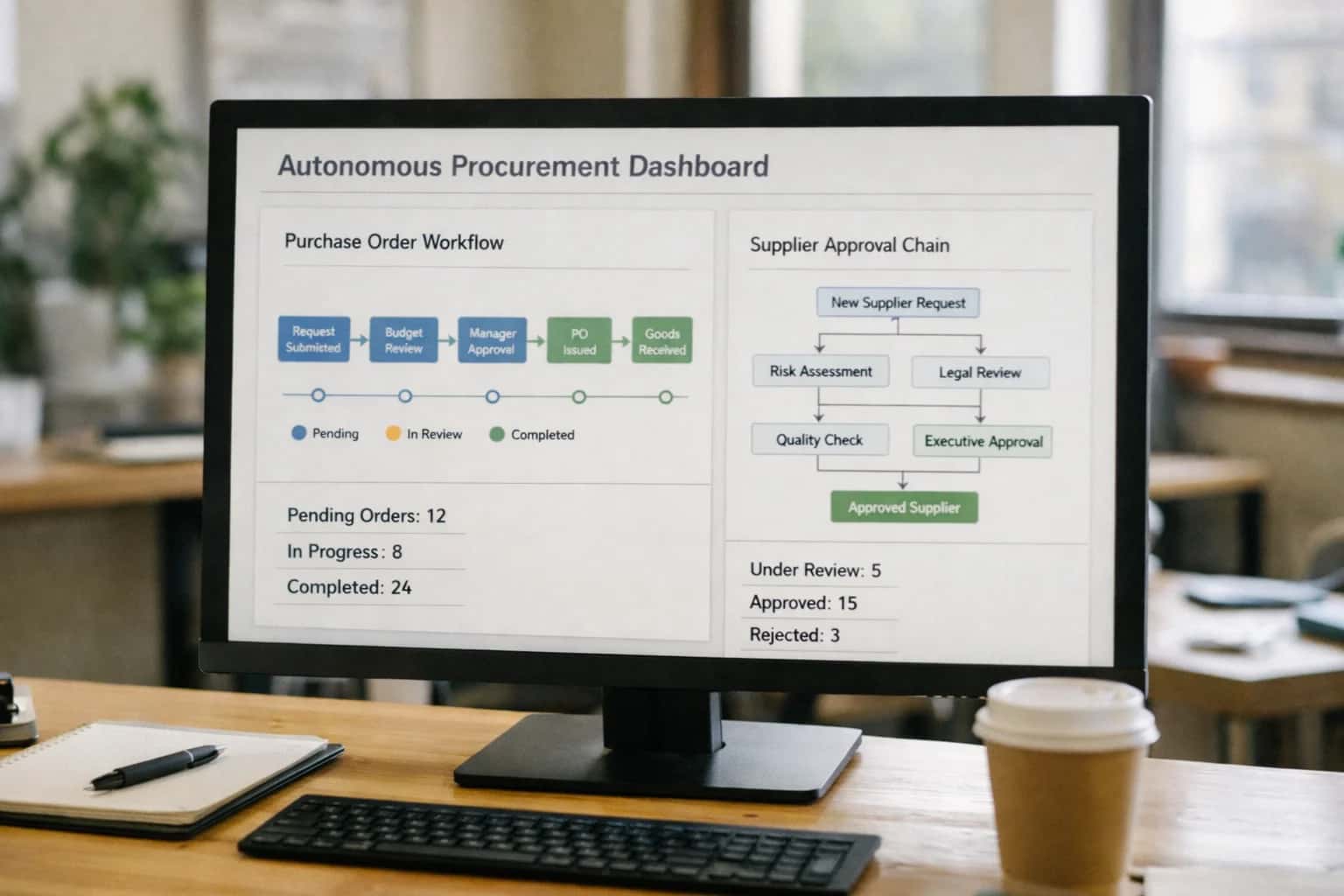
Zip excels at AI-driven procurement orchestration by embedding intelligent agents directly into the purchase request and approval workflow. Its strength lies in proactive spend control, using machine learning to route requests, enforce policies, and provide real-time budget visibility before a purchase is made. For example, its platform can reduce manual procurement cycle times by up to 70% by automating approvals and vendor communications, a key metric for organizations prioritizing pre-purchase compliance.

Comparison
Zip vs Airbase
A technical comparison for CTOs and finance leaders evaluating AI-native procurement platforms against integrated AP and spend management solutions. This analysis focuses on the convergence of proactive sourcing, autonomous approval workflows, and financial control.
THE ANALYSIS
Introduction
A data-driven comparison of two AI-powered platforms converging procurement, accounts payable, and corporate card management.
Airbase takes a different approach by integrating procurement, accounts payable (AP) automation, and corporate card management into a unified financial operations platform. This strategy results in a powerful trade-off: exceptional post-purchase reconciliation and bill payment efficiency at the potential cost of less specialized, AI-native sourcing intelligence. Its corporate card with real-time policy enforcement and automated receipt matching streamlines the entire spend lifecycle from initiation to accounting close.
The key trade-off: If your priority is intelligent, agent-driven sourcing and proactive procurement control to optimize costs at the point of purchase, choose Zip. If you prioritize seamless financial operations, unifying procurement approvals with bill pay, corporate cards, and GL coding for superior visibility and efficiency after the purchase, choose Airbase. For a broader view of the AI procurement landscape, see our comparison of Tropic vs Zip vs Keelvar and the evaluation of Zip vs Coupa.
HEAD-TO-HEAD COMPARISON
Feature Comparison: Zip vs Airbase
Direct comparison of key metrics and features for AI procurement and AP automation platforms.
| Metric | Zip | Airbase |
|---|---|---|
Primary AI Focus | Autonomous Sourcing & Negotiation Agents | AP Automation & Bill Payment |
Spend Intelligence Engine | ||
Autonomous Negotiation Bots | ||
Corporate Card Integration | ||
Built-in Bill Pay | ||
OTIF Improvement Tracking | ||
Avg. Implementation Time | 6-8 weeks | 8-12 weeks |
Zip vs Airbase
TL;DR Summary
Key strengths and trade-offs at a glance for AI procurement platforms converging with AP automation.
01
Choose Zip for AI-Driven Procurement Orchestration
Core strength: Native AI agents for autonomous sourcing and negotiation. Zip's platform is built around intelligent workflows that proactively manage vendor selection, contract analysis, and approval routing. This matters for organizations prioritizing spend intelligence and moving from reactive purchasing to proactive value creation.
02
Choose Airbase for Unified Spend Management & Bill Pay
Core strength: Deep integration of procurement, corporate cards, and accounts payable. Airbase excels as a financial command center, offering real-time policy enforcement, automated bill payment, and seamless GL coding. This matters for finance teams seeking a single platform to control spend from request to reconciliation.
03
Zip's Trade-off: Less Native AP Depth
Specific limitation: While strong on the front-end procurement workflow, Zip's accounts payable automation, like bill payment and vendor portal management, is often less comprehensive than dedicated AP platforms. This may require deeper integration with systems like NetSuite or QuickBooks for full financial close, adding complexity for some enterprises.
04
Airbase's Trade-off: Less Autonomous Sourcing
Specific limitation: Airbase's AI is more focused on compliance, coding, and payment automation rather than autonomous vendor negotiation or complex bid analysis (RFX). For strategic direct material sourcing or tail spend optimization, it may lack the specialized agentic capabilities of platforms like Zip or Keelvar.
CHOOSE YOUR PRIORITY
When to Choose Zip vs Airbase
Zip for AP Automation
Verdict: Superior for AI-driven, pre-purchase control and approval orchestration. Strengths: Zip's core competency is its intelligent approval routing and policy enforcement before a purchase is made. It uses AI agents to dynamically route requests based on amount, category, and historical data, reducing bottlenecks. Its integration with corporate card programs and real-time budget checks prevents overspend at the source. For teams wanting to automate and govern the initiation of procurement, Zip's agentic workflows are more advanced.
Airbase for AP Automation
Verdict: Stronger for post-purchase bill payment, reconciliation, and GL coding. Strengths: Airbase excels at consolidating corporate cards, bill pay, and reimbursements into a single platform. Its AI is optimized for automated bill capture, coding, and sync to accounting systems like NetSuite and QuickBooks. The platform reduces manual data entry after the fact. For finance teams whose primary pain point is the efficiency and accuracy of the payment and close process, Airbase's bill pay automation is a key differentiator.
Key Trade-off: Zip automates the 'go' decision; Airbase automates the 'pay' process. For a complete Procure-to-Pay (P2P) flow, evaluate their integration capabilities or consider a combined approach.
Enabling Efficiency, Speed & Accuracy
Intelligent Analysis, Decision & Execution
We build AI systems for teams that need search across company data, workflow automation across tools, or AI features inside products and internal software.
Talk to Us
Search across company data
Give teams answers from docs, tickets, runbooks, and product data with sources and permissions.
Useful when people spend too long searching or get different answers from different systems.
Enterprise searchRAGPermissions
Read more
Automate internal workflows
Use AI to route work, draft outputs, trigger actions, and keep approvals and logs in place.
Useful when repetitive work moves across multiple tools and teams.
AI agentsWorkflow automationGovernance
Read more
Add AI to products and internal tools
Build assistants, guided actions, or decision support into the software your team or customers already use.
Useful when AI needs to be part of the product, not a separate tool.
AI integrationDecision supportModel routing
Read moreTHE ANALYSIS
Final Verdict and Recommendation
Choosing between Zip and Airbase hinges on whether your primary goal is AI-driven strategic sourcing or integrated spend control.
Zip excels at AI-powered strategic procurement and sourcing because its core is built around autonomous agents for vendor discovery, negotiation, and contract guidance. For example, its platform can autonomously manage complex RFX processes and provide real-time spend intelligence, directly targeting the shift from reactive tasks to 'proactive value-adding orchestration' highlighted in our pillar on AI-Powered Procurement and Sourcing Agents. This makes it a superior choice for organizations where procurement is a strategic function focused on direct materials and cost optimization.
Airbase takes a different approach by converging procurement, accounts payable automation, and corporate card management into a single platform for holistic spend control. This results in a trade-off: while its AI may be less specialized for autonomous sourcing, it provides superior real-time policy enforcement, bill payment, and reconciliation workflows. Its strength lies in enforcing compliance and providing finance teams with a unified view of committed and actual spend, from purchase request to payment.
The key trade-off: If your priority is leveraging AI agents for strategic sourcing, supplier negotiation, and driving down direct material costs, choose Zip. Its architecture is designed for the 'proactive orchestration' of the procurement lifecycle. If you prioritize consolidating procurement approvals, corporate card spending, and bill payment into a single, compliant financial operations (FinOps) platform, choose Airbase. Its integrated approach is ideal for companies seeking to close the loop between procurement intent and financial execution, a critical consideration for modern IT Financial Management (ITFM) for the AI Era.
AI Procurement & AP Automation
Zip vs Airbase
Direct comparison of two platforms converging procurement, approval workflows, and bill payment. Evaluate strengths and trade-offs for your spend management stack.
03
Zip's AI Agent Advantage
Proactive orchestration: Platforms like Zip use AI to move beyond reactive task automation to proactive value-adding orchestration. Its agents can guide requisitions, suggest cost-saving alternatives, and autonomously handle routine vendor negotiations, compressing cycle times.
04
Airbase's Financial Control Advantage
Enforced policy compliance: Airbase embeds spend controls directly into virtual and physical card issuance, with automated policy checks at the point of purchase. This matters for enforcing budget guardrails and simplifying audit trails, reducing rogue spend before it happens.
05
Consider Zip for Complex, High-Value Sourcing
Optimized for strategic procurement: If your use case involves complex RFPs, direct material sourcing, or supplier performance management (e.g., improving OTIF metrics), Zip's AI-driven platform is purpose-built for these high-value negotiations and sourcing events common in manufacturing and distribution.
06
Consider Airbase for Holistic Spend Operations
Unified spend management: If your primary goal is to consolidate procurement-initiated spend with T&E, subscriptions, and bill pay into one system of record, Airbase provides a more complete financial operations platform. It reduces the need to integrate multiple point solutions for AP automation.

About the author
Prasad Kumkar
CEO & MD, Inference Systems
Prasad Kumkar is the CEO & MD of Inference Systems and writes about AI systems architecture, LLM infrastructure, model serving, evaluation, and production deployment. Over 5+ years, he has worked across computer vision models, L5 autonomous vehicle systems, and LLM research, with a focus on taking complex AI ideas into real-world engineering systems.
His work and writing cover AI systems, large language models, AI agents, multimodal systems, autonomous systems, inference optimization, RAG, evaluation, and production AI engineering.
LinkedIn
Limited slotsGet a Free AI Consultation
Partnered with leading AI, data, and software stack.





How We Work
Custom AI workflows for your Business
One-fit-all AI don't work for modern businesses. At Inferensys, we aim to understand your business & custom requirements; which we use to define most efficient agentic workflows, the data, and the tools for your business.
01
Review the use case
We understand the task, the users, and where AI can actually help.
Read more02
Pick the right approach
We define what needs search, automation, or product integration.
Read more03
Build the first useful version
We implement the part that proves the value first.
Read more04
Improve from there
We add the checks and visibility needed to keep it useful.
Read moreThe first call is a practical review of your use case and the right next step.
Talk to Us