Tropic excels at autonomous, AI-driven sourcing and negotiation because it is built from the ground up as an agentic platform. Its core is a set of specialized AI agents that autonomously execute tasks like supplier discovery, RFX management, and real-time price negotiation. For example, Tropic's agents can analyze historical spend data and market signals to autonomously generate and execute negotiation strategies, often achieving double-digit percentage savings on direct materials without constant human oversight.

Comparison
Tropic vs GEP SMART
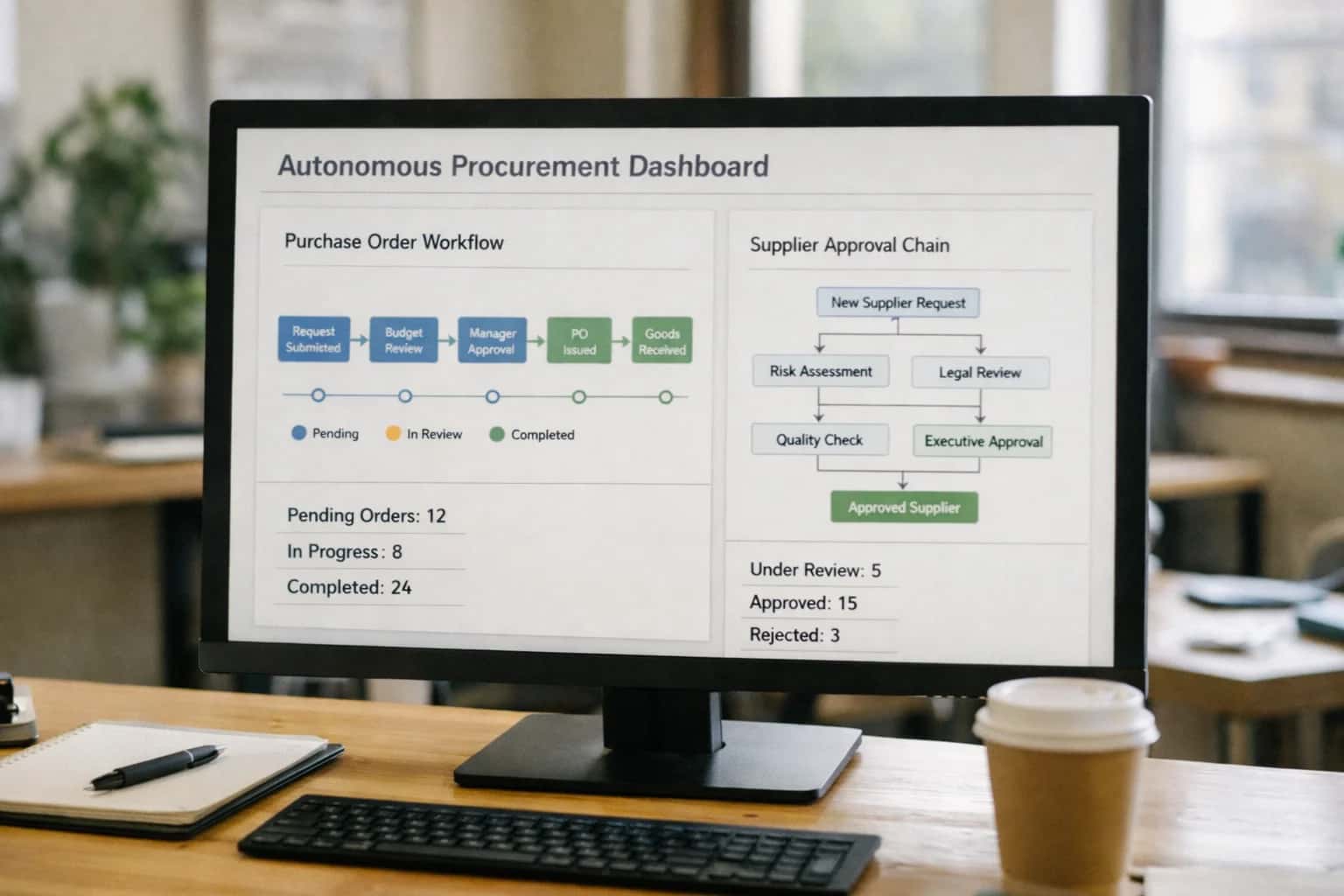
A technical analysis comparing Tropic's AI-native agent platform for autonomous sourcing against GEP SMART's comprehensive cloud-native procurement and supply chain suite. This comparison focuses on AI-driven insights, automation depth, and fit for direct material sourcing.
THE ANALYSIS
Introduction
A direct comparison between an AI-native procurement agent and a comprehensive cloud-native suite, focusing on automation depth versus process breadth.
GEP SMART takes a different approach by providing a unified, cloud-native platform for the entire source-to-pay (S2P) process. This strategy integrates procurement, supply chain, and finance workflows into a single data model. This results in a trade-off: while its AI capabilities for spend intelligence and predictive analytics are robust, they are designed to augment and guide human decision-makers within a broad process framework, rather than operate with full autonomy like a dedicated agent.
The key trade-off: If your priority is maximizing automation and AI-agentic execution for strategic sourcing and negotiation to drive immediate cost savings, choose Tropic. If you prioritize a comprehensive, integrated suite that orchestrates the entire procurement-to-payment lifecycle with AI-powered insights embedded within established workflows, choose GEP SMART. For a deeper dive into AI agent platforms, see our comparison of LangGraph vs. AutoGen vs. CrewAI for multi-agent orchestration and our analysis of Tropic against other AI-native platforms like Zip and Keelvar.
HEAD-TO-HEAD COMPARISON
Feature Comparison: Tropic vs GEP SMART
Direct comparison of AI-driven procurement platforms, focusing on automation, intelligence, and sourcing capabilities.
| Metric | Tropic | GEP SMART |
|---|---|---|
Core AI Function | Autonomous Sourcing & Negotiation Agents | Cloud-Native Procurement & Supply Chain Platform |
Primary Use Case | Direct Material Sourcing & Vendor Negotiation | End-to-End Procurement & Supply Chain Operations |
Spend Intelligence Automation | ||
Autonomous Negotiation Bots | ||
OTIF (On-Time-In-Full) Improvement Focus | High (Manufacturing/Distribution) | Medium (Broad Supply Chain) |
Time to Value for New Implementation | ~8 weeks | ~12-16 weeks |
Native Integration with Major ERPs (SAP, Oracle) |
AI Agent vs. Cloud Suite
TL;DR Summary
A quick comparison of a specialized AI agent platform against a comprehensive cloud-native suite, focusing on core strengths and ideal use cases.
01
Choose Tropic for AI-Driven Direct Sourcing
Autonomous negotiation agents: Tropic's core competency is using AI to autonomously execute RFPs, analyze bids, and negotiate with suppliers for direct materials. This matters for procurement teams seeking to compress sourcing cycles and achieve hard-cost savings through automated, data-driven vendor interactions. Its agentic approach is a direct application of Agentic Workflow Orchestration Frameworks.
02
Choose GEP SMART for End-to-End Process Orchestration
Unified source-to-pay platform: GEP SMART is a cloud-native suite integrating strategic sourcing, supplier management, contracts, and invoicing on a single data model. This matters for large enterprises needing deep process control, compliance, and integration with legacy ERPs like SAP or Oracle, moving beyond isolated AI point solutions.
03
Tropic's Strength: Proactive Spend Intelligence
Predictive cost benchmarking: Tropic's AI agents continuously analyze market data and historical spend to provide real-time should-cost models and savings opportunities. This matters for category managers who need to move from reactive cost tracking to proactive value identification before an RFP is even issued.
04
GEP SMART's Strength: Supply Chain Resilience
Integrated risk and performance management: Beyond procurement, GEP SMART provides tools for monitoring supplier risk, tracking on-time-in-full (OTIF) performance, and simulating supply chain disruptions. This matters for manufacturers and distributors where procurement is intrinsically linked to broader Logistics and Supply Chain Visibility AI needs.
CHOOSE YOUR PRIORITY
When to Choose Tropic vs GEP SMART
Tropic for AI-Driven Sourcing
Verdict: The superior choice for autonomous, agent-led procurement. Strengths: Tropic is built as an AI agent platform from the ground up. Its core competency is deploying autonomous agents for vendor discovery, negotiation, and contract guidance. It excels in direct material sourcing where complex, multi-round negotiations are common. The platform uses spend intelligence to power its agents, enabling proactive savings identification and execution. For teams prioritizing OTIF (On-Time-In-Full) improvement and moving from reactive tasks to 'proactive orchestration,' Tropic's agentic architecture is decisive.
GEP SMART for AI-Driven Sourcing
Verdict: A robust cloud suite with embedded AI insights, not autonomous agents. Strengths: GEP SMART is a comprehensive, cloud-native procurement and supply chain platform. Its AI capabilities are deeply integrated into modules for spend analysis, supplier risk management, and sourcing events. It provides powerful AI-driven insights and recommendations to guide human decision-makers. For organizations that need a full-stack solution with strong ERP integration and prefer AI as an augmentation tool within established workflows, GEP SMART offers greater breadth and process control. It is less about autonomous execution and more about intelligent augmentation.
Enabling Efficiency, Speed & Accuracy
Intelligent Analysis, Decision & Execution
We build AI systems for teams that need search across company data, workflow automation across tools, or AI features inside products and internal software.
Talk to Us
Search across company data
Give teams answers from docs, tickets, runbooks, and product data with sources and permissions.
Useful when people spend too long searching or get different answers from different systems.
Enterprise searchRAGPermissions
Read more
Automate internal workflows
Use AI to route work, draft outputs, trigger actions, and keep approvals and logs in place.
Useful when repetitive work moves across multiple tools and teams.
AI agentsWorkflow automationGovernance
Read more
Add AI to products and internal tools
Build assistants, guided actions, or decision support into the software your team or customers already use.
Useful when AI needs to be part of the product, not a separate tool.
AI integrationDecision supportModel routing
Read moreTHE ANALYSIS
Final Verdict
Choosing between Tropic and GEP SMART hinges on whether you prioritize AI-native, autonomous sourcing or a deeply integrated, cloud-native enterprise suite.
Tropic excels at AI-driven, autonomous sourcing because its core is built as an agentic platform. It uses specialized AI agents for tasks like vendor discovery, real-time price benchmarking, and autonomous negotiation, directly targeting the 'proactive value-adding orchestration' pillar. For example, its systems are designed to improve On-Time-In-Full (OTIF) metrics by predicting and mitigating supply chain disruptions, a critical capability for manufacturers and distributors.
GEP SMART takes a different approach by offering a comprehensive, cloud-native procurement and supply chain platform. This strategy results in a trade-off: while it provides robust modules for source-to-pay, supplier management, and spend analysis, its AI capabilities are often integrated features rather than the core architecture. Its strength lies in unifying procurement data across a complex enterprise landscape, offering deep analytics but with less emphasis on fully autonomous agentic workflows.
The key trade-off: If your priority is leveraging AI agents for autonomous negotiation, direct material sourcing, and agile spend intelligence, choose Tropic. It is purpose-built for the AI agent paradigm discussed in our pillar on AI-Powered Procurement and Sourcing Agents. If you prioritize a broad, integrated suite with deep ERP connectivity, established supplier networks, and comprehensive process orchestration across indirect and direct spend, choose GEP SMART. For a comparison of Tropic against other AI-native platforms, see our analysis of Tropic vs Zip vs Keelvar.

About the author
Prasad Kumkar
CEO & MD, Inference Systems
Prasad Kumkar is the CEO & MD of Inference Systems and writes about AI systems architecture, LLM infrastructure, model serving, evaluation, and production deployment. Over 5+ years, he has worked across computer vision models, L5 autonomous vehicle systems, and LLM research, with a focus on taking complex AI ideas into real-world engineering systems.
His work and writing cover AI systems, large language models, AI agents, multimodal systems, autonomous systems, inference optimization, RAG, evaluation, and production AI engineering.
LinkedIn
Limited slotsGet a Free AI Consultation
Partnered with leading AI, data, and software stack.





How We Work
Custom AI workflows for your Business
One-fit-all AI don't work for modern businesses. At Inferensys, we aim to understand your business & custom requirements; which we use to define most efficient agentic workflows, the data, and the tools for your business.
01
Review the use case
We understand the task, the users, and where AI can actually help.
Read more02
Pick the right approach
We define what needs search, automation, or product integration.
Read more03
Build the first useful version
We implement the part that proves the value first.
Read more04
Improve from there
We add the checks and visibility needed to keep it useful.
Read moreThe first call is a practical review of your use case and the right next step.
Talk to Us