Modular AI hardware architecture is a design philosophy that treats systems as collections of hot-swappable components—like GPUs, memory, storage, and networking—instead of monolithic appliances. This approach is enabled by standardized form factors like OCP (Open Compute Project) and Open19, and disaggregated designs that separate compute from memory and storage pools. The core benefit is upgradability: you can refresh a single accelerator or add memory without replacing the entire chassis, dramatically cutting material consumption and aligning with circular hardware lifecycles.

Guide
How to Architect for Modular AI Hardware Components
A technical guide to system design patterns for modular AI infrastructure. Learn backplane designs, disaggregated architectures, and standardized form factors to enable independent upgrades and reduce material waste.
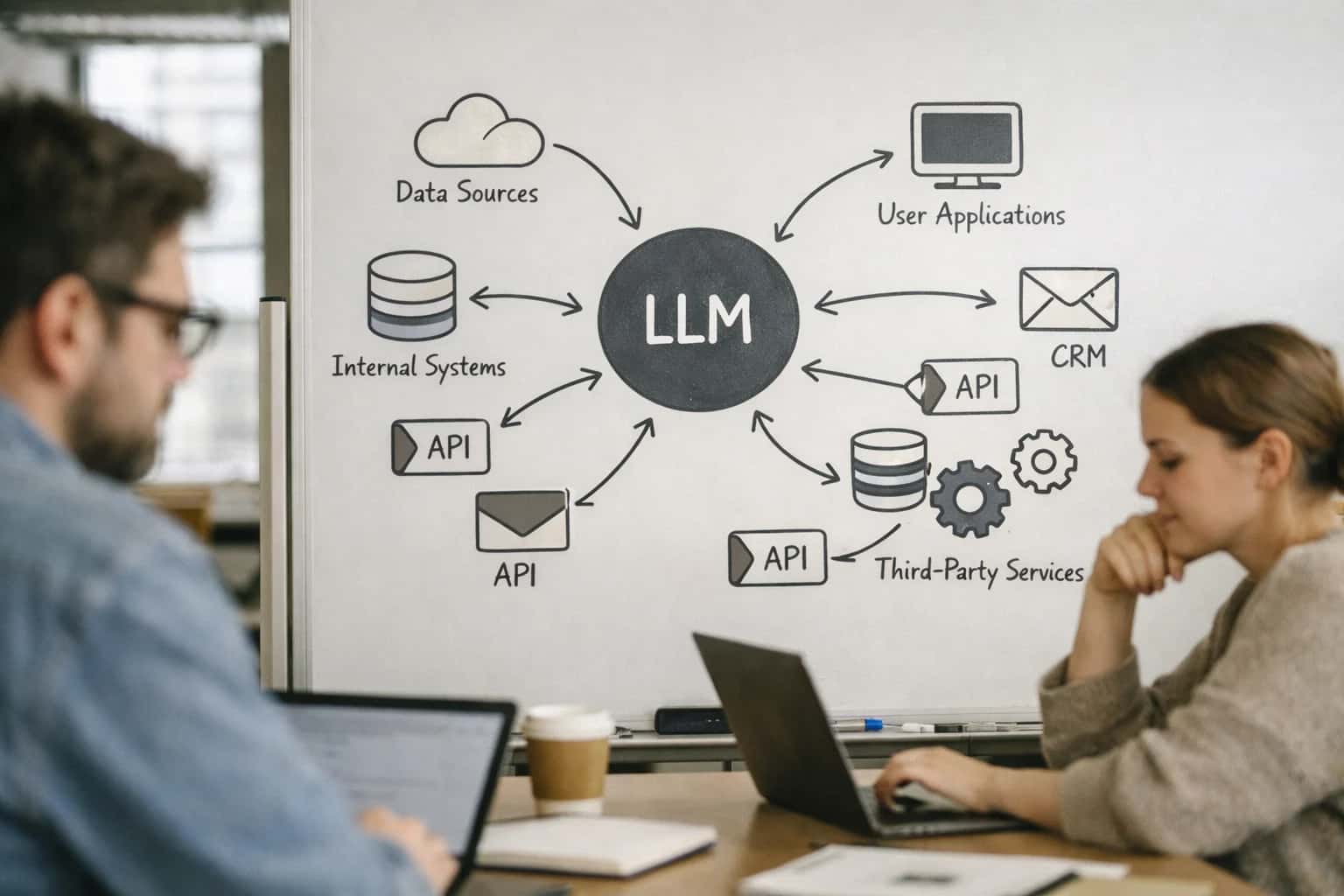
This guide explains the system design patterns that enable hardware modularity in AI infrastructure, a foundational strategy for extending asset life and reducing e-waste.
To implement this, you must architect around a modular backplane that provides high-bandwidth, standardized interconnects (e.g., PCIe, CXL) for component independence. Design for tool-less serviceability and ensure firmware supports future hardware generations. This creates a system where the core infrastructure lasts 7-10 years while performance-critical components can be upgraded in 3-year cycles, optimizing total cost of ownership and reducing the environmental impact of the rapid AI buildout. Start by evaluating vendors against these modularity principles during procurement.
STANDARDIZED VS. CLOSED SYSTEMS
Modular Architecture Comparison: OCP vs. Open19 vs. Proprietary
Evaluating key design and operational features of open hardware standards against traditional proprietary systems for modular AI infrastructure.
| Architectural Feature | OCP (Open Compute Project) | Open19 | Proprietary (e.g., Dell, HPE) |
|---|---|---|---|
Core Design Philosophy | Hyperscale data center optimization | Standardized server building blocks for any data center | Vendor-specific integration and lock-in |
Form Factor Standardization | Open Rack (ORv2), Olympus | 19-inch rack with common server tray | Vendor-specific chassis and sleds |
Hot-Swappable Accelerator Support | |||
Disaggregated Memory/Storage Backplane | |||
Vendor-Neutral Spare Parts Availability | |||
Typical Refresh Cycle (Chassis) | 7-10 years | 5-7 years | 3-5 years |
Tool-less Serviceability Score | 90% | 85% | 60% |
BIOS/Firmware Openness | Open-source reference | Varies by vendor | Closed, vendor-controlled |
ARCHITECTING FOR MODULARITY
Tools and Vendor Ecosystems
The foundation of a circular hardware lifecycle is modularity. This ecosystem of tools, standards, and vendors enables you to build systems where components can be independently upgraded, repaired, and replaced.
06
DCIM and ITAM Software for Asset Lifecycle
Data Center Infrastructure Management (DCIM) and IT Asset Management (ITAM) software are the operational brains for tracking modular hardware through its lifecycle.
- DCIM tools like Sunbird DCIM or Nlyte track physical location, power, and cooling.
- ITAM platforms like ServiceNow or Snipe-IT track procurement, warranty, maintenance, and decommissioning.
- Integrating these systems creates a single source of truth for every GPU, SSD, and power supply, enabling data-driven decisions on refurbishment, as covered in our guide on hardware asset tracking.
EXPLORE
Enabling Efficiency, Speed & Accuracy
Intelligent Analysis, Decision & Execution
We build AI systems for teams that need search across company data, workflow automation across tools, or AI features inside products and internal software.
Talk to Us
Search across company data
Give teams answers from docs, tickets, runbooks, and product data with sources and permissions.
Useful when people spend too long searching or get different answers from different systems.
Enterprise searchRAGPermissions
Read more
Automate internal workflows
Use AI to route work, draft outputs, trigger actions, and keep approvals and logs in place.
Useful when repetitive work moves across multiple tools and teams.
AI agentsWorkflow automationGovernance
Read more
Add AI to products and internal tools
Build assistants, guided actions, or decision support into the software your team or customers already use.
Useful when AI needs to be part of the product, not a separate tool.
AI integrationDecision supportModel routing
Read moreARCHITECTING FOR MODULARITY
Common Mistakes
Modular AI hardware promises longevity and reduced e-waste, but common design and procurement pitfalls can lock you into a linear, disposable model. This section addresses the key mistakes that prevent true hardware circularity.
A modular backplane is the foundational interconnect that allows components like GPUs, NICs, and storage to be hot-swapped. The most common failure is vendor lock-in through proprietary connectors and form factors. This prevents you from mixing components from different generations or manufacturers, defeating the purpose of modularity.
To architect correctly:
- Standardize on open specifications like OCP Accelerator Module (OAM) or Open19. These define mechanical, thermal, and electrical interfaces.
- Design for future bandwidth. A backplane with PCIe 5.0 today may bottleneck PCIe 6.0 or CXL 3.0 accelerators tomorrow. Over-provision lane count and cooling capacity.
- Ensure the system BIOS/firmware supports a wide PCIe Device ID allowlist to avoid compatibility blocks with new cards.

About the author
Prasad Kumkar
CEO & MD, Inference Systems
Prasad Kumkar is the CEO & MD of Inference Systems and writes about AI systems architecture, LLM infrastructure, model serving, evaluation, and production deployment. Over 5+ years, he has worked across computer vision models, L5 autonomous vehicle systems, and LLM research, with a focus on taking complex AI ideas into real-world engineering systems.
His work and writing cover AI systems, large language models, AI agents, multimodal systems, autonomous systems, inference optimization, RAG, evaluation, and production AI engineering.
LinkedIn
Limited slotsGet a Free AI Consultation
Partnered with leading AI, data, and software stack.





How We Work
Custom AI workflows for your Business
One-fit-all AI don't work for modern businesses. At Inferensys, we aim to understand your business & custom requirements; which we use to define most efficient agentic workflows, the data, and the tools for your business.
01
Review the use case
We understand the task, the users, and where AI can actually help.
Read more02
Pick the right approach
We define what needs search, automation, or product integration.
Read more03
Build the first useful version
We implement the part that proves the value first.
Read more04
Improve from there
We add the checks and visibility needed to keep it useful.
Read moreThe first call is a practical review of your use case and the right next step.
Talk to Us