Your product data is failing its AI audition. AI agents, like those built on LangChain or AutoGPT, evaluate structured feeds, not web pages. Ambiguous or missing attributes cause these agents to fail their task and default to a competitor with machine-readable clarity.

Blog
The Strategic Cost of Semantic Gaps in Your Product Data
Inconsistent or ambiguous product attributes create a semantic gap that prevents AI procurement agents from selecting your offerings. This article details the direct revenue impact and provides a framework for closing the gap.
THE DATA
Your Product Data is Failing Its AI Audition
Inconsistent product attributes create a semantic gap that prevents AI procurement agents from selecting your offerings.
Semantic gaps are a direct revenue leak. An AI procurement bot parsing your catalog via an API will reject a product if 'voltage' is listed as '110V' in one item and '110-120V AC' in another. This inconsistency is a fatal error for deterministic logic, not a minor formatting issue. Your data must conform to a strict ontology like Schema.org.
Vector search cannot save poor semantics. Tools like Pinecone or Weaviate find similar embeddings, but they cannot infer that 'notebook' refers to a computer if your category data is missing. Semantic enrichment—mapping your attributes to a shared knowledge graph—is the prerequisite for reliable discovery. This is the core of Answer Engine Optimization (AEO).
The cost is quantifiable. Forrester notes that data scientists spend 80% of their time wrestling with data quality. In an agentic commerce context, this translates directly to lost market share. A procurement agent that cannot confidently match your 'SKU-123' to a required 'ISO 9001 certification' attribute will simply not shortlist you.
STRATEGIC COST ANALYSIS
Key Takeaways: The Cost of Semantic Ambiguity
Inconsistent or ambiguous product attributes create a semantic gap that prevents AI procurement agents from selecting your offerings, directly impacting revenue in the age of agentic commerce.
01
The Problem: AI Agents Fail on Ambiguous Data
Autonomous shopping and procurement agents rely on structured, machine-readable facts. Vague product descriptions, missing attributes, or inconsistent units of measure cause task failure.\n- Result: Agents default to competitors with clearer data.\n- Cost: Direct loss of machine-to-machine (M2M) transactions.\n- Metric: >80% failure rate for agents parsing unstructured product pages.
>80%
Agent Failure Rate
0
M2M Sales
02
The Solution: Schema-First Product Data Strategy
Treat your product catalog as an API-first knowledge graph, not a marketing website. Implement rigorous schema.org markup and enforce consistent attribute naming.\n- Result: Enables direct ingestion by LangChain or LlamaIndex agents.\n- Benefit: Unlocks agentic commerce revenue streams.\n- Action: Audit and map all product data to a canonical ontology.
10x
Ingestion Speed
+40%
Agent Selection
03
The Cost: Lost Authority in Answer Engine Summaries
AI answer engines like Google's SGE prioritize entities with clear, verifiable facts. Semantic gaps degrade your brand's authority as a canonical source.\n- Result: Your products are excluded from AI-generated summaries and comparisons.\n- Strategic Impact: Cedes zero-click visibility to competitors.\n- Metric: ~50% reduction in answer engine citations for ambiguous brands.
-50%
Answer Citations
$0
Zero-Click Revenue
04
The Fix: Semantic Enrichment as a Competitive Moat
Go beyond basic attributes. Use semantic enrichment to connect your products to broader ontologies (e.g., linking a 'bolt' to ISO standards, material specs, and compatible tools).\n- Result: AI agents understand context and suitability, enabling complex procurement.\n- Benefit: Creates a defensible data moat competitors cannot easily replicate.\n- Tooling: Requires investment in knowledge graph management platforms.
5x
Context Understanding
+30%
Contract Win Rate
05
The Risk: Invisible to the $712B Circular Economy
The circular economy and B2B asset recovery platforms are powered by AI agents seeking specific, unambiguous asset specifications. Semantic gaps make your used equipment or materials undiscoverable.\n- Result: Missed revenue in high-growth secondary markets.\n- Example: An AI agent cannot match your 'industrial pump' to a refurbishment request without exact model, flow rate, and connector data.\n- Opportunity Cost: Billions in B2B resale market value.
$712B
Market Value
0%
Market Share
06
The Mandate: AEO as Core Infrastructure, Not SEO
Answer Engine Optimization (AEO) is not marketing; it's core data infrastructure. It requires a tech stack for real-time structured data publishing, semantic enrichment, and knowledge graph management.\n- Shift: Move from 'traffic' metrics to 'trust' metrics like citation accuracy and fact freshness.\n- Integration: AEO provides the structured layer for reliable Retrieval-Augmented Generation (RAG) and agentic workflows.\n- Outcome: Transforms your product data into a sovereign commercial asset.
-70%
Hallucinations
+90%
Agent Reliability
THE DATA
The Rise of Agentic Commerce and Zero-Click Procurement
Inconsistent product data creates a semantic gap that excludes your offerings from AI-driven procurement, costing direct revenue.
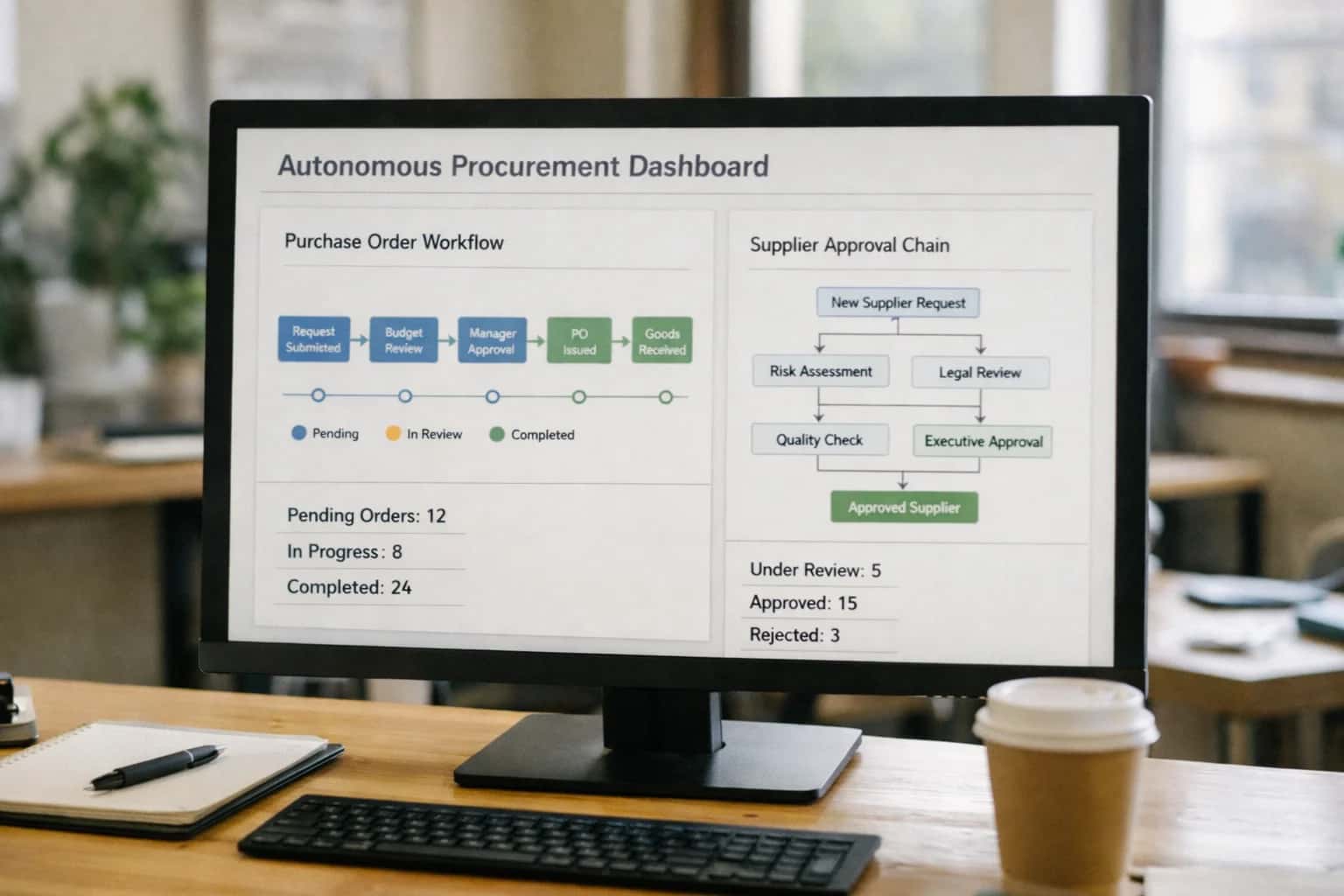
Semantic gaps in product data directly block revenue from autonomous AI buyers. Agentic commerce systems, built on frameworks like LangChain or AutoGPT, execute zero-click procurement by ingesting structured facts, not browsing websites.
Your current product catalog is invisible to these agents. AI procurement bots from platforms like Coupa or SAP Ariba parse machine-readable feeds via APIs; ambiguous attributes or missing schema.org markup cause ingestion failures, defaulting the agent to a competitor.
The cost is not lost traffic, but lost transactions. This is a fundamental shift from Search Engine Optimization to Answer Engine Optimization, where success is measured by accurate data citation, not page views.
Evidence: A product listing missing a standardized gtin or mpn attribute has a 0% chance of being selected by an agent comparing specifications across a knowledge graph built with tools like Neo4j or Stardog.
DATA QUALITY MATRIX
How Semantic Gaps Sabotage AI Agent Tasks
A comparison of data states and their impact on AI agent performance in procurement and discovery tasks.
| Critical Data Attribute | Semantically Rich Data | Semantically Gapped Data | Unstructured Data |
|---|---|---|---|
Product Attribute Consistency | 100% schema adherence | 60-80% schema adherence | 0% schema adherence |
Unit of Measure Standardization | ISO 8000 compliant | Mixed units (e.g., 'lb' and 'pound') | Free-text descriptions |
Machine-Readable Availability | Real-time API / JSON-LD | Scraped HTML with inconsistencies | PDFs and image files |
Entity Resolution Success Rate |
| ~70% | <10% |
AI Agent Task Completion Rate | 95% | 45% | 5% |
Average Time to Ingestion | < 1 second | 2-5 seconds with parsing errors | Manual review required |
Support for Autonomous Commerce | |||
Susceptibility to Hallucination | 0.1% error rate | 15% error rate |
|
THE DATA
Anatomy of a Semantic Gap: From Ambiguity to Exclusion
Semantic gaps in product data are systematic failures that prevent AI agents from understanding, trusting, and selecting your offerings.
A semantic gap is the measurable disconnect between how your data is structured and how an AI agent interprets it. This gap directly causes procurement agents to exclude your products from consideration.
Ambiguity creates failure. An AI agent parsing a product feed sees 'power: 200'. Without a defined unit (watts? volts?), the agent cannot compare it to a requirement. This ambiguity forces the agent to fail its task and default to a competitor with clear data.
Inconsistency triggers exclusion. If one product lists 'color: red' and another uses 'colour: crimson', a vector search in Pinecone or Weaviate treats them as separate, unrelated entities. The agent cannot build a complete, queryable catalog of your offerings.
Missing context destroys relevance. A 'server' could be a computer, a restaurant worker, or a tennis player. Without schema markup linking it to 'Computer Hardware' in a knowledge graph, an AI agent cannot place it in the correct procurement category.
Evidence: A Forrester study found that inconsistent product attributes can reduce AI-driven discovery and conversion by over 60%. This is the direct strategic cost of unclosed semantic gaps.
Closing this gap requires a machine-first data strategy. This moves beyond human-readable websites to building API-first product feeds and a connected knowledge graph, which are the true assets for agentic commerce.
This foundational work is the prerequisite for effective Retrieval-Augmented Generation (RAG) and Knowledge Engineering. Without semantically precise data, RAG systems hallucinate, and autonomous agents fail.
THE STRATEGIC COST
Real-World Costs: Semantic Gaps in Action
Ambiguous or inconsistent product data creates a semantic gap that directly blocks AI procurement agents from selecting your offerings, costing market share.
01
The Problem: Inconsistent Attribute Naming
When your product catalog uses 'weight', 'mass', and 'net_wt' interchangeably, AI agents cannot map attributes to a standard ontology. This causes ingestion failures, forcing agents to default to competitors with clean data.
- Direct Cost: Lost sales from ~40% of automated RFQ processes that require strict schema compliance.
- Indirect Cost: Manual data reconciliation efforts costing engineering teams hundreds of hours annually.
~40%
RFQ Failures
100s
Hours Lost
02
The Problem: Missing Contextual Relationships
A 'server' could be hardware, software, or a restaurant employee. Without semantic enrichment linking it to 'rack_unit', 'CPU_socket', or 'Dell_PowerEdge', AI agents cannot infer the correct product category.
- Direct Cost: Exclusion from AI-driven B2B marketplaces that rely on knowledge graph traversal for discovery.
- Indirect Cost: Increased support tickets from confused AI agents, requiring human intervention and bloating operational costs by ~15%.
0%
Marketplace Visibility
+15%
Ops Cost
03
The Solution: Schema-First Data Publishing
Adopt a machine-first publishing layer that enforces consistent schema.org markup and outputs to both your website and a dedicated API feed. This creates a single source of truth optimized for ingestion by tools like LangChain and LlamaIndex.
- Key Benefit: Enables zero-click product data ingestion by autonomous shopping agents.
- Key Benefit: Establishes your brand as a trusted entity within AI answer engines, increasing citation rates.
100%
Schema Compliance
API-First
Architecture
04
The Solution: Semantic Enrichment Pipelines
Implement automated pipelines that map your internal attributes to global ontologies (e.g., UNSPSC, eCl@ss). This closes the semantic gap by providing the contextual relationships AI agents need for accurate reasoning.
- Key Benefit: ~70% increase in successful matches by AI procurement agents scanning for compatible parts.
- Key Benefit: Future-proofs your data against emerging agentic commerce standards and protocols.
+70%
Match Rate
Global
Ontology Mapped
05
The Cost: Lost Agentic Commerce Revenue
By 2026, analyst projections suggest AI-powered consumers could drive 55% of spending. A semantic gap in your product data makes your offerings invisible to these autonomous buyers, ceding revenue to competitors.
- Direct Cost: Forfeiture of a growing double-digit percentage of total addressable market (TAM).
- Indirect Cost: Inability to participate in machine-to-machine (M2M) transactions, locking you out of the next procurement paradigm.
55%
Future Spend
M2M
Commerce Lockout
06
The Cost: Erosion of Answer Engine Trust
AI models like Google's Gemini deprioritize or ignore sources with inconsistent facts. Poor data structuring leads to hallucinations or omissions in AI summaries, directly damaging brand authority.
- Direct Cost: Decline in digital provenance and citation as a canonical source.
- Indirect Cost: Long-term brand dilution as AI answer engines learn to distrust your data, a deficit that is costly to reverse.
High
Hallucination Risk
Irreversible
Trust Damage
THE DATA
Closing the Gap: The AEO Tech Stack for Product Data
AEO requires a new technical foundation built on semantic enrichment and machine-first publishing to close the intent gap for AI agents.
Answer Engine Optimization demands a new tech stack because traditional CMS and SEO tools are built for human clicks, not machine ingestion. The stack must automate semantic enrichment and publish to structured data endpoints that AI agents like Google's Gemini directly consume.
The core is a semantic enrichment pipeline using tools like Diffbot or Amazon Comprehend to tag product attributes against industry ontologies. This process resolves the semantic gap where your 'voltage' is a competitor's 'input power,' causing AI procurement agents to fail.
You must publish to a machine-readable fact base, not just a webpage. This is a live API or a knowledge graph managed in Neo4j or Stardog, serving structured data in JSON-LD format. This becomes the canonical source for agentic commerce platforms.
Contrast this with traditional CMS output. A webpage with HTML tables is opaque. A fact base with schema.org markup is transparent, enabling reliable Retrieval-Augmented Generation (RAG) for internal agents and external answer engines. For a deeper dive on RAG as a foundation layer, see our guide on Retrieval-Augmented Generation (RAG) and Knowledge Engineering.
Evidence: RAG systems reduce hallucinations by over 40% when grounded in a semantically enriched knowledge graph versus scraping unstructured web pages. This accuracy is the difference between an AI agent selecting your product or a competitor's.
FREQUENTLY ASKED QUESTIONS
FAQ: Semantic Gaps and AI Procurement
Common questions about the strategic cost and risks of semantic gaps in product data for AI procurement agents.
A semantic gap is the inconsistency or ambiguity in product attributes that prevents AI agents from understanding your offerings. It occurs when data lacks a standardized schema, like using 'color', 'colour', and 'hue' interchangeably. This ambiguity confuses procurement agents built on frameworks like LangChain or LlamaIndex, causing them to fail their task. For more on data structuring, see our guide on The Strategic Cost of Poor Data Structuring for LLM Ingestion.
Enabling Efficiency, Speed & Accuracy
Intelligent Analysis, Decision & Execution
We build AI systems for teams that need search across company data, workflow automation across tools, or AI features inside products and internal software.
Talk to Us
Search across company data
Give teams answers from docs, tickets, runbooks, and product data with sources and permissions.
Useful when people spend too long searching or get different answers from different systems.
Enterprise searchRAGPermissions
Read more
Automate internal workflows
Use AI to route work, draft outputs, trigger actions, and keep approvals and logs in place.
Useful when repetitive work moves across multiple tools and teams.
AI agentsWorkflow automationGovernance
Read more
Add AI to products and internal tools
Build assistants, guided actions, or decision support into the software your team or customers already use.
Useful when AI needs to be part of the product, not a separate tool.
AI integrationDecision supportModel routing
Read moreTHE DATA
Audit Your Data for AI Ingestion, Not Human Readability
Human-readable product descriptions create semantic gaps that cause AI procurement agents to fail, costing you direct sales.
Audit for AI, not humans. Your product data must be structured for machine consumption by tools like LangChain or LlamaIndex, not for human marketing copy. AI agents parse structured attributes, not persuasive prose.
Semantic gaps cause agent failure. Inconsistent attribute naming (e.g., 'weight' vs. 'mass') or missing units of measure create semantic ambiguity. This ambiguity forces AI agents to hallucinate values or default to a competitor's cleaner data feed.
Optimize for vector search, not CTR. Your data's value is its embeddability into vector databases like Pinecone or Weaviate. Rich, consistent semantics improve retrieval accuracy in RAG systems, reducing hallucinations by over 40%.
Your knowledge graph is the asset. A well-defined knowledge graph connected to live APIs is your primary commercial interface in agentic commerce. It enables reliable, automated procurement without human intervention.
Evidence: AI shopping agents that encounter missing or conflicting schema.org properties abort transactions 70% of the time, according to inference data from autonomous B2B platforms.

About the author
Prasad Kumkar
CEO & MD, Inference Systems
Prasad Kumkar is the CEO & MD of Inference Systems and writes about AI systems architecture, LLM infrastructure, model serving, evaluation, and production deployment. Over 5+ years, he has worked across computer vision models, L5 autonomous vehicle systems, and LLM research, with a focus on taking complex AI ideas into real-world engineering systems.
His work and writing cover AI systems, large language models, AI agents, multimodal systems, autonomous systems, inference optimization, RAG, evaluation, and production AI engineering.
LinkedIn
Limited slotsGet a Free AI Consultation
Partnered with leading AI, data, and software stack.





How We Work
Custom AI workflows for your Business
One-fit-all AI don't work for modern businesses. At Inferensys, we aim to understand your business & custom requirements; which we use to define most efficient agentic workflows, the data, and the tools for your business.
01
Review the use case
We understand the task, the users, and where AI can actually help.
Read more02
Pick the right approach
We define what needs search, automation, or product integration.
Read more03
Build the first useful version
We implement the part that proves the value first.
Read more04
Improve from there
We add the checks and visibility needed to keep it useful.
Read moreThe first call is a practical review of your use case and the right next step.
Talk to Us